Money Tree Leaves Turning Yellow and Dropping in Winter? Here's How to Care for It Right
The money tree (Pachira aquatica) symbolizes wealth, and it also works wonderfully as a decorative plant, which is why it is so widely loved. However, many gardening enthusiasts report that the money tree is not easy to grow - its leaves turn yellow and drop at the slightest provocation, and their money trees have never successfully made it through winter. In fact, the reason a money tree cannot survive the winter is that these few things were not done well during winter care: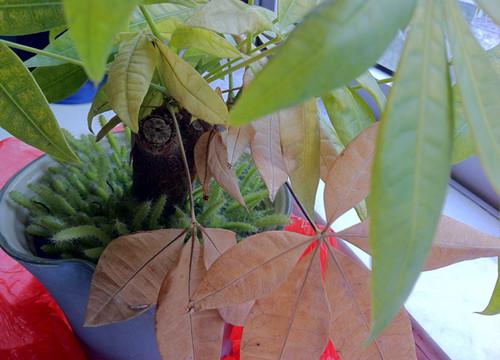
1. Temperature too low, cold damage
It is the depths of winter right now. If you accidentally place the money tree somewhere exposed to cold drafts, or a cold front arrives and the temperature drops too low, then before long you will find that the money tree's leaves begin to scorch and also fall off.
Solution: Keep the indoor temperature no lower than 8°C. If the temperature is too low, consider covering it with a plastic bag to keep it warm. Do not place the money tree somewhere exposed to cold drafts.
2. Overwatering causes yellow leaves and leaf drop
Winter is already cold, and if you then water the money tree too much, keeping the potting soil wet for a long time, it will cause a lack of oxygen in the soil, the fibrous roots will rot, and this will hinder the money tree's normal respiration and nutrient absorption, leading to yellowing and falling leaves.
Solution: In winter, reduce how often you water the money tree - about once a month is enough.
3. Air too dry
Winter air is relatively dry, especially in northern areas with heating. Excessively dry air will cause the money tree's leaf margins to scorch and turn yellow.
Solution: Regularly spray water on the money tree's leaves to increase air humidity.
4. Pests and diseases
Winter weather is relatively cold, so most of the time doors and windows are kept tightly closed and ventilation is poor. If the money tree grows in such an environment for a long time, it is prone to red spider mites and scale insects, causing the money tree's leaves to turn yellow and drop.
Solution: Although winter is cold, you can choose to open the windows for ventilation for 2 to 3 hours at noon when the temperature is higher. This benefits not only the plant but also your family's health.
How to care for a money tree in winter? What to do when money tree leaves turn yellow
The main reasons for leaf drop in potted money trees are:
1. Low ambient temperature. If the indoor ambient temperature where your money tree is kept stays above 15°C - the money tree stops growing when the temperature is below 18°C. The money tree is native to tropical America and widely distributed in Southeast Asia. It likes warm, humid environments and requires an optimal growing temperature of 18-30°C. It is not cold-tolerant. In spring, move it outdoors around the end of the third lunar month or around early May on the solar calendar. Never let room temperature fall below 8°C, otherwise cold damage will occur - in mild cases leaves drop, in severe cases the plant dies.
2. Insufficient light. The money tree likes light but dislikes direct sunlight. Place it indoors in a spot with diffused light for growing, and in winter place it in a spot indoors with relatively good light. Starting in late April, choose a clear, warm noon, move the pot outdoors or onto a balcony, and expose it to direct sunlight for 1-2 hours, gradually extending the time until it is under full-light management. In an outdoor full-light environment, the leaf nodes are short, the leaves are broad, the color is deep green, the canopy is full, and the base of the stem is thick. Under weak light for a long time, the branches are thin, the leaf stalks droop, and the leaves are pale green. No matter what environment it is grown in, do not suddenly change the placement location; changing position should involve a gradual adaptation process. If you suddenly move the plant from a shaded spot to a sunny spot, it will scorch the leaves and burn the edges, affecting its appearance. Long-term insufficient light makes the plant prone to yellow leaves accompanied by leaf drop.
3. Too much moisture. The money tree does not have high water requirements, and it should not be overwatered, to prevent water accumulating in the potting soil, causing root rot and leading to plant death. In summer, water once a day indoors; in spring and autumn, water once every 5-10 days. But this is not an absolute interval - it should be adjusted flexibly, following the principle of keeping the potting soil "dry before wet." Too much moisture creates waterlogging, and the plant develops yellow leaves, root rot, and leaf drop.
4. Too much fertilizer. During the optimal growing temperature period it grows rapidly, so it should be fertilized regularly to ensure lush growth. Generally, apply a light fertilizer once about every 20 days, but use less nitrogen fertilizer to avoid leggy growth. When repotting, besides replacing the new nutrient soil, also add decomposed base fertilizer so it grows strong and healthy. If too much fertilizer is applied, or the fertilizer used is not decomposed, it will burn the roots, causing yellow leaves and leaf drop.
5. Thick dust on the leaf surface. If the dust on the leaf surface is too thick, it not only affects appearance but also affects the plant's respiration and photosynthesis. This seriously affects the plant's healthy growth. The dust on the leaf surface should be sprayed and washed clean in time, or wiped clean with a soft cloth.
What to do when money tree leaves turn yellow
Causes of money tree leaves turning yellow
Cause one: Improper watering
The money tree likes a warm, humid climate, and both overwatering and underwatering can cause leaves to turn yellow.
When overwatered, the soil in the pot stays constantly too wet, the money tree's roots cannot breathe properly, the root and stem rot, and this gradually spreads to the branches and stems, and finally the leaves turn yellow, wither, and drop off; in severe cases the whole plant dies. When underwatered, the potting soil is moist on top and dry below, which not only affects nutrient absorption but also causes the leaves to become dull and lusterless, and they gradually wither and yellow from the bottom up and drop off - the money tree is silently protesting your laziness~
Solution:Ventilate promptly, repot, or replenish water.
When overwatered, place it by a window for good ventilation and loosen the soil more. If the potting soil cannot dry out within a short time and has become muddy, you can place a layer of absorbent cotton cloth at the bottom of the flowerpot and replace it with a new one once it is soaked through, or use a fan on a low setting to blow on it. If after trying every method the soil still has not dried, then change the soil.
When underwatered, the soil surface cracks. If it has not turned fully yellow, replenish water gradually. First moisten the soil surface, watering a little every hour, and gradually water it thoroughly. Avoid watering it thoroughly all at once, to prevent the roots from swelling from absorbed water and affecting growth.
Cause two: Improper light
The money tree likes sunlight but is not tolerant of intense direct light. Scorching sun exposure or long-term shade can also cause the leaves to wither and yellow.
Placing the money tree in an indoor corner and placing too much emphasis on ornamental effect, causing the money tree to be in a shaded environment for a long time, will cause new branches and leaves to be pale yellow and leggy, while old leaves become dull and drop off in large numbers. In the scorching summer, you can only stay indoors in the air conditioning - how can the money tree withstand the assault of the blazing sun? If you forget to move it to a shaded spot at noon, then you can only accept the sad sight of yellowing leaves.
Solution:Move it to a semi-shaded spot.
For situations where sudden exposure to sunlight causes the money tree's leaves to turn yellow, the chance of saving it is not great. When leaves turn yellow due to excessive sun exposure, the leaves lose water severely and are very hard to recover in a short time; it is recommended to move it to a semi-shaded spot. With proper watering, the yellowed leaves will slowly drop off, and once new buds grow it will be fine.
Cause three: Too much fertilizer
Impatient as you are, you must be worried that the money tree will become malnourished from lack of fertilizer, right? But excessive fertilizing is no good either. The money tree absorbs a fixed amount of nutrients. If too much fertilizer is applied, after the plant absorbs enough nutrients, the remaining fertilizer will burn the money tree's roots and stems, causing the leaves to turn yellow.
Solution:Trim the roots and change the soil.
When overfertilizing causes the money tree's roots to rot, take the plant out of the pot, clean up the rotted parts, replace with new soil, and replant. Or water it to dilute the nutrients in the soil and reduce the fertilizer strength.
Cause four: Unsuitable temperature
Some people dislike summer and winter, because one is too hot and the other too cold. Plants are the same way. The suitable growing temperature for the money tree is 20°C~30°C; too high or too low will affect its growth.
If the temperature in the money tree's growing environment is too high, transpiration is too strong, and the roots cannot supply enough water and nutrients, the leaves will gradually dry up and turn yellow. But if the temperature is too low - for example, when the winter temperature falls below 16°C - the leaves are prone to turning yellow and dropping, and below 10°C the plant very easily dies.
Solution:Increase the temperature.
In summer, when high temperatures cause the money tree's leaves to turn yellow, promptly move the plant to a cool spot and sprinkle water to lower the temperature. If the yellowing is not serious, it will slowly resume growing. In winter, appropriately raise the care temperature to avoid cold damage to the plant.
Cause five: Pests and diseases
When the money tree is attacked by fungi and bacteria, it triggers leaf spot disease. Local areas of the leaves become necrotic, producing yellow patches or spots, and in severe cases the entire leaf withers, yellows, and drops off.
Not only do pathogens covet the money tree - there are also many pests such as red spider mites and scale insects that can cause the money tree's leaves to wither and yellow. Observe carefully!
Solution:Spray chemicals.
Improve ventilation and spray chemicals promptly. For different pests and diseases, choose the corresponding fungicide, spraying once every 5~7 days, and it will basically improve after 3~4 sprays. (Recommended chemicals: carbendazim, chlorothalonil, Huhuashen)
Cause six: Branches and leaves too dense
The money tree has relatively strong growth ability, so its branches and leaves grow vigorously. If you do not have a habit of regular pruning, then the branches and leaves hidden at the bottom will turn yellow and droop due to insufficient light and inability to get ventilation.
Solution:Prune promptly.
Many gardening enthusiasts' money trees have grown into the shape of a straw hat, and they still do not prune them. As a foliage plant, luxuriant branches and leaves are of course important for the money tree. But if there are too many leaves and they hinder the plant's growth, then that is your fault.
The money tree grows relatively fast. For potted plants with luxuriant branches and leaves, you can prune off a portion of the branches. There is no need to be reluctant - new buds will soon grow, and the plant will grow even more luxuriantly.
If you cannot bring yourself to be ruthless, then take a look at how gardening enthusiasts prune their money trees→→"Illustrated Guide" Pruning methods for the money tree
Cause seven: Soil on the alkaline side
Soil is an essential factor for the money tree's growth. Most areas in the north have soil with relatively high salinity and alkalinity, but the money tree prefers acidic conditions. Being unaccustomed to the soil is no small matter - when the soil lacks the iron the money tree needs, the result of malnutrition is withered, yellow leaves.
Solution:Acidify the soil.
The money tree is suited to growing in acidic soil, and promptly changing the soil's acidity and alkalinity can rescue a yellowing money tree. No need to take it out of the pot, no need to change the soil - just apply a certain amount of ferrous sulfate into the soil, sprinkling it directly into the flowerpot. This both increases the soil's fertility and acidifies the soil, killing two birds with one stone.
In the process of acidifying the soil, note that you should not use vinegar. Table vinegar can indeed quickly make the soil acidic, but because the method of change is aggressive, it will damage the organic matter in the soil and lower the soil's fertility.
How to prevent money tree leaves from turning yellow
Control the amount of watering
So that you do not cry bitterly because the money tree's leaves turn yellow, we should do everything well before it turns yellow, starting first with the amount of watering. Watering the money tree should follow the principle of "do not water if not dry, and water thoroughly when you do." Under normal care, watering once every 15~20 days is enough.
What? You say the editor's explanation is too rough? I cannot tolerate that. The editor is going to bring out the big guns - recommending the professional knowledge of a gardening expert on watering the money tree→→"Expert Says" How to water the money tree, do not thank me too much.
Reasonable light
In caring for the money tree, do your best every day. Starting in late April, choose a clear, warm noon, move it outdoors or onto a balcony to receive sunlight, for 1~2 hours at first, then gradually extend the time, and you will get unexpected results.
Of course, in summer it is best to do this in the morning or evening, when the sunlight is milder and will not harm the money tree.
Moderate fertilizing
Fertilizing the money tree should follow the principle of "light fertilizer, applied frequently," fertilizing according to the plant's growth condition. During the growing season, apply a liquid fertilizer or mixed flower fertilizer once every 1 to 2 weeks, and when repotting the plant, add decomposed base fertilizer in time.
Control the soil's pH
Actually, most household soil is bought directly from the market, and the soil in the pot is acidic. But why do yellow leaves still appear? This is related to our watering and soil changing. When watering, try to choose acidic water (rainwater, river water, or tap water that has been left standing); in addition, you can regularly water with a ferrous sulfate solution to keep the soil's pH within a suitable range.
Regularly clean up branches and leaves
First, prune promptly, cutting off overly dense, leggy, and diseased branches to enhance the plant's light penetration. Second, clean the dust off the leaf surface. Too much dust on the leaf surface not only affects appearance but also reduces photosynthesis, causing leaves to turn yellow.
Prevent and control pests and diseases promptly
When growing a money tree indoors, pests and diseases are hard to avoid because of ventilation, light, and humidity. The key is to do good preventive measures. Except on rainy days and in winter, ensure the care environment has good air circulation; in hot, humid seasons, spray a fungicide once each time to do good prevention.
Maintain a suitable temperature
The money tree is relatively sensitive to temperature - hot and it turns yellow, cold and it also turns yellow - so a suitable temperature is very important. The money tree's suitable growing temperature is 22~35°C; above 35°C, growth slows down. In winter the minimum temperature is 16-18°C (basically the same as indoor temperature); below this temperature the leaves turn yellow and drop, and below 10°C the plant easily dies.