A Detailed Guide to Making a Serissa japonica Bonsai
Serissa japonica, also known as "Snow-in-June" or "Stars in the Sky," is an evergreen or semi-evergreen dwarf shrub. It has many dense branches and a low-growing habit, reaching only about 1 m in height when grown in the open. It prefers a shady, humid and warm climate, is not tolerant of severe cold, and has no strict requirements for soil. Its leaves are tiny, its trunk is rugged and lustrous, its branches are pliable, and its root system is well developed, making it extremely suitable for bonsai.
Serissa japonica used for making bonsai can be collected from the wild, or propagated by division in March, or by cuttings during the plum rain season. Because Serissa japonica has an inherently unique shaping quality, growers can carry out artistic work freely according to the branching characteristics of the plant. Besides being trained into the general formal upright, slanting, semi-cascade and forest styles, it can also be made into large cascade, exposed-root, rock-clinging, or connected multi-trunk styles according to certain characteristics of Serissa japonica itself.
In order to maintain the beautiful shape of the trunk, not only should fertilizer be applied sparingly during the growing season, but watering should also be controlled; otherwise, excessive fertilizer and water will cause the plant to grow leggy and easily deform the bonsai's shape.
Serissa japonica must be pruned twice every year. When pruning, the cloud-like foliage pads should be trimmed flat. The first pruning is in mid-April, cutting off the spring shoots; after the second batch of spring shoots has grown, it is exactly the flower bud differentiation period, which ensures blooming in June. The second pruning is best done after the flowering period, cutting off the tips of flowering branches to stimulate the growth of autumn shoots. By winter, the new shoots are emerald green and can still maintain the bonsai's beauty.
How to Make a Serissa japonica Bonsai - Serissa japonica Bonsai Making Methods
Serissa japonica is one of the trees commonly used for bonsai. It has the characteristics of fine leaves, dense branches, thick trunks and exposed roots, so it is an excellent material for making bonsai and is loved by gardening enthusiasts. Today, the editor shares with you how to make a Serissa japonica bonsai and the methods for making one. Let's take a look together.
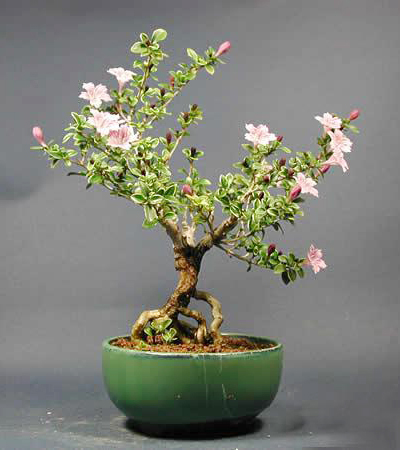
How to Make a Serissa japonica Bonsai
Serissa japonica prefers semi-shade, fears waterlogging, and dreads scorching sun; it has strong resistance. For pot cultivation, soft mountain soil must be selected, and it should be placed in a sunny spot, not kept indoors for long periods. During the growing season, fertilizer needs to be applied 1-2 times. The potting soil should preferably be on the drier side; too much or too concentrated fertilizer and water will cause leggy branches and leaves. It has the characteristics of fine leaves, dense branches, thick trunks and exposed roots, so it is one of the excellent materials for bonsai. The branches and trunk of Serissa japonica are soft and pliable and can withstand wiring, and it is divided into formal upright, twisted, cascade and other styles. If the pot is tall, it can be trained into a cascade style. Cascade style is further divided into semi-cascade, full cascade and small cascade according to the degree of slant. So-called semi-cascade means the trunk basically extends horizontally beyond the pot rim. In full cascade, the trunk hangs down 45 degrees below the pot rim. In small cascade, the trunk generally hangs down about 30 to 40 degrees. A natural style with slight trimming is also possible.
Propagation is mainly by cuttings, and layering, division and cuttings can also be used. Generally, hardwood is used in early spring, but during the plum rain season either softwood or old branches can be used. When making small or miniature bonsai, in order to promote rapid shaping, cuttings are often taken in June-July during the plum rain season from multi-year-old branches with beautiful form and a large-tree shape. The lower cut is made into a horseshoe shape and inserted into vermiculite or sand, covered with film to keep warm, and misted with water; roots can form in about 40 days. At this point, transplant them, and after slight tying and pruning they can be shaped. Because this plant is easy to find in the mountains and wilds everywhere, some flower growers often dig it up directly from the woods and pot it.
Serissa japonica has strong adaptability, and cultivation and care are relatively simple. However, because it fears scorching sun exposure, during the growing season it should be placed in semi-shade and humid places such as under tree shade; otherwise, too strong light will affect its growth and be unfavorable for viewing. Although this plant relatively likes fertilizer, if too much fertilizer is applied, branch growth becomes excessive and new branches are prone to leggy growth. Generally, fully rotted cake fertilizer water is applied only once before winter and once after flowering. It has a certain drought tolerance but is not tolerant of waterlogging. Watering should follow the principle of watering when dry and not watering when not dry. During the rainy season, prevent water accumulation in the pot; in rainy weather, the pot should be placed on its side. In summer during high temperature and dry periods, spray water on the leaves in the morning and evening to cool them and increase air humidity, so as to promote growth and flowering.
Because Serissa japonica has extremely strong sprouting ability, many new shoots will sprout from the trunk and roots. Excess new shoots should be removed in time to avoid consuming nutrients and disrupting the normal development of the tree shape. Branches that sprout after flowering and protrude beyond the crown should also be pruned; otherwise, the ornamental effect will be affected.
If Serissa japonica is kept above 5°C in winter, its branches and leaves will remain lush and evergreen, but the soil must not dry out too much and should be kept slightly moist.
Serissa japonica Bonsai Making Methods
I. Sources of Trunk Material
Division propagation is carried out in March in spring, and cutting propagation (stem cuttings or root cuttings) is carried out from April to October. If protected cultivation (seedbed) propagation is used, cuttings can be taken from November to January of the following year. In the southeastern and central provinces and regions of China, wild tree trunks can also be collected from the wild for cultivation and processing.
II. Processing and Shaping
The "trunk-building and trunk-cutting method" can be used for processing, and the "combination of pruning and wiring method" can also be used for processing and shaping. Wiring is often carried out from after half-defoliation in winter to before bud break in spring. The trunk and main branches are wired with metal wire, and the small branches are shaped by fine pruning.
III. Transplanting and Potting
Transplanting and potting are best done in February-March, and can also be done during the plum rain season and late autumn. Choose a relatively shallow round, square or oval purple clay pot or glazed pot; the pot color should preferably be somewhat dark to form a contrast with the flower color. The potting soil should be a sandy loam rich in organic matter, loose and fertile, with good drainage and aeration. It can be prepared by mixing humus soil, pine needle soil and peat with 40% sand or rice husk ash.
IV. Water and Fertilizer Management
During the growing season, water frequently to keep the potting soil moist. It should not be too dry or too wet for long periods, and absolutely avoid water accumulation in the pot or loss of water from the potting soil. In summer, spray water on the leaves 1-2 times a day. In winter, appropriately reduce watering frequency and keep the potting soil moist and slightly on the dry side. From April to May each year, apply 2-3 times a 0.5% concentration phosphorus-potassium fertilizer solution. In midwinter, apply 1-2 times a dilute organic fertilizer solution; do not fertilize in other seasons. Avoid applying concentrated fertilizer.
V. Light and Temperature Requirements
During the growing season, it is best to keep it in a place with ample sunlight, warmth and humidity, and good ventilation. In summer and early autumn, shade it by 50%-70% and avoid scorching sun. In winter, it can overwinter outdoors in the south, while in the north it should be moved indoors, and the room temperature should preferably be kept at 5-12°C.
VI. Repotting and Pruning
Repot once every 1-2 years, in February-March in spring or during late autumn. Remove all old soil and appropriately prune the roots. Root exposure can be carried out in conjunction with repotting to form hanging roots and improve ornamental value. Each year from after half-defoliation in winter to before bud break in the following spring, carry out one shaping and pruning: shorten long branches and leggy branches, thin out overly dense fine weak branches, and cut off diseased and pest-damaged branches as well as other messy branches that affect the ornamental effect. During the growing season, timely pinch the tips, remove buds and remove side branches, etc., to maintain a beautiful shape. Healthy branches cut off can be used for cutting propagation.
Pest and Disease Control for Serissa japonica
Serissa japonica bonsai has relatively few pests and diseases, with occasional occurrences of aphids and snails. Aphids can be killed by spraying a 500-600 times dilution of essential balm; snails can be killed by spraying a 1500 times dilution of 58% Fengleiji emulsifiable concentrate. Root rot sometimes occurs. At the initial stage of the disease, use a 600-1000 times dilution of 12% copper abietate emulsifiable concentrate, or an 800 times dilution of 50% Genfuling, to drench the roots and spray the leaves for control, spraying (drenching) once every 3-5 days, for 3-4 consecutive times.
1. Control of dodder
A climbing herbaceous plant that parasitizes Serissa japonica, twining its stems around the trunk and branches. The twined branches develop constrictions, and the stems form haustoria at the constrictions to absorb nutrients from the tree. The stems grow rapidly, continuously branching and twining around the host plant, and interweaving with one another to cover the entire crown.
Control methods: In severely affected plots, deep plow every year; seeds buried below 3 cm are unlikely to emerge. Check in time in late spring and early summer. When dodder is found, remove and destroy it together with weeds and the affected parts of the host, and clear away the sprouting branches and wild plants that serve as bridges. Chemical control methods: During the peak period of seed germination, spray the ground with 1.5% sodium pentachlorophenate and 2% prometryn solution, then spray once every 25 days, for a total of 3-4 sprays, to kill dodder seedlings.
3. Aphids
Control methods: Spray a 500-600 times dilution of essential balm to kill them.
3. Snails
Control methods: Spray a 1500 times dilution of 58% Fengleiji emulsifiable concentrate to kill them. Root rot sometimes occurs. At the initial stage of the disease, use a 600-1000 times dilution of 12% copper abietate emulsifiable concentrate, or an 800 times dilution of 50% Genfuling, to drench the roots and spray the leaves for control, spraying (drenching) once every 3-5 days, for 3-4 consecutive times.
4. Scale insects
Control methods: Spray a 1000-1500 times dilution of 40% omethoate or a 1000-1500 times dilution of 25% phosmet for control.
How to Make a Serissa japonica Bonsai
Serissa japonica, also known as "Stars in the Sky," is an evergreen small shrub. Its tree form is delicate, its branches and leaves are gracefully spaced, and it blooms in midsummer, with abundant white flowers like snow, making it most suitable for viewing. Serissa japonica is a good material for making miniature bonsai and water-and-land bonsai. Serissa japonica bonsai is an excellent choice for indoor greening and embellishment, and can be placed on windowsills and desks, appearing very elegant.
Serissa japonica prefers shade and tolerates moisture, fears strong light, likes a warm climate, and fears cold. It is suitable for planting in loose, well-drained soil, and can adapt to both neutral soil and slightly acidic soil.
Serissa japonica is usually propagated by cuttings or division. For cuttings, hardwood or softwood can be used, carried out in February-March or June-July respectively. Cut 6-8 cm long cuttings and insert them to a depth of 1/2. After insertion, build a shade frame, and water frequently. They can be transplanted in the spring of the following year.
Division propagation is carried out in March. Dig up the plants sprouting from the roots together with their roots, divide them, and replant each division with roots.
For Serissa japonica bonsai, a relatively shallow rectangular or oval pot is suitable. The material should preferably be purple clay pottery or glazed pottery, and the color should preferably be dark. Use leaf mold or dried, frozen and loosened pond mud as the potting soil. Line the bottom of the pot with a layer of river sand and leaves, then transplant the seedling into it in early spring or late autumn. When planting, part of the long roots can be cut off.
Serissa japonica bonsai includes slanting-trunk, curved-trunk, cascade, forest and exposed-root styles. Generally, the method of combining pruning and wiring is used for shaping.
Serissa japonica is best placed in a semi-shaded and semi-sunny, warm and humid place. In winter, move it indoors to overwinter.
During the growth period of Serissa japonica, pay attention to watering, fertilizing and appropriate pruning, repot once every 2-3 years, and control pests and diseases in time.