What potting medium should be used to grow orchids? An experienced orchid grower shares 2 kinds, for many shoots, strong seedlings and abundant flowers
To grow orchids well, you must first know how to grow the roots. Every orchid grower knows this, because orchid roots are the organs that absorb and store water and nutrients. Only when the orchid roots are strong can they absorb and store more water and nutrients to supply the orchid leaves. With rich nutrients, orchids can have many shoots, strong seedlings and abundant flowers.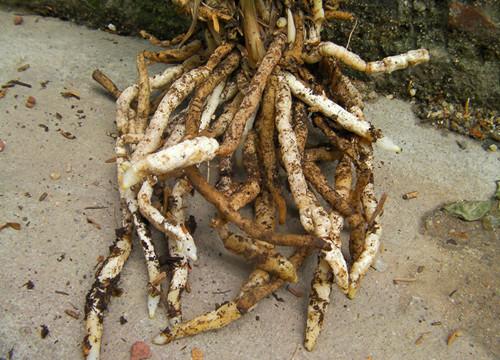
So here comes the question: how can orchid roots be made strong? Experienced orchid growers say: to make orchid roots grow strong, the potting medium is the foundation, and watering management is the key. Below are 3 excellent media that have been repeatedly tested in practice by orchid growers and shown to have remarkable root-strengthening effects.
1. Spent mushroom substrate
The spent substrate left after cultivating edible fungi such as shiitake, mushrooms and wood ear is a good medium for growing orchids. Because it is made by composting rice straw and cow dung, the spent mushroom substrate is loose and airy, and rich in nutrients.
Using spent mushroom substrate to grow orchids has the following advantages:
① It is easy to obtain, loose and light, not prone to compaction, highly permeable to water and air, and good at holding water and retaining nutrients. Orchids planted in it develop well-developed roots that are thick and snow-white.
② The orchid seedlings are strong, the leaves are broad and thick, and the leaf color is deep green and glossy. The flowering and sprouting rate is high, the flowers are large, and the flowering period is long. There are few weeds on the pot surface and the disease rate is low.
2. Brick granules
Brick granules are divided into blue brick granules and red brick granules. Blue bricks are made from relatively good clay and fired with firewood and mountain grass. Few people fire this kind of blue brick now, but old blue bricks discarded from ancient buildings can be used. Crush them into granules to use as potting medium. This old blue brick, after years of weathering, has moderate water absorption.
Red brick granules contain a lot of coarse sand and are fired with coal powder mixed in during preparation. Their fire energy has not dissipated and their sulfur content is extremely heavy. Modern buildings mostly use red bricks. New red bricks have strong fire energy; old red bricks have less fire energy but heavy alkaline substances. You can soak the brick granules in water for several days, changing the water once a day, and drip some vinegar into the water to neutralize the alkalinity, removing the alkaline substances and fire energy from the brick granules.
Brick granules themselves have many pores, so they are highly water-absorbent and air-permeable, and drain quickly. When used to grow orchids, the orchid roots will not turn black, and variegated-leaf orchids will not lose their variegation. The proportion of brick granules in a mixed potting medium is preferably 20%-30%.
Although the root-strengthening potting media shared by orchid growers are not easy to find, the results are still quite good. As long as you truly love orchids, nothing is too hard to find. If you have a better method, you are welcome to share it in the comments so more people can benefit.
How to grow orchids (beginner's study guide) Common orchid questions answered
Everyone likes orchids very much, but growing them well is really not easy, especially for those orchid growers who have just started growing orchids. Let's take a specific look below at the guide for beginners to grow them well.
1. How to grow orchids? Growing orchids is really difficult. They die after being grown for a while. What is the reason?
Compared with other flowers, orchids are indeed somewhat harder to grow. The difficulty lies in the fact that orchid roots are relatively sensitive to water and are easily "drowned" or "thirsted to death." When the state of the potting medium being too wet or too dry lasts longer than the orchid roots can tolerate (to be precise, when the state of oxygen deficiency or water deficiency in the potting medium lasts longer than the orchid roots can tolerate), it will cause root rot or hollow roots; if it lasts even longer, the root problems will be reflected on the leaves, and the plant will eventually wither, turn yellow and die.
Because the orchid itself contains water in its pseudobulbs, and because whether orchid roots are rotted or hollow, their remaining parts still retain a trace of the function of absorbing water, the orchid can still linger on for a while even if there is a problem with the roots, and problems are not easily discovered in time from the above-ground part of the plant.
In fact, orchids are more often "drowned," that is, due to improper selection and blending of potting medium, too strong water retention, or too frequent watering, the potting medium stays wet all the time. When this overly wet state lasts beyond the limit that orchids can tolerate, the orchid roots rot and the orchid plant eventually dies. In addition, some people hear that orchids are "afraid" of water, so they water them very rarely, and as a result they overcorrect, and the orchids are "thirsted to death." This situation also occurs. It can be seen from this that whether the water content in the potting medium can be controlled well is the key to success or failure in growing orchids.
2. Why can't ordinary soil be used to grow orchids?
Let us first analyze the changes in the dry and wet states of soil after watering: "wet" -> "somewhat wet" -> "moist" -> "somewhat dry" -> "dry." Among these, "wet," "somewhat wet," or "dry" and "somewhat dry" are all unfavorable to orchid root growth. Only "moist" is most suitable for orchid growth. Because ordinary soil stays "wet" or "somewhat wet" for too long after watering, exceeding the time orchids can tolerate, tragedy naturally occurs. Therefore, ordinary soil is not suitable for growing orchids.
It can be seen from this that shortening as much as possible the time the potting medium stays in the "wet" and "dry" states and extending the time it stays in the "moist" state is the fundamental goal of orchid cultivation. Whether it is the selection and blending of potting medium, the choice of orchid pots (the size and texture of orchid pots also greatly affect changes in the water content of the potting medium), or watering, all of these revolve around this goal.
From this it can also be seen that the water-retention or water-drainage characteristics of the potting medium itself largely determine the changes in the water content of the potting medium, and even determine success or failure in growing orchids. It can be said that watering is the external cause determining changes in the water content of the potting medium, while the potting medium is the internal cause determining changes in the water content of the potting medium. To control the water content of the potting medium well, the prerequisite is that the potting medium must be properly selected and blended.
3. How can you judge the orchid-growing effect of a potting medium?
The so-called orchid-growing effect of a potting medium is also the root-growing effect of the potting medium. If orchid roots are grown well, the above-ground parts (leaves, shoots, etc.) will certainly grow well; if orchid roots are not grown well, the above-ground parts will not be good either. Therefore, from the growth condition of the above-ground parts, one can judge the growth condition of the orchid roots.
For example, after an orchid is potted, if it regains vitality after 1-3 weeks (recovery is fast in spring and autumn, slow in summer and winter), the leaves are glossy, new seedlings grow (noticeably taller), new shoots emerge (as in spring), and the leaves feel tough when brushed by hand, it shows that the orchid roots are growing well, the potting medium is relatively ideal, and management (mainly watering) is also on point.
If after a period of time after potting in the medium (about 1 month), the leaves have no gloss, new seedlings stagnate in growth (become stunted), and new shoots do not emerge or few emerge (in spring), the leaves feel soft and limp when brushed by hand, and black spots easily appear on the leaves when the temperature is slightly higher, then it shows that there must be a problem with the orchid roots, and the potting medium may be unsatisfactory. In this case, the pot must be emptied. If you empty the pot at the time when you would normally water (for example, if you usually water once every 5 days, empty the pot before watering on the 5th day) and find that the potting medium is soaking wet and the roots have all or partially turned black, it shows that the potting medium retains water too strongly. Then add some air-permeable and water-draining potting medium, such as granular potting medium, tree fern, decomposed peanut shells, etc.; of course, if you feel that the water-retention and water-drainage characteristics of the potting medium are already relatively ideal, then there is no need to improve the potting medium, and simply appropriately extending the watering interval can also solve the problem. If when emptying the pot you find that the roots and potting medium are in a dry state, and hollow roots have even appeared, then add some potting medium with strong moisture retention, such as leaf mold, perlite, etc.; if you feel the potting medium is relatively ideal, then shortening the watering interval will also do.
It is somewhat difficult to judge whether the underground part (roots) is healthy from the growth condition of the above-ground part of the orchid plant. The simplest and most intuitive method is still to empty the pot and look at the roots. There are two ways to empty the pot: surface emptying and full emptying. Surface emptying means removing part of the potting medium from the pot surface, 5-10 cm deep, to observe the growth state of the roots around the pseudobulbs and at the surface layer of the potting medium. If new roots have grown or there are crystal-clear root tips on old roots, it shows that both the potting medium and management measures are relatively ideal; if there are no new roots, or the tips of old roots have turned black or even rotted, it shows that there is a problem with the potting medium or watering. If you want to understand the growth state of all the roots, then you can only do a full emptying. Whether surface emptying or full emptying, be careful to avoid damaging the roots as much as possible, especially the root tips. Although emptying the pot is a bit troublesome, it is the most intuitive and accurate method for understanding the orchid-growing effect of the potting medium, and it is also a necessary path for beginners to accumulate experience.
4. The orchid has not died, but it is not growing new seedlings either. It is half-dead and half-alive. What should be done?
As mentioned earlier, if the above-ground part of the orchid does not grow well, there must also be a problem with the orchid roots. If the above-ground part is half-dead and half-alive, it shows that the underground part is in bad shape - most of the roots are not growing well, and perhaps only one or two roots remain to sustain the plant's life. In this case, the pot must be emptied and the medium replaced with an ideal one.
5. How can you blend a good potting medium yourself?
There are many potting media that can be used to grow orchids. Each place can use local materials, but to blend an ideal potting medium, the following principles must be followed:
1. The physical structure of the potting medium is ideal, air-permeable and water-draining. Use granular potting medium; there are certain gaps between the granules, so natural air permeability and water drainage are good. If using powdery potting medium such as leaf mold, add perlite, tree fern, and granular potting medium, etc., so that it becomes fluffy.
2. The chemical composition of the potting medium is reliable, with no harmful components. Some organic potting media, such as peanut shells and pine bark, must be decomposed; otherwise, after use they will break down substances harmful to orchid roots.
3. The potting medium has good moisture retention, draining water while also holding water. An ideal potting medium should have a short "wet" time and a long "moist" time. That is, after watering, because the physical structure of the potting medium is good (there are gaps between the medium), a large part of the water drains away, and afterward, because the potting medium itself has absorbed a certain amount of water, it can maintain a "moist" state for a relatively long time, and then slowly change from "moist" to "dry" (note: the potting medium does not suddenly change from "moist" to "dry," but changes slowly, that is, the potting medium stays for a relatively long time in the "somewhat dry" state between "moist" and "dry"). This has three major benefits: first, the potting medium stays "wet" for a short time, avoiding root rot; second, the potting medium stays "moist" for a relatively long time, creating favorable environmental conditions for orchid root growth; third, the potting medium stays in the "somewhat dry" state for a relatively long time, and the ideal watering time is when the potting medium is in the "somewhat dry" state. Obviously, watering is then easier, and it does not matter much if it is one or two days earlier or later. If the potting medium does not retain moisture well and quickly changes from "dry" to "wet," the "somewhat dry" period lasts a relatively short time, and the watering time must be judged relatively accurately to ensure that the watering time falls within the period when the potting medium is in the "somewhat dry" state. This is quite difficult, and watering is easily too early or too late, which is unfavorable to orchid growth. In short, a potting medium with good moisture retention can not only avoid orchid root rot, but also reduce the difficulty of watering. Of course, to blend a potting medium with ideal moisture retention, before selecting and blending, you must have a full understanding of the water-retention and water-drainage characteristics of each potting medium and the fluffy effect it can play in the mixed potting medium.
As long as you follow these principles, you can blend a good potting medium. Of course, whether a potting medium is good or not can only be known after use. It is worth noting that after blending what you think is an ideal potting medium, do not rush to change all orchids to the new potting medium. You must first try it on one or two pots, and only after the effect is verified should you use it on a large scale.
6. Is there an orchid-growing formula that is easy to source or buy and has ideal results?
1. Classic formula: 65% Kanuma soil + 35% Sendou soil. (Volume ratio, same below)
This formula is widely used and generally recognized by orchid growers. With this formula, the potting medium is air-permeable and water-draining, the orchid roots generally will not have problems, and growing orchids is easy to succeed with. Note: the quality of commercially sold Sendou soil varies greatly, so buy reliable quality; before use, both must be soaked thoroughly, that is, only when the granules are broken open and the middle is moist can they be used.
With this formula, because nutrients are insufficient, you can place more than 30 granules of Osmocote or 10-30 granules (depending on pot size) of Magamp on the pot surface. In southern balconies, where the dry wind is relatively strong, the orchid pot can be slightly larger, and a layer of sphagnum moss can be placed on the pot surface to retain moisture.
2. Simple formula: 50% leaf mold + 50% perlite.
Leaf mold (or mountain topsoil) can be taken from the surface soil under broad-leaved forests containing dead branches and fallen leaves (also containing soil). This kind of soil is loose; when squeezed by hand it forms a ball, and when the hand is opened the soil disperses. Add an equal amount of perlite, and the leaf mold becomes fluffier and will not compact. Perlite has a very strong fluffy effect, good moisture retention, and a low price, making it an ideal potting medium. On this basis, you can also mix in 20%-50% of other granular potting media. You can choose one or several of coal cinder granules (granules after sieving out the powder from coal ash), decomposed peanut shells, decomposed pine bark, brick granules the size of soybean grains, small-particle pond foundation stone, small-particle Kanuma soil, etc., for better results.
It is worth mentioning that the leaf mold formula developed by Lin Shengzhou is easy to source, low in cost, and ideal in planting results. Its formula is: 50% leaf mold + 50% sandy loam. Sandy loam is a kind of soil half-decomposed into sandy texture, and it is not easy to stick together.
Because leaf mold is rich and abundant in nutrients, no fertilization is needed, and the seedlings grown are all relatively strong. Special note: some beginners are always afraid that orchids will be "starved to death" and like to apply all kinds of fertilizers to orchids, and the orchids are often "rotted to death" by fertilizer.
3. Commercial potting media.
If you find blending potting medium yourself troublesome, you can buy ready-blended commercial potting medium. The so-called orchid culture soil sold in flower and bird markets is not very reasonably blended, and it is generally reported that the use effect is poor. Local orchid growers in Fuzhou can buy commercial potting medium from Lin Yong. The potting medium sold by Lin Yong is blended according to the "foolproof soil" formula developed by Zheng Weixin (Lanshan Siji). Its components are:
1 part leaf mold + 1 part perlite + 1 part tree fern shavings + 1 part pond foundation stone + 1 part Sendou soil + half a part coconut coir (all by volume).
After many years of testing, orchids cultivated with this potting medium have good roots and strong seedlings, and the effect is quite good.
Orchid growers from other places can select and blend it themselves according to this formula; they can also adapt to local conditions, use local materials, and make appropriate improvements or substitute components for Zheng's foolproof soil formula. The author uses Zheng's foolproof soil formula with the Sendou soil removed, and the cultivation effect is also very good.
7. What should be done if orchids keep growing black spots?
When orchids grow black spots, it is mostly anthracnose. There are mainly two underlying reasons:
1. The orchid seedlings are not strong enough, and the resistance of the orchid seedlings is relatively weak. The root cause is still that the potting medium is not ideal and the orchid roots are not growing well, so effort must still be put into the potting medium.
2. The orchid is exposed to the sun at relatively high temperatures or the environment is relatively stuffy and hot. After the temperature exceeds 28°C, orchids should be shaded; at the same time, in high-temperature seasons, the environment should be ventilated, and stuffy, hot conditions must be avoided. The key is still to improve cultivation conditions, which is the fundamental solution. When necessary, spray 800 times dilution of Shibaogong (fenamidone? no, is iminoctadine) or Score to stop the development of the disease.
8. The orchid leaves have turned yellow. What is the reason?
When orchid leaves turn yellow, there are mainly two reasons:
1. Yellowing of leaves caused by natural aging. In spring and summer, orchid metabolism is vigorous, new shoots keep emerging, and at the same time some old seedlings that have grown for many years also wither and die. This kind of yellow leaf from "old age death" has three characteristics: first, it occurs on old pseudobulbs; second, the pseudobulbs have nothing abnormal (such as turning black or rotting); third, leaf yellowing generally starts from the outer leaves of the orchid plant and then moves to the inner leaves, from the leaf tip to the leaf base. In addition, there will not be any black spots on the yellow leaves.
2. Yellowing of leaves caused by disease. The orchid plant develops stem rot, bacterial soft rot, or southern blight. This kind of yellow leaf mostly occurs on new seedlings. Leaf yellowing develops from the central leaf outward to the outer leaves, and from the leaf base toward the leaf tip, and the pseudobulbs often have abnormal conditions (such as turning black and rotting). In this case, the diseased plant must be broken off, and the roots and pseudobulbs of the remaining healthy plants should be soaked for 1 hour in a broad-spectrum fungicide (such as carbendazim, hymexazol, etc.), then repotted with new potting medium.
Next, let me share with flower friends the eight orchid-growing moves created by a master:
Move one: be calm and keep an ordinary mind.
For growing orchids, treat them with an ordinary mind and grow them calmly. Believe in orchid fate. If there is fate, even if you have a favorite good flower, you can have it; if there is no fate, even if you have countless wealth, you still cannot get it. Even if you rack your brains or use despicable means to obtain it, it will still leave you with both people and money lost. At the same time, no matter how the orchid market is, calm down and grow your own orchids, because we cannot control the orchid market, nor can we change it. What we can control is the orchids in our own hands, and what we can change is our own temperament.
Move two: open your eyes wide and bring in the right seedlings.
With today's developed internet, orchid growers can introduce orchid seedlings through many channels, such as online auctions and purchases at orchid markets. However, driven by greed for profit, many orchid vendors take advantage of everyone's love for orchids, passing off virus-infected seedlings as variegated varieties, passing off inferior re-exported grass as native species, treating tissue-cultured orchids as wild-collected orchids, and even selling photos to cheat money without shipping, etc., swindling money and making orchid growers full of hope only to harvest disappointment. Therefore, I have always believed that for the orchids you want to introduce, you must introduce them from reliable orchid growers, or from online orchid merchants who are truly trustworthy, and it is best to act only after seeing the actual flower.
Move three: pots and plants must match appropriately.
For potting orchids, try to use a large pot for many plants and a small pot for few plants. Never use a large pot for few plants or a small pot for many plants, because after potting, if the plants and pot do not match, it will not be easy to figure out during ordinary watering and fertilizing, bringing a certain degree of difficulty to management.
Move four: wind, light, warmth and moisture should suit the orchid's nature.
Since ancient times, at least many orchid books say this, and of course I think so too: ventilation is the first priority. The environment must be ventilated, and the potting medium must be ventilated, letting orchid roots grow under semi-ventilated conditions. Give orchids enough light for necessary photosynthesis. According to natural laws, give orchids the necessary temperature difference: heat when it should be hot, cold when it should be cold, vernalize when they should vernalize, and go dormant when they should go dormant. As for humidity, try to keep it moist but not wet.
Move five: look more, observe diligently, and handle less.
In ordinary orchid management, especially for beginners, you must withstand the temptation of small shoots and flower buds. Before small shoots and flower buds appear, you use your cute little hands to disturb them, and as a result, with one carelessness, the about-to-emerge small shoots and flower buds are ruined. Also, there is frequent repotting: today you see this potting medium is good, so you change to this; tomorrow you see that potting medium is good, so you change to that, tossing the orchid back and forth. Before the orchid roots have settled into the pot, they are disturbed again. It is estimated that if you can still grow orchids well this way, heaven must be helping you.
Move six: act when it is time to act.
When you see abnormal signs in orchids, you must act decisively. Cut out the diseased part when it should be cut, separate when it should be separated, divide the pot when it should be divided. Never take chances when there are signs of disease, otherwise you will be the one who regrets it.
Move seven: make more orchid friends and study diligently.
In your spare time, make orchid friends widely. You can exchange with orchid friends online and offline. For questions you do not understand, do not be ashamed to ask orchid friends. At the same time, exchange your own orchid-growing insights with other orchid friends, learn from others' good experience in orchid cultivation, combine it with your own actual situation to make up for your shortcomings, and explore a set of orchid-growing methods suitable for your own orchid-growing environment, so that your orchids are grown without scorched tips or scorched tails, with high seedling production and good flower form, loved by everyone.
Move eight: reach the state of no move surpassing moves.
Summary: The above are questions about how to care for orchids. I hope it will be helpful to beginner orchid growers.
Orchid planting methods: choosing potting medium_Orchid information_Yilan Network mobile version
After choosing a suitable orchid pot, the next step is choosing the potting medium. Every orchid grower has their own formula for orchid potting medium. Personally, I think one central point cannot change. With this basic point, you can mix freely, and everything changes without departing from its essence. This center is that the potting medium must have good air permeability. Below are several formulas commonly used by orchid growers.The first: Teacher Feng's bark section
For the ratio of orchid potting medium and materials, many beginners can only rely on simple textual descriptions in books. Teacher Feng explains this process step by step with pictures and text. The tools and materials used are: 1. already fermented bark 2. creek stones, used as the main ratio base material for hard potting materials. Natural and pollution-free. 3. a container for soaking the bark.
1. Put the bark into clean water to soak, repeatedly changing the water several times, with intervals of anywhere from ten minutes to 1 hour, until the soaking water becomes clear, which is best.2. Mix the creek stones and the soaked bark at a ratio of about 7:3. This ratio must be adjusted somewhat according to the actual environment of each place.3. Stir thoroughly and evenly4. The finished product after blendingThe second: potting medium from an orchid grower on Orchid Resource Network
This is an old orchid grower who has grown orchids for 20 years. Previously, his potting medium had never been unified. At first, when growing orchids, he always used humus soil from the mountains. It was good, but if only humus soil was used, it was not easy to water thoroughly. At peak times, for convenience, he bought Chengdu "Xinghong" brand six-in-one potting medium, 20 yuan per bag, ready to use after opening the bag, and it was not bad. Unfortunately, after orchids fell into a trough, the potting medium factory stopped production. Later, sometimes this potting medium, sometimes that potting medium, but he felt the cost-performance ratio was not very high. Starting last year, he blended potting medium himself. After a year of testing, although it is not the best, the cost is relatively low, and he feels it is not bad. He shares it with orchid growers for reference.
1. Pine bark is fully fermented, then steamed and boiled to kill insects and sterilize. After steaming and boiling the pine bark, note that it must be fully cooled before use.2. 40% pine bark3. About 20% red sandstone, or it can be replaced with fired soil, small brick granules, or small coal cinder granules.4. 20% Fukusei stone. Fukusei stone is a stone similar to Kanuma soil, about 20%. Because it is cheaper than Kanuma soil, I use this. It can also be replaced with Kanuma soil, Oya stone, pond foundation stone, or even free cobblestones.5. Stir thoroughly (adding an appropriate amount of tree fern gives even better results)Other methods:
By volume ratio:
① Compound blending of potting medium for soil culture.
The first formula: 50%-60% soil-type potting medium (30% humus soil or sandy loam, 15% pond mud or peat soil, 5% "air sand soil"); 40%-50% "Sendou soil" or artificial granular soil.
The second formula: 60% soil-type potting medium; 25% organic potting medium; 15% inorganic potting medium.
The third formula: 50% rice husk charcoal (when the husks are completely burned, splash water immediately so they do not turn to ash, to enhance water drainage and air permeability and also reduce fire energy); 35% humus soil or sandy loam; 15% pine needles. Especially suitable for plants with few roots.
The fourth formula: 30% air sand soil; 40% humus soil; 30% wood shavings or pine leaves. Most suitable for the domestication and cultivation of wild-collected orchids.
The fifth formula: 20% sandy loam; 10% "air sand soil"; 10% humus soil; 20% rice husk charcoal; 20% fully burned coal cinder clumps (watered to reduce fire energy); 20% pine leaves or crushed foam plastic. It has a good effect on the continued variation of variegated-leaf orchids.
② Compound blending of potting medium for soilless culture.
All-inorganic potting medium: 30% crushed foam plastic; 50% crushed brick and tile; 20% perlite or kaolin.
All-organic potting medium: 30% tender branches; 30% peanut shells; 30% pine leaves; 10% crushed sphagnum moss. It has relatively good water retention and contains nutrients, suitable for non-professional orchid growers.
Combined formulas: 30% crushed foam plastic; 30% crushed brick and tile; 20% tender branches; 10% pine leaves; 10% sphagnum moss. 50% high-phosphate stone; 30% foam blocks; 10% pine leaves; 10% sphagnum moss. 50% coarse river sand; 30% foam blocks; 10% pine leaves; 10% sphagnum moss.
The above formulas have been proven feasible by orchid growers, but resources and climate vary from place to place, so changes can be made during specific operation. There is no need to rigidly adhere to one formula.
The basic composition of orchid potting medium is orchid foundation stone, Sendou soil granules, bluestone, pine bark, and coconut coir. Other materials are added according to the grower's habits, such as: tree fern, peanut shells, sawdust, wood shavings, pine needles, oak (chestnut) leaves, walnut shells, peach (apricot) pits, etc. The specific ratio also varies from person to person. Orchid growers in Yunnan often use chestnut leaves at 50%. It is best to decide according to the local humidity and wind conditions.
Potting medium is the material foundation on which fleshy-rooted orchids depend for survival. Grasping the characteristics of orchids and blending a potting medium suitable for orchid growth is a key element of success in growing orchids. In orchid-growing areas, orchid growers can easily buy orchid potting medium from orchid markets. Sichuan's Emei Sendou soil, Taiwan and Guangzhou's pond foundation orchid stone, as well as Japan's Kanuma soil and domestically produced orchid mycorrhizal soil, can all be freely purchased. However, orchid growers who do not have purchasing conditions are not so lucky. Then, blending orchid potting medium yourself becomes a realistic choice for orchid growers, and also an inevitable path to improving orchid cultivation skills. Blending a suitable potting medium is the key to success in growing orchids. For salaried orchid growers, using local materials to blend potting medium themselves, besides saving money, the rare thing is the pleasure of it. In addition, it is also one of the important ways to grasp the nature of orchids.
Coal cinder: Coal cinder is the cinder clumps left after coal is burned. It is a potting material that orchid growers in both urban and rural areas can easily obtain and use widely. In particular, household honeycomb coal cinder, after screening out dust, the cinder clumps can become the main component of potting medium. Used to grow orchids, it drains water and is air-permeable, retains water and fertilizer, is light and does not compact, is free of pathogens, and contains relatively high phosphorus and potassium components, which is beneficial for orchid root development and promoting variation.
Brick granules: Some orchid growers crush red bricks or blue bricks to make brick granules. You can also go directly to a brick factory to scoop up brick fragments piled by the kiln, and after screening, make coarse and medium granules for later use. This hard potting material has strong water absorption, and excellent water drainage and air permeability. The disadvantages are that it dries easily in autumn and winter, and contains few nutrients.
Small stones: On construction sites, coarse sand is often screened to make fine sand for plastering walls. The coarse stone granules sifted out, the size of peanuts or mung beans, are very suitable for use as granular material for growing orchids. You can also screen them yourself from a river, removing large river cobbles and fine sand, and keeping coarse and medium granules for later use. The advantages of small stones are that they are easy to obtain, easy to water, cool in nature, and quite suit the nature of orchids, so there is less disease. Orchid growers in Zhangzhou and Shunde, Guangdong, popularize growing orchids with small crushed stones plus heat-treated coconut coir, and the orchid roots grown are snow-white, reaching export standards.
Mountain soil: Mountain soil is formed from fallen leaves and withered stems of plants accumulated and decomposed over many years. It is light, porous, highly air-permeable, somewhat acidic, and rich in large amounts of organic matter. It is generally called humus soil. It is a potting medium favored by orchid growers in Jiangsu, Zhejiang and Yunnan. It has sufficient fertility, produces strong seedlings, and brings flowers quickly. But for new orchid growers, watering is hard to control, and if sterilization is insufficient, it easily breeds disease.
Fired soil: It is soil that has been roasted with fire. Fujian and Jiangxi call it turf soil, and Guizhou calls it soil skin ash. Farmers mostly use it as base fertilizer for growing vegetables and crops. Fired soil is generally alkaline, and after being rinsed by rain several times it becomes weakly acidic. Because it has been burned by high-temperature fire and smoked, the soil has high fertilizer efficiency, is rich in phosphorus and potassium fertilizer, and is non-sticky, loose and air-permeable.
Spent mushroom soil: Also called shiitake soil, it is the discarded fungal logs from producing edible fungi and tea tree mushrooms, and it is also a good potting material for growing orchids. It is loose and has high fertilizer efficiency, but it contains a high amount of fungi, so it should be strongly sterilized; otherwise it easily breeds soft rot.
Dry cow dung: It is commonly used as farmyard manure in rural villages. After being fully decomposed and sun-dried for a week to sterilize and eliminate insect eggs, it is used as an additive to orchid potting medium. It is not only loose but also fertile, and does not harm roots.
Sawdust: It can be obtained from furniture factories and wood processing factories. It has good water absorption and contains certain minerals and organic substances. It is better used after being composted and decomposed. Fir and miscellaneous wood are preferable; pine sawdust contains oily components and is not suitable for selection.
Bark chunks: Bark is loose and light, and retains water and fertilizer. Willow bark is especially the best, resistant to moisture and rot, and contains natural salicylic acid (aspirin), which has the effect of promoting rooting and sprouting in orchids and leaf photosynthesis. Adding willow bark when growing orchids makes orchid plants grow vigorously. At the same time, aspirin has anti-inflammatory, sterilizing and antiseptic effects, and can effectively prevent root rot.
Rotten wood chunks: Easy to obtain when collecting orchids in the mountains. Rotten wood is rich in organic matter, absorbs water and retains fertilizer, preserves warmth, dissipates heat, and is air-permeable. It is a superior medium for growing orchids. Mixed with coarse granules and used for pot drainage, the pot does not need to be changed for two or three years.
Charcoal: Light in weight and low in density, with super-strong water absorption. After woody material is burned, it is rich in phosphorus and potassium components, making it an excellent choice for mixed pot drainage material, and also a good material for eliminating standing water in pots.
Plastic foam: Modern people's purchased home appliances and daily necessities are often packaged with foam material. Many urban orchid growers make foam into granules to use as orchid potting material, and trial results are good. Growing orchids with foam has the advantages of not accumulating water, good warmth retention, good permeability, being clean and disease-free, and a high sprouting rate. The disadvantages are that it does not absorb water and has no nutrients. It can be selected as a filler for pot drainage, or used as granular material to replace red brick granules. In addition, volcanic stone, peat soil, bagasse, coconut coir, etc. are also good potting materials for growing orchids, but they are generally not easy for ordinary orchid growers to obtain. No potting material is perfect. While it has some advantages, it inevitably has some shortcomings. Practice has proved that a single medium can hardly meet the growth needs of orchids. Only by rationally matching according to the type of orchid, coordinating advantages and disadvantages, and promoting and complementing each other, can an ideal potting medium be blended.
1. Mainly use granular potting medium: loose and air-permeable is the most basic requirement for orchid potting medium. Traditional orchid growing mainly used mountain soil, but modern orchid-growing practice has proved that choosing granular potting medium more easily meets the orchid's need for air and water permeability. Granular potting medium easily absorbs and conserves water to meet the orchid's water supply needs. In particular, coarse granules are indispensable for pot drainage and are a good way to eliminate standing water. The disadvantage of granular potting medium is insufficient fertilizer and lack of nutrient elements, but now various special orchid fertilizers have basically made up for this defect of granular potting medium. You can mix bone meal into the potting medium to increase fertility, or apply slow-release fertilizers such as Shizhixiang and Osmocote after the orchid has settled into the pot. You can also use Guolan Yebao, Lanjun Wang, Gaocui for spraying and root drenching to supplement fertilizer, and the effects are all very good. The choice of granular potting medium is still quite broad. The coarse coal cinder, crushed brick granules, small stones, fired soil mentioned above are all very good granular potting materials. According to the characteristics of various granules, supplemented with other potting media and mixed, you will certainly be able to blend a good potting medium for growing strong seedlings. It should be pointed out that potting materials such as coal cinder and brick granules that have been burned by fire should be soaked for three days before blending, changing the water every day, to remove "fire poison."
2. Pay attention to the combination of soft and hard and the harmony of yin and yang: With coarse granular hard potting material, you also need to appropriately match some soft potting material to play the role of harmonizing yin and yang. Comparatively speaking, red brick granules, coal cinder, and fired soil are hard materials, with strong fire energy and heavy yang nature. Materials like sawdust, bark chunks, and rotten wood are soft potting materials, somewhat more yin in nature. Generally speaking, by reasonably matching the two in a certain ratio, a clever orchid potting medium is made. As for how to match them, orchid growers need to carefully experience and ponder during the blending process. It can be said that the process of blending potting materials is the process of figuring out the nature of orchids.
3. Use mud materials reasonably: Wild orchids live deep in remote mountains and old forests, accompanied by mountain soil all their lives. It can be said that the orchid's closest friend is mountain soil. Therefore, mountain soil became the main potting medium in traditional orchid growing, and it is still chosen by some old orchid masters with deep orchid skills, and native plants grown in mountain soil are robust and full of vitality. But for modern orchid growing, especially for new orchid growers, difficulty in controlling water is the main reason people dare not easily use mountain soil to grow orchids. Mountain soil collected from primeval forests needs to be sun-dried for three to five days, and if conditions permit, for a longer time. Then sieve it, remove impurities, discard fine mud, and keep coarse and medium granules for blending. If there is no mountain soil, if conditions permit, choosing fired soil or shiitake soil as a substitute can also keep the potting medium with a "mud nature."
IV. Finally: following the "three-in-one" model of granular material, mud material, and soft additive material, here are several potting mix recipes recommended for orchid growers to choose from.
1. River pebbles or fine gravel 30%, coconut coir 30%, fired soil 30%, tree bark 10%
2. Coal cinder 30%, river pebbles or fine gravel 30%, mountain soil granules 30%, sawdust 10%.
3. Coal cinder 30%, red brick granules 30%, mountain soil granules 30%, dried cow dung 10%
I. Homemade soft potting mix recipe: peat 40% + osmanthus leaves 20% + pine bark 15% + mountain soil 15% + Kanuma soil 5% + expanded clay pebbles 5%;
II. On April 2, 5 Cymbidium tortisepalum and 2 Cymbidium goeringii grown to maturity in hard potting mix were test-planted in their original sweat-sand pots, with about 15 granules of slow-release fertilizer scattered on the surface of each pot, watered twice a week under normal management;
III. In spring the number of new shoots was moderate, the seedlings grew well, the leaves were green and lush; except for one Jianyangdie which developed soft rot in June and was discarded, the rest showed no disease;
IV. The situation when unpotted on September 27 was as follows:
1. Some of the old roots were hollow, with long roots more hollow and short roots largely unaffected;
2. The number of crystal tips on new roots was fair;
3. New roots were generally short, and the slightly longer ones had also become bent;
4. In the potting mix, the top 1/3 near the pot surface was still loose and aerated, while the lower part was compacted with severe water accumulation;
5. The osmanthus leaves had decomposed into powder, no longer showing their original shape, and the peat and bark had rotted and turned black;
6. Each pot contained several large earthworms living as parasites, along with many small earthworms ranging in thickness from a hair to a toothpick emote
V. Experiment summary:
1. The nutritional composition of the mix was fairly suitable for orchid growth;
2. Potting was pressed too firmly, causing excessive density in the lower part of the potting mix; the mountain soil, Kanuma soil, and expanded clay pebbles were dense and heavy, and after watering they compacted the potting mix, causing the lower roots to rot from soaking and preventing new roots from penetrating downward;
3. The problem of breeding earthworms and nematodes must be taken seriously and solved;
4. There were both gains and losses, and it is worth improving on this basis and continuing the experiment. I plan to no longer use Kanuma soil and expanded clay pebbles, and instead use 10% perlite, reduce the mountain soil to 10%, and add some easily obtained shells of oil-bearing nuts.With so many recipes, there is always one that suits you; the important thing is for orchid growers to freely experiment, since the one that suits you is the best, and the ratio should be adjusted according to the weather in each region.