What are the requirements for growing gladiolus cut flowers? These key points must be mastered
(1) Corm treatment Before sowing, first soak the corms in clean water for 15 minutes, then disinfect them. Common disinfection methods include: soaking in 0.1% mercuric chloride solution for 30 minutes; soaking in 1%-2% formalin solution for 20-60 minutes.
(2) Planting time For open-field cultivation, planting can begin once the soil temperature reaches above 5°C. When early-flowering varieties and late-flowering varieties are planted at the same time, their flowering periods can be 20-30 days apart; corms with a circumference of 12-14 cm can bloom 2-3 weeks earlier than corms of about 8 cm; varieties that flower after 60-70 days at a cultivation temperature of 25°C will have their flowering cycle extended to 90-120 days when the temperature drops to 12-15°C.
(3) Planting density For gladiolus grown as cut flowers, plant at a row spacing of 20 cm and a plant spacing of 10-15 cm. With corms weighing 12-15 g and about 3.5 cm in diameter, 20,000-25,000 can be planted per mu.
(4) Planting depth Spring planting should be shallower than summer and autumn planting. Usually, the depth for spring planting is 5-10 cm, while summer and autumn planting can be deepened to 10-15 cm.
How to plant gladiolus corms, gladiolus corm planting methods
Gladiolus, whose scientific name is Gladiolus gandavensis, is not an orchid but a bulbous plant in the Iridaceae family. Iridaceae plants have long flowering periods, bright and colorful flowers, and diverse flower forms, and gladiolus is one of the world's four major cut flowers. So do you know how to plant gladiolus corms? What are the methods for planting gladiolus corms? Below, the editor will introduce them to you.
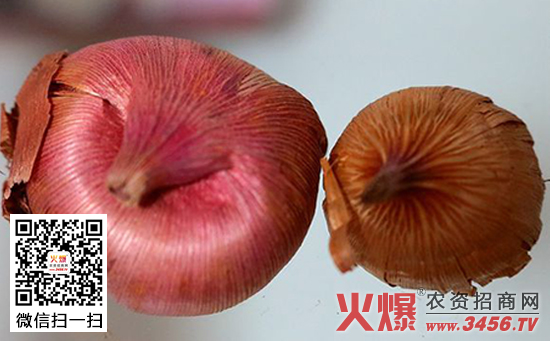
How to plant gladiolus corms
Before planting, soak the graded corms in water for 15 minutes, then disinfect them by soaking in 0.1% mercuric chloride or 80 times diluted formalin solution for half an hour. After removing them, rinse them clean and then plant. Bury them all in the soil, press lightly to firm, water thoroughly, and thereafter manage normally with watering when dry and withholding when wet. This flower can be grown both in the ground and in pots.
A furrow dibbling method can also be used, with the furrow depth about 3 times the corm diameter, and the plant spacing flexibly adjusted according to corm size. For small corms, use the furrow broadcasting method, while for cormels, the direct broadcasting method is mostly used. Before planting, apply sufficient base fertilizer, but be careful that the fertilizer does not come into direct contact with the corms. After sowing, pay attention to water management, and do not water before emergence unless the soil is dry.
For some rare varieties, or varieties whose propagation coefficient needs to be rapidly expanded, plump and full commercial corms can be cut into 2-4 pieces, each piece must retain part of the basal plate and a complete, plump bud, and these are used for cormel propagation. To prevent the corms from rotting, the cut surfaces should be smeared with charcoal powder or plant ash and planted immediately.
The above is the article on how to plant gladiolus corms and gladiolus corm planting methods. Gladiolus is a light-loving long-day plant. When grown in winter, light should be increased on cloudy days, and it is afraid of freezing. The suitable growing temperature is 20-25°C during the day and 10-15°C at night. Corms that have passed through dormancy will sprout at 4-5°C. When grown in winter, plants freeze to death at a low temperature of 0°C. It is not tolerant of waterlogging, and the cultivation site should not accumulate water.
Is gladiolus easy to grow? Key points of gladiolus planting techniques
Gladiolus is a common cut flower variety, but it can also be grown in pots, in gardens, and so on, with a wide range of uses, and it is very popular among people in daily life. Below are the key points of gladiolus planting techniques; all you flower-loving friends can learn them.
1. Growth habits of gladiolus
Gladiolus is a herbaceous plant with a bulbous root. Its flowering period can last about three months. Gladiolus likes a warm and humid growing environment and cannot grow in an overly cold environment. The most suitable temperature for gladiolus growth is around 20 degrees, and too high a temperature will also cause poor growth. It likes sandy soil with deep fertility and likes light; long periods of light are beneficial for gladiolus flowering.
2. Care techniques for gladiolus flowering
(1) Light Gladiolus likes long periods of light and is a fairly typical long-day plant. Before the flowering period, 14 hours of light per day is very beneficial for gladiolus to form flower spikes and grow flower buds, and to enter the flowering period earlier.
(2) Temperature Gladiolus likes a warm environment, and the temperature is best around 20 degrees; this kind of temperature is beneficial for gladiolus to form flower buds. Gladiolus enters dormancy in winter, so temperature regulation can be used to let gladiolus enter the growing period earlier, which is beneficial for earlier flowering. Gladiolus flowers are very beautiful. Pay attention to the following planting techniques, and you can grow gladiolus too.
(3) Fertilization Gladiolus likes fertilizer, especially phosphate fertilizer, which can promote gladiolus flowering and improve the quality of gladiolus flowers. Usually, apply organic fertilizer to gladiolus once every ten days or so. Be careful to use fully decomposed organic fertilizer and to dilute it, otherwise it is easy to burn the roots. In addition, pay attention to applying some phosphorus and potassium fertilizer before the gladiolus flowering period to promote flower bud formation.
3. Pest and disease control of gladiolus
Because the roots of gladiolus are corms, they are relatively prone to mildew, such as dry rot, leaf spot, wilt, and scab. The main feature of these diseases is that the corms are attacked, causing plant death. Disease control is mainly preventive; pay attention to keeping gladiolus well ventilated, preventing soil waterlogging, and disinfecting in time to avoid mildew. If disease appears, deal with it promptly. First, disinfect the flower soil and corms, promptly remove diseased corms, flowers, and leaves, and spray relevant medicines.
During the gladiolus planting process, if you want it to bloom, you need to reasonably control light, temperature, fertilization, and so on. With such a beautiful flower, aren't you flower-loving friends going to plant it right away?