A Detailed Guide to the Propagation and Cultivation Methods of Gladiolus
Gladiolus is mainly propagated by corm division, and can also be propagated by cutting the corms, sowing seeds, and tissue culture. The corm has a lifespan of one year and is renewed annually, that is, during the process of leafing out and flowering in the current year, the corm swells at the base of the flower stem to form a new corm, while the original mother corm gradually shrivels and dies, and cormels are produced at the base of the new corm; the new corm and cormels can then be removed and planted separately. Usually the new corm can flower the following year, while the cormels need another year of growing before they can flower. When propagating by cutting the corms, each piece must carry more than 1 bud or part of the bud plate. Seed propagation is mostly used for breeding new varieties, and the seeds should preferably be sown as soon as they are collected.
For field planting, gladiolus should be grown in a sunny spot with deep, fertile, well-drained soil. Before planting, the soil should be plowed and base fertilizer applied. Usually high-ridge planting or ridge planting is adopted; the planting density varies with corm size, generally with 20-30 cm between rows and 10-15 cm between plants, and the covering depth should be 2-3 times the height of the corm. To extend the flowering period, a batch can be planted every 10 days from late March to mid-to-late July, ensuring flowers can be enjoyed in succession from summer to autumn. Flowers for winter and spring supply require greenhouse cultivation, and the growing period is more than 20-30 days longer than in summer.
Fertilizer and water management during the growing period is the key to making the plants flower well and grow good corms. From planting until two leaves appear, watering should not be excessive, so as to avoid excessive vegetative growth that affects flower bud differentiation. From the start of stem elongation, water must not be lacking, and the soil should be kept moist. The flowering period is also when the new and old corms begin to alternate, so water must not be lacking either. After the flowers fade, the amount of watering can be gradually reduced, but the soil should not become too dry, so as to ensure the needs of new corm growth. From mid-to-late September, when temperatures drop and plant growth slows, watering should be controlled.
At least 3 fertilizations should be applied during the growing period: the first after 2 leaves have unfolded, to promote growth and increase the number of flowers; the second at the 4-leaf stage, to promote thick, sturdy flower stems and large blooms; and the third after flowering, to promote new corm development. Take care to apply more phosphorus and potassium fertilizer; nitrogen fertilizer should not be excessive, otherwise the plants tend to lodge. In winter cultivation, attention should be paid to supplementary lighting. After flowering, when more than 1/3 of the leaves turn yellow and withered, the corms should be lifted immediately, dried in the sun, and stored in a low-temperature, dry place. For home cultivation, a 26 cm diameter clay pot can be used for planting. Choose fertile sandy loam, preferably with a pH of 5.5-6.5. A mix of 8 parts garden soil, 2 parts leaf mold, plus 2 spoonfuls of compound fertilizer can also be used.
The planting depth of gladiolus corms should be determined by corm size and soil properties: for large corms in loose soil, the planting depth is 8-10 cm; for small corms in clay soil, the planting depth is 6-8 cm. In commercial production, open-field planting should choose well-drained, airy, sunny sandy loam, with deep plowing of about 30 cm, using decomposed stable manure or compost as base fertilizer, with 15-20 cm between plants and a depth of 6-12 cm. Large corms are planted in holes, while small corms can be sown in furrows. After planting, cover with soil, firm it down, and then water. The entire growing period of gladiolus is about 100 days. Planting can be carried out in batches according to the desired time for cut flowers. Fertilizer and water management for gladiolus is the key to making the plants flower well and grow good corms.
During the growing period, the soil should be kept at a certain level of moisture; if too wet, the corms rot, while if too dry, the leaf tips turn yellow. After emergence, water once every 2-3 days; in summer, water once every 1-2 days; during the stage when the flower spike emerges and the buds develop, water should be sufficient, with watering once a day and slight shading, and excess water should be drained promptly in the rainy season. After flowering, the amount of water can be reduced, but it should not be too dry. Topdressing can begin when the plants have grown 2-3 leaves, applying decomposed human manure or cake fertilizer solution once every 15 days to promote stem and leaf growth. When the stems and leaves extend and the flower buds form, nitrogen fertilizer should be avoided; too much nitrogen fertilizer causes the leaves to grow excessively and become weak, so phosphorus fertilizer should be applied instead to promote flower development and opening. To make the flower colors vivid, apply superphosphate and bone meal once together with watering.
After the spike emerges, a 1% superphosphate aqueous solution can be sprayed on the aboveground parts. After flowering, apply potassium fertilizer once to help improve corm quality and increase cormel production. For cut flowers, the first and second flowers on the inflorescence can be cut when they first open, retaining as many as 4-6 leaves to prevent affecting corm growth. The best time to cut is in the morning or at dusk. Placing the cut flowers in cold water and keeping them in a cool place can preserve them for about 10 days, and the flowers on the inflorescence can continue opening all the way to the top. Common diseases of gladiolus include damping-off, rot, leaf spot, and rust, which mostly occur in hot, humid weather with poor ventilation, so disease prevention should be emphasized. Maintaining crop rotation and disinfecting the soil can effectively suppress the harm of nematodes.
zhiriji.com/18/" target="_blank">Control Methods for Gladiolus Leaf Spot)Cultivation and Propagation Techniques for Gladiolus
Propagation Methods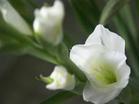
Gladiolus is mainly propagated by corm division; the new corm flowers the following year. To speed up propagation, the corm can also be cut into pieces, each of which must have buds and a rooting portion; the cut surfaces are coated with plant ash, and after slight drying they are planted. When breeding new varieties, seed propagation is mostly used; the seeds are collected in autumn and sown immediately, giving a high germination rate. In winter, the seedlings are moved into the greenhouse for cultivation, and the following spring they are carefully planted out in the open field with strengthened management; by autumn, some seedlings may flower.
Field Management
For cultivating gladiolus, choose a sunny, well-drained sandy loam rich in humus. Although it can grow and flower in clay soil, the renewal corm develops poorly and few cormels form under the large corm. Before planting, sufficient base fertilizer should be applied to the soil, preferably a base fertilizer rich in phosphorus and potassium. Planting depth varies with soil properties and corm size, generally 5-10 cm, with 15-25 cm between plants and rows, and 3 topdressings during the growing period. The first is after two leaves have unfolded, to promote bud, stem, and leaf growth; the second is when the stems of the 4-leaf stage elongate and form buds, to promote thick, sturdy flower stems and large blooms; the third is after flowering, to promote renewal corm development. Sunshine during the growing period favors flower bud differentiation and development. If drought occurs in summer, irrigation should be sufficient, while in the rainy season attention should be paid to drainage and irrigation.
Gladiolus Growing Methods and Cultivation Management
Gladiolus is a very good cut flower material, and together with roses, carnations, and gerbera daisies it is known as one of the "Four Great Cut Flowers of the World." Many flower enthusiasts also grow gladiolus, and some may ask how to grow gladiolus and what its growing methods are. So today, Huayu Network will explain the growing methods and cultivation management of gladiolus for everyone.
Before growing a flower, you must first understand its growth habits. Gladiolus is a light-loving long-day plant, averse to freezing cold, prefers cool summer climates, is not tolerant of excessive heat, is not tolerant of waterlogging, and dislikes standing water. It prefers fertile, well-drained sandy loam, preferably with a pH of 5.6-6.5. It should not be planted in heavy clay soil prone to waterlogging.
Gladiolus is mainly propagated by corm division; the new corm flowers the following year. To speed up propagation, the corm can also be cut into pieces, each of which must have buds and a rooting portion; the cut surfaces are coated with plant ash, and after slight drying they are planted. When breeding new varieties, seed propagation is mostly used; the seeds are collected in autumn and sown immediately, giving a high germination rate. In winter, the seedlings are moved into the greenhouse for cultivation, and the following spring they are planted out in the open field with strengthened management; by autumn, some seedlings may flower.
The sowing method is generally used when breeding new varieties. Sow in summer and autumn, sowing as soon as the seeds are collected, which gives a higher germination rate, but the plants must be moved into a greenhouse to overwinter, then transplanted to the open field the following spring for cultivation; by summer, some plants will flower. Alternatively, after collecting seeds, they can be dried and stored until the following spring for sowing and cultivation; in autumn, the young seedlings are dug up and stored, planted the following spring, and some will flower in summer.
After gladiolus is planted, if the soil is dry, irrigation should be carried out to promote rapid rooting of the corms. During the growth period from the 3rd leaf to the 7th leaf, which is the stage of floret primordium formation (the three-leaf stage) and also the key period when the roots of the mother corm begin to die and the new corm grows new roots, special attention must be paid to water supply, along with loosening the soil, weeding, and topdressing. The optimum temperature for gladiolus growth and development generally does not exceed 27°C, so in high summer temperatures attention should be paid to ventilation and shading to avoid excessive temperatures causing plant aging and degeneration. In addition, in the early stage of flower bud differentiation, gladiolus must receive more than 14 hours of light per day. After flower bud differentiation, appropriately shortening the number of daylight hours can promote its growth and help it flower earlier.
The main diseases of gladiolus include penicillium rot, dry rot, and blindness. The way to prevent penicillium rot is to try not to injure the seed corms during harvest and transport, soak them in a 2% potassium permanganate solution for several hours before planting, and pull out diseased plants at any time during growth. The way to prevent dry rot is to select disease-free mother corms when planting and promptly pull out diseased plants during growth. Blindness is a physiological disease that mostly occurs in winter cultivation. The way to prevent it is to ensure suitable temperature and light and to choose varieties tolerant of low temperatures and short days.
The main pest of gladiolus is the two-lined slug, which can be controlled by spraying limewater or ammonia water or by hand catching.
That is all for the introduction to gladiolus growing methods and cultivation management. I hope that through this article you have gained a deeper understanding of gladiolus and can grow better gladiolus.