Identification and Control Methods for Common Pests and Diseases of Cymbidium Orchids
The common diseases of Cymbidium orchids mainly include phytophthora disease, soft rot, root rot, anthracnose, leaf blight, sooty mold, and viral disease; the main pests include scale insects and snails.
(1) Control of phytophthora disease. Spray with a 500-fold solution of 80% zineb. A 2000-fold solution of 8-hydroxyquinoline sulfate can also be sprayed, or the diseased plants can be soaked in sodium o-phenylphenate solution for 1 hour; if necessary, the treatment can be repeated within 3 to 7 days.
(2) Control of soft rot. Take preventive measures; spraying with a 400-fold solution of 40% Kuai De Ning gives good results. A 1000-fold solution of 68.8% Duobao streptomycin or 18.8% streptomycin can also be used, sprayed once every 7 to 10 days, for 3 to 4 consecutive times. These chemicals can be used in rotation to prevent the plants from developing resistance.
(3) Control of root rot. Mix 1 tablespoon of benomyl with 4 kg of water, and soak the roots or apply it to the soil.
(4) Control of anthracnose. Spray with a 500-fold solution of Dafudan or a 500-fold solution of Dasheng-45 wettable powder; a 1000-fold solution of mancozeb can also be sprayed, once a week, for 3 consecutive times.
(5) Control of leaf blight. The control method is the same as for anthracnose.
(6) Control of sooty mold. To prevent sooty mold, you must first control and eliminate aphids, whiteflies, and scale insects; when these insects are absent, sooty mold will naturally be absent as well.
(7) Control of viral disease. At the current level of knowledge, it still cannot be treated; once a suspicious plant is found, it should be immediately isolated or destroyed.
(8) Control of pests. Scale insects parasitize the edges or undersides of the plant's leaves and suck the sap, causing the plant to wither, and in severe cases the entire plant will turn yellow and die, while also inducing sooty mold. Late May is the peak hatching period, and a 1000-fold solution of 40% omethoate emulsifiable concentrate can be sprayed to kill them. Snails can be controlled by hand-catching or by using poison baits such as Mieluoli.
Cymbidium Orchid Prices and Cymbidium Orchid Pest and Disease Control
Because Cymbidium orchids have large flowers and rich, brilliant colors, decorating indoor spaces such as flower stands, balconies, and windowsills with them can create an elegant home living environment. Today, we will introduce Cymbidium orchid prices, as well as Cymbidium orchid pest and disease control.
Cymbidium Orchid Prices
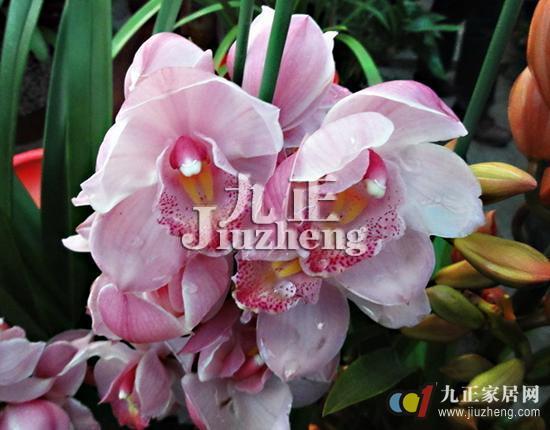
Cymbidium orchids are hybrid flowers with numerous varieties and brilliant, colorful blooms, making them very suitable for home decoration. It is understood that Cymbidium orchids currently on the market are relatively expensive. Generally speaking, high-quality Cymbidium orchids with more than 4 flower spikes have an estimated base wholesale price of 150-200 yuan per pot, mid-range products with 3-4 spikes cost 100-150 yuan per pot, and low-end products cost less than 100 yuan. In addition, prices vary according to the growth stage of the Cymbidium orchid: those in bloom are the most expensive, followed by those with buds, and small seedlings are the cheapest. Of course, Cymbidium orchid prices also differ by region. In Beijing, a Cymbidium orchid with 3-4 flower stems, each with more than 10 buds, costs about 560 yuan per plant, while in places such as Yunnan it costs only about 200 yuan.
Many people who like Cymbidium orchids and hope to buy them to decorate their homes want to know how much a pot of Cymbidium orchids costs. In fact, how much a pot of Cymbidium orchids costs depends on the actual situation; its price is not fixed. Generally speaking, the price difference between regions is not very large; it is mainly during celebrations and festivals. Take Spring Festival for example: generally a pot of Cymbidium orchids costs 200 to 300 yuan before the festival, 150 to 200 yuan after the festival, and by the end of the first lunar month it can be bought for 100 yuan. In addition, the price of Cymbidium orchids is also closely related to the number cultivated that year.
Cymbidium orchids are a flower that people greatly enjoy, so the price is generally relatively high, especially during festivals. Due to differences in region and time, the prices provided are for reference only and cannot be used as a basis for purchasing.
Cymbidium Orchid Pest and Disease Control
1. Fungal anthracnose
It mostly occurs at the tips of the leaves. The edges of the lesions are dark brown and the centers are grayish white. It is mostly caused by high temperature, high humidity, and poor ventilation. The lesions should be cut off promptly and spraying should be carried out at the same time. Commonly used agents include 1000-fold mancozeb and 1000-fold Keshade.
Other fungal diseases are commonly controlled with the following agents: 1000-fold chlorothalonil, 800-fold metalaxyl, and 800-fold metalaxyl.
2. Bacterial diseases
Commonly used agents include 6000-fold agricultural streptomycin sulfate, 300 ppm agricultural streptomycin, and 800-fold jinggangmycin. When there is continuous cropping or long-term cultivation, soft rot will occur severely. It does not occur at the small seedling stage; generally by the third year, when the flower buds reach a height of 20 to 30 cm, the corms are found to suddenly rot, and it also occurs on the mountain. At this time, they can only all be destroyed, otherwise it is easy for the disease to spread to healthy plants. If the surrounding environmental sanitation is dealt with promptly and chemical control is carried out, it will have an inhibitory effect on the disease.
3. Pests
The main pests are slugs and spider mites. Commonly used agents: Kuakesixing (poison bait) and trichlorfon acaricide. When ventilation is poor from June to September, slugs occur severely, mostly hiding on the undersides of leaves, while also damaging the root system. For control, lime can be scattered in the cracks between bricks and then water sprayed, which can kill large numbers of adults; at the same time, Kalanchoe leaves and granular Kuakesixing can be used as poison bait. Spider mites occur on the undersides of leaves, so when spraying, start from the undersides of the leaves.
The above is an introduction to Cymbidium orchid prices and Cymbidium orchid pest and disease control. We hope it can help everyone. For more home knowledge, please stay tuned.
Pest and Disease Control of Cymbidium Orchids
Fungal anthracnose
It mostly occurs at the tips of the leaves. The edges of the lesions are dark brown and the centers are grayish white. It is mostly caused by high temperature, high humidity, and poor ventilation. The lesions should be cut off promptly and spraying should be carried out at the same time. Commonly used agents include 1000-fold mancozeb and 1000-fold Keshade.
Other fungal diseases are commonly controlled with the following agents: 1000-fold chlorothalonil, 800-fold metalaxyl, and 800-fold metalaxyl.

Bacterial diseases
Commonly used agents include 6000-fold agricultural streptomycin sulfate, 300 ppm agricultural streptomycin, and 800-fold jinggangmycin. When there is continuous cropping or long-term cultivation, soft rot will occur severely. It does not occur at the small seedling stage; generally by the third year, when the flower buds reach a height of 20 to 30 cm, the corms are found to suddenly rot, and it also occurs on the mountain. At this time, they can only all be destroyed, otherwise it is easy for the disease to spread to healthy plants. If the surrounding environmental sanitation is dealt with promptly and chemical control is carried out, it will have an inhibitory effect on the disease.
Pests
The main pests are slugs and spider mites. Commonly used agents: Kuakesixing (poison bait) and trichlorfon acaricide. When ventilation is poor from June to September, slugs occur severely, mostly hiding on the undersides of leaves, while also damaging the root system. For control, lime can be scattered in the cracks between bricks and then water sprayed, which can kill large numbers of adults; at the same time, Kalanchoe leaves and granular Kuakesixing can be used as poison bait. Spider mites occur on the undersides of leaves, so when spraying, start from the undersides of the leaves.
