What are the common varieties of radiator plant? A detailed guide to care and propagation
There are at least 1000 species of Peperomia plants worldwide. In China, 5 species are currently used for ornamental cultivation: watermelon peperomia, ripple peperomia, gray-green peperomia, variegated peperomia, and trailing peperomia, all of which are small indoor foliage pot plants. They prefer high temperatures and semi-shady environments, with an optimum growing temperature of 25°C. In winter, room temperature must be kept above 10-15°C, otherwise they will drop their leaves; below 8°C they will freeze and die.
Peperomia is robust and easy to cultivate and care for. In spring, summer, and autumn, provide shade; in winter, indirect slanted light is fine. Their leaves are thick and fleshy, covered with a waxy layer that can store water, so transpiration is low and watering should not be excessive. During dry spring weather and when indoor temperatures are high in winter, pay attention to raising air humidity. In hot, stuffy summers, increase ventilation, otherwise leaves may drop easily.
Under pot cultivation, Peperomia rarely sets seed, so propagation is always done by cuttings. Varieties with above-ground stems can be propagated by cutting stem sections 5-6 cm long, each with 1-2 leaves, inserted into plain sand. Varieties without above-ground stems can be propagated by leaf cuttings: cut off a plump, well-developed leaf with 1-2 cm of petiole attached, insert it into coarse sand or vermiculite, and at a room temperature of about 25°C, roots will form at the base of the petiole after 3 weeks; after 40 days, young leaves will sprout, and when 4 leaves have emerged, divide the seedlings and pot them up.
How to propagate and cultivate Peperomia
Peperomia is also known as pepperwort. Commonly cultivated varieties include variegated peperomia and white-leaved peperomia. Peperomia originates from tropical regions of the Americas and prefers warm, humid, and semi-shady environments, with an optimum growing temperature of 25-28°C. In winter, room temperature should be kept between 10-15%, otherwise it will drop its leaves; below 10°C it will freeze and die. It prefers loose, fertile soil with good drainage.
Under pot cultivation, Peperomia rarely sets seed, so propagation is mostly done by cuttings or division. Depending on the species, some Peperomia plants have above-ground stems and can be propagated by cutting stem sections 5-6 cm long, each with 1-2 leaves, inserted into plain sand. Those without above-ground stems can be propagated by leaf cuttings: cut off a plump, well-developed leaf with 1-2 cm of petiole attached, insert it into coarse sand or vermiculite, and at a room temperature of about 25°C, roots will form at the base of the petiole after about 3 weeks; after 40 days, young leaves will sprout, and when 4 leaves have grown, divide the seedlings and pot them up. Division is best done in spring and autumn.
If your Peperomia has set seed, you might try sowing them. After sowing, cover the pot with a black plastic bag until the seeds germinate, otherwise light will inhibit germination. The seeds will take about 20 days to emerge.
For potted Peperomia, choose a sieved potting mix of 5 parts leaf mold or peat soil, 3 parts garden soil, and 2 parts coarse sand. Watering should be adjusted according to season and weather, following the principle of "water when dry, dry-wet alternating," and never let water accumulate in the pot. In dry weather and in summer, spray the stems and leaves with clean water 1-2 times a day to help keep the foliage green and fresh. During the growing period, apply a dilute liquid fertilizer about once every half month. Peperomia is fairly shade-tolerant and can be grown indoors in bright, indirect light year-round; in spring, autumn, and winter it can receive a bit more sunlight. In summer, pay attention to shading and avoid direct strong sunlight; you can place the pot on a north-facing balcony or windowsill, or keep it under an outdoor shade awning, and be sure to ventilate and cool it down. Do not overwater; in hot, humid summers, the base of the stem is prone to rotting. In winter, room temperature must not drop below 12°C; when room temperature is low, control watering and stop fertilizing, otherwise root and leaf rot can easily occur. To keep the branches and leaves full and the foliage emerald green, do a short pruning every 2-3 years to encourage new shoots.
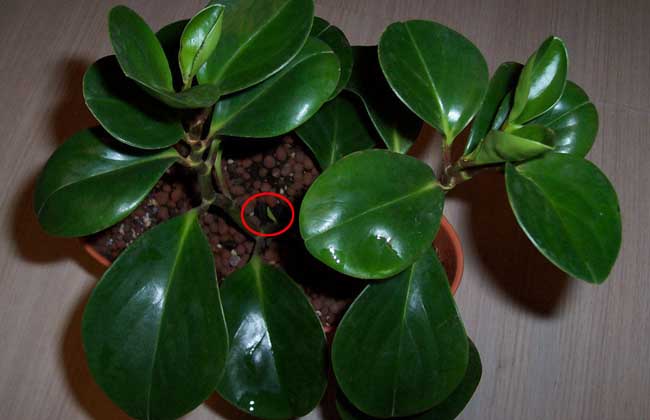
Peperomia has a full, compact form with thick, bean-like fleshy leaves that stay emerald green and glossy year-round. It is often used for indoor decoration, such as on a desk, shelf, or tabletop in a study, bedroom, or living room. Its bright green color is fresh and elegant, and it is well-loved by many people.
How to grow potted Peperomia well: propagation methods for Peperomia
Peperomia is also known as bean petal green, bean petal vegetable, bean petal ruyi, and so on. It is a herbaceous plant in the pepper family, Peperomia genus. It is commonly grown in white plastic pots or white porcelain pots and placed on coffee tables, display cabinets, curio shelves, or office desks, or its branches can be allowed to trail down and hang indoors by a window or in a bathroom. It has a certain purifying effect on formaldehyde, xylene, secondhand smoke, and so on. Now let's take a look at how to grow potted Peperomia well!
Peperomia's growth habits
Peperomia is native to the West Indies, Panama, and northern South America, and was later introduced to China. It is now produced in Taiwan, China, Fujian, Guangdong, Guangxi, Guizhou, Yunnan, Sichuan, southern Gansu, and southern Tibet, among other places. It prefers a warm, humid, semi-shady environment, with an optimum growing temperature of around 25°C and a minimum no lower than 10°C. It is not tolerant of high temperatures, requires relatively high air humidity, and dislikes direct sunlight. It prefers loose, fertile, well-drained, moist soil.
Peperomia's propagation methods
Peperomia is mostly propagated by cuttings and division. For cuttings in April-May, select healthy top shoots about 5 cm long as cuttings, keep 1-2 leaves on the upper part, and after the cut end has dried, insert into a moist sand bed. Peperomia can also be propagated by leaf cuttings: cut off a leaf with its petiole, let it dry slightly, then insert it obliquely into a sand bed; it will root in 10-15 days. In a greenhouse with temperature control equipment, this can be done year-round. Division is mainly used for propagating variegated-leaf varieties.
How to grow potted Peperomia?
1. Soil: Peperomia prefers loose, fertile, well-drained sandy soil rich in humus, and is not suited to growing in clay soil. So the substrate is usually a mix of leaf mold, river sand, and a small amount of rotted organic fertilizer. For a better substrate, you can use a mix of peat soil and perlite.
2. Watering: Peperomia likes water relatively well and is not drought-tolerant. During the growing period, water frequently. When the temperature is above 25°C or the air is dry, water a bit more, but also prevent waterlogging. When the temperature is below 25°C, water thoroughly only when the pot surface is dry. When the temperature is below 10°C, it can tolerate several days of dryness without watering.
3. Humidity: Peperomia likes a moist growing environment. Under high-humidity conditions, it grows lushly and its leaf color is vivid. When the temperature is high or the air is dry, increase leaf spraying or sprinkle water in the growing environment to maintain relatively high air humidity, which is very beneficial to plant growth. It can also adapt to short periods of dryness, but not for long; generally humidity should be kept at around 70%.
4. Temperature: Peperomia likes a warm environment. The optimum growing temperature is between 20-30°C. The overwintering temperature should ideally be kept above 10°C; below 10°C growth stops, and below 5°C it is prone to freezing damage. Temperature changes directly affect leaf color. For variegated-leaf types, the optimum winter temperature is 18-20°C, while for green-leaf types it is around 15°C. It fears heat in hot summers, so it can be placed under a shade awning and misted to cool it down, but note that both excessive heat and excessive moisture can cause stems and leaves to turn black and rot.
5. Light: Peperomia prefers semi-shade or indirect light. Except in winter, when it needs sufficient light, it needs some shading in other seasons, especially in summer. If placed in a deeply shaded environment, it tends to become leggy, with elongated internodes and reduced ornamental value, which is also undesirable. Under semi-shade conditions, the leaf color is brighter and the gloss is better. Special variegated varieties have slightly higher sunlight requirements.
6. Fertilizing: Peperomia needs a small amount of fertilizer when the temperature is above 18°C. When the temperature is below 18°C or above 30°C, it is best to apply little or no fertilizer. Fertilizing is best done with small amounts applied frequently; watering with diluted fertilizer solution instead of plain water is ideal. It is not tolerant of raw or concentrated fertilizer and can easily suffer fertilizer burn. You can also fertilize by spraying fertilizer solution on the leaves, which works well. Fertilizer should be mainly nitrogen and potassium, with phosphorus secondary.
7. Pruning: Peperomia has strong branching ability and grows quickly, so pay attention to regular pruning and cut off overly tall or dense branches. This not only improves air circulation between stems and branches but also keeps the plant shape attractive. For newly propagated small seedlings, pinch the tips when the seedlings are about 10 cm tall to increase the number of branches. For large plants, pruning generally depends on their growth vigor.
Precautions for Peperomia
1. Peperomia has relatively few pests and diseases. The diseases that generally appear are caused by improper care and unsuitable environment, and it can gradually recover after adjustments. The main pest is red spider mite, but it can be prevented by maintaining relatively high air humidity. When it occurs, it can be controlled by wiping the leaves with a damp cloth or spraying a targeted pesticide.
2. When growing Peperomia in summer, strengthen air convection so that the internal heat can be released. Place it in semi-shade, or provide 50% shade. At the same time, mist appropriately, 2-3 times a day.
3. When growing Peperomia in winter, move it indoors to a bright spot for care. Outdoors, you can wrap it in plastic film to overwinter, but every two days at the warmer midday period, uncover the film to let it breathe.
4. Peperomia has high fertilizer and water requirements, but it most fears random fertilizing, concentrated fertilizer, and one-sided application of nitrogen, phosphorus, or potassium. It should follow the fertilizing (and watering) principle of "apply dilute fertilizer frequently, small amounts with more frequent applications, and complete nutrition."
5. Peperomia fears direct strong light and needs to be kept in semi-shade, or given 70% shade. If kept indoors, place it in as bright a spot as possible, and every one or two months move it outdoors to a semi-shady spot or give it shade for a month, so it can accumulate nutrients and recover its vigor.