A Detailed Guide to the Propagation and Cultivation of Hydrangea
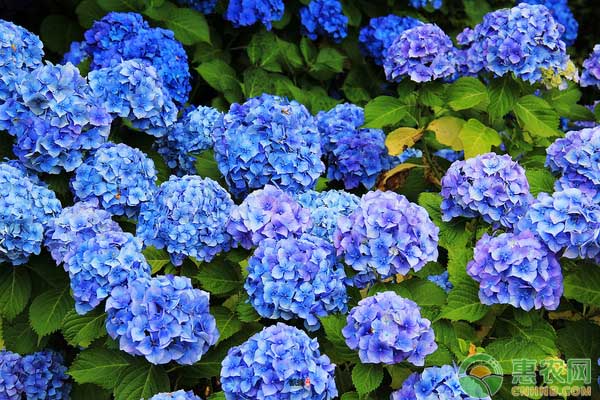
[Morphological Characteristics] Hydrangea is a deciduous shrub, growing up to 3-4 m tall. The lower branches are stout, hairless, with prominent lenticels. The simple leaves are opposite, large and glossy, obovate to elliptic, 7-15 cm long, with coarsely serrated margins, hairless on both surfaces or hairy only on the veins beneath. The terminal corymb is nearly spherical, with flower heads reaching up to 20 cm across, almost entirely composed of sterile flowers; the flower colors include white, pink or blue, and are extremely beautiful.
[Origin and Habits] Hydrangea is native to China and Japan. It prefers a warm, humid climate and is not cold-tolerant. It likes shade and dislikes direct, blazing sunlight; it is a short-day plant. It prefers moist, humus-rich, well-drained, slightly acidic soil. The optimal growing temperature is around 20°C, and the overwintering temperature should be above 5°C.
[Propagation] Hydrangea can be propagated by cuttings, layering, division and other methods. The cutting method is relatively commonly used. In early summer (generally from May to July), select stout, well-developed current-year branches or newly sprouted tiller shoots as cuttings, cut them into segments about 10 cm long, and insert them into a cutting bed using coarse sand or vermiculite as the substrate; after insertion, shade them and maintain humidity, and they will root in about 30 days. Alternatively, in November to December, in conjunction with heading back old plants, take the headed-back branches as cuttings for propagation; after insertion, maintain a temperature of about 15°C, and they can root in about 45 days. Division is carried out in autumn, winter or before bud break in spring. Layering is carried out in the early part of the growing season.
[Cultivation] For potting soil, use a mix of pine needle soil, leaf mold, or sandy loam mixed with peat soil. Hydrangea has fleshy roots, so watering should not be excessive; you can spray water on the leaves to prevent root rot. During the rainy season, prevent water from accumulating in the pot. In winter, just keep the soil at 30% moisture; do not water unless it is dry. Hydrangea likes heavy feeding; generally apply a dry fertilizer once a month and a liquid fertilizer once a week. The flower color of hydrangea changes with the pH of the soil; generally at pH 4-6 it is blue, and at pH 7 and above it is red. If you want blue hydrangeas, dissolve one tablespoon of alum in 2.5 liters of water, and use this water to water the plants from sprouting to flowering. The flowering habit of hydrangea is that the new shoots bearing inflorescences all arise from strong branches of the previous year, so pruning should be done after flowering, generally in early spring from February to March, cutting weak branches, dead branches and branches that have already flowered back to the base, to promote robust growth of new branches. To renew old potted plants, head back in November to December, counting from the roots upward, leave 2-3 buds, and then cut off the upper branches. When removing leaves in March, keep 3-4 healthy buds per plant and remove the rest. Hydrangea blooms at the top of the stems, and the flower heads are relatively large, so supports should be set up and tied to keep the flower stems upright and the plant shape full.
How to cultivate hydrangea? A detailed guide to hydrangea cutting propagation techniques
How to grow hydrangea? Hydrangea flowers resemble a hydrangea ball, like fertile, moist soil, and are a very delicate flower; most hydrangea cultivars can only be reliably propagated through rooted cuttings. Let's learn about hydrangea cutting propagation techniques below.
Preparation Work
Cleanliness is essential for successfully rooting hydrangeas. Wipe the pruning blades with a cloth soaked in alcohol. This kills disease organisms and prevents the spread of pathogens. Clean the pots, rinse them in clean water, then soak the pots in a solution of 1 part household bleach to 9 parts water for at least 5 minutes. Rinse them clean with clean water. Use rooting soil (for example, equal parts peat and perlite) to fill the pot to within 2-3 cm of the rim. The time is mid-to-late summer for propagation, when the flowers have already formed and the stems are still green.
Finding Branches
Find hydrangea stems that have not yet flowered, because flowering reduces the concentration of plant hormones in the stems. This hormone promotes rooting. You can test for proper stem development by bending a green stem.
Cutting
Using clean pruning shears, remove the top portion of the stem containing several leaves. Cut the stem below the node, which is the area where the leaves emerge. Cut the stem into shorter pieces, each about 10CM, containing three to four nodes. Clean the alcohol-pruning shears between each stem cut from the bush.
Preparing for Planting
Prepare a small, clean container with some rooting hormone. Never dip the cutting into the entire container, which could contaminate the rooting hormone. If leaves are present, remove the lower two leaves from the cutting. Immediately dip the base of the stem into the rooting hormone, applying it to the freshly cut end as well as any wounds created by removing leaves. Cut off the outer half of the remaining leaves to reduce water use by the cutting.
Maintaining Humidity
You need to keep the cutting until it roots, so it needs a humid environment. Place a large, transparent plastic bag over the cutting, and if necessary, take it off the branch, with the stump inserted into the potting mix. Place the cutting in a shaded place. It will probably root after about a week.
How does hydrangea propagate? Hydrangea propagation methods
How does hydrangea propagate? Hydrangea cultivation is often based mainly on asexual propagation such as division, layering and cuttings; especially for varieties or cultivars with special ornamental characteristics, asexual propagation is an important means of keeping the offspring consistent with the characteristics of the mother plant. Let's look below at how hydrangea propagates.
Hydrangea propagation methods 1. Hydrangea division propagation methodIt is suitable to carry out before sprouting in early spring; division can be done in conjunction with repotting, simply separating the sprouting shoots at the roots. Hydrangea division propagation is suitable before sprouting in early spring. Separate the rooted branches from the mother plant and pot them directly; watering should not be excessive, and maintain them in semi-shade; after new buds sprout, move them to normal care. Layering propagation can be carried out when the buds begin to swell; after 30 days they can grow, and the following spring cut them from the mother plant, transplant them with soil, and they can flower the same year.
2. Hydrangea layering propagation methoda. For home use, it is best to use the "air layering method". Choose a robust 2-year-old branch, and carry out ring barking 4 cm to 5 cm below the internode, that is, use scissors to grip the stem and turn it one full circle, then 2 cm below the cut, grip it again with scissors and turn one full circle, and peel off the bark between the two cuts to expose the xylem. Then tie plastic film 5 cm to 6 cm below the cut to form a bag shape, put moss or peat soil into the bag, tie the bag opening tightly, and fix the bagged branch with a stake, then pour water in from the bag opening.
b. Generally, pour clean water into the bag once every 4 to 5 days. In 25 to 30 days, callus tissue will form at the ring-barked area, and in about 50 to 60 days roots will grow; when the young roots change from white to yellow-brown, they can be cut from the mother plant and planted separately in pots.
c. Layering should be carried out during the rainy season; choose a 2-year-old branch and wound it at an appropriate spot, wrap it with a half-split bamboo tube or film filled with nutrient soil, keep the soil moist, and roots will develop after 1 month; the following spring cut it from the mother plant and plant it in a pot with the soil ball.
3. Hydrangea cutting propagation methodCuttings can be done except in winter. In early spring, cut tender branches for cuttings; the cuttings should have 2-3 nodes, and remove the lower leaves to reduce water evaporation. You can also, in the peak summer growing season, cut young tender side branches sprouting from the base of the main stem and side branches, insert them with leaves into plain sandy soil, place them in a shaded area to maintain moisture, and they will root in about 20 days, with a high survival rate.
4. Hydrangea tissue culture propagationUsing dormant buds as explants, after routine disinfection inoculate them on MS medium supplemented with 6-benzylaminopurine 0.8 mg/L and indoleacetic acid 2 mg/L to cultivate adventitious buds. When the shoots reach 2-3 cm tall, transfer them to 1/2 MS medium supplemented with indoleacetic acid 2.0 mg/L to grow into complete small plantlets.