What are the control methods for sunscald disease in Alocasia macrorrhiza?
It occurs everywhere, and the leaves, flowers, stems and fruits of many woody and herbaceous flowers can be affected, hindering their ornamental value.
Symptoms: In summer, when plants are exposed to intense sunlight, water-soaked spots appear on the leaf surface, which then rapidly lose water and turn grayish-white.
Disease pattern: The longer a plant grows in the shade, the more tender its tissues become; the higher the temperature in sunlight and the longer the exposure, the more severe the disease.
Control methods: Strengthen cultivation management. Alocasia macrorrhiza likes high temperature and high humidity, with an optimum growth temperature of 20-28°C, not lower than 13°C in winter. The cultivation site should be shaded, with 50%-60% sunlight exposure, and avoid direct intense sunlight. Grow it in leaf mold soil and keep the potting soil moist at all times, with high air humidity. Spray vitality essence once every 2 weeks, and promptly prune withered old lower leaves. Manage carefully and promptly remove diseased leaves. During the disease period, spray 500-800 times diluted solutions of pesticides such as carbendazim, thiophanate-methyl, and chlorothalonil.
How to prevent sunscald disease in Alocasia macrorrhiza
When growing Alocasia macrorrhiza, a disease often appears——sunscald disease. Sunscald disease in Alocasia macrorrhiza occurs everywhere, and the leaves, flowers, stems and fruits of many woody and herbaceous flowers can be affected, hindering their ornamental value. So, how do you control sunscald disease in Alocasia macrorrhiza?
Symptoms: In summer, when plants are exposed to intense sunlight, water-soaked spots appear on the leaf surface, which then rapidly lose water and turn grayish-white.
Disease pattern: The longer a plant grows in the shade, the more tender its tissues become; the higher the temperature in sunlight and the longer the exposure, the more severe the disease.
Control methods: Strengthen cultivation management. Alocasia macrorrhiza likes high temperature and high humidity, with an optimum growth temperature of 20-28°C, not lower than 13°C in winter. The cultivation site should be shaded, with 50%-60% sunlight exposure, and avoid direct intense sunlight. Grow it in leaf mold soil and keep the potting soil moist at all times, with high air humidity. Spray vitality essence once every 2 weeks, and promptly prune withered old lower leaves. Manage carefully and promptly remove diseased leaves. During the disease period, spray 500-800 times diluted solutions of pesticides such as carbendazim, thiophanate-methyl, and chlorothalonil.
Alocasia macrorrhiza Alocasia macrorrhiza Illustrated Guide: How to grow Alocasia macrorrhiza / How to propagate Alocasia macrorrhiza
Alocasia macrorrhiza ProfileAlocasia macrorrhiza Alocasia macrorrhiza
Aliases: Haitian taro, langdu (underground stem), tianyu, Guanyin lotus, xiutiancao, gehexian
Classification: Perennial herbaceous flowering plant
Family and genus: Plantae, Angiosperms, Monocots, Alismatales, Araceae, Alocasia
Bloom period: Winter and spring
Alocasia macrorrhiza (originally named taro or gupoyu), scientific name: Alocasia macrorrhizos, Araceae, Alocasia genus, also known as Buddha's hand lotus, etc. In Taiwan, China it is called gupoyu. Native to South America, it is a common ornamental plant in tropical and subtropical regions, commonly known as hen yutou, langdu (Guangdong), wild taro, mountain taro, big-root taro, big-worm taro, tianyu, tianmeng, etc. As an ornamental plant it is called Alocasia macrorrhiza. A perennial evergreen herbaceous plant with medicinal value; the corm and leaves can be used medicinally. Its leaf sap is poisonous if ingested, and the rhizome is toxic. Under conditions of warm, humid air and sufficient soil moisture, it will drip from the leaf tips...
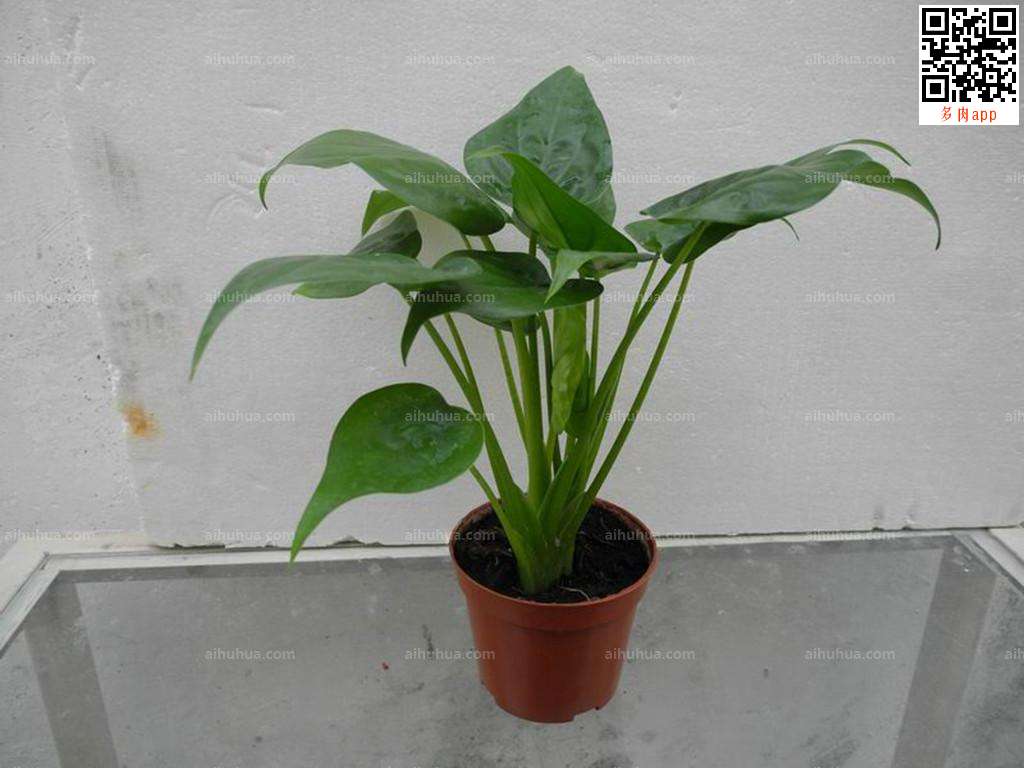
How to grow Alocasia macrorrhiza and precautions. Introduction to Alocasia macrorrhiza
Alocasia macrorrhiza (originally named taro or gupoyu), scientific name: Alocasia macrorrhizos, Araceae, Alocasia genus, also known as Buddha's hand lotus, etc. In Taiwan, China it is called gupoyu. Native to South America, it is a common ornamental plant in tropical and subtropical regions, commonly known as hen yutou, langdu (Guangdong), wild taro, mountain taro, big-root taro, big-worm taro, tianyu, tianmeng, etc. As an ornamental plant it is called Alocasia macrorrhiza. A perennial evergreen herbaceous plant with medicinal value; the corm and leaves can be used medicinally. Its leaf sap is poisonous if ingested, and the rhizome is toxic. Under conditions of warm, humid air and sufficient soil moisture, it drips downward from the leaf tips or leaf edges, and its flowers resemble Guanyin, hence the name Alocasia macrorrhiza.
Morphological characteristics of Alocasia macrorrhiza
Alocasia macrorrhiza is a perennial upright herb, with plants reaching up to 2 m tall. It has a fleshy underground rhizome, long petioles, broad leaf sheaths, and large shield-shaped broadly arrow-shaped leaves clustered at the top of the stem, with pointed tips, slightly wavy edges, and prominent main veins. The spathe is yellow-green, with a spadix inflorescence.
Appearance and shape
The aboveground stem of Alocasia macrorrhiza is thick and sturdy, sometimes up to 2-3 m tall, and the whole plant can reach up to 5 m. The creeping rhizome is 5-8 cm thick, cylindrical, jointed, and often produces adventitious buds. Leaves are mostly spirally arranged; petioles are thick and large, up to 1.5 m long, with the lower 1/2 having a sheath, and the base together with the sheath 5-10 cm wide; leaf blades are leathery, slightly shiny on the surface, green, lighter on the underside, very broad, arrow-ovate, with shallowly wavy edges, 50-90 cm long and 40-80 cm wide. The anterior lobe is broadly ovate, with an acuminate apex, nearly equal in length and width; the posterior lobe is semi-ovate, about 1/3 the length of the anterior lobe, with a shorter united base, a circular sinus, and posterior basal veins at right angles or acute angles to each other; the anterior lobe has 6-10 pairs of primary lateral veins, slightly broad.
The inflorescence peduncles of Alocasia macrorrhiza are in clusters of 2-3, cylindrical, each covered by a bract leaf (scale leaf) 50 cm long and about 8 cm wide, the latter lanceolate and green; the peduncle is (12-)50-60 cm long, pale green. The tube of the spathe is rolled into a long rounded ovate or ovate shape, white-green, 3-5 cm long, 4 cm thick; the limb is white-green, yellow-green, later turning white, boat-shaped, oblong, with a slightly protruding tip, slightly curved downward, (10-)20-30 cm long, and (4-)5-8 cm wide when spread out.
Spadix morphology and fragrance:The female inflorescence is cylindrical, (2-)3-4 cm long; the sterile male inflorescence is (2.5-)5-6 cm long, gradually narrowing and transitioning into the fertile male inflorescence, which is 3-7 cm long; the appendix is conical, cream-yellow, thicker at the base, 3-5.5 cm long, 1-2 cm thick, with a blunt tip, embedded with irregular grooves.
Female flowers:The ovary is prismatic, gradually narrowing at the apex into a distinct style; the stigma is disk-shaped; ovules are ovate, with basal placentation. Sterile male flowers are flat, with a hexagonal top. Berries are bright red, short ovate, about 1 cm long, 5-9 mm in diameter. Bloom period is April-July; it can also bloom under warm and humid conditions.
Ecological habits of Alocasia macrorrhiza
If the air humidity is too low, the water it releases will immediately evaporate, so dripping generally occurs more in the morning, known as the "guttation" phenomenon (Alocasia macrorrhiza is Alocasia). The flowers are spathe-shaped, belonging to the "spadix inflorescence" type. It is an ornamental flowering plant that likes warmth, moisture and ample sunlight. It generally blooms in winter and spring, with the dormant flowering period from November to May or June of the following year, and peak bloom from February to April.
1、The growth temperature is 20-30°C, and it can tolerate a minimum low of 8°C. In summer high temperatures, as long as the soil is kept moist, water is sprayed frequently, and it is shaded, it can still grow normally. In winter, room temperature must not be lower than 5°C. Alocasia macrorrhiza is an understory plant of tropical rainforests, so its growth requires high humidity, and diffused light is best.
2、As a shade-tolerant plant, it likes a semi-shaded environment and should be placed in an environment that is both shaded and ventilated.
3、It especially likes moisture. During the growing season, not only must the potting soil be moist, but the air humidity must also be no less than 60%. In summer high temperatures, spraying water should be increased to create a relatively cool and humid environment for it. If placed in an indoor air-conditioned hall, ensure the potting soil is moist and also spray the leaf surface from time to time. If the winter room temperature cannot reach 15°C, watering should be controlled, otherwise it easily causes root rot. Under normal circumstances, spraying warm water once a week is enough to keep the leaves dark green.
4、It can be grown in nutrient soil mixed from leaf mold, peat soil, river sand and a small amount of thoroughly decomposed cake fertilizer. It can also be hydroponically grown, but attention should be paid to preventing root rot and adding nutrient solution. Usually repot once every spring, and loosen the soil once a month to keep the potting soil in a well-aerated state.
5、It relatively likes fertilizer. From March to October, apply liquid fertilizer once every half month, and the proportion of nitrogen can be appropriately increased. If a little ferrous sulfate can be added, so much the better; the leaves will then grow as large as lotus leaves and be smooth and attractive. Fertilization should stop when the temperature is below 15°C.
6、Because Alocasia macrorrhiza is a foliage plant, under improper planting and care, the largest leaves may turn yellow and dry up. At this time, they should be cut off together with the stem using a knife, otherwise it will affect the growth and ornamental value of the other leaves.
Cultivation techniques for Alocasia macrorrhiza
1. Temperature should be suitable; 2. Light should be appropriate; 3. Fertilization should be proper; 4. Watering should be reasonable; 5. Overwintering should be protected; 6. Pests and diseases should be controlled; 7. Growth should be controlled;
Production standard:20 cm pot: height 20-30 cm, crown width about 25 cm, number of leaves 6-7 per plant, 4 months. Substrate preparation: cultivate in nutrient soil mixed from loose domestic peat with good drainage and aeration, 2:2:1 pond mud, peat soil, and coarse sand mixed soil plus a small amount of thoroughly decomposed cake fertilizer. Add water to the peat and mix well (standard for adding water: after adding water and mixing well, when you tightly squeeze a handful of peat, water seeps out from between your fingers). Wait until it is planted in cups.
Potting:For reused old pots, they must be soaked in 2000 times diluted potassium permanganate solution for more than half an hour, then rinsed with clean water and dried for later use. Large pot cultivation generally uses 20 cm specification pots. When planting, first place about 4 cm of substrate at the bottom of the cup, then move the screened seedlings into the cup. Small seedlings should not be planted too deep, with the base of the plant level being appropriate; the substrate should be moderately firm and filled to 8/10 of the cup, 2-3 plants per pot.
Hydroponic method
For hydroponic Alocasia macrorrhiza, the root-washing method can be used to convert soil-grown plants into hydroponic plants. When washing the roots, do so carefully and try not to damage the tubers and root system. At the same time, cut off rotten roots and aged root systems. If the tuber has no roots, first place it in a shaded place to dry for 2-3 days, and after the wound is dry, soak it in water. After 2-3 days, new roots can be seen emerging.
In the early hydroponic stage, change the water once every 2-3 days, with the water depth preferably submerging 2/3 of the root system. After a week, new roots can grow. After 3 weeks, once the hydroponic plant has adapted to the hydroponic environment, switch to nutrient solution culture. After that, change the nutrient solution about once a month.
Because the stem tissue of Alocasia macrorrhiza is relatively loose, poor water quality can easily cause pollution leading to root rot and stem rot. Therefore, keep the bottle water clean. At the same time, when changing the water or nutrient solution, clean the mucus on the tubers and roots, and cut off rotten roots.
Alocasia macrorrhiza is a very common home-grown green potted plant, but because it is a tropical plant, it generally does not bloom in the north. However, if the temperature and other conditions at home are suitable, it will also bloom.
It does not have high requirements for soil, but grows best in sandy loam or humus loam with good drainage and organic matter. Because Alocasia macrorrhiza by nature likes warm, humid and semi-shaded environments and is not cold-tolerant, during the growing season the potting soil must be kept moist. But it can also tolerate a little drought, so do not treat it too harshly.
In summer, the flower pot should be placed in a semi-shaded and ventilated place, and water should be sprayed frequently around it and on the leaf surface to increase air humidity, lower leaf temperature, and keep the leaves clean.
Because Alocasia macrorrhiza grows very fast, it relatively likes fertilizer. Apply nitrogen, phosphorus and potassium compound fertilizer 1-2 times a month (the proportion of nitrogen can be appropriately higher). If a little ferrous sulfate can be applied, the leaves will be larger and greener. Long-term lack of fertilizer easily causes the lower part of the Alocasia macrorrhiza stem to become bare and empty, affecting its ornamental value. When the temperature drops and it enters the dormant period, fertilization can be reduced or stopped.
If you want the Alocasia macrorrhiza you keep indoors to be small and exquisite, then simply wait until its seedlings grow to about one chi and are suitable for placement at home, then immediately spray the whole plant with 2% paclobutrazol solution. After that, the stems and leaves that grow again will be no more than 40 cm tall, and the leaves will be thick and fleshy, with high ornamental value. Spraying once about every half a year can achieve a good height-control effect. The sap in the leaves of Alocasia macrorrhiza can cause skin itching after human contact, so be careful when touching it.
Temperature:Alocasia macrorrhiza can only grow well in an environment not lower than 18°C. If the temperature is lower than 18°C, Alocasia macrorrhiza will be in a dormant state and stop growing. Pay special attention to this when growing it indoors for ornament.
Fertilization:Alocasia macrorrhiza likes fertilizer, and it should be fertilized every month.
Watering:Alocasia macrorrhiza needs more watering in summer, but not excessively; it is suitable to alternate between dry and wet, and there must be no standing water in the soil, otherwise the tubers will rot. In winter it goes dormant, so water less and stop fertilizing.
Sunlight:Alocasia macrorrhiza likes shade, so do not let direct sunlight hit it. If Alocasia macrorrhiza becomes "wilted", it is mainly due to insufficient fertilization, so pay attention to topdressing.
How to grow Alocasia macrorrhiza
Every summer and autumn, the tubers of Alocasia macrorrhiza sprout small leafy Alocasia plantlets, which can be divided during repotting and soil changing. After the fruit ripens in autumn, collect the orange-red seeds and sow them immediately after collection, or dry and store them and sow them after the following spring.
Propagation methods of Alocasia macrorrhiza
This refers to perennial old plants. Stem cuttings can be used for propagation in combination with plant renewal. The advantage of stem cutting is that because the plant loses its apical growth advantage, nutrients accumulate at the base, prompting a large number of sprouts from the roots and stem base, which helps increase propagation speed and quantity.
First, cut the stem at about 5 cm from the soil surface at the base of the plant body;
Second, the cut old stem can be cut into branches about 15 cm long, placed in a shaded place to air-dry for half a day, and then inserted into sandy loam soil for cultivation. Especially for the section at the top that is still growing, after cutting off all formed leaves, plant it directly as a single plant in a pot, with cutting and cultivation carried out simultaneously. After two months of cultivation, it becomes a formed plant with large leaves, compact branching, and a short, sturdy and vigorous form, which placed indoors has a touch of elegant charm.
Stem-cutting propagation of Alocasia macrorrhiza is suitable in all three seasons: spring, summer and autumn.
During the cutting period, keep the substrate (6 parts sand : 4 parts garden soil) moist, and at the same time increase air humidity. In about 7-10 days, many sturdy roots will grow.
During the cultivation of old plants, because the environment is shaded and humid, or because the leaf surface is sprayed morning and evening every day in summer and autumn, a few new plants occasionally sprout on the old stem (especially on the stem base left after stem cutting), and many aerial roots adhere to it. They can be broken off from where the offspring plant meets the mother plant and potted for planting.
Disease control of Alocasia macrorrhiza. 1. Precautions
The white sap in the stem of Alocasia macrorrhiza is toxic. Accidental contact with or ingestion of its sap will cause discomfort in the throat and mouth, and in severe cases can also cause suffocation and lead to death from cardiac paralysis. Skin contact with its sap can cause itching or strong irritation, and eye contact with the sap can cause severe conjunctivitis, or even blindness. Therefore, contact with Alocasia macrorrhiza should be minimized, and families with children had best not grow it. However, Alocasia macrorrhiza is not a carcinogenic plant.
2. Winter care
Alocasia macrorrhiza likes a warm, humid and slightly shaded environment, but during the flowering period it needs ample sunlight, otherwise the spathe will be greenish, affecting quality. It must be ensured 3-5 hours of light per day, otherwise the petioles will elongate and affect ornamental value. Alocasia macrorrhiza is not strongly cold-resistant, and should be moved into a greenhouse in mid-October. In summer, under shaded conditions, water should be sprayed frequently to cool and moisturize.
Alocasia macrorrhiza likes moist, fertile soil, that is, what is commonly called "heavy fertilizer and heavy water", and should be watered more during the growing period. For topdressing, liquid fertilizers such as decomposed soybean cake water can be applied alternately with chemical fertilizers (compound fertilizer or diammonium phosphate), applying once every 2 weeks. When applying liquid fertilizer, never let the fertilizer water pour into the leaf sheaths, to avoid rot.
Use of ferrous sulfate: In potted Alocasia macrorrhiza, topdressing with ferrous sulfate can make the leaves of Alocasia macrorrhiza larger, thicker, and greener, smooth and glossy, and the petioles less likely to elongate, thereby ensuring the leaves' good appearance. At the same time, it can promote flower bud formation and prolong the flowering period. The specific method is: dilute ferrous sulfate into a 2% solution, and apply it once every month, watering thoroughly each time.
3. Control measures
Diseases of Alocasia macrorrhiza are reflected on the leaves. There are generally two kinds, one is leaf spot disease, and the other is anthracnose. For leaf spot disease, spray the leaf surface with 800 times diluted chlorothalonil or carbendazim, for 2-3 consecutive times, with 7 days between each application. For anthracnose, spray the leaf surface with 500 times diluted 75% thiophanate-methyl.
Spray once every 7 days, for 2-3 consecutive times, and it can basically be controlled. Because Alocasia macrorrhiza is a foliage plant, once the leaves become diseased, it will inevitably affect its ornamental effect, so prevention should be given priority.
Reflected on the stem, there is a kind of wilt disease, caused by bacterial infection. This disease is not easy to detect at first, and once discovered it will be very serious. If the stem is found tilting to one side, or there is a wilting spot, it must be wilt disease. A small knife can be used to cut out the diseased part. The boundary between the diseased part and the healthy part is very obvious, and it can generally be broken off by hand. If the diseased part is less than one third of the stem, apply a layer of chlorothalonil solution to the healthy part, keep it dry, apply again after ten days, and it can basically heal after 20 days.
The most serious pest of Alocasia macrorrhiza is mites, namely the commonly called red spider mite. Red spider mites generally live on the underside of leaves. They not only suck the nutrients of the leaves, but also spread various viruses, seriously affecting plant growth, so frequent inspection is essential. Once discovered, treat immediately. Drugs such as mite clear, saomanjing, and imidacloprid can be used for treatment.
1. Preventing yellowing leaves
Alocasia macrorrhiza is native to the humid tropical rainforests of Southeast Asia. It likes diffused light and does not like direct sunlight. In spring and autumn, place it in a semi-shaded, semi-sunny shaded spot; in summer, place it in a shady spot; in winter, move it indoors. If the sunlight is too strong, the leaves will suffer sunscald and turn yellow. But "all things grow relying on sunlight". Being placed for a long time in places such as the living room or bedroom, due to insufficient or no light, will affect plant growth and morphogenesis. Under such conditions, the plant's internodes become especially long, the leaves are underdeveloped and small, and lack chlorophyll, appearing yellow; in addition, Alocasia macrorrhiza likes high temperature and high humidity. Appropriately applying more fertilizer and paying attention to more watering can increase its resistance to the environment and can also keep the leaves greener. To keep the potting soil moist for Alocasia macrorrhiza, you can expose a little of the roots. Water when the potting soil looks dry, watering thoroughly each time. Cut off yellowed leaves at the root, being careful not to damage other leaf stems.
2. Treating root rot
Alocasia macrorrhiza does not have high requirements for potting soil, but when the soil has poor aeration it easily causes root rot, so choose soil with good drainage, fertility, and slight acidity.
Treatment method: Keep the bottle water clean, and when changing the water or nutrient solution, clean the mucus on the tubers and roots, and cut off rotten roots.
Variety classification of Alocasia macrorrhiza
Alocasia macrorrhiza, Angiosperms, Alismatales, Araceae, Alocasia genus. Scientific name Alocasia, anciently called "Guanyin lotus" and "xiutiancao", is a perennial evergreen herbaceous plant with medicinal value.
Distribution region of Alocasia macrorrhiza. Domestic distribution
In China, Alocasia macrorrhiza is abundantly produced in central-southern, western to southeastern Yunnan Province and southern Sichuan, in tropical rainforests and wild banana forests at altitudes of 200-1100 m. It is also found in Sichuan, Guizhou, Hunan, Jiangxi, Guangxi, Guangdong and coastal islands, Fujian, Taiwan, China, and other places.
Overseas distribution
Abroad, Alocasia macrorrhiza is native to South America, and is distributed abroad in Bangladesh, northeastern India (Khasi Hills), Laos, Cambodia, Vietnam, Thailand to the Philippines.
Medicinal or dietary therapeutic value of Alocasia macrorrhiza
The medical information and health dietary therapy information on Huahua Network is for reference only and cannot be used as a basis for diagnosis or medical treatment. For any health problem, consult professional medical personnel, and for the treatment of any disease, follow a doctor's advice.
Ultimate flower-protecting mission: Love yourself, and start from reality and strictly follow a doctor's advice. For illness, do not be careless, do not delay, do not give up hope, face it bravely, warm the silent world with love, and care for the flower field in your heart with your heart.
The dried rhizome is elliptical, long elliptical or cylindrical, varying in size, with the long ones reaching 90 cm, and 3-6 cm in diameter or thicker. Sometimes residual cork and ring-shaped nodes and circular root scars can be seen. It is solid in texture, white and powdery in cross-section, with vascular bundles scattered as pale yellow dots, and the endodermal ring is clear. The odor is faint, the taste is bland, and chewing it causes numbness. It is mainly produced in Guangdong, Guangxi, Sichuan and other places. In addition, in the Guangdong region, this product is customarily used as langdu. It can be collected throughout the year. During processing, pad the hands with cloth or paper to avoid poisoning, peel off the outer skin with a small knife, slice, soak in clean water for 6-7 days, changing the water multiple times, then take out and dry in the sun or use fresh.
1. Chemical composition
The corm contains 17.4% moisture, 4.11% crude protein, 0.84% crude fat, 4.99% crude fiber, 3.76% ash, and 68.9% nitrogen-free extract.
It also contains alocasia alkali, which is toxic. It contains vitamin B1 (thiamin), vitamin B2 (riboflavin), nicotinic acid, ascorbic acid, dehydroascorbic acid, cholesterol, campesterol, stigmasterol, beta-sitosterol, fucosterol, carotene, calcium oxalate, trigalactosyl diglycerides, tetragalactosyl diglycerides, neutral lipids, glycolipids, phospholipids, linoleic acid, palmitic acid, linolenic acid, oleic acid.
2. Value in traditional Chinese medicine. 1. Nature and flavor
Nature and flavor: pungent; cold in nature; toxic.
Meridian entry: heart meridian; liver meridian; gallbladder meridian; large intestine meridian.
Functions: clear heat and detoxify; move qi and relieve pain; dissipate nodules and reduce swelling.
① "Gangmu": pungent, highly toxic.
② "Guangxi Traditional Chinese Medicine Records": bland in taste, cold in nature, highly toxic.
③ "Sichuan Traditional Chinese Medicine Records": warm in nature, pungent in taste, toxic.
2. Functions and indications
Treats miasmic malaria, acute vomiting and diarrhea, typhoid fever, rheumatic pain, hernia, red and white leukorrhea, carbuncles and toxic swellings, atrophic rhinitis, scrofula, furuncles, scabies, and snake and dog bites.
① "Gangmu": treats malarial miasma, toxic swellings, and wind leprosy.
② "Classification of Materia Medica": treats all malignant sores and toxic swellings; grind into powder and apply with wine.
③ "Tianbao Materia Medica": apply to furuncles and scabies.
④ "Guangxi Traditional Chinese Medicine Records": treats pulmonary tuberculosis, sha disease, febrile diseases, etc.
⑤ "Sichuan Traditional Chinese Medicine Records": treats internal and external hemorrhoids.
3. Usage and dosage
Internal use: decoct in water (long decoction), 1-3 qian (fresh 0.5-1 liang; slice and stir-fry with rice until the rice is scorched, then add water and cook until the rice is mushy, remove the residue).
External use: roast and apply, heat and rub, or pound and apply.
4. Suitability and contraindications
Not suitable for raw consumption.
Otherwise, poisoning will cause swelling of the mouth and tongue, and even death by suffocation.
Beware: children may accidentally eat it.
Those with a weak constitution should take it with caution.
Yao Kecheng, "Food Materia Medica": eating it by mistake can cause a person to suffocate.
The flower meaning of the giant taro (Alocasia macrorrhizos)
Like-mindedness, sincerity, being interesting, and inner elegance.
Pictures of the giant taro (Alocasia macrorrhizos)