How to care for Alocasia macrorrhizos? Detailed methods and tips
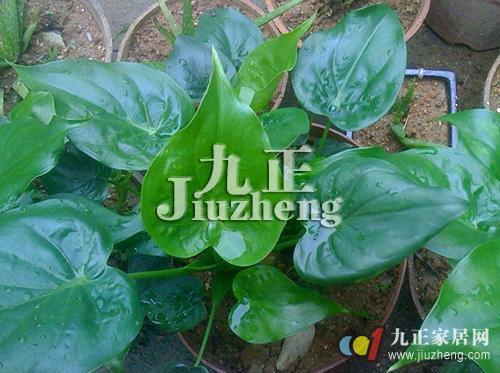
The scientific name of "Dripping Guanyin" is Alocasia macrorrhizos (giant taro). It is native to the tropical rainforests of South Africa. If it is grown in a humid and warm environment, water droplets will drip from the leaf edges, which is why it is called "Dripping Guanyin". When growing Alocasia macrorrhizos, pay attention to the following aspects:
(1) Temperature. Alocasia macrorrhizos can only grow well in an environment not lower than 18°C. If the temperature is lower than 18°C, Alocasia macrorrhizos will enter a dormant state and stop growing.
(2) Light. Alocasia macrorrhizos prefers shade, so direct sunlight must be avoided.
(3) Fertilizing. Alocasia macrorrhizos likes fertilizer. When Alocasia macrorrhizos becomes "wilted," it is mainly because of insufficient fertilizing. Therefore, according to its growth condition, Alocasia macrorrhizos should be fertilized once a month.
(4) Watering. Alocasia macrorrhizos drips water along its leaves, and this characteristic makes many people think that Alocasia macrorrhizos must love to "drink water." But in fact, Alocasia macrorrhizos is not always "thirsty," and watering once a week is enough. Be careful not to spray water on the leaf surface of Alocasia macrorrhizos. Water in the north is highly alkaline, and spraying water will cause white spots to appear on the leaves.
How to grow Alocasia macrorrhizos. Cultivation methods for Alocasia macrorrhizos. What to do if the leaves turn yellow and the roots rot
The corms and leaves of Alocasia macrorrhizos can be used medicinally, but they are highly toxic. The leaf sap will cause poisoning if ingested, so if there are pets or children at home, it is not suitable to grow Alocasia macrorrhizos, to avoid tragedy. This is a point that requires extra attention when growing Alocasia macrorrhizos. Now let's learn about the cultivation methods for Alocasia macrorrhizos.
How to grow Alocasia macrorrhizos. What to do if Alocasia macrorrhizos has root rot
The leaves of Alocasia macrorrhizos are thick and glossy, suitable for placement in the living room. It is an ornamental large indoor foliage plant, and many people grow it at home. But specifically, how do you grow Alocasia macrorrhizos? What should you do if Alocasia macrorrhizos has root rot? Below, we will introduce the cultivation methods for Alocasia macrorrhizos, as well as the causes of root rot in Alocasia macrorrhizos and the solutions.
How to grow Alocasia macrorrhizos
1. Substrate preparation
Cultivate with a nutrient soil made by mixing loose domestic peat with good drainage and aeration, a 2:2:1 mix of pond mud, peat soil, and coarse sand, plus a small amount of thoroughly decomposed cake fertilizer. Add water to the peat and mix well (standard for adding water: after adding water and mixing well, when you tightly squeeze a handful of peat, water seeps out from between your fingers). Then wait to plant it in cups.
2. Potting
For old pots that are reused, they must be soaked in a 2000-fold potassium permanganate solution for more than half an hour, then rinsed with clean water and dried for later use. Large pots are generally planted in 20cm specification pots. When planting, first place about 4cm of substrate at the bottom of the cup, then transplant the screened seedlings into the cup. Small seedlings should not be planted too deep, and it is best to keep the base of the plant level; the substrate should be moderately firm and filled to 8/10 of the cup, with 2-3 plants per pot.
3. Spraying water
Alocasia macrorrhizos especially likes moisture. During the growing season, not only should the potting soil be moist, but the air humidity should also be no less than 60%. During high summer temperatures, spraying water should be strengthened to create a relatively cool and humid environment for it. If it is placed in an indoor air-conditioned hall, it is necessary both to keep the potting soil moist and to spray the leaf surface from time to time. If the indoor temperature in winter cannot reach 15°C, watering should be controlled, otherwise it is easy to cause root rot in the plant. Under normal circumstances, spraying warm water once a week is enough to keep its leaves dark green.
4. Fertilizing
Alocasia macrorrhizos relatively likes fertilizer. From March to October, a liquid fertilizer should be applied once every half month, and the proportion of nitrogen can be appropriately increased. If a little ferrous sulfate can be added, so much the better; then the leaves will grow as large as lotus leaves and be smooth and attractive. Fertilizing should stop when the temperature is below 15°C.
5. Pruning
Because Alocasia macrorrhizos is a foliage plant, when planting and care are improper, the largest leaf may turn yellow and dry up. At this time, it should be cut off together with the stem using a knife, otherwise it will affect the growth and ornamental value of the other leaves.
6. Repotting
You can use a nutrient soil made by mixing leaf mold, peat soil, river sand, and a small amount of thoroughly decomposed cake fertilizer. Alternatively, it can also be hydroponically grown, but care should be taken to prevent root rot and to add nutrient solution. Usually repot once every spring, and loosen the soil once a month to keep the potting soil in a well-aerated state.
What to do if Alocasia macrorrhizos has root rot
Causes of root rot in Alocasia macrorrhizos
Alocasia macrorrhizos is divided into soil culture and water culture.
Root rot in soil-cultured Alocasia macrorrhizos is mainly caused by the potting soil being too wet. If the potting soil is too wet, root and stem rot in Alocasia macrorrhizos is very likely to occur. The reasons for the potting soil being too wet may be that you watered too much, causing water accumulation in the pot, or that the soil is highly clayey, has poor air permeability, and easily accumulates water itself.
Root rot often occurs in water-cultured Alocasia macrorrhizos mainly because the stem tissue of Alocasia macrorrhizos is relatively loose. If the water quality is very poor, it may cause root rot and stem rot.
Solutions for root rot in Alocasia macrorrhizos
The solutions for root rot in soil-cultured Alocasia macrorrhizos are as follows: pull up the Alocasia macrorrhizos, cut off the rotten roots, and also cut off a little of the healthy tissue near the rotten part to ensure that what remains is all white. After cutting the roots, be careful to let it dry, and after the wound heals, plant it in well-drained, fertile, slightly acidic soil. You can also apply some plant ash to the wound for disinfection and sterilization.
It should be noted that the sap of Alocasia macrorrhizos is toxic. When cutting the roots, wear rubber gloves to prevent poisoning yourself. After Alocasia macrorrhizos is planted in the soil, remember to water only after it dries out, and do not water when it is not dry. In addition, place it in a ventilated spot for growing.
For hydroponic Alocasia macrorrhizos with root rot, the rotten part of the roots should be cut off, the mucus on the tubers and roots should be washed clean, and the water or nutrient solution should be changed. When growing it, pay attention to keeping the water in the bottle clean.
The above are the cultivation methods for Alocasia macrorrhizos introduced to everyone, as well as the causes of root rot in Alocasia macrorrhizos and the solutions. Did everyone understand? For more home knowledge, please pay attention.