How to grow Alocasia macrorrhizos? These methods you need to master
Alocasia macrorrhizos, also known as giant taro and Guangdong langdu, is a perennial evergreen herbaceous plant of the genus Alocasia in the Araceae family. Its stems are thick and upright, its leaves are emerald green and glossy, its bearing is elegant, it is highly shade-tolerant and easy to cultivate. After being grown as an indoor foliage plant, it quickly became popular and widespread, becoming a new favorite among foliage flowers. Placed in living rooms and halls, Alocasia macrorrhizos looks fresh and simple, with a rich tropical rainforest feel, and is much favored by growers.
Alocasia macrorrhizos is native to tropical Asia. In the valleys and by the streams of Fujian, Hainan, Jiangxi and other provinces in southern China, it often grows wild, reaching up to 5 m in height. It likes a hot, humid, semi-shaded environment, fears blazing sun, and is not cold-tolerant. Its suitable growing temperature is 22-30°C, and it can withstand short periods of 0°C low temperature. It is not strict about soil, and loose, well-drained sandy loam is best.
Alocasia macrorrhizos is mostly propagated by division, and can also be grown from seed or cuttings. Division is most suitable in May-June. When the tiller buds sprouting from the base of a mature mother plant have two leaves, they can be cut off with a sharp knife, the wounds coated with plant ash, and after the wounds dry slightly they can be inserted into substrates such as peat or vermiculite. If soil is used as the substrate, it must be strictly sterilized to prevent infection and rot. After cutting, shade the plants and frequently mist the leaves to maintain high air humidity; the substrate only needs to be slightly moist, and watering must not be excessive. After new roots form, they can be transplanted into pots and kept in a semi-shaded place for care.
Small tubers can also be sown, also preferably in May-June. When sowing, place the small tubers with the tips pointing up and bury them in a sterilized substrate, keeping the soil at medium moisture; new shoots can grow in about 20 days. The dried stems of Alocasia macrorrhizos can also be cut into sections for cuttings, and they root and sprout easily. After Alocasia macrorrhizos blooms, it also easily sets seed; the seeds are red when mature and can be enjoyed for their looks. Harvest after maturity and sow at 25°C for better seedling emergence.
Alocasia macrorrhizos is simple to maintain and easy to grow. After being moved outdoors in spring, water it thoroughly once and place it in full sunlight, but from June to September it must be shaded; a semi-shaded, moist environment with 50%-60% light transmittance is better. If the light is too strong in summer, the leaves will turn yellow and lose their gloss. At home, near an east-facing window is best, and in winter good light should still be maintained. For Alocasia macrorrhizos displayed in a dark indoor spot, it should be moved to a brighter place for a period of care about once a month, to prevent prolonged darkness from causing weak growth.
During the growing season, keep the soil moist but not waterlogged. For this, when preparing the growing mix, use 2 parts garden soil, 2 parts peat, and 1 part perlite or coal cinder, mixed evenly. In this way, even if there is a bit more water, it will not cause water to accumulate in the pot. When Alocasia macrorrhizos is placed indoors, it can be set on a tray, but the water depth should not exceed 2 cm; having water can increase humidity, but too much water stored in the tray will keep the soil too wet for a long time, affecting root growth and respiration, leading to poor plant growth and even death. Because it likes humid air, when watering normally, spray the leaves with water; especially in the summer and autumn growing season, maintaining high air humidity can keep the leaves fresh and glossy. Fertilize from May to September, applying 2-3 times a month with either rotted organic fertilizer or inorganic fertilizer. With more fertilizer the leaves are large; with less fertilizer the leaves are small and yellow.
Alocasia macrorrhizos fears cold. After being brought indoors in October, the indoor temperature in winter is best kept above 5°C. Below 5°C, the leaves easily turn yellow and fall off; below 0°C, the leaves will be noticeably damaged by cold. In winter, water less and keep the potting soil slightly moist to prevent too much water from damaging the roots. On sunny days, wipe the leaf surface with warm water, which can both increase humidity and keep the leaf surface clean and glossy, maintaining high ornamental value.
Alocasia macrorrhizos has large, beautiful leaves that are emerald green and delightful. It is suitable for placement in halls and similar places, elegant and generous, full of tropical flavor. But although Alocasia macrorrhizos is beautiful, the sap in its stems and leaves is toxic. It must not be eaten or gotten into the eyes. After contact with the skin, immediately wash it off with water and vinegar.
How to grow Alocasia macrorrhizos, the growing methods for Alocasia macrorrhizos / 6 points
As one of the common household plants, Alocasia macrorrhizos is something everyone has likely heard of, and many flower lovers keep it at home. But the editor wants to ask: do you really know how to grow it? Have you ever been poisoned by it? Although Alocasia macrorrhizos is easy to grow, there are some things we need to know. How to grow Alocasia macrorrhizos? Below are the growing methods for Alocasia macrorrhizos compiled by the editor based on the experience of many flower lovers. Come take a look!
1. How to grow Alocasia macrorrhizos, master 6 points
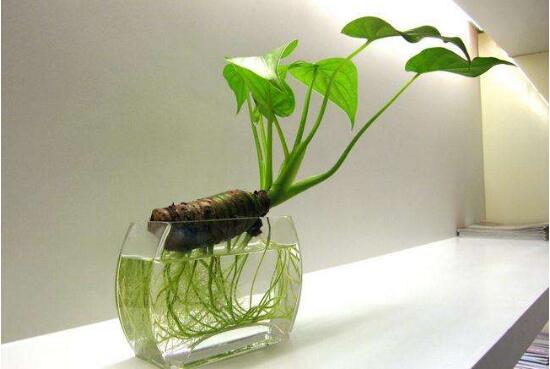
First, to grow Alocasia macrorrhizos at home, you need to provide its growing conditions. We all know that when growing plants at home, the things to pay attention to are really just these 6 points: the necessary soil (except for hydroponics), the amount and degree of watering, suitable temperature, light, fertilizing, and proper pruning. The editor will introduce these in detail for everyone.
2. Growing methods and precautions for Alocasia macrorrhizos
1. Soil, ordinary garden soil
Earlier, we introduced hydroponic Lysimachia nummularia, and learned that growing it can be done without soil. But Alocasia macrorrhizos is different. Although it has become accustomed to a free environment, it still has requirements for soil. For this, flower lovers can choose ordinary garden soil or a mix with leaf mold; if the soil is rather sticky, add a little fine sand to neutralize it.
Precautions: (1) Pay attention to preventing root rot and adding nutrient solution; (2) Usually repot once every spring, and loosen the soil once a month to keep the potting soil in a well-aerated state.
2. Water, spray more in summer
How to grow Alocasia macrorrhizos? Watering is very important. It is understood that Alocasia macrorrhizos needs sufficient water for growth, especially in summer, when the environment is stuffy and hot. Spray water on the leaves every midday to increase air humidity; only then will the leaves of Alocasia macrorrhizos be large and thick. In winter, as long as the indoor temperature is relatively high, it can be watered normally.
Precautions: (1) Do not water too much, otherwise the stems of Alocasia macrorrhizos will rot; (2) When watering, make sure there is sufficient light; do not water on cloudy days. Light and water must work together for Alocasia macrorrhizos to grow well.
3. Temperature, best at 20-25°C
Among the growing methods for Alocasia macrorrhizos, temperature has a great effect on it. It is understood that Alocasia macrorrhizos likes a warm, humid, semi-shaded environment, and its most suitable growing temperature is 20-25°C. Below 18°C, it enters dormancy and stops growing, which means it should be moved indoors in time in winter to ensure an appropriate temperature.
Precautions: During cultivation, you must especially grasp the changes of the seasons. Especially now that summer is approaching, pay special attention to placing Alocasia macrorrhizos in a semi-shaded, ventilated place, and spray water on its leaves multiple times to maintain air humidity. Avoid abnormal conditions in Alocasia macrorrhizos caused by excessively high temperatures.
4. Light, 3-5 hours of light
Alocasia macrorrhizos is a plant that likes shade and coolness, and can grow very well in bright light. So when everyone buys it home or for the office, placing it in an indoor corner with light but not strong light is enough. If the light is too strong, the leaves will wilt. However, during the flowering period, sufficient sunlight must be ensured; otherwise the buds will have a pale green color, affecting quality. Therefore, Alocasia macrorrhizos at home or in the office only needs about 3 hours of light per day.
Precautions: (1) Alocasia macrorrhizos most avoids direct sunlight, so do not take it outside just because you see strong sun; (2) When the leaves of the cultivated Alocasia macrorrhizos droop, it may be due to lack of fertilizer; at this time, add some liquid fertilizer to it.
5. Fertilizing, once a month
Alocasia macrorrhizos is extremely fond of fertilizer. Once a fertilizer deficiency appears, the leaf bases will shrivel. Therefore, the fertilizing cycle for Alocasia macrorrhizos is once a month, and every 2 weeks it must be given an additional fertilizer application, with appropriate watering. The fertilizer choice is mainly nitrogen fertilizer, with phosphorus and potassium fertilizers as supplements.
Precautions: (1) When topdressing, be careful not to splash fertilizer water onto the leaf edges, as this easily causes leaf rot; (2) Many flower lovers hope to ensure that the leaves of Alocasia macrorrhizos are large and green through fertilizing. This is indeed a good method. Flower lovers only need to add a small amount of ferrous sulfate to the fertilizer solution each time they fertilize.
6. Pruning, cut off yellowed leaves
Because Alocasia macrorrhizos is a foliage plant, under certain improper care conditions, the largest leaves will turn yellow and dry up. At this time, they should be cut off together with the stem using a knife; otherwise it will affect the growth and ornamental value of the other leaves. This is the growing method for Alocasia macrorrhizos. Although there are quite a few points to note, as long as flower lovers are careful, there will be no problems.
Special note: Alocasia macrorrhizos is toxic!
Regarding Alocasia macrorrhizos, the editor especially reminds everyone that the white sap in its stems is toxic, and the water it drips is also toxic. Accidental contact with or accidental ingestion of its sap will cause discomfort in the throat and mouth, and a burning pain in the stomach. So flower-growing friends must pay attention. You certainly would not accidentally eat it, but special care must be taken to prevent young children from accidentally eating it.
Not only that, when our skin contacts the sap of Alocasia macrorrhizos, itching or strong irritation occurs, and contact of the eyes with the sap can cause severe conjunctivitis, and even blindness. Accidentally eating the stems and leaves will cause symptoms of nausea and pain, and in severe cases suffocation, leading to death from cardiac paralysis. Therefore, contact with Alocasia macrorrhizos should be minimized, and families with small children had best not plant it.
3. Feng shui effects of Alocasia macrorrhizos
In Chinese feng shui, it is believed that the types, attributes, and placement positions of some plants can affect a person's fate, and such plants are called feng shui plants, and Alocasia macrorrhizos is one of them. For most people, the plants placed at home are still better with round leaves, and naturally the larger and thicker the leaves, the better, so something like Alocasia macrorrhizos is quite suitable for home placement.
So what is the feng shui effect of Alocasia macrorrhizos? According to experts, placing some thick-leaved or large-leaved evergreen plants in the prosperous direction of the home can achieve the effect of“invigorating vitality”, because Alocasia macrorrhizos belongs to the type of plant that does not leak wealth, so placing it in the wealth position will have a very good wealth-attracting effect.
How to grow Alocasia macrorrhizos, growing methods for Alocasia macrorrhizos, what to do if the leaves turn yellow and the roots rot
The corms and leaves of Alocasia macrorrhizos can be used medicinally, but they are highly toxic, and its leaf sap is poisonous if ingested. So when there are pets or children at home, it is not suitable to grow Alocasia macrorrhizos, to avoid tragedy. This is a point requiring extra attention when growing Alocasia macrorrhizos. Now let us learn about the growing methods for Alocasia macrorrhizos.