How to plant pennywort? Learn the correct planting method
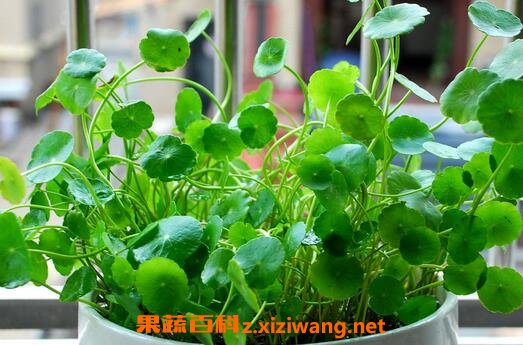
Pennywort (Hydrocotyle vulgaris) originates from Europe and is a perennial emergent aquatic plant. Its appearance is unique: a thin, upright stem topped with a round, green leaf, like a small umbrella or a little shiitake mushroom, which is why it is called pennywort. Pennywort grows about 10 cm tall and reproduces through stolons, forming a connected cluster of little shiitake-like plants, and is mostly used as a foreground plant.
Pennywort is easy to cultivate and adapts to a wide range of water conditions. It can grow in water at 20-30°C and grows very well under fluorescent lighting. Most pennywort currently sold is the emersed form, and its leaves fall off at the slightest touch when moved into an aquarium for planting, so do not disturb it carelessly. After some time, smaller submersed leaves will grow from the roots, and at that point it becomes more robust. Newly planted pennywort must have a well-developed root system so that it can grow submersed leaves; it is best if it has some stolons. If it is just a single stem of pennywort, it may soon wither and die without growing new leaves. The phosphate and nitrate levels in the water where pennywort is planted must be low, otherwise algae will grow on the leaf surfaces.
Pennywort can be planted beside driftwood or stones, or among short foreground plants such as carpet plants and dwarf vallisneria (Vallisneria), like little mushrooms growing on a lawn, and is highly decorative.
How pennywort reproduces: the planting method for pennywort
Pennywort is a green plant that symbolizes wealth and good fortune, and many people like to grow it at home. Its leaves are emerald green and especially lovely, and it can beautify the environment and bring good feng shui. So how does pennywort reproduce? What are the planting methods for pennywort? If you want to know the details, take a look at the professional introduction below.
1. How pennywort reproduces
In daily life, pennywort can be propagated from seed, but this is especially troublesome to do, so people mostly prefer to propagate it directly by division. Because pennywort has very strong vitality, you can usually just divide it and plant the divisions, and they will quickly take root. Alternatively, you can directly buy pennywort seedlings sold on the market and plant them at home. If you want to propagate from seed, you must germinate and raise the seedlings in advance, and when buying seeds you may easily end up with fake seeds.
2. The growing habits of pennywort
This plant likes to grow in a warm and humid environment. Normally it can be placed in partial sun or a shady spot, and should not be exposed to direct sunlight. It is not demanding about soil, and choosing loose soil with good drainage is enough. In addition, pennywort has poor tolerance for both high temperatures and cold, and it grows fastest in a warm environment of around 25 degrees.
3. Pennywort's requirements for fertilizer and water
Pennywort normally has relatively high requirements for fertilizer and water. It likes a warm and moist environment. In spring and autumn it should be watered once every two days, while in summer it needs to be watered once every two days, and fertilizer must be kept up. During peak growing seasons such as spring and summer, it should be fertilized once a week, preferably with a compound fertilizer high in phosphorus and potassium, or a slow-release fertilizer can be chosen. After winter arrives, pennywort's growth slows down, and both water and fertilizer should be reduced, otherwise its roots will rot and its growth the following year will be affected.
Pennywort propagation methods: teaching you step by step how to plant pennywort
Pennywort has round, shield-shaped leaves like a copper coin, with long stalks and wavy edges, and it blooms small yellow-green flowers in summer and autumn. It grows segment by segment, with one leaf on each segment, and can keep extending. It is one of the aquatic plants that is both attractive and very easy to grow. So, would you like to know some knowledge and experience related to pennywort? Do you want to grow pennywort well? Today, let us get to know it together.
Preparations before propagating pennywort
Space preparation: before propagating, find a suitable spot at home for your pennywort. It cannot be just anywhere; it needs suitable sunlight, good ventilation, and appropriate moisture levels.
Tool preparation: a potted pennywort plant, a flowerpot, an ordinary plastic cup, water, and soil.
The propagation steps for pennywort
From the original pennywort pot, or from the home of relatives or friends, casually pick a few stems of pennywort with roots and leaves. It does not matter even if there are no leaves; they can still be kept alive.
Pennywort stems and leaves
Prepare one cup, or a small flowerpot will also do. An unused rinsing cup or water cup at home will work as long as it does not leak.
Cup
Prepare fertile soil; adding a little sand is also fine. The more fertile the soil, the better, and fertilizer can also be added later.
The planting soil for pennywort
Bury the roots of the pennywort in the mud and do not let them float up. Then add water. Every day, when you see that the water has dried up or decreased, remember that you must water more, otherwise it will dry out and that will not be good.
Small pot of pennywort
Or plant it in a large flowerpot. It is said that the larger the flowerpot, the better it grows. In fact, this is not necessarily the key; the key is still plenty of fertilizer and plenty of water.
Fertilizer for pennywort
Next, start putting it in the sun. Pennywort really likes sun exposure, and even the strong summer sun will not harm it. So sufficient sunlight is key.
Pennywort in the sun
Fertilizer is also key. If you see the leaves getting smaller and smaller and rather thin and weak, then it is time to add fertilizer.
Adding nutrients for pennywort
At first there are only a few sparse stems of pennywort, but with enough fertilizer, enough water, and enough sunlight, it will quickly fill the pot. In winter, you can bury the entire root in the soil, and the following year it will sprout again and grow new pennywort leaves.
The above is what I have learned today about aquatic plants. I hope fellow flower lovers will find this article helpful after reading it. If you want to know more about aquatic flowers, please continue to follow our Succulent Garden, and we will provide you with more related content as soon as possible!