Sand-burial method for sprouting and rooting Dracaena fragrans cuttings
Burying Dracaena fragrans in sand to force sprouts and roots is actually a form of cutting propagation. When Dracaena fragrans is shipped from the south to the north, most of it arrives as finished plants with leaves, soil and pots. Leaves are easily damaged in transit, which affects the ornamental effect. Transport is inconvenient and the cost is too high. If, instead, Dracaena fragrans canes are shipped, then sprouted and rooted after arriving in the north, they can be transported in bulk without fear of leaf damage along the way. After arriving in the north, sand burial can be used to force sprouts and roots for propagation. The specific procedure is as follows:
(1) First cut 1.5 m long Dracaena fragrans canes into short sections of 75 cm and 45 cm as needed, and seal the top with wax to prevent moisture loss.
(2) Inside the greenhouse, build a small plastic film tunnel; lay three layers of bricks beneath the tunnel, pour coarse sand inside the bricks and water it until damp.
(3) Insert the shortened Dracaena fragrans canes into the wet sand and maintain the environment inside the small tunnel at a temperature of 35°C and a humidity of 90%. After about 40 days, the Dracaena fragrans will push out plump, strong new shoots.
(4) After the new shoots of Dracaena fragrans have opened leaves and rooted, gradually remove the plastic film tunnel, and after airing and sunning for a period, they can be potted for care. Dracaena fragrans propagated by this sand-burial sprouting and rooting method has good quality and vigorous growth, and is deeply welcomed by enthusiasts.
How to propagate and cultivate Dracaena fragrans
The Chinese name of Dracaena fragrans is Xianglongxueshu, with the aliases Brazilian iron tree, Brazilian millennium tree and golden-edged fragrant dragon's blood tree; it is a plant of the genus Dracaena in the family Liliaceae. It is an evergreen tree with a neat plant shape and upright stems. The leaves are clustered at the top of the stem, 40-90 cm long and 6-10 cm wide, with slightly blunt tips, curved into a bow shape, and bearing bright yellow or milky white stripes; the leaf margins are bright green, with wavy undulations and a glossy sheen. The flowers are small, yellow-green and fragrant.
Dracaena fragrans is native to tropical regions. It likes an environment with ample light, high temperature and high humidity, and is tolerant of shade and dryness; it grows well in bright diffused light and in the relatively dry environment of northern rooms.
Dracaena fragrans is propagated by cuttings. Use branches pruned from stems with poorer plant shape as cutting material, cut them into 5-10 cm sections, and insert them upright or lying flat in a cutting bed with coarse sand or vermiculite as the medium. They can also be rooted by water culture. The specific method is to insert the cut stem sections into water; the cut surface should be smooth, and the upper end can be coated with wax to prevent water evaporation, which is especially important in dry seasons. The lower end is immersed 2-3 cm in water, the temperature is above 25°C, and the water and container must be kept clean. Leafy shoot tips root relatively quickly, rooting and being potted in 3-4 weeks; stem sections root more slowly, sometimes requiring 2-3 months to grow new roots and new shoots. Management techniques: as long as conditions such as temperature are suitable, Dracaena fragrans can grow throughout the year.
In summer during high temperatures, appropriate shading is needed. In winter, the room temperature must not be lower than 5°C, but it is best to let it go dormant in winter; the dormancy temperature is 13°C. If the temperature is too low, yellow-brown spots will appear on leaf tips and leaf margins. Dracaena fragrans placed indoors should be in a location with ample light. If the light is too weak, the markings on the leaves will turn green, the basal leaves will yellow, and the ornamental value will be lost. During the cultivation period, keep the water clean and water 1-2 times per week; do not use too much water, to prevent the trunk from rotting. In summer during high temperatures, spraying can be used to raise air humidity, and water can be sprayed on the leaves to keep them moist.
During the growing season, Dracaena fragrans should be given appropriate foliar topdressing, spraying the leaves with a dilute nutrient solution once every half month. After Dracaena fragrans has been cultivated for several years, when the plant is too tall or the lower leaves of the stem have fallen off and the plant shape is poor, pruning should be carried out. Repot or change the soil every year in early spring. For potted Dracaena fragrans, if the environment is unsuitable, there may be damage from red spiders, thrips, scale insects and the like. In addition, excessive ventilation, drought, irregular watering and excessive fertilization can all cause leaf tip scorch.
Dracaena fragrans is a rather popular large indoor potted ornamental plant, especially when placed in relatively spacious living rooms, studies and sitting rooms, where it has an elegant, simple style with a southern tropical flavor. It is a world-famous new-generation indoor foliage plant with a graceful and neat plant shape.
How does Dracaena fragrans propagate? Illustrated guide to Dracaena fragrans propagation methods / 100% cutting survival rate
As an introduced foliage plant from abroad, Dracaena fragrans has been much loved by flower enthusiasts in recent years. It is not only good-looking, but also has amazing effects in purifying air and beautifying the home, so it is propagated in large quantities. Different plants have different propagation methods, so how does Dracaena fragrans propagate? Now let's take a look together with the editor at the illustrated guide to Dracaena fragrans propagation methods.
1. How does Dracaena fragrans propagate? Cuttings/layering/sowing
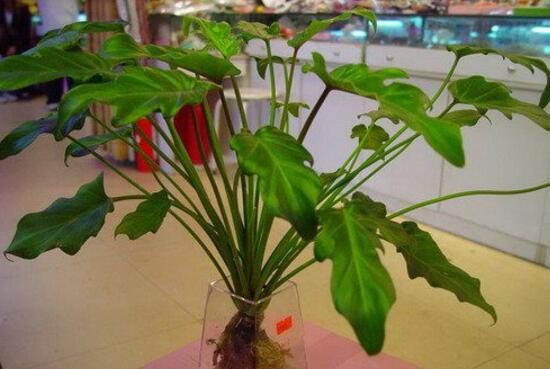
As a common foliage plant, the cultivation method of Dracaena fragrans is actually very simple; with care, it can be amazingly beautiful. However, if you want to propagate Dracaena fragrans yourself, it is not so easy. According to research, Dracaena fragrans has three propagation methods: cuttings, division and sowing, among which cuttings are the most commonly used. Let's take a look at the specific operations below.
2. Illustrated guide to Dracaena fragrans propagation methods
(1) Cutting propagation of Dracaena fragrans
When it comes to propagating Dracaena fragrans, the most commonly used method is still cutting propagation. According to the editor's research, the cutting propagation of Dracaena fragrans can also be divided into two types: column cutting and thin-branch cutting.
1. Column cutting of Dracaena fragrans
① Cuttings: choose thick trunks with a diameter of 6-10 cm as cuttings. However, trunks of more than 10 cm can also be chosen, but the trunk must be kept fresh, and the color of the bark is preferably light yellow;
② Medium: according to the growth habits of Dracaena fragrans, the cutting medium can be river sand, vermiculite or moss. The medium depth should be about 30 cm; remember to disinfect it before cutting;
③ Cutting: insert the cuttings into the medium to a depth of about 10-25 cm. Of course, the depth is mainly related to stability; if the cutting height reaches more than 1 m, other methods can be used to fix it in place for stability;
④ Care: water promptly after cutting to keep the soil moist, while avoiding sunlight around midday. After about one month, new shoots can be seen emerging. When the new shoots grow to 5 cm to 10 cm high, they can be planted in place.
2. Thin-branch cutting of Dracaena fragrans
Thin-branch cutting of Dracaena fragrans is combined with pruning; in order to control the height of Dracaena fragrans, the cut branches (extended: pruning methods for Dracaena fragrans) can be used for cuttings. When cutting, horizontal insertion and vertical insertion can be chosen, keeping the room temperature at 25-30°C; after about one month, new roots can grow. Note: in order to avoid pests and diseases of Dracaena fragrans, various soils, containers and tools must likewise be disinfected before cutting.
(2) Other propagation methods for Dracaena fragrans
Besides cuttings, Dracaena fragrans can also be propagated by air layering (complicated operation, low survival rate). Also, Dracaena fragrans bears fruit after flowering, and seeds remain afterward, so Dracaena fragrans can also be propagated by sowing. However, it is generally difficult to obtain mature Dracaena fragrans seeds, so sowing propagation is not often used.
Overall, when propagating Dracaena fragrans, whether by cuttings, division or sowing, it can survive, but the one suitable for home propagation is still cuttings. Of course, methods are fixed while people are flexible; everyone can choose a method for propagation according to actual conditions. This is where the editor's introduction to Dracaena fragrans propagation methods ends, and I hope it can be helpful to everyone.