Detailed Guide to Hydroponic Kalanchoe Methods and Care Points
1. Key Points for Selecting Material for Hydroponic Kalanchoe
Choose a soil-grown plant with a good plant shape and cultivate it hydroponically using the root-washing method. It is best to use ceramsite as the substrate, which makes it easy to secure the plant and also helps rooting, so the plant can quickly adapt to the hydroponic environment. You can also select robust growing branches in spring and autumn, remove the lower leaves, let them dry slightly, and then place them directly in water for hydroponic cultivation; after 5 days, water roots will grow.
2. Key Points for Hydroponic Kalanchoe Care
For hydroponic kalanchoe, initially change the clean water every 2-3 days. After 2 weeks, add general-purpose plant nutrient solution, and renew it every 3-4 weeks.
Kalanchoe is easy to manage and grows quickly. Plants propagated by cuttings before September can all grow into full plants by the Spring Festival. When the stems and leaves grow too tall, pinch them back to encourage more branching and maintain a beautiful plant shape, but stop pinching after flower buds form in November. Except in midsummer, when strong direct light should be avoided, it should be placed in a spot with ample light in other seasons; with insufficient light, the branches become thin and long, and the leaves become small and thin.
With long-term insufficient light, the leaves will drop in large numbers. If a plant that has already bloomed is kept in a dark place for a long time, the flower color will fade, and then the flowers will wither and drop. To make the plant bloom from New Year's Day to the Spring Festival, the winter nighttime temperature should be above 10°C, and the daytime temperature should be between 15-18°C. After the flowers fade, promptly remove the spent flowers to reduce nutrient consumption.
What Are Some Easy-to-Grow Hydroponic Plants? 15 Super Simple Hydroponic Plants
Many people like growing hydroponic plants in daily life, so do you know what easy-to-grow hydroponic plants there are? Below, the editor recommends 10 super simple, easy-to-grow hydroponic plants for everyone.
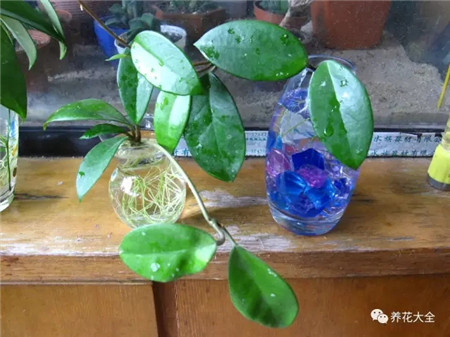
What Are Some Easy-to-Grow Hydroponic Plants -- Plants That Can Be Grown Hydroponically from a Pinched Branch
Hoya
Flower meaning: youthful beauty
Placement: balcony, windowsill, bookshelf
Hoya branches are graceful and beautiful, and the stems are fleshy. Each node has aerial roots. For hydroponics, cut a branch about 20 cm long and insert it directly into water. In about 20 days, you can see white water roots growing out.
Care points:
Frequently mist the leaf surface to keep the leaf color brighter and more beautiful. In winter, it is enough to change the water about once every two weeks.
Ivy
Flower meaning: gratitude, loyalty, eternity
Placement: living room, study
Ivy is an evergreen vine with graceful branches and is simple to grow hydroponically. Cut the branches and insert them in water. If the room temperature can reach about 20 degrees, new roots can sprout in about 3 weeks.
Care points:
For hydroponics, you can choose ones with richly colored leaves for higher ornamental value. In summer, shade is needed; in winter, just place it in a spot with ample light. Change the water when it becomes dirty.
Pothos
Flower meaning: warm and cheerful
Placement: living room, windowsill
When it comes to plants that can survive from a pinched branch, pothos is definitely one of them. It can live when it meets water, and even a three-year-old child can grow it well, so why worry that you cannot grow it well? For hydroponics, cut a branch with aerial roots, which can promote faster rooting of the branch.
Care points:
Pothos likes a humid environment. Frequently spraying the leaf surface can make the leaves more vivid and beautiful. The indoor temperature in winter must not be lower than 5 degrees, otherwise it is very easy to get cold damage.
Arrowhead Plant
Flower meaning: pure love
Placement: coffee table, desk
Arrowhead plant is also a common trailing plant, and its stems have many aerial roots, making it very suitable for hydroponics. For hydroponics, cut a branch with aerial roots and insert it directly into water for water cultivation. It can root in about 10 days and is not affected by the season, so it can be done all year round.
Care points:
Choose the time to change the water according to the water quality. Over time, the arrowhead plant will grow new vines again. Gardeners can appropriately guide them so they decorate our home.
Spider Plant
Flower meaning: wealth and good fortune
Placement: living room, study
Spider plant has the good reputation of being a "green purifier," and it can be said to have a huge purifying effect on the environment. So if you think soil cultivation is too difficult, you might as well try hydroponics once. Cut off the small spider plantlets with aerial roots from the stolons of the mother plant and insert them into water for water cultivation; after a few days, you will see the plant grow new white tender roots. It is just that simple~
Care points:
Hydroponic spider plants should be placed in a spot with better light, which is good for rooting. In the first few days, change the water every day; after rooting, just change it when the water becomes dirty.
What Are Some Easy-to-Grow Hydroponic Plants -- Plants That Can Be Grown Hydroponically Just by Washing the Roots
Flower meaning: longevity
Placement: living room, study, bedroom
Monstera can be grown hydroponically in all four seasons. Choose a healthy plant, not too large, take it out of the pot, wash the roots clean, and then place it in clean water for hydroponics.
Care points:
When the air is dry, spray water on the leaf surface to keep it moist. Monstera can be grown hydroponically in all four seasons, but in summer it is prone to root rot, so do not add nutrient solution at this time. In winter, place it in a spot with ample sunlight. If root rot is found, disinfect with potassium permanganate, then rinse with clean water and continue hydroponic cultivation.
Podocarpus
Flower meaning: health and longevity, good luck and wealth
Placement: children's room, study
One-year-old podocarpus is very easy to grow hydroponically. Wash off the soil from the roots and secure it in the planting basket with maifan stone. It stands gracefully and looks very beautiful.
Care points:
Frequently spray water on the small leaves and occasionally add diluted nutrient solution, which can make the leaf color more beautiful.
Cactus
Flower meaning: unwavering
Placement: living room, study
Gardeners who cannot even keep cacti alive, look here. Take a robust growing cactus out of the pot and wash its roots, then place the cactus in a planting basket and choose a heavy, stable glass container for hydroponics to prevent the cactus from falling over. In this way, a hydroponic cactus will never be grown to death again.
Care points:
The cactus body should not touch the water surface. When changing the water, do not drip water onto the cactus, to prevent the cactus ball from rotting. Choose the water-changing frequency according to the water quality, and frequently clean the container bottle to avoid moss growth.
Guzmania
Flower meaning: wealth, respect
Placement: living room, study
Guzmania has unusual flowers and glossy leaves, can absorb carbon dioxide, and reduce electromagnetic radiation,
but its upper part is relatively large and its root system is not well developed, so when growing it hydroponically, it is necessary to secure the roots with maifan stone or another substrate.
Care points:
The leaf surface easily attracts dust, so it should be wiped frequently. Each time you change the water, you can add some water inside its cup-shaped structure, but be careful not to splash it onto the flowers.
Flower meaning: good luck and wealth
Placement: living room, study
Money Tree, originally named Malabar chestnut, is widely loved by people because it is named money tree. For hydroponics, wash the plant roots clean, cut off old roots, then insert the plant into moist river sand to induce new roots. When the new roots grow to about 2 cm, rinse them and place them in a hydroponic container for hydroponic cultivation.
Care points:
Hydroponic money trees should be placed in a bright indoor spot. A long-term shaded environment will cause the leaves of the money tree to drop. In winter, the temperature must not be lower than 5 degrees.
What Are Some Easy-to-Grow Hydroponic Plants -- Plants That Can Be Grown Hydroponically from a Fruit
Peanut
Placement: living room, study, bedroom
Have any gardeners tried hydroponic peanuts? Remove the peanut shells and place them directly in a hydroponic container, and they will grow green peanut sprouts, which are good-looking and save money!
Hydroponic peanut sprouts need to be placed in a spot with ample light. Insufficient light easily leads to leggy growth. Also, hydroponic peanut sprouts can only be enjoyed ornamentally. If you want to harvest peanuts, gardeners still need to grow them in soil n(*≧▽≦*)n.
Potato
Placement: living room, balcony
Do not throw away sprouted potatoes; growing them hydroponically can also create a little bit of greenery. For hydroponics, you can grow the whole potato hydroponically, or cut it into pieces with a knife and then grow them hydroponically. When dividing the potato, pay attention to the direction of the buds, keeping them facing upward as much as possible to facilitate plant growth.
Care points:
The water only needs to slightly cover the potato tuber. Place it in a spot with ample light and replenish water in time.
Sweet Potato
Placement: living room, study
Hydroponic sweet potatoes are natural and beautiful, and can be styled into all kinds of shapes. Moreover, sweet potato leaves can also be eaten. It is sweet potato season right now, so hurry up and grow a pot hydroponically.
Care points:
Do not put the whole sweet potato into the water. Change and add water in time, provide ample light, and try not to let the temperature fall below 5 degrees.
Garlic
Placement: windowsill, balcony, living room
Choose fresh garlic and remove the outer skin so it sprouts faster. You can separate the garlic into cloves or grow it hydroponically directly. Add water up to the lower part of the garlic, and it will sprout very quickly.
Care points:
Remember to give it plenty of sunlight, otherwise the garlic sprouts will easily grow thin and weak.
Onion
Placement: balcony
Take a complete onion with no rot, remove the outer skin, and then place it in a prepared hydroponic container so the roots touch the water surface. After a period of time, you can enjoy a beautiful hydroponic onion.
Care points:
Frequently change the water for hydroponic onions and promptly cut off rotten roots. After hydroponic cultivation, place the onion in a spot with ample sunlight as much as possible, so the leaves do not become leggy.
Gardeners, come quickly and tell Huahua what plants you have grown hydroponically!
Money Tree and Kalanchoe Hard to Grow in Summer? Key Summer Care Points and Tips for These Two Plants
Recently, during the hottest time of summer, many flower growers say that money trees and kalanchoes are not very easy to grow. In fact, no matter what kind of flower it is, there are certain care tricks. As long as you master these tricks, growing flowers well will naturally be no problem. Next, let's look at the summer care guide for money trees and kalanchoes!
1. Money Tree
1. Control water at the roots and spray water on the leaves
For money trees, controlling water at the roots actually means controlling watering. Many people who grow money trees mostly kill them by overwatering and root rot, so remember that even in summer, do not water too much. Some people see that the surface of the flowerpot evaporates quickly in summer, and as soon as they see the surface soil is dry, they hurry to water, not realizing that there is still water in the pot. To judge whether the flowerpot lacks water, you can insert a chopstick into the pot and pull it out once every 2-3 days to check. Water again when the chopstick is dry, and when watering, water thoroughly.
In summer, leaf surface evaporation is high, and it is easy to dry out. Sometimes even if the pot is not short of water, the leaves are drooping. At this time, spray water to keep it moist. Use a spray bottle to spray water around the money tree leaves, which can not only lower the temperature but also quickly make the leaves perk up.
2. Strengthen ventilation
Money trees like ventilated environments the most. Places near balconies and windowsills at home, corridors, and so on, which not only have ventilation but also some scattered light, are all very suitable for growing money trees. If there is no ventilation, the water in the pot cannot evaporate in time, and root rot is also very likely.
3. Fertilize appropriately
It is often said that money trees grow slowly, so do not miss summer, this growth period. Hurry and add fertilizer appropriately, mainly nitrogen fertilizer: fermented rice water, bean cake water, or mix slow-release fertilizer, compound fertilizer, etc., into the soil. Add fertilizer once every half month, and after one summer there can be a big change!
4. Measures for handling yellow leaves and root rot
If the money tree's leaves droop and turn yellow because of too much watering or lack of ventilation, promptly remove the yellow leaves, move the money tree to a ventilated place, pause watering, and wait 3-5 days for the condition to improve before watering normally again.
If the condition does not improve after 3-5 days and the leaves continue to turn yellow, then dig it out quickly and take a look; the roots may already be rotten. Use a knife to cut off the rotten part and soak it for 20 minutes in carbendazim solution or potassium permanganate solution for disinfection.
After disinfection, insert it directly into water for hydroponics. The water here is best tap water that has been left to stand (to remove chlorine). During hydroponics, you can add a little rooting powder or vitamin B or aspirin, which can accelerate rooting.
If you find it troublesome, you can also cut a thin branch for hydroponics. As long as it is a healthy one-year-old strong branch, the success rate of hydroponics is very high.
2. Kalanchoe
1. Kalanchoe can also bloom during the dormant period
When the temperature exceeds 35 degrees, kalanchoe begins to enter the dormant period, but some people's kalanchoes are blooming right now. What is going on? The factor that affects whether kalanchoe enters dormancy is temperature. If you move the kalanchoe into an air-conditioned room, or place it on a cool balcony, and the temperature is around 23-30 degrees, it will not enter the dormant period and will continue to grow normally. Above this temperature range, it will enter dormancy.
Light also affects kalanchoe. If you shorten the light time, with 4 hours of mild sunlight during the day and the rest of the time in a cool place, then with a temperature difference of 8-10 degrees between cold and warm, the kalanchoe mistakenly thinks the flowering period has arrived, and so it blooms.
Of course, if your kalanchoe has already entered the dormant period, do not fuss over it like this. It is better to learn how to help it safely through the summer!
2. How to judge whether kalanchoe is dormant
Most kalanchoes enter dormancy in July and August. If the growth rate of the kalanchoe obviously slows down, and it seems not to grow taller, not to bloom, and the leaves either turn yellow or develop black rot, it means it has already entered dormancy.
3. How to get dormant kalanchoe through the summer
If your kalanchoe has already gone dormant, then start watering it less, move it to a cool, well-ventilated spot, and prune off all the yellow leaves to reduce nutrient consumption. Don't do any fertilizing or repotting for now; wait until after September.
4. Kalanchoe needs a trim when you grow it
If a kalanchoe is in its dormant period, it tends to grow leggy easily, so those of you growing kalanchoe must pay attention to this problem. As soon as you notice the kalanchoe getting leggy, prune it right away, otherwise if it keeps growing until autumn, it will be too late to prune. When pruning kalanchoe, you can follow the principle of "remove two, keep four": for a branch with 6 pairs of leaves, cut off the length of 2 pairs of leaves and keep the stem with 4 pairs of leaves.
The kalanchoe cuttings you remove can also be re-propagated. Even though it is summer now, this can still be done: insert the cuttings into breathable sandy soil, water them thoroughly, place them on a cool, well-ventilated north-facing windowsill, and mist them daily to keep them moist. They will roughly root in 1-2 weeks.
Summer temperatures are high and the light is intense, so no matter what kind of flower you are growing, you must do a good job with watering and other care. That wraps up this summer care guide for money tree and kalanchoe. Here the editor stresses that during the peak of summer, you should pay more attention to your plants, and you definitely won't go wrong doing so.