How to prevent and control camellia pests and diseases? A full breakdown of practical control methods
Camellia leaf spot disease occurs severely during the plum rain season in the south. First, small silvery-gray round spots appear on the leaves, then they grow larger and larger, and finally many lesions merge together, producing many small black dots on top. These black dots are the conidia of the pathogen, and when they fall onto other leaves they can continue to cause disease, expanding the infection.
When transporting camellias from the south to the north, quarantine work must be done well, and diseased plants must not be brought in. The pathogen of leaf spot disease prefers low temperatures and damp conditions, so the possibility of disease occurring during greenhouse maintenance in winter is very high. Once diseased leaves are found, they should be removed and burned immediately, otherwise it will spread to the whole plant.
In the early stage of the disease, half-strength Bordeaux mixture can be sprayed 2 to 3 times; if the disease is already severe, then 50% thiophanate wettable powder diluted 1000 times should be sprayed, once every 10 days for a total of 3 to 4 sprays, with good results.
What to do when potted camellias get insects, camellia pest and disease control (spraying insecticide to kill pests)
With the advancement of potting techniques, camellias have become a scenic feature in many people's homes. Any plant can get insects, and of course camellias are no exception. What should you do when camellias get insects? The common insect pests of camellias include aphids, stem borers, and red spider mites. The control methods differ for each type of insect. Below we will look at camellia pest and disease control.
1. What to do when camellias get insects: spray insecticide to kill pests
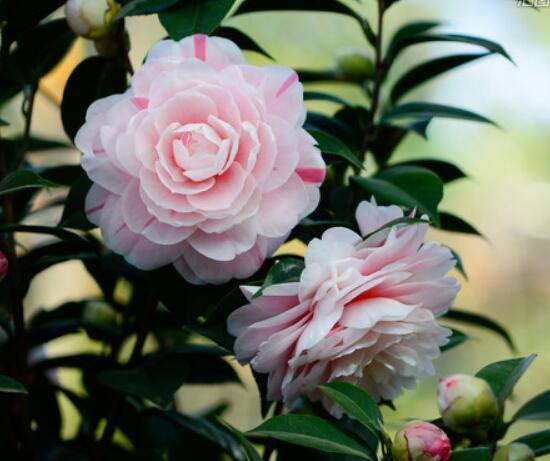
Camellias are very common in daily life, and their unique flowers and floral fragrance are deeply loved by people. Earlier we talked about how to grow camellias and the effects and benefits of camellias. Now let's discuss a very common problem: what to do when camellias get insects, and camellia pest and disease control. There are many common insect pests of camellias, and the control method for each is different. Below we will explain them one by one.
2. Camellia pest and disease control
1. Aphids
Aphids are divided into two types: winged aphids and wingless aphids. Aphids gather on the tender shoots of camellias to suck sap, causing the buds and leaves of the affected camellia to shrivel and severely affecting growth. At the same time, the excrement of aphids can also cause sooty mold.
Control method: In the early stage of aphid damage, you can spray the camellia plant with 50% phosphamidon emulsion at 2000 times dilution or 50% dimethoate emulsion every 3 to 5 days. Generally, about 3 sprays can eliminate the aphids. Another method is to use 0.5 kg of tobacco stems and 0.25 kg of quicklime, add water (about 10 to 15 liters), soak for a day and a night, filter out the residue, and then spray for control.
2. Scale insects
What to do when camellias get insects? It is very likely this kind of insect. There are many types of scale insects, among which the three that harm camellias severely are the cottony cushion scale, the red wax scale, and the chaff scale. Scale insects lay a very large number of eggs; each female can lay around a thousand eggs, and can lay 3 to 5 times a year. So in severe cases the branches and leaves are covered with scale insects sucking leaf sap. Affected leaves change from green to grayish green, and finally to yellow, causing the whole plant to wither and yellow and die.
Control method: Because these insects are mostly fairly concentrated, they are relatively easy to find. When the number is small in the early stage, you can directly crush and kill the insect bodies on the branches and leaves. If the number of insects is relatively large, you should take advantage of the weak resistance of newly hatched nymphs and grasp the right timing for applying the pesticide. (The body surface of adults has a waxy layer, so the effect of spraying is poor.)
3. Stem borers
They harm the branches and tips of camellias, causing the affected branches and tips to wither and die. Damage is generally severe in March to April and in August to September.
Control method: Cut off and centrally burn the branches with stem borers, and use light traps to kill adults. During the peak emergence period of adults, you can spray 20% dimethoate emulsion at 500 times dilution or 90% trichlorfon at 1000 times dilution; during the larval stage you can also spray 90% trichlorfon at 500 times dilution.
4. Black citrus whitefly
This insect sucks sap from the leaves and harms camellia leaves; its secretions can also cause sooty mold to occur in large amounts, severely affecting the normal photosynthesis of camellias, and in severe cases causing phenomena such as heavy flower drop.
Control method: In winter or early spring, cut off the infested branches and leaves and burn them centrally. During the peak hatching period of nymphs, you can spray phosmet, malathion, or dimethoate, etc., once every 7 days, for effective control. Through the above answers, I believe everyone now knows what to do when camellias get insects and how to control camellia pests and diseases. Below let's look at camellia disease control.
3. Camellia disease control
1. Anthracnose
This disease is one of the common diseases of camellias. It generally occurs from June to July on the leaves of that year's seedlings, and the lesions mostly start from the leaf tip or leaf margin. At the initial stage, water-soaked greenish-brown lesions appear on the edges of the basal leaves, then expand into irregular large patches with a layer of small black dots arranged in a pattern that spreads across the entire leaf, finally causing the leaves to fall off.
Control method: Strengthen cultivation management, pay attention to applying organic fertilizer and phosphorus-potassium fertilizer to improve the disease resistance of the plant, and promptly remove and burn diseased leaves. After the spring shoots emerge, spray 1% Bordeaux mixture to prevent infection by the pathogen. In the early stage of disease onset, spray with 65% zineb wettable powder plus 600 times water solution; or spray with 70% thiophanate-methyl wettable powder at 1000 to 1500 times dilution.
2. Sooty mold
This disease can affect both branches and leaves, and is more obvious on the leaves. In the early stage of infection, sooty small mold spots appear on the diseased parts, then gradually expand and connect into patches, covering most of the plant with a sooty mold layer. After the pathogen parasitizes, it not only absorbs nutrients from the flowers but also severely affects the plant's photosynthesis and respiration, causing the plant to drop a large number of leaves.
Control method: Do not plant too densely, and keep the ventilation and light transmission between plants good. Do not let humidity become too high, and control the conditions for the pathogen to breed. During the disease period, spray lime sulfur mixture at 0.3 degrees Baume, once every 10 to 15 days, for a total of 3 sprays. You can also spray 50% thiophanate wettable powder at 500 times dilution, once every 7 to 10 days, 3 sprays, which can achieve a therapeutic effect.
3. Root-knot nematode disease
This disease harms the roots of camellias, causing the roots to turn dark brown, and the root nodules to rot and rupture. The main root swells, new fibrous roots do not grow, the aboveground plant stops growing, and the whole plant gradually dies.
Control method: Before potting, disinfect the growing medium to kill the disease-causing organisms. ② After discovering the disease, immediately use disinfected growing medium as the potting soil and repot. Before repotting, the potting soil can be exposed to the hot sun for 2 to 3 days before use. You can use dibromochloropropane plus 100 to 150 times water to make a solution and spray it on the soil for disinfection, but soil treated with this chemical must be piled for 20 days before it can be used for potting. Otherwise it will damage the root system. The above is all the content on camellia pest and disease control and what to do when camellias get insects. I hope it can help you.
Pest and disease control techniques for camellias
Camellia leaf spot disease occurs severely during the plum rain season in the south. First, small silvery-gray round spots appear on the leaves, then they grow larger and larger, and finally many lesions merge together, producing many small black dots on top. These black dots are the conidia of the pathogen, and when they fall onto other leaves they can continue to cause disease, expanding the infection.
When transporting camellias from the south to the north, quarantine work must be done well, and diseased plants must not be brought in. The pathogen of leaf spot disease prefers low temperatures and damp conditions, so the possibility of disease occurring during greenhouse maintenance in winter is very high. Once diseased leaves are found, they should be removed and burned immediately, otherwise it will spread to the whole plant.
In the early stage of the disease, half-strength Bordeaux mixture can be sprayed 2 to 3 times; if the disease is already severe, then 50% thiophanate wettable powder diluted 1000 times should be sprayed, once every 10 days for a total of 3 to 4 sprays, with good results.