How to prevent and control common pests and diseases of the bromeliad (Guzmania)?
The most common diseases of the bromeliad are heart rot and root rot. In plants affected by heart rot, the tissue at the base of the leaf cup softens and rots, with a foul odor. In plants with root rot, the root tips turn blackish-brown or rot. Poor drainage of the growing medium or overwatering, water pH that is too high, poor ventilation during seedling packaging, seedlings left piled up too long before planting, and high temperature and high humidity all easily cause heart rot or root rot in plants.
To prevent and control heart rot or root rot, in addition to paying attention to watering of the growing medium and water quality, you can pour 75% oxadixyl-mancozeb, 40% fosetyl-aluminum, and Good-rite (zinc nabam) through the leaf cup. The concentration of the chemicals must first be tested on a small area before being applied on a large scale, because too high a concentration easily causes phytotoxicity.
The more common pest of bromeliads is the pineapple mite. This mite can be found at the boundary between the water reservoir of the bromeliad and the air. It specifically damages cells and can cause the center of the plant to rot. It can be controlled with 15% pyridaben emulsifiable concentrate or hexythiazox emulsifiable concentrate.
What to do when the bromeliad has bugs, pest and disease control for the bromeliad / spraying chemicals to kill them
Its effects are astonishing: it can not only be eaten to whiten the skin, but as a medicine it can also treat all kinds of ailments, so many flower lovers choose to grow it. However, during cultivation, due to improper care, the bromeliad will suffer from pest problems. So what should you do when the bromeliad has bugs? The following is the pest and disease control for potted bromeliads; the common ones include 3 major pests and 3 major diseases. Let us take a look together.
I. What to do when the bromeliad has bugs, spraying chemicals to kill them
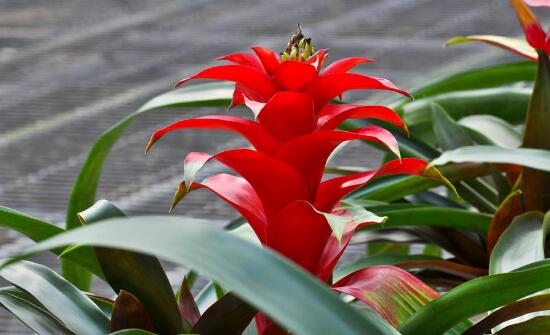
In the bromeliad's cultivation methods and precautions, we introduced the aspects that need attention during its growth. Once these standards are not met, bugs will come looking for it. As for what to do when the bromeliad has bugs, find out which kind of bug it is and then deal with it accordingly. It is understood that the bromeliad has three common pests, as follows:
1. Scale insects
These insects are not only pests of all flowers, but also one of the most common pests of the bromeliad. They are very small and mainly harm the leaves of the bromeliad. In severe cases, the leaves turn yellow, wither, and drop. This symptom generally occurs in cultivation sites with high humidity, poor ventilation, and insufficient sunlight.
Solution: When there are only a few scale insects, they can be scraped off directly. When there are many scale insects, chemical sprays can be used for control, such as 50% parathion emulsifiable concentrate or 50% parathion-methyl, both of which can be sprayed to kill them.
2. Red spider mites
Red spider mites are one of the common pests of the bromeliad. They generally appear in summer, mainly inhabit the undersides of leaves or the base of leaf axils, and reproduce extremely quickly. Red spider mites pierce and suck the liquid from leaves, buds, and variegated leaves, affecting normal growth and development. They not only affect the appearance, but in severe cases can even cause the whole plant to wither and die.
Solution: Red spider mites are relatively small, and when there are few of them, they are hard to spot. Once found, they can be washed off with clean water. In severe cases, spray a 1:1000 dilution of dimethoate solution, spraying once every 4 days, for 2-3 consecutive times.
3. Bagworms
Bagworms are one of the common pests of the bromeliad. They mainly harm the leaves, usually eating away the leaf mesophyll and leaving only a transparent lower epidermis. After the lower epidermis dries up and falls off, holes, gaps, or breaks form.
Solution: When this pest is found, chemicals should be sprayed to kill it. There are many pesticides that can be used, such as trichlorfon, dichlorvos, dimethoate, omethoate, malathion, fenitrothion, and so on.
II. Diseases of the bromeliad and their solutions
What to do when the bromeliad has bugs; after reading the above, everyone should know! However, besides being attacked by insects, diseases also constantly threaten the bromeliad. The main diseases of the bromeliad are 3 kinds: heart rot, root rot, and leaf tip yellowing. The specific symptoms and solutions are as follows:
1. Heart rot
Heart rot is caused by fungi and is one of the common diseases of the bromeliad. After contracting this disease, the tissue at the base of the leaf cup of the bromeliad softens and rots, with a foul odor, and over time the leaf cup will collapse on its own.
2. Root rot
This is also one of the common diseases of the bromeliad. After contracting this disease, the root tips of the bromeliad turn blackish-brown or rot, and no lateral roots grow, thereby affecting the plant's absorption of water and nutrients, and the plant grows slowly and becomes weak.
Prevention and control methods for heart rot and root rot: Before the above symptoms occur, you can spray a 400-fold dilution of oxadixyl-mancozeb or use a 400-fold dilution of fosetyl-aluminum to pour through the leaf cup, once a month, for three consecutive times, which can effectively prevent the diseases from occurring. Once heart rot and root rot appear, they are basically impossible to save.
3. Leaf tip yellowing and withering
Leaf tip yellowing is one of the common diseases of the bromeliad. It is mainly caused by improper watering, low air humidity, and excessive fertilization, resulting in too high a salt content in the plant's soil and causing salt damage. This is what we call a physiological disease, caused by human factors. In mild cases, it causes the leaves to turn yellow; in severe cases, the plant dies directly.
Prevention and control methods: This disease is related to water, so our watering is very important, and choosing the right water quality is even more important. Try to choose water with less salt content. For household watering, use it after exposing it to the sun. Control the temperature and avoid temperature extremes to prevent cold damage.
What are the precautions and methods for pest and disease control of the bromeliad? How should pest and disease control be carried out for the bromeliad?
The bromeliad is a common herbaceous plant that symbolizes that all goes as one wishes. It not only has an auspicious meaning, but also has extremely high ornamental value. Many flower lovers have also had experience growing bromeliads. So, do you all know what methods there are for pest and disease control of the bromeliad? Today, the editor will introduce them to you in detail.
Scale insects:When cultivating bromeliads, the common pests are scale insects. Scale insect pests are very small in body, mostly brown and yellow, with some white ones, and the body length is 1-3 mm, egg-shaped or oval. Scale insect pests pierce and suck the sap of leaves, causing chlorotic spots on the leaves, and the wounds can cause black mold disease due to the sticky secretion attached by the pests. After the eggs of scale insect pests hatch, when the nymphs can move, they immediately look for a place where they can feed on leaves, then secrete a protective waxy layer and no longer move. When the eggs have just hatched and the scale has not yet thickened, the effect of spraying chemicals for control is good. General organophosphorus pesticides such as dichlorvos, malathion, fenitrothion, etc. can be used for control. After scale insect pests become fixed, because they are protected by a waxy covering, only systemic pesticides can be used for control. Commonly used pesticides include dimethoate, omethoate, etc. A small number of scale insect pests can be manually scraped off with a fingernail.
Red spider mites:The body is extremely small, with a body length below 0.5 mm. Tiny red dots can be seen by looking carefully with the naked eye. They mainly inhabit the undersides of leaves or the base of leaf axils, and reproduce extremely quickly. Young seedlings are more susceptible to their damage, and the damage is especially severe in dry seasons. Red spider mites pierce the leaf epidermis with piercing-sucking mouthparts and then suck the sap to live, causing damage to plant growth. Pale yellow chlorotic spots appear at the damaged parts, which later turn into brown patches. In addition to common organophosphorus pesticides such as phosmet, dimethoate, omethoate, and dichlorvos, there are also acaricides specially used to kill red spider mites, such as dicofol, propargite, fenbutatin oxide, bromopropylate, and so on.
Bagworms:Bagworms have a characteristic: after the larvae hatch, they spin silk on the leaves and then glue the bitten fragments of leaves together to form a protective case, and the insect body hides inside the case. When harming the leaves of the bromeliad, they usually eat away the leaf mesophyll, leaving only a transparent lower epidermis. After the lower epidermis dries up and falls off, holes, gaps, or breaks form. The chemicals for controlling bagworms include trichlorfon, dichlorvos, dimethoate, omethoate, malathion, fenitrothion, and so on.
Caterpillars:The larvae of tussock moths are often called caterpillars. They can harm leaves and flowers, eating them into notches or biting them off. General organophosphorus or pyrethroid insecticides can be used to spray and kill caterpillars.
Snails:Snails have a spiral shell on the outside of their bodies. One kind of relatively large snail has a flat spherical spiral shell, while another kind of relatively small snail has a flat round spiral shell. The latter is commonly found harming bromeliads, mainly using its radula to scrape and eat small flowers. Snails like shady and damp conditions. On rainy days, they are active day and night causing damage. When it is relatively dry, they hide during the day and come out at night to cause damage. Snails move slowly, and wherever they crawl they leave mucus. To control snails, you can scatter quicklime powder on the ground, or first make trap piles with leaves, weeds, vegetable leaves, etc. Before dawn, the snails hide under the trap piles, and then they can be captured in a concentrated way.
Spodoptera litura:The larvae of Spodoptera litura mainly harm the flowers of the bromeliad, feeding on petals, stamens, and pistils. This insect generally hides in dark places such as the pot soil and the bottom of the pot during the day, and comes out to feed in the evening, but on rainy days it can also feed outside during the day. The pesticides used to control caterpillars can be used to control Spodoptera litura larvae.
The most common diseases of the bromeliad are heart rot and root rot.In plants affected by heart rot, the tissue at the base of the leaf cup softens and rots, with a foul odor. In plants with root rot, the root tips turn blackish-brown or rot. Poor drainage of the growing medium or overwatering, water pH that is too high, poor ventilation during seedling packaging, seedlings left piled up too long before planting, and high temperature and high humidity all easily cause heart rot or root rot in plants.
To prevent and control heart rot or root rot, in addition to paying attention to watering of the growing medium and water quality, you can pour 75% oxadixyl-mancozeb, 40% fosetyl-aluminum, and Good-rite (zinc nabam) through the leaf cup. The concentration of the chemicals must first be tested on a small area before being applied on a large scale, because too high a concentration easily causes phytotoxicity.
The more common pest of bromeliads is the pineapple mite. This mite can be found at the boundary between the water reservoir of the bromeliad and the air. It specifically damages cells and can cause the center of the plant to rot. It can be controlled with 15% pyridaben emulsifiable concentrate or hexythiazox emulsifiable concentrate.
The above is all the content I have learned today about the bromeliad. I hope flower lovers will find it helpful after reading this article. If you want to learn more knowledge about the bromeliad, please continue to follow Duorou Huapu, and we will provide you with more related knowledge!