What are the care methods and precautions for asparagus fern?
Asparagus fern, also known as cloud bamboo and mountain grass, is a perennial climbing evergreen herbaceous plant of the Liliaceae family. The stems are soft and slender with nodes, growing in clumps. The leaf-like branches are fine and slender, bright green, densely arranged like feathers. The flowers are small, bisexual, white, and mostly bloom in spring and summer. The berries are spherical, initially green, turning purplish-black when mature. There are many horticultural varieties, among which the dwarf asparagus fern has clustered stems and fine, dense, short leaf-like branches; the dense-leaved asparagus fern has denser leaves, a shorter plant, and grows more durably; the fine-leaved asparagus fern has fine and long leaf-like branches. The asparagus fern's branches and leaves are slender, shaped like cloud layers, emerald green and light, quiet and elegant, giving people a feeling of vitality and soft comfort. It is usually grown as a dwarfed potted plant, placed on a desk, writing table, or shelf, beautifying the living room and study. It is a very popular indoor foliage plant, and is also an important accompanying material for fresh cut flowers in vases, making bouquets, flower baskets, and so on.
Asparagus fern is native to South Africa. It likes warm, humid climates and semi-shaded environments, is afraid of drought, avoids dry winds, is not cold-tolerant, and likes loose, fertile, well-drained and well-aerated sandy loam soil. To make the asparagus fern beautiful in shape and elegant in branches and leaves, the following tasks need to be done well in care and management:
(1) Watering.
Asparagus fern is neither drought-tolerant nor waterlogging-tolerant. During the growing period, the frequency and amount of watering should be determined according to the season, growth condition, and the wetness of the potting soil. Normally, water until the water poured into the pot quickly seeps into the soil and the potting soil is not waterlogged. Do not water if not dry; when watering, water thoroughly, and do not give "half watering." Asparagus fern likes humid air, so in dry climates or hot weather seasons, in addition to keeping the potting soil moist, you should also frequently spray water on the branches, leaves, and the ground around the flowerpot to increase air humidity. When the ambient temperature is low in winter, watering should be controlled.
(2) Fertilizing.
Asparagus fern relatively likes fertilizer. Generally, in spring and autumn, apply a dilute liquid fertilizer about once every half a month. After the plant takes shape, fertilization should be controlled to avoid excessive growth or the production of long vines. When summer temperatures are high or winter temperatures are low, fertilization is generally stopped. If no fertilizer is applied for a long time and the potting soil is not changed, resulting in insufficient nutrient supply, the plant will become weak and the branches and leaves will turn yellow. Therefore, every 1-2 years before germination in early spring, repot and change the soil. The potting soil can be a culture soil mixed with 4 parts leaf mold, 4 parts garden soil, 2 parts river sand, plus a small amount of fully decomposed cake fertilizer powder.
(3) Light.
Asparagus fern likes semi-shaded environments and must absolutely avoid strong direct sunlight. For home care, it can be placed year-round indoors in front of a window or on a balcony with bright scattered light. If it can be moved to a semi-light location to receive light during spring and autumn when the sunlight is not too strong, it is even more beneficial to its growth.
(4) Shaping and pruning.
To make the asparagus fern beautiful in shape and elegant in branches and leaves, shaping and pruning need to be carried out in good time. One-year-old seedlings do not need pruning. Asparagus ferns more than two years old will grow climbing new stems and can be pruned at different heights so that new branches and leaves emerge from the upper leaf bases, producing shaping effects at different levels. At the same time, cut off overly dense branches, dead branches, and weak branches to facilitate ventilation.
(5) Winter management.
Asparagus fern likes warmth. In winter, it should be placed on a south-facing windowsill, and the room temperature should preferably be kept above 10°C. If it is placed for a long time in winter in a place where it cannot see light, with poor ventilation or too low room temperature, the branches and leaves are all likely to turn yellow, or even fall off and die. In winter, in rooms heated by heating or a stove, spray and wash the branches and leaves once or twice a week with clean water close to room temperature. This not only increases the air humidity around the potted flower but also keeps the branches and leaves fresh and green. In addition, if scale insects are found, they should be controlled promptly.
How to grow asparagus fern: asparagus fern cultivation tips
Asparagus fern is native to South Africa and is distributed in central China, northwest China, the Yangtze River basin, and various places in the south. It likes warm, humid, semi-shaded, and ventilated environments. It is not tolerant of severe cold in winter, not tolerant of drought, and avoids direct sunlight in summer. It is a highly ornamental plant that can be placed in the living room or study, purifying the air while also adding a literary atmosphere. Its roots are used as medicine and can treat acute bronchitis, with the function of moistening the lungs and stopping cough. Now let us take a look at asparagus fern cultivation tips.
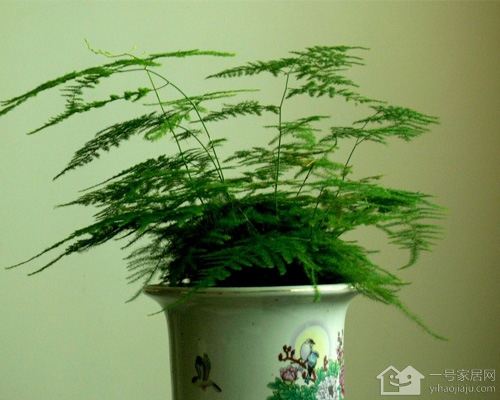
How to grow asparagus fern
Asparagus fern is an evergreen ornamental plant belonging to the genus Asparagus in the Liliaceae family, originating from Africa. It is a common potted landscape plant in homes. Asparagus fern is a green vine plant. The roots and stems are succulent clustered stems, relatively soft, and extend straight upward. Like bamboo, it has nodes, symbolizing rising step by step. Because it resembles dwarf bamboo but has more elegance and artistic flavor than bamboo, it was called asparagus fern by ancient literati. What the asparagus fern displays as its dripping green is actually not leaves but its leaf-like branches. The leaf-like branches grow densely and, gathered together, look like feathers, very elegant. Seen from a distance, the asparagus fern stacks up layer upon layer, like green clouds, so it is also called cloud pine and cloud bamboo. Its branches and leaves are luxuriant and well-arranged, so it is rated as the literatus among bamboos. Generally, asparagus fern looks better in its first three years of growth. After gradually growing larger, it needs proper pruning, mainly for foliage viewing. Moreover, placing asparagus fern in the home not only purifies the air but its fragrance also has the effect of stopping cough and moistening the lungs.
Since asparagus fern is so good, how should it be grown to add more scenery? First, let us understand its habits.
Asparagus fern is native to Africa. The climate in Africa is relatively warm, and the soil is fertile, with the temperature staying above 15°C. However, asparagus fern has always grown in shady places with relatively good ventilation, generally growing in mountains and fields. Nowadays many people grow it in courtyards or homes, and some pair it with rockeries as a landscape combination. It has relatively strict water requirements, is not cold-tolerant in winter, and is prone to death.
Asparagus fern more than 3 years old can be propagated by division, but division should be carried out in spring; timing is very important! The method is to use a knife blade to divide the stems and roots of the asparagus fern into two to three clumps, with each clump having three to five buds. Then plant them separately in prepared new pots. After division, be sure to remember to keep moisture and shade! Otherwise it will cause yellow leaves!
For home cultivation, the soil for planting asparagus fern is very important. Choose fertile sandy loam soil, and the soil must be kept moist. Friends should pay attention! Generally speaking, you can mix the soil base in a ratio of four parts sandy loam, two parts leaf mold, and one part sand. But friends should note that the soil must be changed and fertilizer added regularly, so as to ensure that the asparagus fern can grow healthily!
Asparagus fern is a very "high-maintenance" plant. If you water too much, the roots of the asparagus fern will rot; if there is too little water, the leaf tips of the asparagus fern will turn yellow and become withered.
So the key point friends should remember is: when watering, pay attention to the weather and the dry or wet condition of the soil. Water when dry. In hot summer, you can use a spray-type watering device to humidify and cool the asparagus fern!
Here the editor also wants to tell friends about the daily pruning method for asparagus fern. If the branches and leaves of the asparagus fern have growth problems due to sunburn, dry soil, lack of fertilizer, or other reasons, all the leaf-like branches can be cut off. If a certain branch grows slowly, then in order to make the asparagus fern look good, it can be cut off from the root all at once!
Care methods for asparagus fern
1. Sufficient nutrients, avoiding loss of nutrients. Sometimes this is caused by hard potting soil, poor aeration, and reduced root vitality, which affects the normal growth of the plant. In addition to repotting in spring with culture soil rich in organic matter, the surface of the potting soil should also be loosened frequently, and attention should be paid to strengthening fertilization.
2. Water more and keep it moist. The potting soil should often be kept moist, and water should frequently be sprayed on the plant. The water temperature should preferably be the same as room temperature, and the asparagus fern should be placed in a place with high air humidity. During the growing season, mixed fertilizer should be applied appropriately to promote robust growth and enhance resistance.
3. The amount of water should be appropriate; too much is also not good. It should be moved to a shaded place or by a window with curtains to avoid direct strong light, and at the same time be careful not to water too much.
4. Pay attention to weather changes. When a typhoon comes, the asparagus fern should be moved indoors. Its rotting is mainly caused by being hit by strong winds in the hot summer season or by long-term water accumulation in the flowerpot. Therefore, in summer, special attention should be paid to guarding against thunderstorms or typhoon damage.
Asparagus fern is a shade-loving plant. It likes warm and humid climates and can neither tolerate cold nor endure summer heat. It has relatively strict requirements for light conditions. It can neither be shaded all year round nor withstand direct sunlight; being exposed to the scorching sun for half a day will also make it turn yellow. Therefore, asparagus fern should be moved indoors for cultivation and placed under scattered light to grow, avoiding direct sunlight. Keep the soil fertile and well-drained and aerated. In winter, the indoor temperature should be controlled above 5°C so that it can overwinter safely.
Methods for growing asparagus fern at home: precautions for growing asparagus fern
Asparagus fern is actually also called cloud pine and cloud bamboo. It can grow up to several meters tall. Next, let us take a look at how to grow asparagus fern.
Asparagus fern is an evergreen ornamental plant belonging to the genus Asparagus in the Liliaceae family, originating from Africa. It is a common potted landscape plant in homes. Asparagus fern is a green vine plant. The roots and stems are succulent clustered stems, relatively soft, and extend straight upward. Like bamboo, it has nodes, symbolizing rising step by step.
Because it resembles dwarf bamboo but has more elegance and artistic flavor than bamboo, it was called asparagus fern by ancient literati. What the asparagus fern displays as its dripping green is actually not leaves but its leaf-like branches. The leaf-like branches grow densely and, gathered together, look like feathers, very elegant.
Seen from a distance, the asparagus fern stacks up layer upon layer, like green clouds, so it is also called cloud pine and cloud bamboo. Its branches and leaves are luxuriant and well-arranged, so it is rated as the literatus among bamboos. Generally, asparagus fern looks better in its first three years of growth. After gradually growing larger, it needs proper pruning, mainly for foliage viewing. Moreover, placing asparagus fern in the home not only purifies the air but its fragrance also has the effect of stopping cough and moistening the lungs.
Home cultivation
1. Potting soil: For the potting soil for cultivating asparagus fern, fertile sandy loam soil should be used. It requires warmth, moisture, rich humus, and good drainage. Generally, a ratio of 4 parts garden soil, 2 parts leaf mold, 2 parts compost soil, and 1 part sand can be used, and the soil must be changed and fertilizer added regularly.
2. Watering: Watering is the key point in asparagus fern cultivation. Too much watering and overly wet potting soil can easily cause root rot, while too little watering will cause the leaf tips to dry, scorch, and turn yellow.
3. Fertilizing: Asparagus fern does not like heavy fertilizer, but it cannot lack fertilizer either. Limited by the potting soil of container cultivation, asparagus fern cultivation must replenish nutrients in time to meet growth requirements. During fertilization of asparagus fern, apply little but often. Do not apply concentrated fertilizer, otherwise it will cause yellow leaves.
4. Light: Asparagus fern cultivation must not be exposed to the scorching sun. In hot seasons, it should be placed in a cool, ventilated place. At the same time, during the flowering period, asparagus fern is afraid of both wind and rain, so attention should be paid to good ventilation. In good weather, it can be appropriately placed outdoors to receive sunlight. In winter, the temperature for potted asparagus fern should be kept above 5°C to avoid freezing.
5. Placement: Asparagus fern loves a clean and air-circulating environment. If stimulated by harmful gases such as smoke, dust, coal gas, and pesticides, the leaves will turn yellow, curl, and even wither and die. Asparagus fern should be placed in a clean, well-ventilated environment, away from decorative materials such as marble that release mercury gas.
Precautions for growing asparagus fern
The importance of soil for asparagus fern:
For home cultivation, the soil for planting asparagus fern is very important. Choose fertile sandy loam soil, and the soil must be kept moist. Friends should pay attention! Generally speaking, you can mix the soil base in a ratio of four parts sandy loam, two parts leaf mold, and one part sand. But friends should note that the soil must be changed and fertilizer added regularly, so as to ensure that the asparagus fern can grow healthily!
Watering for growing asparagus fern:
Asparagus fern is a very "high-maintenance" plant. If you water too much, the roots of the asparagus fern will rot; if there is too little water, the leaf tips of the asparagus fern will turn yellow and become withered. So the key point friends should remember is: when watering, pay attention to the weather and the dry or wet condition of the soil. Water when dry. In hot summer, you can use a spray-type watering device to humidify and cool the asparagus fern!
Daily pruning for asparagus fern:
Here I also want to tell friends about the daily pruning method for asparagus fern. If the branches and leaves of the asparagus fern have growth problems due to sunburn, dry soil, lack of fertilizer, or other reasons, all the leaf-like branches can be cut off. If a certain branch grows slowly, then in order to make the asparagus fern look good, it can be cut off from the root all at once!
The above is the relevant introduction in this article. I believe that after reading it, you also have a simple understanding of this. If needed, you can continue to follow No.1 Home Network to learn more information.