Common pests and diseases of the peace lily and their control methods
(1) Diseases. Common diseases include bacterial leaf spot, brown spot and blight, along with root rot and stem rot.
Bacterial leaf spot has two modes of infection. The first infection type begins on the leaves and is called leaf infection. Leaf infection usually starts at the leaf margins and on the lower part of the leaf where there are more stomata. In the early stage, water-soaked spots can be seen on the underside of the leaf; later, brown spots appear at the leaf margins, with a yellow halo around the edges. The second infection type begins on the stem and spreads rapidly throughout the whole plant through the vascular system, and is called systemic infection (or vascular infection).
Systemic infection can be detected by yellowing leaves; in the early stage of bacterial infection the new leaves are dull in color. In a relatively short time, this type of infection can cause the peduncles and leaves to drop from the plant, the growing point to rot rapidly, and bacterial ooze to seep out. Systemic infection cannot be saved.
Brown spot mainly harms the leaves of the plant. The disease usually starts on the basal leaves; in the early stage, small round light green water-soaked spots appear, which gradually turn brown or black later. As time goes on, the spots gradually enlarge, the affected leaves wither along with them, and finally dry up and die.
The symptoms of blight are that the parts near the ground are affected first, and the root crown, stems and leaves can all be affected. Water-soaked spots appear first, and after expanding they turn brown. When the humidity is high, the spots expand rapidly, the diseased part softens and becomes wet rot, and a sparse white mold layer grows. When the root crown is infected, the plant lodges;
when the stem is infected, it collapses after wet rot, and the stems and leaves above the diseased part wilt or die; on the leaves it often expands into large yellowish-brown spots, seriously affecting the ornamental effect.
For the control of bacterial leaf spot and brown spot, in the early stage of the disease, sprays such as 75% chlorothalonil, 50% mancozeb and 50% captan can be used. The concentration is generally an 800-1000 times aqueous solution, sprayed once every 7 days, 2-3 times in a row; or use 50% Shajunwang at 1000 times solution, sprayed 3-4 times in a row every 7-10 days, which gives a very good control effect.
For blight, the following can be adopted: 1. Crop rotation or planting in disease-free soil. 2. Choose a well-drained place for planting or for placing flower pots. Avoid overly dense plant clumps and ensure good ventilation and light. 3. Pull out diseased plants promptly and burn them. Disinfect the soil before planting, and drench with 95% Lüheng No. 1 premium at 3000 times solution. 4. According to the weather forecast, spray early before heavy rain arrives or right after rain with 58% metalaxyl-mancozeb wettable powder at 600 times solution or 61% phosethyl-Al-mancozeb wettable powder at 400-500 times solution, or shuangmeiyijing wettable powder at 600 times solution, about once every 10 days, and depending on the weather and the incidence of blight, apply 2-3 treatments.
(2) Pests. The common pests are mainly scale insects and red spider mites.
Scale insects are one of the most common pests of flowers, often gathering in clusters on branches, leaves and fruits. The mouthparts of adults and nymphs are inserted into the leaf and branch tissues of the flowers to suck sap, causing branches and leaves to wither and become deformed, and inducing sooty mold, doing great harm. Scale insects have strong reproductive capacity and can produce multiple generations in a year. After crawling for a short time, they form a scale and become fixed in place, which is one of the major characteristics of scale insects. Scale insects have strong resistance to pesticides, and ordinary pesticides find it hard to penetrate them, making control relatively difficult. Therefore, control should be carried out at the appropriate time. Control methods: when scale insects are found on individual leaves or branches, they can be gently brushed off with a soft brush or wiped off and cleaned with a cotton ball or loofah stem; when scale insects occur over a large area, chemical control should be used, mainly by spraying during the egg hatching period, because at this time the scale has not yet formed or thickened and the insects can be killed with pesticides. Pesticides can be selected from 40% omethoate, 50% malathion and 80% dichlorvos emulsifiable concentrate at 800-1000 times solution, sprayed once every 7-10 days, 2-3 times in a row, which can effectively prevent damage by scale insects.
In the process of flower cultivation, red spider mite is a common pest. This mite harms plants by piercing its mouthparts into the flower leaves to suck sap, damaging the chlorophyll of the flowers, causing the leaves to show grayish-yellow dots or patches, and the leaves to become withered and yellow and even drop off. Control methods: to prevent damage by red spider mites, observe the flowers carefully at ordinary times, and when abnormal leaf color is found, carefully check the underside of the leaves. When individual leaves are affected, the infested leaves can be removed; when many leaves are affected, spray pesticide for control as early as possible. Commonly used pesticides include propargite, dicofol, dimethoate, huachongjing and fenvalerate. For home flower growing, a flower sprayer can be kept on hand; add 4 drops of huachongjing to 400 ml of water (equivalent to a 2000 times solution), or add 8 drops of dicofol or dimethoate (equivalent to a 1000 times solution), shake well after adding the pesticide, and spray immediately. Spraying should be uniform and thorough, and particular attention should be paid to spraying the underside of the leaves well.
What to do when the peace lily gets pests, pest and disease control of the peace lily / leaf spot is beyond saving
Because the peace lily has a good symbolic meaning, many flower lovers choose to grow it indoors. However, indoors is certainly no match for the wild, and because the conditions are poorer, the peace lily can be troubled by insects. So what should be done when the peace lily gets pests? Soil, light, water and so on may cause the peace lily to become diseased. Below is a careful compilation of pest and disease control for the peace lily; if you love flowers, you must come and take a look.
1. What to do when the peace lily gets pests: find the cause
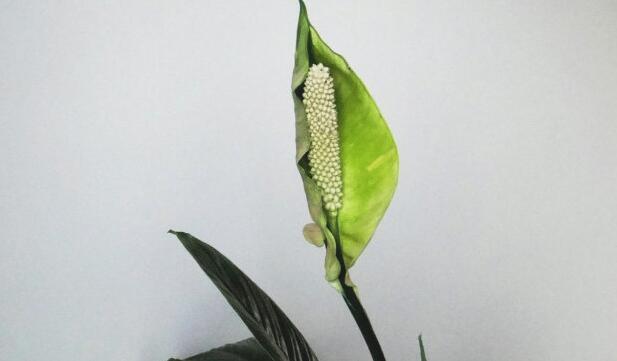
In the cultivation methods for the peace lily, we introduced that when grown indoors, the peace lily has requirements for soil, light, water and so on, and once these do not meet the standard, insects or disease will appear on the leaves. As for what to do when the peace lily gets insects, it is actually very simple: we only need to find out what kind of insect it is and then deal with it accordingly. The following are the symptoms and solutions for several kinds of pest damage, as follows:
1. Scale insects
Scale insects, one of the pests that all flowers hate, may be the insect on the peace lily. It is understood that this insect often gathers in clusters on branches, leaves and fruits. The mouthparts of adults and nymphs are inserted into the leaf and branch tissues of the flowers to suck sap, causing branches and leaves to wither and become deformed, and inducing sooty mold, doing great harm.
Control methods: when there are few scale insects, gently brush them off with a soft brush or wipe them off and clean them with a cotton ball or loofah stem; when there are many scale insects, select 40% omethoate, 50% malathion and 80% dichlorvos emulsifiable concentrate at 800-1000 times solution, sprayed once every 7-10 days, 2-3 times in a row, which can effectively prevent damage by scale insects.
2. Red spider mites
As one of the diseases and pests of the peace lily, red spider mite is very troublesome. It harms plants by piercing its mouthparts into the flower leaves to suck sap, damaging the chlorophyll of the flowers, causing the leaves to show grayish-yellow dots or patches, and the leaves to become withered and yellow and even drop off.
Control methods: observe the flowers carefully at ordinary times, and when abnormal leaf color is found, carefully check the underside of the leaves. When individual leaves are affected, the infested leaves can be removed; when many leaves are affected, spray pesticide for control as early as possible. Commonly used pesticides include propargite, dicofol, dimethoate, huachongjing and fenvalerate.
That is mainly all there is to say about what to do when the peace lily gets pests. In fact, as long as we pay a little more attention during care, insects will not appear. But it does not matter if it is attacked by insects; everyone should stay calm, find the cause and deal with it accordingly. A tiny insect cannot stir up much of a storm.
2. Symptoms of peace lily diseases and control methods
Besides being attacked by insects, diseases are also something we need to pay attention to. It is understood that the peace lily mainly has three diseases: bacterial leaf spot, brown spot and blight, among which leaf spot is basically beyond saving once contracted. The specific symptoms and solutions are as follows:
1. Brown spot
This disease is one of the main diseases of the peace lily. It mainly harms the leaves of the plant, and the disease usually starts on the basal leaves. In the early stage, small round light green water-soaked spots appear, which gradually turn brown or black later. As time goes on, the spots gradually enlarge, the affected leaves wither along with them, and finally dry up and die.
Control methods: in the early stage of the disease, sprays such as 75% chlorothalonil, 50% mancozeb and 50% captan can be used. The concentration is generally an 800-1000 times aqueous solution, sprayed once every 7 days, 2-3 times in a row; or use 50% Shajunwang at 1000 times solution, sprayed 3-4 times in a row every 7-10 days, which gives a very good control effect.
2. Bacterial leaf spot
Bacterial leaf spot has two modes of infection: the first infection type begins on the leaves and is called leaf infection. Leaf infection usually starts at the leaf margins and on the lower part of the leaf where there are more stomata. In the early stage, water-soaked spots can be seen on the underside of the leaf; later, brown spots appear at the leaf margins, with a yellow halo around the edges.
The second infection type begins on the stem and spreads rapidly throughout the whole plant through the vascular system, and is called systemic infection. Systemic infection can be detected by yellowing leaves; in the early stage of bacterial infection the new leaves are dull in color. In a relatively short time, this type of infection can cause the peduncles and leaves to drop from the plant, the growing point to rot rapidly, and bacterial ooze to seep out. Systemic infection cannot be saved.
3. Blight
This disease appears as leaf spots, seedling damping-off, root and stem rot, crown rot, branch cankers and rot, etc. The affected parts of the plant develop dark brown water-soaked spots with indistinct edges, which can rapidly cause necrosis and rot of the diseased parts.
Control methods: 1. Choose a well-drained place for planting or for placing flower pots. Avoid overly dense plant clumps and ensure good ventilation and light. 2. Pull out diseased plants promptly and burn them. Disinfect the soil before planting, and drench with 95% Lüheng No. 1 premium at 3000 times solution.
What to do when the peace lily leaves wilt: appropriate shading / proper water and fertilizer / spraying pesticide for pests and diseases
Flower lovers should be familiar with the peace lily; it is also called bai zhang or yi fan feng shun, and is a flower deeply loved by flower lovers. In daily life, many people grow peace lilies at home, but during cultivation, for various reasons, the leaves of the plant may show wilting symptoms. So what should be done when the peace lily leaves wilt? Today the editor will solve this problem for everyone.
1. When the peace lily leaves wilt, find the cause
As a common flower, the peace lily is not difficult to grow, but flower lovers can easily overlook some details, and the results show in the leaves, causing symptoms such as yellowing peace lily leaves and wilting peace lily leaves. As for what to do when the peace lily leaves wilt, the editor has summarized 6 causes and attached solutions. Let us continue reading.
2. Causes of wilting peace lily leaves and solutions
1. Light too strong
The peace lily likes light, but it fears direct strong light, and grows best in a spot with indoor diffused light. If in summer everyone puts the peace lily in the sun to bake, it will show an adverse reaction, mainly appearing as wilting and withered yellow peace lily leaves.
Solution: if the exposure time was not long, promptly move it to a cool indoor place to let it recover, water it a little, and then slowly move the plant to a spot with diffused light for care; if the exposure time was long, the plant may be beyond saving, so shading must be paid attention to in summer care.
2. Unsuitable temperature
The peace lily likes a warm environment, and the most suitable growing temperature is 22-28°C. Once the temperature exceeds 35°C or falls below 5°C, wilting peace lily leaves are very likely to appear.
Solution: in summer, move the plant to a ventilated indoor place for care, and water it in good time to lower the temperature; in winter, keep the room temperature above 15°C.
3. Air too dry
The peace lily likes a moist environment and needs relatively high air humidity. If the air is too dry, the leaves of the peace lily will wilt and look listless.
Solution: during the growth of the peace lily, besides meeting its water requirements, also spray water around the plant from time to time to increase air humidity.
4. Too much fertilizer
The peace lily likes fertilizer, and during growth, sufficient nutrients can make it bloom more beautifully. However, when fertilizing, be sure to note that fertilizer must not be applied too much or too concentrated, otherwise fertilizer burn will occur, making the peace lily grow poorly and causing leaf wilting.
Solution: if the wilting peace lily leaves are caused by too much fertilizer, promptly irrigate with water to dilute the fertilizer and let it flow out from the bottom of the pot.
5. Pests and diseases
When talking about the causes of wilting peace lily leaves, pests and diseases are actually also something to consider. It is understood that when mite pests occur, for example, the leaves of the peace lily will wilt, lose their luster and become withered and yellow.
Solution: find out exactly which pest or disease it is, then spray pesticide accordingly. For details, refer to pest and disease control of the peace lily.
6. Sudden environmental change
Besides the above points, a sudden environmental change is also one of the causes of wilting peace lily leaves. This situation generally appears on newly bought potted peace lilies. The reason is that the environment has changed, and the temperature and humidity change greatly, which easily weakens the root absorption function and reduces water uptake.
Solution: at this time, do not worry; this is a process every new potted plant must go through. Flower lovers only need to meet its growth needs, and after a period of time it will recover to health.