How to Grow Lucky Bamboo in Water? Detailed Guide to Methods and Steps
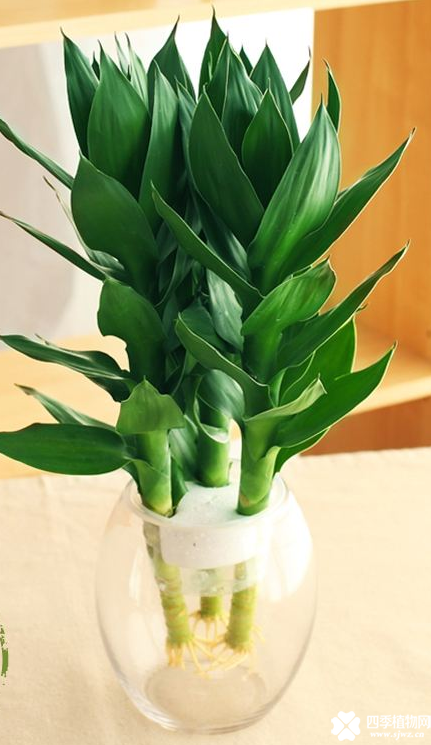
Lucky bamboo stands tall and graceful, elegant in bearing, with stems and leaves much like emerald bamboo. It stays green through winter and summer, giving a sense of prosperity and good fortune. Lucky bamboo roots very easily in water and is especially well suited to hydroponic growing.
① Before placing it in a vase, remove the leaves from the base of the cutting, and cut the base at a slant with a sharp knife. The cut should be smooth to help it absorb water and nutrients, then immerse about 7 cm of the cutting, measured from the cut, in clean water.
② Change the clean water once every 3 to 4 days. Do not move its position or change its direction within 10 days. After about 15 days, silvery white roots will grow. If you place the stem in an opaque container, or wrap the transparent hydroponic container well with black cloth, rooting can be hastened.
③ After rooting, it should not be frequently rewatered. If you notice the water level dropping, simply add some water. After rooting, apply a small amount of compound fertilizer in good time, and the stems will grow thick and sturdy with glossy green leaves. If no fertilizer is applied for a long time, the plant grows weak and the leaves turn yellow. But do not over-fertilize, to avoid "burning the roots" or causing leggy growth.
④ Do not place lucky bamboo beside a TV or in places constantly hit by air conditioning or an electric fan, to avoid the leaf tips and leaf edges drying up.
Methods for Growing Lucky Bamboo in Water
1. Temperature Requirements
Lucky bamboo is relatively cold-tolerant. The most suitable growing temperature is 20-28°C, and it can tolerate low temperatures of 2-3°C, but in winter it must be protected from frost. Too low a temperature will cause cold injury, leading to withering.
2. Light Conditions
Lucky bamboo is a shade-loving plant with excellent shade tolerance. It is suitable for placement in partial shade. Never put it in strong direct sunlight, otherwise it will cause the lucky bamboo to turn yellow and grow slowly.
3. Water Quality Requirements
When growing lucky bamboo in water, do not use freshly drawn tap water directly. The water should first be left to settle to reduce the chlorine compounds in it, so as to ensure the normal growth of the lucky bamboo.
4. Fertilizing Precautions
Lucky bamboo is relatively tolerant of fertilizer. Generally, compound fertilizer should be applied every 2-3 months. If grown in water, potassium dihydrogen phosphate should be added after each water change every 2 weeks, to ensure normal nutrient absorption.
5. Branching
Lucky bamboo has poor branching ability, unlike other trees and flowers. So when planting, it is best to gather several stems together and plant them in one pot. This way the ornamental effect will be much better, and its air-purifying ability will also be much better.
6. Treatment After Rooting
After rooting, add a small amount of nutrient solution or compound fertilizer in good time, so as to ensure thick, sturdy stems. But do not add too much, otherwise it will cause root burn. Generally, fertilizing once a month is enough.
7. Placement
Never place lucky bamboo beside a TV or air conditioner, as the leaf edges will then dry up very easily, seriously affecting the ornamental effect.
8. Best Time for Vase Placement
The most suitable time for placing it in a vase for water growing is April to September, because rooting and survival are easiest during this period.
9. Misting the Leaves
Mist the leaves of the lucky bamboo appropriately, especially in dry weather, so as to keep them spreading and lush.
10. Changing the Water
Change the water once every two weeks. If the water is never changed, bacteria will accumulate in the water, leading to root rot.
Methods for Growing Lucky Bamboo in Water, Hydroponic Cultivation of Lucky Bamboo
Lucky bamboo is an evergreen small tree, green all year round, and hydroponic lucky bamboo is especially enticingly green, with a green that has a touching beauty. Placing a vase of hydroponic lucky bamboo at home is not only a good decoration, but also has a certain effect on improving the temperature, humidity and air quality of the local environment, bringing fresh air to the home. Below, the editor introduces the methods for growing lucky bamboo in water, and the precautions for hydroponic cultivation of lucky bamboo.
Methods for Growing Lucky Bamboo in Water
1. Pay attention to trimming the roots when first inserting: When first inserting, remove the leaves at the base so as not to affect the bamboo's growth. The specifics depend on the size of your vase; just remove the leaves below the mouth of the vase. In addition, use scissors or a knife to cut off a small part of the root at a slant, which allows the bamboo to absorb water better. Make the cut as smooth as possible.
2. Water volume control and choice of water: Fill with water to one third of the vase, no more than two thirds. Before rooting, change the water once every 3 days. After rooting, do not change the water again; simply add water to the vase. In dry, stuffy weather, mist the leaves. It is best to use well water or purified water. If using tap water, it is best to store it for a day before use.
3. Maintain indoor temperature: Lucky bamboo grows best between 16°C and 26°C. Cold easily causes the plant to die. In winter, do not place it on a balcony, beside a window or in other colder places, and never let the water freeze. Take anti-freeze measures when necessary.
4. Ensure sufficient light: Hydroponic lucky bamboo is generally placed indoors. Although its sunlight requirements are not high, if it gets no sunlight at all, the leaves will likewise turn yellow and grow poorly. So place it in a bright, ventilated environment as much as possible, so it gets sufficient light.
5. Fertilize once a month: For plants grown in water, we generally neglect fertilizing, but actually this is not right. Fertilizing can make the plant grow better. Hydroponic lucky bamboo only needs fertilizing once a month. You can choose professional fertilizer at a flower market, or simply drip a few drops of dissolved vitamin C1 into the water when adding it.
Precautions for Growing Lucky Bamboo in Water
1. Hydroponic lucky bamboo does not need any nutrient solution added; simply changing the water appropriately will let it grow very well. But note that its leaves must not be submerged in water. Remove any leaves that would be submerged, and the leaves will not turn yellow.
2. Keeping the roots clean is very important. Just add a little salt each time you change the water. It both adds nutrients and prevents root rot, which is very easy.
3. Do not place it where an electric fan or air conditioner blows; if there is root rot, cut away the rotten roots in good time; if the water has an odor, change the water in good time and also check for root rot; when the leaves turn yellow, check whether there is too much fertilizer or insufficient light.
The above are the methods for growing lucky bamboo in water, and the article on hydroponic cultivation of lucky bamboo. The beauty of hydroponic lucky bamboo is inseparable from its auspicious name. It has slender, elegant leaves, an emerald leaf color, and its stem nodes show a feature resembling bamboo nodes, though it is not true bamboo. Because water can evaporate freely from the container of hydroponic lucky bamboo, in the same environment it plays a more obvious role in regulating air humidity than plants grown in potting soil, while also saving a lot of troublesome work.