A detailed guide to growing lucky bamboo, easy for beginners to learn
Lucky bamboo is an evergreen ornamental plant of the genus Dracaena in the Asparagaceae family. Because of its deep green leaves, vigorous growth and ease of growing in water, it has become a widely popular foliage plant. It can be grown in pots or in water, and in particular the tower-shaped form introduced from Taiwan, China, named "lucky bamboo tower", is deeply loved by consumers at home and abroad. In the Zhanjiang area of Guangdong and in Hainan, it is already grown on a large scale as an industry, and some products are exported abroad.
Lucky bamboo likes high temperatures and high humidity, and tolerates shade and waterlogging. The suitable growing temperature is 29°C-30°C, and it can tolerate low temperatures of around 3 (sic). Therefore in southern Guangdong and Hainan province it can be planted directly in open fields, but it needs shading, especially in summer and autumn.
Lucky bamboo is usually propagated by cuttings and division. Every node of lucky bamboo easily produces roots, so it roots quite easily from cuttings. In large-scale production, side branches or the top shoots discarded when making "lucky bamboo towers" can be cut into cuttings 15-20 cm long, inserted into coarse sand or semi-muddy field soil, buried 2-3 nodes deep in the soil, kept moist, and they will root in 35-45 days.
When planting in open fields, choose deep, fertile sandy soil and form raised beds for planting. The bed width is 1.5 m, the ridge height is 20-30 cm, the row spacing is 25 cm, and the plant spacing is 20 cm; generally 13,000-16,000 plants can be planted per mu. After the cuttings have rooted, during the seedling stage apply a compound fertilizer with a nitrogen:phosphorus:potassium ratio of 20:20:20 or decomposed farmyard manure once every 15 days to promote thick, luxuriant branches, and loosen the soil appropriately and remove weeds in time. During the growing season, apply 30-35 kg per mu of a compound fertilizer low in nitrogen and rich in phosphorus and potassium to promote plant growth and prevent lodging.
How to grow lucky bamboo
Lucky bamboo is a plant that everyone likes very much. Its name is very auspicious, and its shape is fresh, natural and attractive. Lucky bamboo is mostly grown in water, but it can actually also be grown in soil. Below we introduce how to grow lucky bamboo.
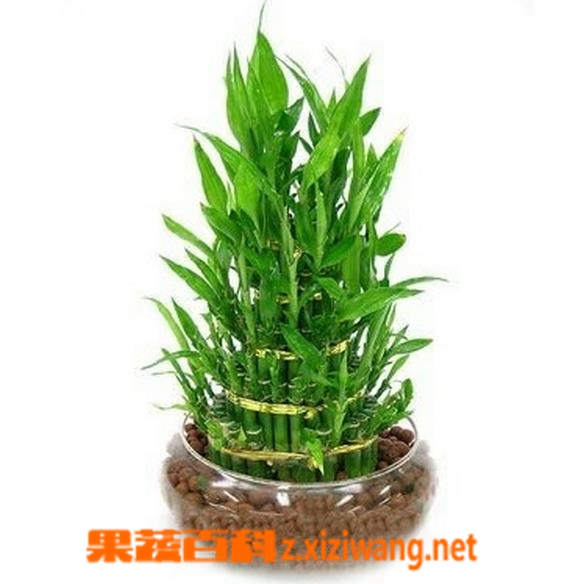
1. How to grow lucky bamboo——water growing
Growing lucky bamboo in water first has certain temperature requirements. Lucky bamboo is a plant that can endure cold, but the temperature suitable for growth is between 20-28 degrees; if the temperature is too low, cold damage will occur. Secondly, lucky bamboo is a shade-loving plant, and too much light is actually harmful to it, so do not expose it too much to the sun. Lucky bamboo has fairly simple water quality requirements; do not use tap water directly, and filtered water is better. For lucky bamboo grown in water, you can choose a compound fertilizer and fertilize every two weeks when changing the water.
2. How to grow lucky bamboo——soil growing
The growing temperature for lucky bamboo is the same as for water growing, that is, in winter you must be careful that the temperature is not too low and causes cold damage. If lucky bamboo is grown in soil, the soil needs to be kept moist and watered once every 3 days; if the potting soil is too dry, lucky bamboo
leaves will turn yellow. For lucky bamboo, you can use a spray bottle to spray the leaves to lower the temperature and at the same time increase moisture. Lucky bamboo should not receive too much light. Also, the best planting time is between April and September; during this period lucky bamboo is most suited to rooting and developing.
How to grow lucky bamboo, how to cultivate lucky bamboo, cultivation techniques
Lucky bamboo pictures and information: http://hua.fengqiaoju.com/duoniansheng/fuguizhu/
Lucky bamboo is also called Xian Da dragon tree. China has the congratulatory saying "when flowers bloom, prosperity comes; when bamboo is reported, peace arrives." Its stems and leaves are slender and delicate, soft and elegant, so it is very much loved by people. How to care for lucky bamboo? An introduction to how to cultivate lucky bamboo.
Lucky bamboo is an evergreen small tree of the Asparagaceae family. The beauty of lucky bamboo is inseparable from its auspicious name. It has slender, elegant leaves and emerald green foliage, and its stem nodes show a feature resembling bamboo joints, but it is not true bamboo.
China has the congratulatory saying "when flowers bloom, prosperity comes; when bamboo is reported, peace arrives." Because lucky bamboo has slender, delicate stems and leaves, is soft and elegant, and is full of bamboo charm, it is very much loved by people. Lucky bamboo is loosely managed, has few pests and diseases, is easy to cultivate, and also symbolizes "great fortune and great profit."
Lucky bamboo is suitable as a small potted plant, used to decorate bedrooms, studies, living rooms and other places. It can be placed on a desk, coffee table or countertop; it is prosperous and elegant, exquisite and unique, and has very good ornamental value.
Lucky bamboo is native to the Canary Islands and the tropical regions of Africa and Asia. In the early 1980s, it was introduced to Zhanjiang, Guangdong by the Tropical Crops Research Institute of the Chinese Academy of Tropical Agricultural Sciences.
Lucky bamboo likes high-temperature and high-humidity environments. It is not strict about light requirements; it likes light and can also tolerate shade. It can be placed indoors for a long time without sunlight and does not need deliberate care. As long as there is enough water, it can grow vigorously.
When growing potted lucky bamboo indoors, you must master humidity and temperature well in care. During the growing season, keep the potting soil moist often and frequently spray water on the leaf surface to maintain relatively high environmental humidity; being too dry easily causes the leaf tips to dry up. In winter, the potting soil should not be too damp, but the leaf surface should still be sprayed often, and at the same time pay attention to cold protection so that the leaves do not turn yellow, shrink and even fall off. In the peak growing season from May to September, granular compound fertilizer can be applied 2-3 times per month to keep the leaves green and glossy.
Because lucky bamboo has poor branching ability, when used for indoor viewing it is best to plant more than 5 stems together in one pot for a better effect. After being displayed indoors for a long time, although growth becomes stable, the leaves will inevitably be covered with a layer of dust. You can wash the leaves by spraying water to make them show their beautiful luster again.
What to do if lucky bamboo leaves turn yellow:
Yellowing due to too much water
Young leaves are dull yellow and lack luster, old leaves show no obvious change, stems are thin and yellow-green, and new shoots shrink and stop growing, indicating overwatering. Take the plant out of the pot, place it in a ventilated and cool place to let the soil ball dry by itself, then put it back in the pot.
Yellowing due to lack of water is different from yellowing due to too much water. Yellowing due to lack of water shows as leaf tips or edges becoming withered and dry, and old leaves turning yellow, drying and falling from the bottom upward, but new leaf growth is relatively normal. Just pay attention to watering thoroughly and sufficiently.
Strong direct sunlight shining on some shade-loving flowers (such as spider plants, hostas, etc.) easily causes the leaf tips and leaf edges to wither, and yellow spots appear on the parts of the leaves facing the sun. Moving them to a shady place is enough.
When placed in a shady environment for a long time, the leaves cannot get enough sunlight and cannot form chlorophyll, so the whole plant's leaves turn yellow and then fall off. Supplementing light can prevent this problem.
Yellowing of flowers caused by too much fertilizer or too high concentration shows as dry brown tips on new leaves; generally the leaf surface is thick and lacks luster, and is uneven and not smooth, while old leaves scorch yellow and fall off. Stop fertilizing immediately; in severe cases, use a large amount of clean water to rinse away part of the fertilizer.
It shows as young leaves becoming lighter in color, yellow or pale green, while old leaves are relatively normal or gradually turn from green to yellow. Check the potting soil; if there is caking, change the soil. Usually apply light fertilizer frequently and water with some alum water at the right time (lucky bamboo is a foliage plant and should be given fertilizer mainly based on nitrogen). Note: another cause of yellow leaves is iron deficiency. You can buy some ferrous sulfate and put an appropriate amount in the water according to the instructions. The simplest method is to find two small iron nails and put them in the water (preferably rusty nails).