What precautions should be taken when growing lucky bamboo in water
Lucky bamboo is very well suited to water cultivation, and containers such as vases or glass water cups can all be used. Take several thick stems, with the length determined by the size of the container; 3 can be inserted per vase. Before putting them in the vase, all the leaves on the cuttings should be stripped off. After inserting, add water to a depth no greater than half of the vase. Then place it in a spot with bright, indirect light, and change the water once every 3 to 4 days. After about 10 days, white roots will gradually grow out, and the axillary buds will begin to sprout, sending out new shoots. After rooting, do not change the water too frequently; after the water evaporates, add water up to the original water level. Frequent water changes will cause yellow leaves and wilting branches. After some time, the water in the vase can be completely replaced once, to avoid the growth of algae.
For lucky bamboo grown in water, after a few months the leaf color will turn somewhat yellow, and the new shoots will also be rather thin and weak. At this time, a small amount of nitrogen fertilizer or nutrient solution can be added to the vase. But too much fertilizer will cause leggy growth and ruin the original plant shape, so fertilizer must be controlled: once a month and not too concentrated. Water-grown lucky bamboo can be enjoyed for 1 to 2 years indoors in winter in a heated room. But do not place it at the air outlet of an air conditioner or electric fan, otherwise the leaf tips will dry up. If you are not satisfied with its plant shape and growth, it can be renewed at any time by re-cuttings in water.
The "lucky bamboo" sold on the market is made by cutting lucky bamboo stems into lengths of varying sizes, arranged in layers from the outside inward, each layer higher than the one before, forming a pagoda shape, tied neatly, slightly decorated, and paired with a narcissus basin or blue-and-white porcelain basin, keeping a water level of 2 to 3 cm deep; this becomes "lucky bamboo" or a "fortune pagoda." This kind of "lucky bamboo" comes in large and small sizes, with heights ranging from 20 to 60 cm, and can be purchased or made according to the size of the office or home environment.
How to grow lucky bamboo in water; precautions for growing lucky bamboo in water
Lucky bamboo has slender stems and leaves, is soft and elegant, has very high ornamental value, and also carries a very good meaning, so many people use it as an ornamental potted plant in the home. Below, I will introduce how to grow lucky bamboo in water, as well as precautions for growing lucky bamboo in water.
How to grow lucky bamboo in water
1. When first inserting, pay attention to trimming the roots. When first inserting, remove the leaves at the base so as not to affect the bamboo's growth. The specific amount depends on the size of your own vase; just remove the leaves below the mouth of the vase. In addition, a small part of the base of the root should be cut off at an angle with scissors or a knife, so that the bamboo can better absorb water; the cut should be as smooth as possible.
2. Water volume control and choice of water. Water reaching one third of the vase is sufficient; do not use more than two thirds. Before rooting, change the water once every 3 days; after rooting, do not change the water again, just add water directly to the vase. When the weather is dry and stuffy, spray water on the leaf surface. It is best to use well water or purified water; if using tap water, it is best to store it for a day before use.
3. Maintain indoor temperature. Lucky bamboo is suited to growing between 16°C and 26°C; cold easily causes the plant to die. In winter, do not place it in colder places such as balconies or beside windows, and never let the water freeze. Anti-freezing measures can be taken when necessary.
4. Ensure sufficient light. Water-grown lucky bamboo is generally placed indoors. Although it does not demand much sunlight, if it cannot come into contact with sunlight at all, the leaves will likewise turn yellow and growth will be poor. Therefore, it should be placed in a bright, ventilated environment as much as possible so that it fully receives light.
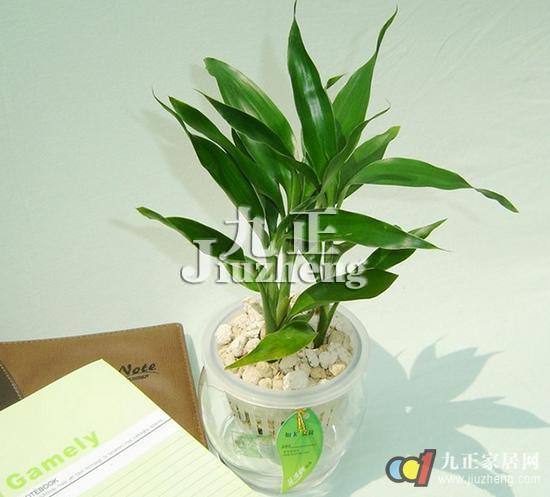
5. Fertilize once a month. For plants grown in water, we generally neglect fertilizing, but this is not actually the case; fertilizing can make the plant grow better. Water-grown lucky bamboo only needs fertilizing once a month. You can go to a flower market to choose specialized fertilizer, or simply drip a few drops of dissolved vitamin C1 into the water when adding it.
Precautions for growing lucky bamboo in water
1. In spring, it can be potted in culture soil or grown in water after washing off the river sand. During care, if there are rotten stems or rotten roots, they should be removed promptly, and the roots and stems soaked in a 75% chlorothalonil 1000-fold aqueous solution for 30 minutes, then rinsed with clean water and continued in water cultivation. If the plant is already very weak, it should be replanted in soil to restore vigor.
2. Before inserting, cut off the leaves at the base of the cuttings, and cut the base into a slanted opening with a sharp knife; the cut should be smooth to facilitate the absorption of water and nutrients. Change the clean water once every 3 to 4 days. Within 10 days, do not move the position or change the direction. After about 15 days, silvery-white fibrous roots can grow out.
3. After rooting, it is not suitable to change the water; only add water promptly after the water evaporates and decreases. Frequent water changes easily cause yellow leaves and wilting branches.
4. After rooting, apply a small amount of compound fertilizer promptly, then the leaves will be glossy green and the branches and stems thick and strong. If no fertilizer is applied for a long time, the plant will grow thin and weak, and the leaf color will easily turn yellow. But fertilizer must not be applied too much, to avoid "burning the roots" or causing leggy growth.
5. In spring and autumn, applying compound fertilizer once a month is sufficient. According to reference materials, to prevent leggy growth in water-grown lucky bamboo, do not apply chemical fertilizer; it is best to inject a few drops of brandy into the vase about every 3 weeks and add a small amount of nutrient solution, which can keep the leaves emerald green.
6. Water-grown lucky bamboo should usually be placed in a bright indoor spot. When the temperature is relatively low, change the water once every 7 to 10 days; in the peak growing seasons of spring and autumn, change the water once every 3 to 5 days, and a complete-element compound fertilizer can be added to the water. In the high-temperature period of summer, it is best to use cooled boiled water for water cultivation, to avoid root rot or the breeding of algae.
7. Stop fertilizing in winter. In severe cold seasons, water cultivation indoors in the north without heating facilities is prone to freezing damage. In early October, it can be planted in river sand; when it is cold, cover the whole pot with a plastic bag and place it indoors where cold wind cannot reach; it can overwinter safely at around 5°C.
8. Do not place lucky bamboo beside a television or in places often blown by an air conditioner or electric fan, to avoid the leaf tips and leaf margins drying up.
The above is the relevant knowledge about growing lucky bamboo in water that I am sharing with everyone. I hope it can help everyone. For more home knowledge, please follow.
How to grow lucky bamboo in water; precautions for growing lucky bamboo in water
Lucky bamboo is an evergreen herbaceous plant. It likes shady and moist environments, is tolerant of shade, waterlogging, and fertilizer, and has strong cold resistance, so it is relatively easy to grow. Lucky bamboo can be divided into water cultivation and soil cultivation. So how do you grow lucky bamboo in water? Below I will tell everyone about precautions for growing lucky bamboo in water.
How to grow lucky bamboo in water
Plant: When growing lucky bamboo in a vase with water, it is best to choose a robust growing plant, paying attention to complete leaves, straight branches and stems, and intact terminal buds. Cut the base into a 45-degree slanted opening with a sharp blade, and grow it in a straight glass container.
Water quality: When growing lucky bamboo in water, do not directly use freshly released tap water. The water should first be left to settle, reducing the chlorine compounds in the water, so as to ensure the normal growth of lucky bamboo.
Water volume: The water depth for water-grown lucky bamboo is around 5 to 10 cm, and the clean water should be changed once every 3 to 4 days. Within 10 days, do not move the position or change the direction. After about 15 days, roots can develop.
Cultivation methods for water-grown lucky bamboo:
Lucky bamboo is relatively cold-tolerant. Its suitable growth temperature is 20-28°C, and it can tolerate low temperatures of 2-3°C, but in winter it must be protected from frost. Too low a temperature will cause freezing damage, leading to withering.
After lucky bamboo roots, stop changing the water; after the water decreases, simply add more promptly. If the water is changed frequently, it instead easily causes yellow leaves and withering. After lucky bamboo roots, give it a small amount of light and drip in a small amount of compound nutrient solution, and thereafter apply nutrient solution once every 3 weeks.
After lucky bamboo roots, apply a small amount of compound fertilizer promptly, then the branches and stems of the lucky bamboo will grow thick and strong, and the leaves will be glossy green. If no fertilizer is applied for a long time, the plant will grow thin and weak, and the leaf color will turn yellow.
When fertilizing water-grown lucky bamboo, do not apply too much, to avoid burning the roots or causing leggy growth. In spring and autumn, applying compound fertilizer once a month is sufficient. To prevent leggy growth in water-grown lucky bamboo, do not apply chemical fertilizer; it is best to inject a few drops of brandy into the vase about every 3 weeks and add a small amount of nutrient solution, which can keep the leaves emerald green.
Precautions for growing lucky bamboo in water:
1. Before putting into the vase, cut off the leaves at the base of the cuttings, and cut the base into a slanted opening with a sharp knife; the cut should be smooth to facilitate the absorption of water and nutrients. Change the clean water once every 3 to 4 days. Within 10 days, do not move the position or change the direction. After about 15 days, silvery-white fibrous roots can grow out.
2. After rooting, it is not suitable to change the water; only add water promptly after the water evaporates and decreases. Frequent water changes easily cause yellow leaves and withering.
3. After rooting, apply a small amount of compound fertilizer promptly, then the branches and stems will grow thick and strong, and the leaves will be glossy green. If no fertilizer is applied for a long time, the plant will grow thin and weak, and the leaf color will turn yellow, affecting its ornamental value. But fertilizer must not be applied too much, to avoid "burning the roots" or causing leggy growth. In spring and autumn, applying compound fertilizer once a month is sufficient.
4. Do not place lucky bamboo beside a television or in places often blown by an air conditioner or electric fan, to avoid the leaf tips and margins drying up.
5. Change the water for lucky bamboo once every two weeks, otherwise bacteria will accumulate in the water, leading to the phenomenon of root rot.