How to Grow Snake Plants? A Few Practical Care Tips for You
Snake plant, also known as mother-in-law's tongue. Its leaves rise straight up, firm and upright, sword-shaped, with gorgeously patterned leaf surfaces full of character. Because it stays green all year round and has an exceptionally long ornamental period, it is an excellent foliage plant.
The snake plant's leaves are dark green, with cloud-like horizontal bands of alternating light green and dark green on both sides, resembling a tiger's tail. Common cultivated varieties and cultivars include: 'Golden Edge Snake Plant', which has a golden-yellow band along each side of the leaf, green and yellow setting each other off, bright and eye-catching; 'Silver Stripe Snake Plant', a smaller plant with shorter, narrower leaves and silvery-white longitudinal stripes of varying width along the edges and center of the leaf; 'Golden Edge Dwarf Snake Plant', whose leaf margins have golden-yellow or milky-white edging, and so on.
The snake plant is native to tropical Africa. It likes warmth and tolerates cold slightly. It likes sunlight and tolerates partial shade, but fears intense direct sun. It is drought-tolerant and fears waterlogging. A sandy loam with good drainage and aeration suits it best. Snake plants are commonly propagated by cuttings and division. However, the golden edge snake plant is not suitable for cutting propagation. If this method is used to propagate young plants, the golden edge often disappears easily, so division propagation must be used. The snake plant is robust by nature, highly adaptable, and easy to cultivate. The potting soil can be made by mixing 4 parts leaf mold, 4 parts garden soil, and 2 parts river sand, plus a small amount of cake fertilizer powder as a base fertilizer. Except in summer, when it needs to be placed in shade to avoid direct sunlight, it should be placed in a sunny spot in the other seasons. If it is kept in too dark a place for a long time, the leaf color will darken and lose vitality.
Watering should be moderate. In spring and autumn, watering should alternate between wet and dry, and slightly on the dry side is preferable. In winter, watering must be controlled even more; spraying the leaf surfaces with clean water once a month to wash off dust will keep the leaves clean. If you can wipe the leaf surfaces once a month with about 50 times diluted beer solution, the leaves will appear oily green and glossy. The snake plant has low fertilizer requirements; applying a dilute cake fertilizer solution once every half month during the growing season is enough to keep the leaves verdant and thick. Keeping the room temperature above 8°C in winter is enough for it to overwinter safely. Generally, repot once every 2-3 years in spring, adding fresh potting soil to meet the needs of vigorous growth.
How to Grow Snake Plants: Tips for Caring for Snake Plants
The snake plant's leaf patterns are its important hallmark, and they also make it look peculiar and interesting. It is a tenacious plant, suitable for growing at home. Below, the editor will teach you tips for caring for snake plants. Take a look!
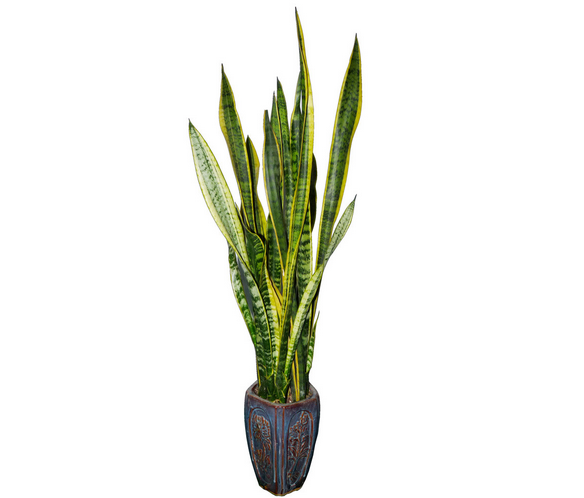
1. Its leaves bear patterns. The snake plant is a perennial succulent herb, with rhizomes that appear creeping; funnel-shaped leaf clusters grow from the rhizomes. The leaves are upright, leathery and thick, light green, with irregular dark green horizontal banded patterns. These patterns closely resemble the stripes on a tiger, which may be why it is called the snake plant. Generally, snake plants are 50 cm to 70 cm tall, with leaves about 3 cm to 5 cm wide. Spring and summer are the flowering season for snake plants; it sends up solitary flower stalks from the rhizome, forming racemes with 3-5 flowers per cluster, giving off a sweet, elegant fragrance.
2. It has multiple cultivated varieties. Common snake plant varieties include golden edge mother-in-law's tongue, dwarf mother-in-law's tongue, silver dwarf mother-in-law's tongue, golden edge dwarf mother-in-law's tongue, and stone pencil mother-in-law's tongue. It can be said that the golden edge mother-in-law's tongue is one of the varieties with relatively high ornamental value, with thin yellow banded stripes along the leaf margins, light green in the center, and dark green horizontal stripes, looking very beautiful.
3. Its living environment. The snake plant is drought-tolerant, moisture-tolerant, and shade-tolerant, able to adapt to various harsh environments. It has no great demands for fertilizer, and growing it in sandy soil with relatively good drainage is best. In addition, the snake plant should not grow in dark places for long periods; it should receive diffused light, but be careful never to suddenly place it in direct sunlight. It grows best in an environment of 20-30°C, and in winter be sure to maintain an indoor temperature of 10°C.
How to Grow Snake Plants
Snake plant leaves are basal, usually 1-2 per plant, sometimes 3-6 in clusters, upright, hard and leathery, flat; however, when grown at home it often does not bloom, and is mainly appreciated for its leaves. It is native to western Asia and is cultivated in various parts of China. So how much do you know about the snake plant? Do you know what uses the snake plant has? What are the methods for growing snake plants? Below, the editor will introduce them to everyone, hoping it will be helpful.
Introduction to the Snake Plant and Its Uses
Introduction to the Snake PlantThe snake plant, also known as mother-in-law's tongue or thousand-year plant, is a perennial evergreen herb of the genus Sansevieria in the family Liliaceae, with creeping rhizomes, clustered leaves, hard and leathery texture, and firm upright leaves. The leaf color is dark green, with alternating light green and dark green patterns on both sides of the leaves. The flowers are white or pale green, blooming in spring and summer. There are many snake plant varieties, each with a resolute posture, peculiar and interesting, and with a certain ornamental value.
Uses of the Snake Plant
Air purification: The snake plant not only has ornamental value but also can absorb indoor formaldehyde. Placing a snake plant at home can reduce the harm formaldehyde does to the human body, especially in newly renovated houses or furniture, where the effect is particularly good.
Medicinal uses: The snake plant contains abamagenin, and has the effects of clearing heat and detoxifying, treating bronchitis, traumatic injuries, colds, and venomous snake bites.
How to Grow Snake Plants
How to Grow Snake PlantsFirst, soil selection
Snake plants need loose soil and require breathability, so when mixing soil for snake plants, be sure to use 2/3 leaf mold plus 1/3 garden soil. Remember that the soil must be loose and breathable, otherwise moisture will not evaporate easily, leading to rot of the rhizomes.
Second, sunlight requirements
Snake plants like light, so be sure to let them come into contact with sunlight often; it is best to place them somewhere they can be directly exposed, and if conditions do not allow that, then place them somewhere close to sunlight. Being placed in a dark place for a long time will cause the leaves to turn yellow.
Third, temperature
Snake plants have fairly high temperature requirements. Their suitable growing temperature is 20-30°C, and in winter it should not drop below 10°C, so be sure to pay attention, especially in northern regions.
Fourth, watering
Snake plants also have fairly high water requirements. Generally speaking, if the soil is relatively loose, watering twice a week is needed, while in winter, due to climatic factors, only once is enough.
Fifth, pruning
Compared with other home-grown green plants, snake plants grow relatively fast, so once the pot is full, manual pruning is needed, mainly cutting away old leaves and overly dense areas to ensure sunlight and growing space.
Sixth, repotting
Snake plants are perennial plants, and generally need repotting once every two years. When repotting, be sure to add nutrients to the new soil so as to ensure their nutritional supply.
Seventh, planting method
Snake plants are rhizome-growing plants. Generally, you only need to plant a few stems, and after a year you can harvest a full pot. When planting, first place part of the soil at the bottom of the pot, then start planting from one side of the pot, planting evenly within the pot.
Eighth, fertilizing
Snake plants have low fertilizer requirements; simply fertilize twice a month during the growing season. Be careful to apply dilute fertilizer solution so as to ensure lush growth.
Ninth, threats from diseases and pests
Common snake plant diseases mainly include leaf spot and anthracnose; in these cases, spray 50% carbendazim for treatment. Common pests include weevil damage; in this case, spray with 50% fenitrothion emulsifiable concentrate diluted 1000 times.