A Detailed Guide to Snake Plant Propagation Methods and Cultivation Techniques
Snake Plant is also known as Sansevieria and Tiger's Tail. It is a perennial succulent herb of the Asparagaceae family, with creeping rhizomes underground; from the rhizomes arise clustered, upright, sword-shaped leaves bearing white, greyish-white or white-and-green banded markings, resembling an upright tiger skin. Common cultivated varieties and cultivars include: Golden-edged Snake Plant, with rounded leaf margins and a golden-yellow band along each side, green and yellow setting each other off, bright and eye-catching; Silver-veined Snake Plant, a smaller plant with shorter, narrower leaves, whose margins and leaf centres bear silver-white longitudinal stripes of varying width; Golden-edged Short-leaf Snake Plant, with grey-green leaves edged in golden-yellow or milky white. The Snake Plant's leaves rise straight up, much like sharp swords, and the leaf markings are like tiger skin, full of spirit; it is a widely cultivated and very popular indoor foliage plant.
Snake Plant is native to tropical Africa. It likes a warm, sunny environment, but in summer it fears direct strong light. It tolerates dryness and dislikes waterlogging. It requires well-drained sandy loam. The optimum growing temperature is 18-24°C, and in winter it can overwinter indoors as long as the temperature does not drop below 0°C.
Snake Plant can be propagated by division and by cuttings. Cuttings can be taken all year round, with June and September being the best. Cut the upright leaves of the Snake Plant into stem sections about 10 cm long, let them dry slightly, then insert them into sand or vermiculite to half their depth, keeping the medium slightly moist; roots will form in about 1 month. For golden-edged cultivars, the golden edge often disappears after leaf cuttings have rooted, so division must be used for propagation. Division is usually carried out in April when repotting.
Snake Plant is highly adaptable and easy to cultivate. For potting, use a mix of 4 parts leaf mould, 4 parts garden soil and 2 parts river sand. Water so that the soil dries out between waterings; especially at the seedling stage, do not water too much, otherwise the rhizomes are liable to rot or even die. Usually, wipe the leaf surfaces with clean water to keep them fresh and bright green. During the peak growing season, apply a dilute liquid fertiliser containing both nitrogen and phosphorus about once every half month; if only nitrogen fertiliser is applied over a long period, the markings on the leaves will become dull. Snake Plant likes light and also tolerates partial shade, and it grows well in bright, indirect light indoors. In general, give plenty of light in spring, autumn and winter, but at midday and when the light is intense in summer, shade it appropriately or move it to a partially shaded spot, and mist the plant appropriately to lower the temperature and raise air humidity, which benefits growth. In winter, place it in a sunny spot indoors and control watering, but it still needs its leaves sprayed and washed with warm water once a week to keep the foliage clean and emerald green.
How to cultivate Snake Plant? Snake Plant cultivation and propagation techniques
Snake Plant is a foliage plant, suitable for indoor decoration, and can be placed in a study, living room, office and other places; it has very good ornamental value. The following are cultivation and propagation techniques for Snake Plant, for everyone's reference.
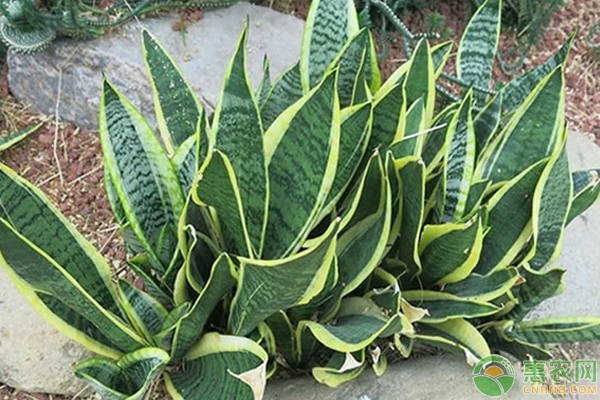
Environment
Snake Plant is highly adaptable; it likes warmth and humidity, tolerates drought, likes light and also tolerates shade, and dislikes high temperatures and direct light, so shade it at midday in summer; it tolerates drought and poor soil. It is not demanding about soil, and sandy loam with good drainage is better. Its optimum growing temperature is 20-30°C, and its overwintering temperature is 10°C.
Light
Snake Plant likes a semi-shaded environment; potted plants grow well when kept in sufficient light. Avoid scorching sun in summer; in the other seasons it should receive plenty of sunlight. Place indoor potted plants in a position with sufficient light, otherwise, if the light is too dim for too long, the leaves will become dull and lack vitality.
Soil
For Snake Plant, change the potting soil once every two years in spring; you can use a mixture of garden soil, nutrient soil, coal cinder and soybean cake crumbs, keeping the soil loose, airy and well drained.
Temperature
Snake Plant is highly adaptable; its optimum growing temperature is 20-30°C, and in winter it should not go below 10°C. Sunlight can be supplemented during the day, otherwise, if it stays below 10°C for a long time, the plant's roots will rot and it will die.
Water
In spring, water Snake Plant frequently to keep the potting soil moist, which helps new plants sprout at the root crown; in the high-temperature summer season, water evaporates quickly, so keep the potting soil moist; after autumn, water less and keep the potting soil dry to strengthen cold resistance. During the plant's winter dormancy, control watering, and it is better for the soil to be slightly dry. Remember that the soil must not become waterlogged, otherwise the root system will rot; it is best to err on the side of dryness rather than moisture.
Fertilising
During the growing season, apply a dilute liquid fertiliser once a month to Snake Plant, and the leaves will stay verdant and thick. You can also add a little compost to the bottom of the pot in spring when changing the potting soil, but not too close to the roots.
Pests and diseases
Snake Plant may suffer from fungal diseases during the high-temperature, rainy periods in spring and summer, so take care to prevent them.
Propagation: division and cuttings.
② Division: Snake Plant can be divided and planted all year round, but spring and summer are best. In spring, when changing the plant's potting soil, choose a pot whose leaf clusters have grown too dense, take the plant out of the pot, and use a sharp knife to separate the offsets from the mother plant, taking care not to damage the roots; the separated offsets should preferably carry plenty of roots. Then smear wood ash on the cut surfaces, let them dry slightly and they can be potted up. Afterwards, place them in a ventilated, dark indoor spot and keep the soil slightly moist; only after new leaves grow can they be moved to normal care.
② Cuttings: Cultivars of Snake Plant with golden-yellow edges or silver veins must not be propagated by cuttings, otherwise the yellow and white markings on the leaves will disappear and they will become ordinary Snake Plant varieties. Select robust, plump leaves and cut them into 5-6 cm lengths, then place them in a dry, cool spot for 3-5 days to let the cut surfaces dry, then insert them vertically or at an angle into nutrient soil to 1/2 their depth, keep them slightly moist, and they will root in about a month.
Snake Plant is highly adaptable and very easy to keep alive. When growing it, you only need to pay attention to water and fertiliser management and pest and disease control; the above are detailed cultivation techniques for Snake Plant. Everyone can draw on them.
Propagation and Cultivation Techniques for Broad-leaf Snake Plant
Propagation methods for Broad-leaf Snake Plant. Propagation: division and cuttings are commonly used. For division, carry it out in spring, in March-April, when repotting. Pull off the crowded clumps that have grown over the rim of the pot together with their rhizomes, and once the wounded stems have dried slightly, pot them up directly. For cuttings, usually carried out in May-June, choose robust leaves of moderate size as cuttings. Cut them into 7-8 cm lengths and insert them into a sand bed; after insertion they root in about 1 month, and when the roots are 2-3 cm long they can be potted up.
Cultivation: It likes a warm, dry, sunny environment. It is not cold-hardy, tolerates shade fairly well but fears waterlogging. The soil should preferably be fertile, loose, well-drained sandy loam. In winter the temperature should not fall below 10°C.
For newly potted seedlings, do not water too much; slightly dry is better. Only after new leaves emerge above the soil surface can the soil be kept slightly moist. During the growing period, fertilise once a month. In summer, when temperatures are high and light is strong, shade it and spray the leaves with water more often. In July-August, during the flowering period, water a little more. In winter, move it indoors for care. Broad-leaf Snake Plant is relatively large, and its rhizomes grow irregularly, so each year when potting it, prune and adjust the plant's shape or replace it in good time.
Pests and diseases: Grey anthracnose and brown spot are common threats, and can be sprayed with a 1000-fold dilution of 70% thiophanate-methyl wettable powder. Among insect pests, weevils are a threat; spray with a 2500-fold dilution of 20% fenvalerate to kill them.