Where exactly do the reasons orchids fail to bloom lie?
Orchids fail to bloom mainly due to the following reasons:
1. Improper watering and fertilizing
Orchids have fleshy roots. If watered excessively, with the potting medium staying wet for a long time, root rot and yellow leaves are easily caused; but if watered too little and the potting medium is too dry, the pseudobulbs are easily shriveled or other tissues are affected in their metabolism due to water loss, which also leads to weakened tissues, poor plant growth, and therefore difficulty in blooming. Thus orchids should be watered at the right time and in the right amount. The orchid-growing experience of our country's gardening predecessors is: "In spring they like moisture, in summer and autumn they like slight dampness, in winter it must be moist with a touch of dryness." This experience is extremely valuable and well worth learning from. This is because summer and autumn are precisely the period of vigorous vegetative growth for orchids; if the soil is on the dry side at this time, nutrient absorption will be inhibited, which in turn affects reproductive growth and blooming. In winter, when room temperature is relatively low, overly wet soil easily causes root rot and also affects dormancy. Applying too much or too concentrated fertilizer easily causes root rot, turning leaf color yellow and leaf tips scorched; if nitrogen fertilizer is favored, the plant grows leggy, affecting flower bud differentiation. All these factors can affect normal blooming of orchids.
2. Too little light
Although orchids are sun-loving flowers, that does not mean they need no light. If they are kept growing in a dark place for a long time, the accumulation of organic matter is limited and cannot meet the needs of reproductive growth, thus affecting flower bud differentiation, and naturally there will be no flowers or very few flowers the following year.
3. Winter room temperature
Improper. Although orchids originate from the south, they retain the stress resistance of wild plants, so their requirements for overwintering temperature are not high; generally a winter room temperature not exceeding 10°C is suitable. If the temperature is too high, Cymbidium goeringii and others cannot get dormancy, which affects blooming the following year. Conversely, if the temperature is too low, the roots are easily damaged, which also affects blooming.
4. Damage from pests and diseases
If orchids suffer severe damage from pests and diseases such as anthracnose and scale insects and no timely control is carried out, the plants grow weak and are also difficult to bloom. In addition, when dividing plants, if the divisions are too scattered and a single planted division has few leaves, the accumulation of organic matter is small, and it is also difficult to bloom; if the plant grows too vigorously and produces many leaf buds, this also easily inhibits flower bud differentiation. To make home-grown orchids bloom, routine care should be strengthened, with special attention to the several links of water and fertilizer, light, and temperature, so that things may go as desired.
[Reasons orchids fail to bloom] What to do if orchids fail to bloom
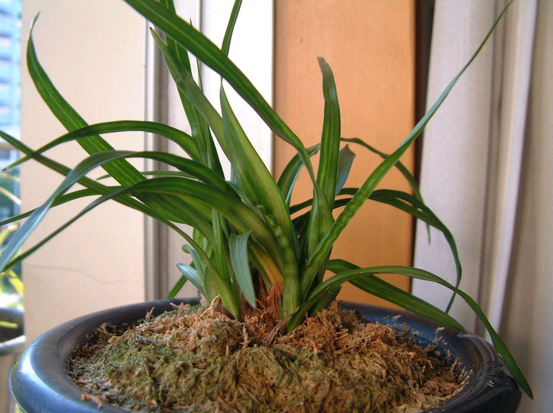
There are many reasons orchids fail to bloom, and orchid enthusiasts need to investigate and analyze them. A normal mature orchid, as long as it has reached a connected plant of two or three shoots or more, can generally bloom if cultivated properly. But in reality orchids are not very easy to grow; during cultivation, a slight mishandling can easily lead to root rot, stem rot, or failure to bloom. Generally, if orchid stem buds rot and are not treated, root rot and yellow leaves follow, and in the end the orchid will certainly not bloom.
5 reasons orchids fail to bloom. 1. The orchid plant is still small and not yet capable of bloomingThe orchid plant is still small and does not have the reproductive genes. Some young seedlings that have not yet formed pseudobulbs need two years of vegetative growth to form pseudobulbs, then sprout new shoots two or three times; only when three generations of branches grow together is blooming possible.
2. Dividing the orchid destroys the reproductive genesDividing and planting separately will destroy the transmission habit of this reproductive gene of orchids, in which generations grow together. Therefore orchids should be planted in clumps; a single plant has few leaves, accumulates little organic matter, and the reproductive genes have no way to become active. Generally, without three pseudobulbs growing connected as three generations together, it is difficult to bloom.
3. Orchids fail to bloom: environment unsuitableImproper dryness and wetness. Late spring, summer, and autumn are the vegetative growth period of orchids (but they need to avoid plum rains and the onslaught of heavy rainstorms). If autumn is on the dry side, it will inhibit vegetative growth. Winter is its dormancy period and should be on the dry side; if too wet, the potting soil easily freezes and expands, squeezing and injuring the root mass, affecting the sprouting of new shoots the following spring and summer and further affecting its normal reproductive growth.
4. Orchids fail to bloom: too little lightToo little light means limited accumulation of organic matter, unable to supply the needs of reproductive growth. Although orchids are shade-loving flowers, that does not mean they need no light; they only avoid direct strong light and long light exposure, and need diffused, scattered light (half shade). Often plants growing in dark places have dark green, luxuriant leaves but are relatively difficult to bloom and bloom less; while plants growing in a south-facing spot and with half shade in midsummer, although their leaf surfaces are slightly yellow-green, bear many flowers, and the flowers are pretty and fragrant.
5. The orchid itself does not bloomThere are also cases where, for special reasons of the orchid itself, it cannot bloom, or rather a very small number of orchids do not much like to bloom. This phenomenon has appeared in various orchid species, and I have encountered it too: a plain-bud Cymbidium ensifolium collected locally in 2004 has been cultivated in this garden for six or seven years and has grown to more than a dozen pots, and to this day it has never been seen to bloom. This is probably the infertility phenomenon of plants (orchids)!
What to do if orchids fail to bloom. 1. Cultivate strong seedlingsGenerally, Cymbidium goeringii kept for flower appreciation should not be divided into single seedlings for propagation when repotting; it is best to plant three seedlings connected together in the pot, so that strong seedlings can be produced.
2. Increase lightLight is the main factor affecting orchid growth and blooming. Plants rely on sunlight for photosynthesis, producing the nutrients indispensable for their growth; both the growth of Cymbidium goeringii and the formation of its flowers require sufficient light. Sunlight helps orchid leaves carry out photosynthesis, making "food" to support the growth and blooming of the orchid seedlings. Apart from summer and early autumn, when direct sunlight must be avoided, Cymbidium goeringii should receive more sunlight in the other seasons; this can not only make the orchid seedlings healthy and sturdy but also strengthen the bulbs and promote the propagation of buds. Vigorously growing orchids are relatively easy to send out flower buds.
3. Master wateringWater is one of the material foundations of plant growth, but the amount of watering should have a limit. Watering cannot be done at fixed times; rather, the right moment should be seized. Water when dry, and when watering, water thoroughly; when the orchid pot is dry, water it. This is the basic principle of watering. When watering, note that the water temperature should as much as possible be similar to the temperature inside the orchid pot at the growing place. In summer and early autumn, water in the morning and evening, while in winter water at noon; the purpose is to reduce the temperature difference between the water and the orchid pot. Cymbidium goeringii should generally be watered a little during the growth period, and before the flower buds have formed, watering should be strictly controlled.
Reasons orchids fail to bloom
Many flower enthusiasts work hard to grow orchids and find that their orchids do not bloom, and truly do not understand the reasons why orchids fail to bloom. This article is the author's summary, based on many years of orchid-growing experience, of several phenomena and reasons for orchids failing to bloom, and it is very helpful for novice flower enthusiasts.
A normal mature orchid, as long as it has reached a connected plant of two or three shoots or more, can generally bloom if cultivated properly (a small number of orchids can also bloom as a single shoot; the thick-rooted, fine-leaved Cymbidium kanran often does). I often hear orchid enthusiasts say their orchids have been grown for several years without blooming. Investigating the reasons, there are roughly the following aspects:
1. Seedling orchids (seed-grown seedlings) and tissue-culture seedlings may not necessarily bloom even after many years of cultivation. Just like other plants, for example fruit trees must reach a certain age before they can bloom and bear fruit; orchids must also reach a certain age before they can bloom and set seed.
2. The species differences among various orchid types differ, and the different climatic conditions in different places often lead to orchids being difficult to bloom. Take Cymbidium goeringii for example: in some regions it is relatively difficult to bloom, or rather fewer of them can bloom. For instance, in Hainan or southern Guangdong, the temperatures in all four seasons are relatively higher than in other parts of the country and relatively even; even if Cymbidium goeringii in the above areas produces flower buds, they cannot bloom because they do not get normal spring-flowering conditions (low-temperature hardening) (I have heard this, but have not verified it). There are also other orchid types; because the latitude differences between the north and south are relatively large, phenomena of not blooming or not blooming normally also occur. For example, some wild orchid types are extremely sensitive to climate and never bloom again when they reach a place with relatively large climatic differences. However, such orchid types are few. Among Chinese orchids, Cymbidium goeringii, Cymbidium ensifolium, Cymbidium faberi, Cymbidium tortisepalum, Cymbidium lianpan, Cymbidium sinense, and Cymbidium kanran can all bloom in most provinces across the country, especially since nowadays air conditioning and solar greenhouses can be used artificially to regulate temperature and thereby promote orchid growth and blooming.
3. The physiological growth of the orchid is disrupted for various reasons, and new leaf buds suddenly appear during the flower bud formation period. In this case, the orchid plant no longer has more nutrients to maintain the normal differentiation of flower buds, thus causing the flower buds to stop growing and fail to bloom.
4. Improper cultivation methods may also lead to orchids failing to bloom. Here there are mainly the following situations:
(1) The orchid's growing medium contains too much nitrogen fertilizer and relatively little phosphorus and potassium fertilizer, thus causing excessive vegetative growth and inhibited reproductive growth. Just like fruit trees planted by farmers around their houses: because the soil is too fertile and garbage and poultry and livestock manure are often dumped on it, the result is that only branches and leaves grow and there are no flowers or fruit. Orchids are the same. The solution is to replace the medium with one having balanced nitrogen, phosphorus, and potassium nutrition or to increase the application of phosphorus and potassium fertilizer.
(2) Watering too much during the flower bud differentiation period, with the growing medium on the wet side, will likewise cause vigorous vegetative growth and inhibit reproductive growth. Because when the growing medium is on the wet side, the nutrients contained in it are constantly released and, together with water, absorbed by the roots, conducted to the leaves, and participate in the plant's metabolism. Once metabolism is strong, respiration becomes vigorous, thereby offsetting the products of leaf photosynthesis; the accumulation of organic matter in the orchid plant is affected, and flower bud differentiation lacks the proper driving force. The solution is to properly control water for the orchids in July and August each year (the flower bud differentiation period of most orchids), keeping the growing medium on the dry side, and at the same time spray the leaf surface with monopotassium phosphate once every 10-15 days, spraying two to three times in succession, which is beneficial to the differentiation and formation of orchid flower buds.
(3) Insufficient light is also one of the reasons orchids fail to bloom. Although orchids are shade-loving plants, they still need a certain amount of sunlight to maintain normal physiological activities. When orchids get enough light, the accumulation of organic matter is relatively greater, and flower bud formation has enough driving force. Some orchid enthusiasts, due to limited conditions, have to grow orchids indoors, and naturally they bloom relatively less. The solution is to let orchid plants that cannot get sunlight enjoy sunlight as much as possible (of course they must not be exposed to the blazing sun), especially the warm, soft sunlight of the morning. Besides light, the accumulation of photosynthetic products (organic matter) also depends on the temperature difference between day and night. If the day-night temperature difference is not large, the respiration of orchids at night is vigorous and will consume the photosynthetic products produced by the orchids during the day. Therefore, when the day-night temperature difference during the flower bud formation period is not large, in areas where orchids often have difficulty blooming, consideration should be given to artificially creating a day-night temperature difference.
5. There is also the case where, for special reasons of the orchid itself, it cannot bloom, or rather a very small number of orchids do not much like to bloom. This phenomenon has appeared in various orchid species, and I have encountered it too: a plain-bud Cymbidium ensifolium collected locally in 2004 has been cultivated in this garden for six or seven years and has grown to more than a dozen pots, and to this day it has never been seen to bloom. This is probably the infertility phenomenon of plants (orchids)!