What are the main pests and diseases of gardenia? How to prevent and control them?
Gardenia does not have many pests and diseases; the main ones are scale insects, sooty mold, and rot. The control methods are as follows:
(1) Sooty mold
Wipe with clean water, or after wiping spray with 0.3% Baume lime sulfur mixture, or carbendazim 1000-1200 times dilution.
(2) Rot
Scrape off the decayed parts promptly, then apply 5°-10° lime sulfur mixture; repeat several times and it will be cured.
(3) Scale insects
The species of scale insects occurring in different regions vary. For control, detect concentrated spots early and brush them off with a small brush. During the nymph hatching period, spray with 40% omethoate 1000-1500 times dilution to kill them.
What are the common pests and diseases of gardenia? Gardenia pest and disease control
Plants inevitably encounter various diseases and pests during growth, and gardenia is no exception; however, the diseases and pests of each plant species may differ. This article intends to briefly introduce the methods for controlling gardenia pests and diseases, for the reference of friends who grow gardenias.
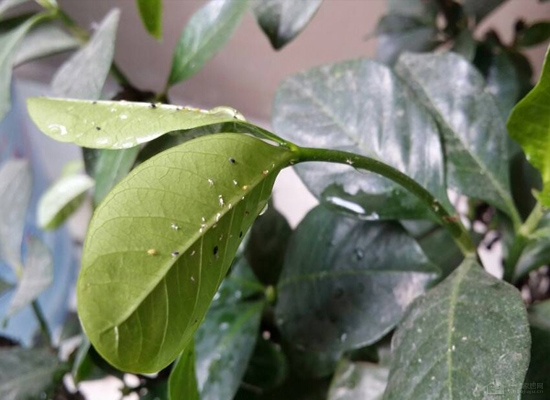
The main diseases of gardenia include brown spot, anthracnose, sooty mold, root rot, and chlorosis; indoors, diseases can occur year-round, and in severe cases the plant loses leaves, drops fruit, or dies. Common pests include red spider mites and scale insects. When disease occurs, the plant's leaves become riddled with holes, which not only affects the plant's growth but also reduces the ornamental value of the gardenia.
I. Control of common gardenia diseases
1. Treatment of chlorosis
Chlorosis is caused by various reasons, so different measures must be taken for its control.
Nutrient deficiency: This type of chlorosis starts from the old leaves at the lower part of the plant and gradually spreads to the new leaves. Nitrogen deficiency: simple leaf yellowing, with new leaves small and brittle.
Potassium deficiency: old leaves turn from green to brown. Phosphorus deficiency: old leaves appear purplish-red or dark red. For all the above situations, apply decomposed human manure or cake fertilizer.
Iron deficiency: This type of chlorosis appears on new leaves; at first the leaves are pale yellow or white while the veins remain green, and in severe cases the veins also turn yellow or white, and eventually the leaves dry up and die. For this situation, spray with 0.2%-0.5% ferrous sulfate aqueous solution for control.
Magnesium deficiency: This type of chlorosis starts from the old leaves and gradually develops toward the new leaves; the veins remain green, and in severe cases the leaves drop off and the plant dies. For this situation, spray with 0.7%-0.8% boron-magnesium fertilizer for control. Excessive watering, freezing, and other factors can also cause yellow leaves, so special attention must be paid during care.
2. Anthracnose
In Cixi it can occur from April to October, damaging the leaves; brown spot occurs in Cixi from March to November, damaging the middle and lower leaves of the plant; chlorosis damages the middle and upper leaves.
Control methods: Strengthen cultivation management, do a good job of clearing the garden, reduce sources of disease and pests, promptly remove diseased branches and leaves, eradicate weeds in the garden, and burn or bury them deeply in a centralized manner to reduce sources of infection; prune in a timely manner, change the ventilation and light penetration of the tree body, and enhance tree vigor; during the rainy season, pay attention to drainage, and lower the groundwater level and field air humidity.
II. Common gardenia pests
1. Red spider mite
Damage symptoms: Red spider mites mainly harm gardenia leaves. Red spider mites parasitize gardenias and mainly live by sucking leaf sap, often gathering on the underside of leaves. Plants infested by red spider mites have yellowing leaves and weak growth. In addition, red spider mites reproduce faster in high, dry temperature environments.
Control methods: First, maintain suitable environmental humidity so as not to create conditions for red spider mites to reproduce. When the air is dry, spray frequently to lower the temperature and increase humidity. Second, when red spider mites are found, immediately rinse with clean water to eliminate them. Third, at home, yellow tobacco leaves or leftover cigarette butts can be soaked in water and sprayed, with an obvious contact-killing effect.
2. Scale insects
Damage symptoms: Scale insects are pests that harm gardenia branches and leaves. Although small in size, their destructive power should not be underestimated. Scale insects live by sucking the plant's sap; in mild cases leaves turn yellow and drop and the plant's growth weakens, and in severe cases the whole plant dies, greatly affecting the growth and development of the gardenia.
Control methods: Scale insects are relatively small and often gather together and secrete wax, looking like a pile of white waxy powder. Simply pry them off with a wooden stick and crush them to death. Or spray with 80% dichlorvos 1000 times solution to kill them. Every year when spring warms and flowers bloom, spray with 0.2-0.5 degree lime sulfur mixture to kill the eggs. This method has a great effect on preventing the occurrence of pests.
This article only introduces the control methods for several common gardenia pests and diseases. If other pests and diseases are encountered during the process of growing gardenias, you may consult relevant technical personnel.
Control of main gardenia pests and diseases
The main pests and diseases of gardenia are:
① Scale insects. Ventilation conditions should be created to inhibit the reproduction of scale insects; during the hatching period (late April to early May), 1000 times solution omethoate pesticide can be sprayed; carbofuran can be buried and applied at the roots for control.
② Sooty mold. Strengthen ventilation and rinse the leaf surface with clean water; 800 times solution carbendazim, or 1000 times solution chlorothalonil can also be sprayed for control.