How to Propagate Gardenia? A Few Common Methods
Gardenia can be propagated by seed sowing, cuttings, layering, division, and grafting. Cuttings, layering, and division are the methods most commonly used.
(1) Cuttings - hardwood cuttings: After the plant goes dormant in autumn, use hardwood cuttings for propagation. Cut mature branches 10-12 cm long as cuttings, keep 3 leaves at the top, and soak the base of the cuttings in vitamin B12 for 2 hours, or treat the base with 20×10 to the -6th power to 25×10 to the -6th power indolebutyric acid for 24 hours, then insert them into coarse sand or vermiculite. After inserting, cover with grass or plastic film to keep warm and moist.
Keep the cutting bed at a temperature of 20-25°C and a relative humidity of 80%. Softwood cuttings: Select healthy softwood shoots and cut them into 12 cm segments, keep 4-5 leaves, and insert them in plain sand or in a bottle filled with cool boiled water or distilled water. Be careful to shade them from direct sunlight, and change the water once a day.
(2) Layering: Carry this out during the growing season from April to October. Select strong 2-3 year old branches 25-30 cm long, wound them, and press them into the soil.
(3) Division: Division propagation can be carried out in June.
How to Propagate Gardenia: A Brief Introduction to Gardenia Cutting Propagation
Earlier we introduced two articles about gardenia,
What Kinds of Gardenia Are There: A Brief Introduction to Gardenia
The Flower Language of Gardenia: What Does Gardenia Symbolize?
Gardenia likes to grow in places with plenty of sunlight and loves light, so when caring for gardenia in spring and autumn, be sure to give it relatively ample light. Otherwise, the growth and development of the gardenia will be affected, and this is also very unfavorable for the gardenia's overwintering. But in summer, if the sunlight is too strong, the gardenia needs to be placed in a semi-shaded environment. When gardenia is affected by a combination of strong sunlight, high temperatures, and excessive rain, it may develop yellow leaves. If the environmental conditions are not improved in time, this will gradually worsen and may even cause death.
In some places, gardenia is called water gardenia, which also shows the gardenia's habit of liking moisture. So when we grow gardenia in pots, we must pay attention to its requirements for environmental conditions.
Gardenia also has the effect of purifying the air. Gardenia has relatively strong resistance to harmful gases such as sulfur dioxide and hydrogen fluoride. However, gardenia is relatively sensitive to smoke and dust and has very weak resistance to it, so gardenia leaves easily accumulate dust, which affects their respiration. Smoke and dust are also one of the causes of poor growth and death. Therefore, when caring for gardenia, be sure to pay attention to the effect of smoke and dust on the growth of gardenia.
A Brief Introduction to Gardenia Cutting Propagation
Which Propagation Method Is Generally Used for Propagating Gardenia?
Cutting propagation is generally most often used for propagating gardenia, because gardenia roots very easily when propagated by cuttings.
Common Cutting Propagation Methods for Gardenia
There are two methods of propagating gardenia by stem cuttings: one is soil cuttings, and the other is water cuttings.
Soil Cutting Propagation of Gardenia
Gardenia soil cuttings are further divided into softwood and hardwood cuttings. First, let's talk about gardenia softwood cuttings.
1. Softwood cuttings means using healthy branches of the current year for cuttings. Cut the cuttings used into lengths of 8-15 cm for insertion.
2. Be sure to pay attention to the cutting period, as this is the key to survival. Generally, it is best to do this during the high-temperature season from the first fu to the middle fu, when rooting is fastest and the survival rate is highest, but it also requires the most meticulous management, ensuring high air humidity and semi-shade conditions.
3. After cutting, roots can form in 2-3 weeks; the survival rate can reach about 90%.
4. For spring cuttings, 1-2 year old hardwood branches can be used. Cut the cuttings to about 20 cm long. The cutting bed should be shaded, and the leaves should be sprayed with water frequently to maintain relatively high humidity. Hardwood cuttings in spring take a longer time to root, with a survival rate of 70-80%, but those that survive from hardwood cuttings form clumps relatively quickly.
5. The potting soil used for cuttings is generally best made from black soil mixed with 1/2 sand. This is because black soil is acidic and has strong water retention, while sand has good permeability and is favorable for rooting. However, pure sand or vermiculite can also be used as potting soil for rooting, but after rooting they must be transplanted into fertile soil in time.
5. After cutting, maintain sufficient moisture, but not to the point of water accumulation. The temperature of the water used for watering has a great effect on survival. When watering, do not cause strong changes in the temperature of the cutting bed. Therefore, when taking cuttings during the fu days, water before 7-8 a.m. in the morning, and after 9-10 p.m. in the evening. Do not use water warmed by the sun during the day, so as to avoid blackening and rotting at the base of the cuttings.
Water Cutting Propagation of Gardenia
The water cutting method for gardenia is relatively popular now because it is clean and tidy, and it is favored by many people. The gardenia water cutting method is a method of soaking the base of the cuttings in water to root. Cut strong softwood shoots of the current year into lengths of 12-15 cm, tie 30-40 of them into a bundle, then soak 1/2 of the cuttings in clean water. With the gardenia water cutting method, it is best to change the water once a day. Place the water container with the cuttings in a semi-shaded place. Generally, after about 20 or more days, new roots will grow. There is also a somewhat more troublesome method: use a thin wooden board, drill small holes in the board at a spacing of 2x5 cm, insert one cutting into each hole, and then place the board over a basin filled with water. Note that the portion of the gardenia cuttings below the board must be completely submerged in the water in the basin. Although this method is a bit more troublesome, its effect is better than the method of tying them into bundles for water cutting.
How to Propagate Gardenia: Gardenia Propagation Methods
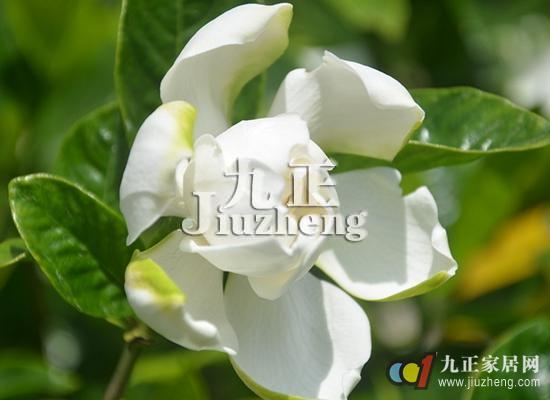
Gardenia is also known as zhizi. Its leaves are deep green and its flowers are elegantly fragrant. It can be grown as a potted plant for ornamental purposes, and the flowers can also be used in flower arrangements and worn as decorations. Therefore, gardenia can be seen in many courtyards and homes. So how is gardenia propagated? Today, let's talk about gardenia propagation methods.
1. Cutting Method
Gardenia branches root very easily. In the warm south, cuttings are often taken from March to October, while in the north they are often taken from May to June. Cut healthy, mature branches and insert them in a sand bed. As long as they are kept moist regularly, they root and survive very easily. Water cuttings are far superior to soil cuttings, with a survival rate close to 100%. Carry this out from April to July. Cut the cuttings, keep only the top 2 leaves and the apical bud, and insert them in a container filled with clean water. Change the water frequently to prevent the cut ends from rotting. After 3 weeks, they begin to root.
2. Layering Method
This is generally carried out around Qingming in April or during the plum rain season. In April, select 1-year-old healthy branches 25-30 cm long from a 3-year-old mother plant for layering. Pull them to the ground and wound the part of the branch that enters the soil. If the wounded part can be dipped in 200 ppm powdered naphthaleneacetic acid and then covered with soil and pressed firm, rooting is even easier.
If there is a three-forked branch, then at the fork point, three seedlings can be obtained at one time. Generally, roots form after 20-30 days. After rooting in June, they can be separated from the mother plant, and by the following spring they can be divided and planted with soil or potted individually.
For transplanting seedlings or potting, spring is best, carried out during the plum rain season, and a soil ball is required. During the growing season, keep the soil moist. Water more during the flowering period and midsummer. Fertilize once a month, and apply one additional application of phosphorus and potassium fertilizer before flowering. In early spring of the following year, prune and shape the plant, and promptly cut off dead branches and leggy branches.
3. Seed Sowing Method
Generally, select plump, dark red mature fruits, and dry them in the sun or in the shade with the shells still on to use as seed. Before sowing, cut open the seed fruit skin with scissors, take out the seeds, rub them apart in hot water, remove floating seeds or impurities, then scoop out the sunken, plump seeds, spread them on a bamboo mat, and place them in a ventilated place to dry off excess moisture. Generally, choose a sunny hillside or earthen plot with deep, loose, fertile sandy loam for sowing, and it can be planted at field edges and corners, or intercropped or relay intercropped with leguminous plants.
Before planting, plow the land 1-1.5 chi deep, remove miscellaneous tree stumps, and make beds with a bed surface width of 4-5 chi (the spacing can be larger if the soil quality is good, otherwise smaller), with a bed height of 6 cun. Apply farmyard manure, green manure, or human and livestock manure water as base fertilizer, for example, 20-30 piculs of human excrement and urine per mu. After the soil dries, shallowly rake the clods and level the bed surface. On the bed surface, open sowing furrows at a row spacing of 6-7 cun, with a furrow depth of about 1 cun, ready for sowing.
Gardenia can be sown in spring or autumn, generally mostly in spring. Spring sowing is done around Yushui, and autumn sowing is done around Qiufen. When sowing, mix the seeds with plant ash and evenly sow them in the sowing furrows, then cover and level the sowing furrows with fine soil or burnt soil, cover with grass, and sprinkle water. Keep the soil moist regularly to promote seedling emergence. Use 4-6 jin of seed per mu.
After seedlings emerge, be careful to remove the covering grass in time. During the seedling stage, weed frequently, and be careful not to damage the seedling roots. After weeding, topdress with diluted human excrement and urine water each time. After one year of raising seedlings, they can be transplanted. If transport is relatively far, it is best to coat the roots with yellow mud slurry, cover with grass to retain moisture, plant one plant per hole, then cover with soil, press firm, and sprinkle water.
After planting, cultivate and weed once each in spring and summer every year and topdress once. Apply human and livestock manure, stable manure, compost, cake fertilizer, and so on. Before flowering in summer, it is better to apply fertilizer with relatively high phosphorus and potassium content. Fertilization is generally carried out after weeding and loosening the soil.
The above are the gardenia propagation methods introduced for everyone. I hope they can help you. For more home knowledge, please stay tuned.