Detailed Guide to Gardenia Cultivation Methods and Care Techniques
Gardenia potting should preferably be done around April. The soil should be a fertile, loose, well-draining, slightly acidic soil, ideally leaf mold mixed with mountain soil, plus a small amount of cake fertilizer and bone meal as a base fertilizer. When transplanting seedlings, it is best to keep the root ball intact. After planting, water thoroughly, place in a shaded spot for about 10 days, then move to a sunny spot and switch to normal care. The key points of care: first, fertilizer and water management; second, pruning; third, pest and disease control.
(1) Fertilizer and water management. Fertilize once every half month before flowering and during the growing season, and keep the potting soil moist at ordinary times. In May, apply 1 to 2 additional feedings of a fertilizer combining nitrogen and phosphorus in a timely manner. Watering should follow the principle of seeing dry and seeing wet; after rain, prevent waterlogging, and avoid leaf drop and bud rot or failure to bloom caused by too much water. In summer, appropriately increase the amount of watering, and spray water on the leaves once each in the morning and evening. Pay attention to shading and keep the plant in a semi-shaded spot for care; never expose it to scorching sun. After Frost's Descent, move it indoors to a sunny spot. At a room temperature above 5°C, it can safely go dormant and overwinter, and it is advisable to keep the potting soil moist but slightly dry. If the room temperature stays above 15°C, it can still bloom, but fertilizer and water must keep up.
(2) Pruning. In early spring, shaping and pruning should be carried out, and leggy branches should be cut off in a timely manner. From May to July, cut off the top shoots to encourage side branches and increase the amount of flowering. After flowering, cut off the spent flowers, and prune once more around December.
(3) Pest and disease control. When the winter room temperature is too high or ventilation is poor, scale insects and sooty mold are likely to occur. They can be sprayed and eliminated with a 1000-fold dilution of dimethoate and a 500-1000-fold dilution of carbendazim. To control diseases early, a 1000-fold dilution of chlorothalonil can also be sprayed twice a month for prevention.
How to extend the gardenia flowering period? Key points for gardenia cultivation and care
Graduation and the start of the school term coincide with the season when gardenias are in full bloom. It gets its name because its fruit resembles a wine cup, and it is also known as yellow gardenia. Its flowering period is from June to August, and with proper care, flowering can last as long as 2 months. Gardenia likes a warm, humid, semi-shaded and semi-sunny environment, and is suitable for growing in fertile, loose and moist acidic loess. Therefore, caring for gardenia requires doing the following tasks well.
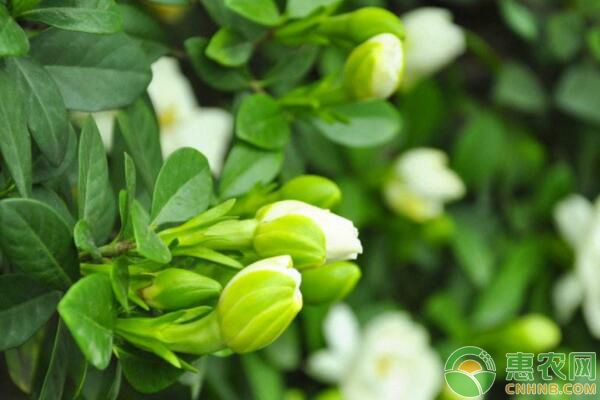
1. Cultivation and care
Gardenia should be transplanted with soil. This is done in spring or the plum rain season. The soil should be a fertile, loose, well-draining acidic soil. For potting, leaf mold plus mountain soil is mostly used, with a small amount of cake fertilizer and bone meal added as a base fertilizer. After transplanting, water thoroughly, place in a cool place, and carry out normal management after the seedlings recover.
In early spring, shaping and pruning should be carried out, and leggy branches should be cut off in a timely manner. From May to July, cut off the top shoots to encourage branching. After the flowers fade, cut off the spent flowers. In hot summer, water more, and spray water on the leaves once each in the morning and evening to increase humidity. Pay attention to shading and do not let it receive direct sunlight. It is best to place it under a shade shed or move it indoors to a ventilated spot.
In spring and autumn, it can be placed outdoors in the sun. Before flowering and throughout the growing season, apply light fertilizer frequently, fertilizing once every half month. If yellow leaves are found, 0.1% ferrous sulfate can be added to the water and fertilizer and poured on. In late autumn, move it indoors to a sunny spot for overwintering.
When the winter room temperature is too high and ventilation is poor, scale insects and sooty mold are likely to breed, and a 500-1000-fold dilution of carbendazim can be sprayed.
2. Propagation and care
Gardenia can be propagated by methods such as cuttings, layering and division.
(1) Cuttings
Using softwood cuttings gives a high survival rate. Take young gardenia branches as cuttings, 10-15 cm long, keep 2 leaves at the top and cut each in half, cut off all the rest, insert them into a seedbed, shade and keep moist, and they will take root in about 20 days.
(2) Division
Dig up the plant with soil, then use a garden fork to cut it apart together with the roots, and plant each part separately right away. Place in a cool spot, and move to a sunny spot after one week.
(3) Layering
This method is mostly used for gardenias planted in the ground. Select strong 2-3-year-old branches, pull them down to the ground, peel off some bark, press them into the soil, then cover well with soil. They will take root after one month, can be separated from the mother plant in mid to late June, and can be planted separately the following spring.
Gardenia Varieties and Cultivation and Care Methods
Gardenia is also known as yellow branch, mountain gardenia, yellow gardenia, jade lotus flower, etc. It is an evergreen aromatic shrub of the family Rubiaceae. The trunk and branches can reach 1-2 m high, are gray, and the twigs are green. The leaves are shaped like rabbit ears, simple, opposite or in whorls of three, leathery and glossy, with entire margins. The flowers are solitary at the branch tips or in the leaf axils, white, strongly fragrant, with a salverform corolla, much like an ancient wine vessel——the “zhi”, hence the name zhizi flower (later the character zhi was changed to “zhi” meaning gardenia). The fruit is ovoid and flat, with the fruit ripening period in October, and the flowering period from June to August.
Gardenia originated in southwestern China. At present, the main cultivated varieties and their variants include large-leaf gardenia (also called large-flowered gardenia), with large leaves, large flowers, double petals and strong fragrance; water gardenia, with a short plant, small flowers and small leaves, and double petals; single-petal sparrow-tongue, with small leaves and small flowers, single-petaled, and mostly wild. In addition, there are also oval-leaf gardenia and small-leaf gardenia, etc.
Gardenia likes a warm and humid climate, loves sunlight but cannot withstand strong direct sunlight, and is suitable for growing in loose, fertile, well-draining, slightly clayey acidic soil. It is a typical acid-loving flower. For potting soil, a mix of 40% garden soil, 15% coarse sand, 30% barnyard manure soil and 15% leaf mold is suitable.
During the seedling stage of gardenia, attention should be paid to watering, keeping the potting soil moist, and frequently applying diluted decomposed fertilizer. For watering, rainwater or fermented rice-washing water is best. During the growing season, if 0.2% ferrous sulfate water or alum fertilizer water is applied once every 10-15 days (the two can be used alternately), it can prevent the soil from turning alkaline, and at the same time supplement iron for the soil to prevent gardenia leaves from turning yellow. In summer, spray water on the leaves once each in the morning and evening every day to increase air humidity. For potted gardenia, after flowering in August, water only with clear water and control the amount of watering. Before Cold Dew, move it indoors and place it in a sunny spot. In winter, strictly control watering, but clear water can be used to spray the leaves often.
Every year from May to July, when the vigorous growth period of gardenia is about to pass, prune the plant, remove the top shoots, and encourage branch sprouting, so that the plant shape will be beautiful and there will be more flowers in the future.