Main Pests and Diseases of Jasmine and Their Control Methods
The main diseases of jasmine are southern blight, violet root rot, and branch blight; the pests include scale insects, stem borers, red spider mites, flower bud borers, jasmine leaf borers, and others. The control methods are as follows:
1. Southern blight
(1) This disease occurs easily under high temperature and high humidity conditions, so a site with good ventilation, light, and drainage should be chosen, and attention should be paid to drainage during the rainy season to reduce humidity.
(2) Do not use infected soil for potted plants. The potting soil can be heated and disinfected with warm water at 50% or above for 24 hours, then dried before use.
(3) Pull out diseased plants and burn them in a centralized manner, and spread lime around the pit of the diseased plants to disinfect the soil before replanting new plants.
(4) In the early stage of the disease, irrigate the soil around the stem with a 500-fold dilution of 50% carbendazim, or use a 500-fold dilution of thiophanate-methyl, or irrigate with 0.3% lime sulfur mixture and then sprinkle lime powder. When the disease occurs, take out the seedlings, wash them clean in clear water, disinfect them with a 1000-fold dilution of mercuric chloride solution, and replant.
2. Branch blight
(1) Promptly prune and burn diseased branches.
(2) Spray an 800-fold dilution of carbendazim or thiophanate-methyl; during the dormant period, spray 3%-5% lime sulfur mixture; during the growing period, spray a 500-fold dilution of 50% thiram wettable powder or a 500-fold dilution of 75% chlorothalonil wettable powder.
3. Violet root rot (root rot)
Spray a 1000-fold dilution of 50% carbendazim wettable powder, or use a 1000-fold dilution of mercuric chloride solution, or 1:5:100 ceresan lime water, or a 1000-fold dilution of potassium permanganate solution to irrigate the root crown. For severely affected plants, dig them out and burn them in a centralized manner, disinfect the planting pit, and then replant.
4. Scale insects
(1) Remove and burn affected branches and leaves.
(2) During the non-harvest period, spray an 800-1000 fold dilution of phosmet, malathion, or fenitrothion, or spray a 10-15 fold dilution of rosin soap mixture.
5. Red spider mites
During the occurrence period, spray a 1000-fold dilution of 40% dicofol, or a 1000-fold dilution of 40% omethoate, or a 2000-3000 fold dilution of 50% cyhexatin wettable powder, or a 1500-2000 fold dilution of 73% propargite emulsion. In summer, use 0.2%-0.3% lime sulfur mixture, and multiple pesticides can also be used alternately.
6. Flower bud borers and leaf borers (flower heart worms and leaf-rolling worms)
Promptly remove affected flower buds, shoot tips, infested leaves, and pupae. During the larval occurrence period, spray a 1000-fold dilution of 50% fenitrothion.
What are the main pests and diseases of jasmine? How to control them?
What are the main pests and diseases of jasmine? How to control them?
The main diseases of jasmine are southern blight, violet root rot, and branch blight; the pests include scale insects, stem borers, red spider mites, flower bud borers, jasmine leaf borers, and others. The control methods are as follows:
Southern blight
(1) This disease occurs easily under high temperature and high humidity conditions, so a site with good ventilation, light, and drainage should be chosen, and attention should be paid to drainage during the rainy season to reduce humidity.
(2) Do not use infected soil for potted plants. The potting soil can be heated and disinfected with warm water at 50 degrees Celsius or above for 24 hours, then dried before use.
(3) Pull out diseased plants and burn them in a centralized manner, and spread lime around the pit of the diseased plants to disinfect the soil before replanting new plants.
(4) In the early stage of the disease, irrigate the soil around the stem with a 500-fold dilution of 50% carbendazim, or use a 500-fold dilution of thiophanate-methyl, or irrigate with 0.3% lime sulfur mixture and then sprinkle lime powder. When the disease occurs, take out the seedlings, wash them clean in clear water, disinfect them with a 1000-fold dilution of mercuric chloride solution, and replant.
2) Branch blight
(1) Promptly prune and burn diseased branches.
(2) Spray an 800-fold dilution of carbendazim or thiophanate-methyl; during the dormant period, spray 3%-5% lime sulfur mixture; during the growing period, spray a 500-fold dilution of 50% thiram wettable powder or a 500-fold dilution of 75% chlorothalonil wettable powder.
3) Violet root rot (root rot)
Spray a 1000-fold dilution of 50% carbendazim wettable powder, or use a 1000-fold dilution of mercuric chloride solution, or 1:5:100 ceresan lime water, or a 1000-fold dilution of potassium permanganate solution to irrigate the root crown. For severely affected plants, dig them out and burn them in a centralized manner, disinfect the planting pit, and then replant.
4) Scale insects
(1) Remove and burn affected branches and leaves.
(2) During the non-harvest period, spray an 800-1,000 fold dilution of phosmet, malathion, or fenitrothion, or spray a 10-15 fold dilution of rosin soap mixture.
5) Red spider mites
During the occurrence period, spray a 1000-fold dilution of 40% dicofol, or a 1000-fold dilution of 40% omethoate, or a 50% cyhexatin wettable powder
2,000-3000 fold dilution, or a 73% propargite emulsion 1500-2000 fold
dilution. In summer, use 0.2%-0.3% lime sulfur mixture, and multiple pesticides can also be used alternately.
6) Flower bud borers and leaf borers (flower heart worms and leaf-rolling worms)
Promptly remove affected flower buds, shoot tips, infested leaves, and pupae. During the larval occurrence period, spray a 1000-fold dilution of 50% fenitrothion.
What are the requirements for growing jasmine? Key points for pest and disease control of jasmine
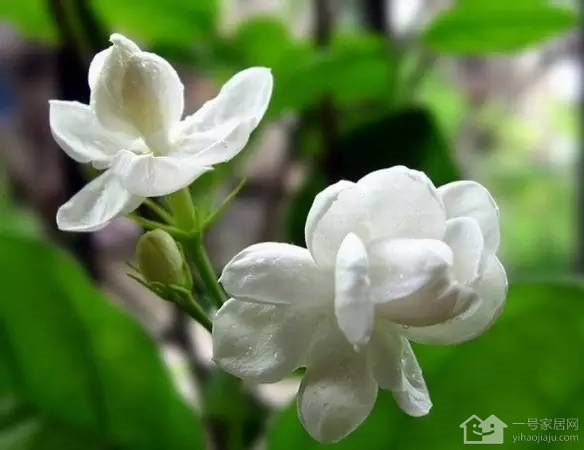
Jasmine is a flower that many flower lovers enjoy growing, and many people keep it at home. This plant is very fragrant and can also repel mosquitoes. Its blooms are also very beautiful, but many people do not know how to grow jasmine, which is awkward. Let's take a look at the requirements for growing jasmine and the key points for pest and disease control of jasmine.
1 Temperature
Jasmine likes high temperatures. It usually begins to sprout at around 20°C, forms buds above 25°C, and forms flower buds at around 28°C to 33°C. Its optimum growth temperature is 22°C to 35°C. If the temperature is too high, the plant enters a semi-dormant state, with fewer and uneven blooms. If the temperature is too low, the plant grows slowly and is not tolerant of low temperatures. If kept below 5°C for a long time, some branches will freeze to death.
2 Water
Jasmine likes moist soil, and it can be watered once a week with about 250 ml. However, it fears water accumulation in the pot. If the potting soil remains wet for a long time, the root system will rot due to lack of oxygen in the potting soil, and the leaves will gradually turn yellow and fall off, or even the whole plant will die.
3 Sunlight
Jasmine likes an environment with ample sunlight. With sufficient light, the leaves are dark green, the branches are thick and strong, more flower buds form, the color is good, and the fragrance is strong. Otherwise, the plant will grow leggy, the leaves will turn pale green and thin, the branches will also be slender, the internodes will be longer and tender, there will be fewer flower buds, fewer blooms, and the flowers will be small with a faint fragrance.
4 Fertilization
Jasmine likes fertilizer, but fertilization should be carried out according to its growth pattern. Do not fertilize in winter or in summer when the temperature is above 35°C. During the growing period, sufficient and reasonable nutrients should be maintained, with attention to a balanced ratio of nitrogen, phosphorus, and potassium fertilizers. During the bud stage, phosphorus and potassium fertilizers should be the main focus to promote the formation of more flower buds. Never apply fertilizer that is too concentrated or use undecomposed organic fertilizer, so as to avoid burning the root system and causing the leaves to turn yellow. Throughout the growing period, spray prepared alum fertilizer water or ferrous sulfate solution once every 1 to 2 weeks.
5 Pest and disease control
Jasmine is susceptible to pests such as red spider mites, so ventilation should be strengthened, and attention should be paid to observation at ordinary times. Once pest damage is found, use dicofol promptly for control.
Jasmine leaf spot disease is a common disease of jasmine. This disease generally begins to occur from May to June, and July to August is the peak period of onset. In the early stage of the disease, light brown spots appear on infected leaves, then spread outward. The diseased area becomes thin and brown and transparent, round or irregular in shape, with the diseased area thin, semi-transparent, brown, and with obvious lesion margins. Finally, black granular substances form on the lesions. Diseased leaves should be removed promptly and destroyed in a centralized manner. During the disease period, spray a 600-800 fold dilution of 65% zineb wettable powder, or an 800-fold dilution of 75% chlorothalonil wettable powder, etc., for 3 to 4 consecutive sprays at an interval of 10 to 14 days.