What are the reasons for spider plant leaves turning black and dying?
Generally speaking, when spider plant leaves turn white or pale, it is due to scorching from strong direct sunlight; when leaves turn yellow and die, it is due to insufficient nutrients or long-term dryness of the potting soil; when leaves turn black and drop off, it is due to overwatering or applying fertilizer that is too concentrated. Preventive methods include:
1. Before Qingming Festival each year, repot and change the soil, replenish nutrients, and promptly remove rotten and blackened roots. After repotting, the roots are damaged, and combined with lower temperatures and slow water evaporation, the absorption capacity is very weak. In terms of care, simply keep the potting soil moist and do not rush to fertilize, otherwise it will cause leaves to turn yellow and drop off.
2. During the growing season, apply diluted decomposed liquid fertilizer once every 10-15 days or so.
3. It grows well at temperatures of 20°C-25°C. Spider plants are especially sensitive to light and require a semi-shaded environment, so in spring and autumn, semi-shade is best; in summer, provide light in the morning and evening and place it in a shaded spot at noon. In winter, room temperature should be maintained above 4°C-5°C; if the temperature is too low, it will suffer cold damage.
4. Aside from winter dormancy when water requirements are not high, during the growing season it is best to keep the potting soil moist. During the intense heat of summer, frequently spray water around the flowerpot and on the leaf surfaces to lower the temperature and create a cool, moist microclimate.
5. Regularly remove dead leaves from the rim of the pot, trim leaf stems, spray and wash the leaf surfaces, remove dust, and watch out for the harmful effects of coal smoke.
6. If leaf blackening and branch withering have already occurred, promptly take the spider plant out of the pot, wash the soil off, cut away shriveled roots, let it dry, and then repot it in fresh soil. After repotting, water thoroughly, place it in a cool spot and keep it moist. After half a month, return to normal care, and it will still be able to reproduce and grow.
What to do when spider plants get pests; pest and disease control/prevention for spider plants is very important
Although spider plants are attractive and highly ornamental, pest and disease problems not only affect their appearance but can also cause the plant to die. So what should you do when spider plants get pests? And how should you deal with diseases when they appear? Let me give you a detailed explanation of spider plant pest and disease control methods.
What to do when spider plants get pests
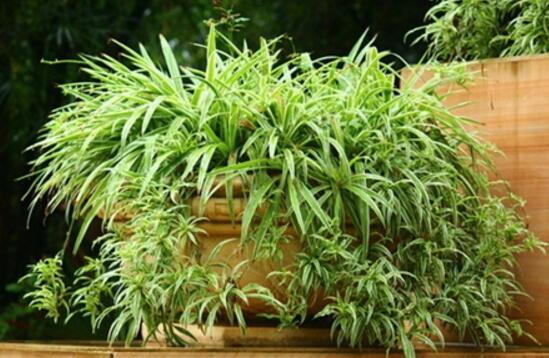
Research has found that the pests commonly appearing on spider plant stems and leaves are mainly scale insects, nematodes, aphids and whiteflies. If spider plants get pests, what should you do? The symptoms and methods are as follows.
1. Scale insects
Symptoms: Leaves turn yellow, the plant grows poorly, leaves drop off and the plant withers and dies; yellow-brown or purplish-brown scale shells appear on the leaves, along with white transparent sticky honeydew secreted by the scale insects.
Control method: Cut off the infested branches and leaves, then spray according to the number of pests. You can use 40% omethoate diluted to a 1000-fold solution for spraying, or 50% malathion diluted to a 1500-fold solution for spraying.
2. Nematodes
Symptoms: The plant grows slowly, leaves turn yellow, and finally the whole plant withers and dies.
Control method: If spider plants get pests in this situation, what should you do? You can evenly apply 15 grams of 3% carbofuran granules into the soil, then cover with 10 cm of soil, and then water thoroughly. Generally, this can eliminate many kinds of pests.
3. Aphids
Symptoms: The plant suffers from malnutrition and leaves turn yellow. When aphids are numerous, they secrete honeydew that covers the surface of spider plant leaves.
Control method: Use 40% phosmet diluted to a 1000-fold solution for spraying, generally once every 7-10 days; spray 2-3 times continuously to eliminate the damage.
4. Whiteflies
Symptoms: Leaves show signs of yellowing and withering, wounds on the leaves rot, and in severe cases the entire plant dies.
Control method: Spray with 40% omethoate diluted to a 1000-fold solution; or spray with 80% dichlorvos emulsifiable concentrate diluted to a 1000-fold solution.
Pest and disease control for spider plants
1. Leaf blight
Symptoms: Leaves first turn yellow, then become brown lesions; the lesions extend toward the leaf base until the entire leaf turns brown or gray-brown, and small black dots appear on the underside of the leaves.
Cause: Relatively high environmental temperature, high humidity, and poor ventilation.
Control method: Control soil moisture, increase organic fertilizers such as phosphorus and potassium fertilizers, improve environmental ventilation, and spray with 70% zineb diluted to a 600-fold solution, once every 15-20 days, 2-3 times is sufficient.
2. Southern blight
Symptoms: Purplish-brown spots appear on the leaves, followed by an obvious white mycelial layer; the plant wilts and eventually dies.
Cause: High temperature and humidity in the environment, waterlogged soil, and poor ventilation and light transmission.
Control method: Water appropriately and fertilize reasonably; for details, refer to how to water spider plants. Do not plant too deep. When disease occurs, scatter lime powder, once every 15 days, 2-3 times is sufficient.
3. Stem rot
Symptoms: The disease starts from older seedlings; after infection, the base of the stem turns brown, the leaves lose their green color and begin to droop, then the disease progresses upward until the whole plant withers and dies.
Cause: Damp soil, lack of light, and poor ventilation.
Control method: Control soil water and fertilizer, keep the soil from becoming too moist, and provide spider plants with a certain amount of light and ventilation. This is the basic common knowledge for spider plant pest and disease control. When disease occurs, spray with 77% copper hydroxide wettable powder diluted to a 1000-fold solution.
4. Anthracnose
Symptoms: Small yellow-brown sunken spots appear on the leaves, then expand into dark brown round spots; leaf tips dry up, and then the whole plant dies.
Cause: High humidity and muggy heat in the environment, water accumulation in the flowerpot, overly dense plant clumps, and poor ventilation.
Control method: Control the frequency of watering and avoid excessively high soil moisture. When disease occurs, spray with 75% chlorothalonil diluted to a 1000-fold solution.
5. Root rot
Symptoms: Often appears on seedlings. Early symptoms are not obvious, but later the degree of root rot noticeably intensifies, then causes leaves to turn yellow and wither, while at night they return to normal.
Cause: Insufficient light, soil with high clay content that easily compacts, and pathogenic bacteria invading the soil.
Control method: Before planting, disinfect the soil and seeds first, and when planting, scatter 50% carbendazim into the soil. When disease occurs, use 40% root rot inhibitor for root drenching, once a week is sufficient.
Ten best foliage plants for indoor growing, water culture or soil culture, take your pick!
Growing flowers at home is becoming more and more common. Many flower lovers grow flowers just to make the home a bit more lively - one more touch of green makes the home a little fresher. As for growing them well and exquisitely, that takes too much time……
Let me recommend the ten plants best suited for home growing. Most of them can be grown in water, isn't that thoughtful?
1. Pothos
Pothos is a must-recommend in my book, and also something everyone is familiar with. Basically, an office can lack any green plant, but there will definitely be a pot of pothos!
Pothos likes shade; giving it light once a week is enough, and it won't die even with completely indoor scattered light.
When the water runs out, just add more; no need to specially change the water. This is the legendary low-maintenance growing!
2. Spider plant
Spider plants are enjoyed for their leaves and roots, and they also bloom!
Water culture looks quite beautiful, and soil culture easily fills the pot!
However, spider plants need light. Without light, spider plants lose their green color, become yellow and white, and frail……
3. Pennywort
Pennywort is similar to spider plants and also needs light. Without light, the stems become thin and tall from etiolation and easily fall over.
If you choose the right container for pennywort, it can be very beautiful!
4. Lucky bamboo
Lucky bamboo has a good name and good symbolism!
It is also very easy to grow; just put it in a glass bottle and change the water frequently.
Green plants all need light, and lucky bamboo is no exception~
There is a folk trick for growing lucky bamboo: drop two rusty iron nails into the glass bottle, which can make lucky bamboo green and beautiful. You can give it a try~
5. Ivy
Ivy is a very common climbing plant; under elevated roads there are whole patches of it!
If your home has a wall, you can go home and try growing a wall of ivy~
Putting two sprigs of ivy in water culture also has a distinctive charm~
6. Maidenhair fern
Among foliage plants, maidenhair fern has very high aesthetic value: thin, black, wire-like stems paired with small fan-shaped, emerald-green leaves. Placed on an office desk, it is just impossibly beautiful!
Maidenhair fern likes water and often grows beside streams; it likes bright scattered light and avoids direct sunlight, making it just right for indoor growing~
That is all for plants that can be grown both in water and in soil. Next, let us introduce several green plants for soil culture~
7. Money tree
The money tree is a very common plant on computer desks, but the money tree has a quirk that everyone must pay attention to:
A money tree kept indoors for a long time should not be casually moved outside to bask in the sun; the money tree is especially sensitive to light!
Some people, on a whim, give the money tree some sun, and then the leaves turn yellow, become transparent, and wither……
8. ZZ plant
ZZ plant leaves resemble a long string of coins, symbolizing bringing in wealth and prosperity, glory and riches!
ZZ plants are also easy to grow: water thoroughly and place on a table, and you do not need to manage anything; it will sprout new shoots on its own~
Its symbolism is also excellent. If you need to give a gift, you might consider giving a ZZ plant: easy to grow, beautiful, and with good symbolism!
9. Alocasia
The flowers of Alocasia really resemble Guanyin; if you have the chance, you must try growing one until it blooms~
My home has a very large Alocasia. It was frozen to death at the beginning of the year, so all the leaves were cut off. Now it has not only grown back, but also bloomed!
The "dripping" in Alocasia refers to its sap dripping from the leaf tips, and this sap is slightly toxic!
Flower lovers with small children at home should probably not grow it~
10. Asparagus fern
Asparagus fern gives people an air of refined elegance and literary grace; placed in the living room, it really shows class!
But asparagus fern is just a little harder to grow than the plants introduced above……
Asparagus fern leaves easily turn yellow; light and water are both indispensable!
The reason asparagus fern is placed last is to let everyone grow them one by one slowly. Does it feel like leveling up while fighting monsters~~