What are the reasons why Phalaenopsis orchids fail to bloom or have their buds wither?
It takes about 2 years for a Phalaenopsis orchid to go from a small seedling to flowering, and mature plants mostly bloom around the Spring Festival each year. But some orchids grown by hobbyists simply do not bloom, or even though they form flower buds, the buds turn yellow and drop early, leaving many flower lovers deeply disappointed.
The reasons are mainly the following:
① Dry air in the growing environment, insufficient watering, or exposure to strong light can all cause the leaves to wilt and turn yellow and withered, affecting flower bud differentiation and blooming.
② Too high or too low a temperature suppresses plant growth and can also affect flower bud formation, so the plant does not bloom. Phalaenopsis orchids prefer a warmer environment; even if flower buds have formed, if the indoor temperature is too low to meet the requirements for blooming, the buds will shrink and drop, and the plant will not bloom.
③ An imbalanced fertilizer ratio, with too much nitrogen fertilizer and a lack of phosphorus and potassium fertilizer, can also affect flower bud formation, so the plant does not bloom or blooms very little. Fertilizing too heavily, especially applying strong fertilizer after bud formation, easily causes the buds to turn yellow and drop early.
④ Careless watering that splashes water onto the crown at the base of the leaves causes rot at the leaf base due to standing water, resulting in poor plant growth and affecting blooming. Therefore, when spraying water, it is best to use a misting method on the leaf surface and avoid spraying the growing point. After flower buds have formed, do not spray water on the flowers, so as to avoid bud drop.
⑤ Poor air circulation; ventilation is especially needed during the flowering period. If the air is stagnant and does not move at this time, the tip of the flower spike is prone to withering, causing the flower buds to turn yellow and drop early.
⑥ If the growing medium is alkaline, or if water and fertilizer that are on the alkaline side are used for a long time, the roots' absorption of water and nutrients is affected, which is also one of the reasons Phalaenopsis orchids fail to bloom. In addition, after the flowers have finished blooming, the faded flowers should be cut off as early as possible, as this can reduce the consumption of nutrients within the plant. Otherwise, it is also unfavorable for the orchid's growth and blooming the following year.
Reasons why Phalaenopsis orchids fail to bloom or have withered buds
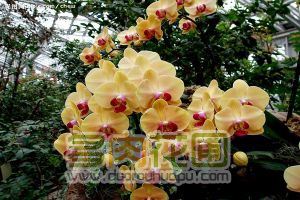
Main reasons and analysis
Dry air in the growing environment
Excessive strong light exposure and insufficient water supply will both lead to wilting and yellowing of the leaves, which is unfavorable for flower bud differentiation and blooming.
Improper control of temperature levels
Poor temperature control can also hinder the plant's normal development, hinder flower bud initiation, and prevent blooming. Phalaenopsis orchids are suited to being grown in a high-temperature environment; even if flower buds emerge, if the indoor temperature is too low, the buds will turn yellow and drop early and fail to meet the requirements for blooming.
Imbalanced fertilizer ratio
When too much nitrogen is applied and phosphorus and potassium fertilizers are lacking at the same time, flower bud differentiation is also suppressed, resulting in no blooming or few blooms. If the fertilizer concentration is too high, especially if strong fertilizer is applied after flower buds have formed, the buds are prone to withering and dropping. If water and fertilizer that are on the alkaline side are used for a long time, the roots' absorption of water and nutrients will be hindered, making it difficult for Phalaenopsis orchids to bloom.
Careless watering
If water splashes into the crown at the base of the leaves during watering, standing water will cause the leaf base to rot, causing abnormal plant growth and affecting blooming. Therefore, when spraying water, the leaf surface can be misted to prevent accidentally spraying the growing point. Once flower buds have formed, stop spraying water on the flowers to avoid bud drop.
Poor air circulation
During the flowering period, special attention should be paid to providing proper ventilation. If air circulation is poor, the tip of the flower spike easily turns yellow and withers, and bud drop can also occur.
What are the reasons why Phalaenopsis orchids fail to bloom or have withered buds?
It takes about 2 years for a Phalaenopsis orchid to go from a small seedling to flowering, and mature plants mostly bloom around the Spring Festival each year. But some Phalaenopsis orchids simply do not bloom, or even though they form flower buds, the buds turn yellow and drop early. The reasons are mainly the following.
Dry air in the growing environment, insufficient watering, or exposure to strong light can all cause the leaves to wilt and turn yellow and withered, affecting flower bud differentiation and blooming.
Too high or too low a temperature suppresses plant growth and can also affect flower bud formation, so the plant does not bloom. Phalaenopsis orchids prefer a warmer environment; even if flower buds have formed, if the indoor temperature is too low, the buds will shrink and drop.
An imbalanced fertilizer ratio, with too much nitrogen fertilizer and a lack of phosphorus and potassium fertilizer, can also affect flower bud formation, so the plant does not bloom or blooms very little. Fertilizing too heavily, especially applying strong fertilizer after bud formation, easily causes the buds to turn yellow and drop early.
Careless watering that splashes water onto the crown at the base of the leaves causes rot at the leaf base due to standing water, resulting in poor plant growth and affecting blooming. Therefore, when spraying water, it is best to use a misting method on the leaf surface and avoid spraying the growing point. After flower buds have formed, do not spray water on the flowers, so as to avoid bud drop.
Poor air circulation has adverse effects; ventilation is especially needed during the flowering period. If the air is stagnant and does not move at this time, the tip of the flower spike is prone to withering, causing the flower buds to turn yellow and drop early.
In addition, after the flowers have finished blooming, the faded flowers should be cut off as early as possible, as this can reduce the consumption of nutrients within the plant; otherwise, it is unfavorable for the orchid's growth and blooming the following year.