How to water-culture small-leaf pothos? Teach you the correct care method
Small-leaf pothos originates from tropical rainforests and has several relatively thin purplish-red aerial roots growing at its nodes, making it very easy to grow in water.
(1) Water-cutting root induction method
As long as the temperature reaches above 20°C, you can at any time cut stem segments with good ornamental value and insert them directly into clean water, with the immersion depth reaching 5.0-10 cm, place them indoors under diffused light, change the water once every 2-3 days, and roots will form in about 10 days. If the stem segments are inserted into an opaque container, or the glass container is shaded with black cloth, the rooting time can be shortened, and many roots will form during water culture.
(2) Direct water culture method using aerial roots
Small-leaf pothos has several relatively thin purplish-red aerial roots growing at its nodes. You can cut stem segments with aerial roots and insert them into water for direct water culture. The aerial roots can adapt to life in water and continue to grow on the basis of the original aerial roots.
(3) Stem segment cutting method
Insert stem segments with tender tips into clean inorganic substrates such as vermiculite or river sand (at least one node must be inserted into the substrate), then carry out necessary shading, moisture retention and other measures. Roots can be induced in about 10 days. When the roots grow to 1-2 cm long, the cutting plant can be pulled up, the substrate attached to the roots and stems washed off, and it can be inserted directly into a water culture bottle for normal water culture.
In addition, the root-washing method can also be used, but it is relatively less likely to survive. As long as pure white new roots grow in the water, the water culture is considered successful, and then it enters the normal water culture care stage.
Large-leaf pothos or small-leaf pothos: which is better? How to care for large-leaf pothos and small-leaf pothos
I believe many friends are familiar with large-leaf pothos and small-leaf pothos, and the editor likes them very much too. So which is better, large-leaf pothos or small-leaf pothos? Today the editor will take everyone to have a look!
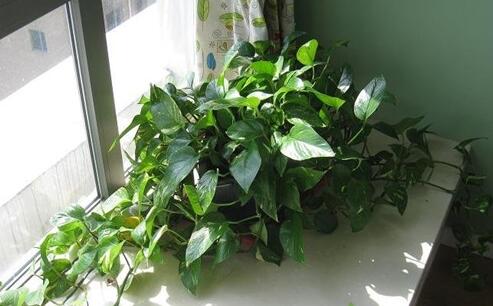
I. Which is better, large-leaf pothos or small-leaf pothos
In fact, both large-leaf pothos and small-leaf pothos are household potted plants widely loved by the public. Among them, large-leaf pothos is mostly grown in soil, while small-leaf pothos is mostly grown in water. In terms of planting method, dear readers can choose according to their own preferences.
In addition, large-leaf pothos is suitable for making a pothos pole, and placing it in a corner of the living room can make the indoor environment appear more serene and grand; small-leaf pothos is suitable for ordinary potted trailing display, and placing it on a desk or coffee table makes it appear exquisite and elegant. Dear readers can freely choose different display styles.
II. How to care for large-leaf pothos and small-leaf pothos
1. Choose healthy, strong pothos stems with aerial roots.
2. Insert the pothos into a transparent vase filled with clean water. Note that the leaves must not be soaked in water, as this will affect water quality.
3. In the first few days, change the water every two or three days with water at the same temperature as the room. After water roots grow, change the water once a week.
4. After new leaves grow, add nutrient solution once about every ten days.
5. If the root system is too long, cut it short in time to avoid loss of nutrients.
III. Can large-leaf pothos and small-leaf pothos be placed in the bedroom
In fact, dear readers do not need to worry excessively about the issue of pothos sap being toxic. As long as you do not deliberately break the pothos stems at ordinary times, its toxins will not cause human allergies.
Moreover, placing pothos in the bedroom can soothe the mood, rest the eyes, purify the air and increase humidity. If dear readers like this plant, there is no harm in placing it in the bedroom.
How to water-culture pothos (many pictures): introduction to the cultivation method of water-cultured pothos
Water-cultured pothos is one of the very good indoor decorative water-cultured plants, a climbing vine foliage flower. The pothos stems are slender and soft, and the leaves are delicate and elegant. Place a nested pot high on top of a furniture cabinet and let its vine stems droop calmly, or after the vine stems hang too long, coil and hang them into a ring, just like emerald relief sculpture. Previously many beginner flower lovers asked how to water-culture pothos. Next, let us look at the water culture method for pothos.
Water-culturing pothos is very simple. Simply put, just cut a few pothos branches and insert them into water, then place them under diffused light (do not place them in direct sunlight). There is also no need to change the water every day; when the water is low, just add water and it is OK! If you want to be a bit more refined, flower lovers can add ceramsite or similar materials in the water culture vessel to fix the pothos branches.
As for water-cultured pothos, I have seen pothos inserted in a mineral water bottle in an office, and I have also seen ceramsite placed in a small pot made by a merchant. Taken together, water-cultured pothos is very easy to care for, but compared with pure water-cultured pothos, the water culture method with peat and ceramsite placed inside is more prone to root rot.
In fact, by looking at the pictures below, you will know how to water-culture pothos. There is no fixed method, and flower lovers can freely use their creativity. Just remember to place it in diffused light. Even if root rot or similar situations occur during water culture, clean up the rotten parts in time, and water culture can continue.
1. The water-cultured pothos in the picture below is rather particular, with ceramsite for fixing branches, and water culture trays, etc. This is generally the style of merchants; it looks good only then does it sell well!
2. The water-cultured pothos below is more casual, in a beverage bottle or water cup. The pothos does not look very lively. The problem is that the placement environment is unsuitable. When pothos faces strong light, it is often prone to sunburn and wilting.
3. A glass of water-cultured pothos, simple, with materials easy to find, and clean water is enough.
4. In the picture below, the pothos roots can be seen. It should have been water-cultured for some time, so the roots are very long. In this situation, it is best to expose 1 cm of the roots to the air, as this helps the roots breathe.
5. A common method on office desks, very easy to keep alive.
Notes on water culture care:
Water-cultured pothos grows relatively fast and is extensively managed in cultivation. During cultivation and management, in summer you should spray water on the plant more often, add nutrient solution once every 10 days, and keep the leaves green. For potted seedlings, when the seedlings grow a cultivation pole of 30 cm, it should be cut off; when fallen lower leaves reach 30%-50%, they should be discarded and replanted. Like potted pothos, water-cultured pothos also needs frequent pruning, cutting off overly long and disordered branches and stems to maintain an orderly, well-spaced appearance. The water for water-cultured pothos is a very key part. Tap water, well water, clean river water, etc. can be used, but the water should be left to stand for one or two days before use.
Summary: The above is an introduction to the care methods for water-cultured pothos. I hope it is helpful to everyone.