What are the reasons an adult Clivia doesn't bloom?
Clivia generally needs 3 to 4 years of cultivation and must grow more than 15 leaves before it can bloom. If it has not reached blooming age, no amount of careful care will make it flower. So why does an adult Clivia sometimes fail to bloom? The main reasons are as follows:
1. Low room temperature in winter inhibits the growth of Clivia. In this case, the winter room temperature must be kept at around 15°C, and must not fall below 10%, only then can Clivia bloom.
2. Clivia receiving short-day conditions is favorable for blooming. Too strong light in summer will cause the plant to consume excessive nutrients, affecting bud formation and blooming. Therefore, in summer, place it in a semi-shaded spot to avoid direct sunlight. In winter, Clivia needs a certain amount of light, otherwise blooming will be affected.
3. During care, applying too much nitrogen fertilizer while lacking phosphorus and potassium fertilizers will result in only leaf growth and no blooming; watering too much or too little will also affect the plant's normal growth and development, affecting bud formation and blooming. Therefore, for adult Clivia, apply more phosphorus and potassium fertilizers during the growing season, once every half month, and apply less nitrogen fertilizer. Water at the right time and in the right amount.
4. The potting soil lacks nutrients. The blooming process of Clivia consumes a large amount of nutrients, and the nutrients originally in the potting soil are mostly used up. If no more fertilizer is applied or new culture soil is added, it will certainly be very difficult for it to continue growing leaves and blooming. Even if it blooms, the flowers are often thin and small, with faded color and low ornamental value. In addition, when the potting soil is too alkaline and the pH exceeds 7.5, it will also affect the growth and blooming of Clivia. To make Clivia bloom every year, for plants that have already bloomed, repot and change the soil at the appropriate time, and strengthen water and fertilizer management so that they grow robustly; only then can they form buds and bloom again.
Why doesn't Clivia bloom? What should you do if Clivia doesn't bloom?
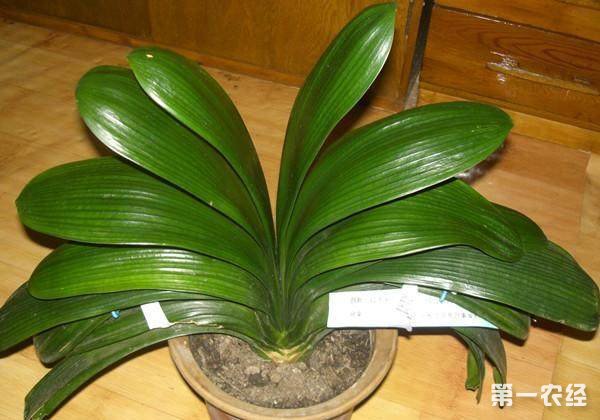
Clivia doesn't bloom
Flower lovers often ask, why do your Clivias bloom so beautifully, while mine shows no signs at all! I've kept it for 3 to 4 years, so it should be an adult by now. Why is this happening?
In fact, after Clivia moves from youth into adulthood, it should generally bloom. Normally, a 4-year-old Clivia has already reached adulthood, usually with around 20 leaves, and should send up a stalk and bloom. Some people care for theirs especially well, with robust plants and good development, and they can bloom in 2 to 3 years. But some Clivias are already near old age and have never bloomed, and some Clivias bloomed once by chance and then never again had any connection with flowers. So why doesn't the Clivia you grow bloom? It may be that these 4 points were not done well:
1. Temperature
Low room temperature in winter will inhibit the growth of Clivia. In this case, the winter room temperature must be kept at around 15°C, and must not fall below 10°C, only then can Clivia bloom.
2. Light
Clivia receiving short-day conditions is favorable for blooming; long-day conditions will cause the plant to consume excessive nutrients, affecting bud formation and blooming. Therefore, in summer, place Clivia in a semi-shaded spot to avoid direct sunlight. In winter, Clivia needs a certain amount of light, otherwise blooming will be affected.
3. Fertilizing
During the growing season, Clivia should be given more phosphorus and potassium fertilizers, once every half month, and less nitrogen fertilizer, otherwise it will only grow leaves and will not bloom.
4. Watering
Clivia has fleshy roots and should be planted in sandy loam with good permeability. Therefore, in winter, control the amount of watering; just keep the potting soil moist, do not water too much, and even more importantly do not let water accumulate in the pot, so as to avoid root rot.
If you do these 4 points well, your adult Clivia will basically be able to produce beautiful flowers, so everyone should have confidence and patience!
Why doesn't Clivia bloom? And the care measures to make Clivia bloom
Clivia is a precious flower, rich in a sense of nobility. It has high ornamental value, and Clivia is especially beautiful when in bloom. However, some flower lovers report that the Clivia they grow does not bloom. What are the reasons Clivia doesn't bloom, and how should it be cared for so that it blooms?
Reasons
There are many reasons an adult Clivia doesn't bloom. First, the soil has not been changed for a long time, and the soil is severely lacking in phosphorus fertilizer and other elements. Second, root rot causes poor nutrient absorption, leading to no blooming. Third, long-term drought and lack of water lead to no blooming.
Measures
Fertilizing: Apply once bone meal, well-fermented fish innards, and soybean cake water, which can make the flower color vivid, the flowers larger, and the leaves thick. Otherwise, small flowers, few in number, and pale flower color are likely to occur. At the same time, be careful to avoid applying too much nitrogen fertilizer and insufficient phosphorus and potassium fertilizer, which would cause weak growth or leggy leaves and affect bud formation and blooming.
Light: Provide a certain amount of light to meet the requirements of photosynthesis and blooming for light. Under strong light, the flowering period is short and the flower color is vivid; under weak light, the flower color is pale. Too long or too strong light, or long-term shading with insufficient light, will all affect the production and accumulation of nutrients, preventing bud formation and blooming.
Temperature: Suitable temperature has a clear effect on the quality of blooming. If the temperature is too high, root hairs exist for an extremely short time, and the function of absorbing water and fertilizer is greatly reduced, causing Clivia to enter a semi-dormant state; if the temperature is below 10°C, growth will also be inhibited; during the flowering period it should be 15-20°C. When root hairs exist for a long time and the function of absorbing water and fertilizer is good, the leaves grow short and wide, and the flowering vigor is luxuriant.
Water: Clivia must not lack water throughout the plant's growth period, and it needs even more water after entering the flowering period; the growing humidity should not be lower than 60%.
The above is the related content about Clivia that I have compiled for you. To learn more, please continue to follow Duorou Huapu, and we will provide you with more knowledge.