What are the tips for preventing and controlling pests and diseases on the money tree?
Common diseases of the money tree include root rot and leaf blight.
Root rot usually starts from the roots or the root crown and spreads upward, with the phloem becoming soft and rotting into a water-soaked state and the xylem changing color. It is generally caused by a damp, shady environment. The key to prevention and control is to create suitable environmental conditions for it and keep it dry and clean. After the disease appears, it can be sprayed for treatment with Previcur or zinc manganese metalaxyl.
Leaf blight mainly occurs at the edges of the leaves. In the early stage of the disease, there are small brown spots on the leaf edges, which gradually spread inward to form blighted leaf spots with a clear boundary line against the healthy parts. In the late stage of the disease, many small black dots densely cover the lesions, affecting the ornamental effect. Diseased leaves should be removed promptly once found, and management should be strengthened during cultivation, with timely watering and fertilizing and foliar fertilizer sprayed during the growing season. After the disease appears, fungicides such as carbendazim and chlorothalonil can be sprayed.
The main pest is the sugarcane borer moth. For prevention and control when winter begins, you can drench the affected part of the stem with a 1000-fold solution of Haonianodng, and mix 3% carbofuran into the growing medium, once every 10 days, for 2 to 3 consecutive times, which can kill the sugarcane borer moth larvae about to overwinter. If the affected plant is severely damaged, it should be burned promptly. Besides preventing and controlling pests and diseases, proper management is also very important for effective prevention.
The money tree, also known as Malabar chestnut, is a perennial evergreen tree of the genus Pachira in the family Malvaceae. It is native to Central America. In China, it can be grown outdoors in places such as Guangdong, Hainan and Fujian. It prefers a warm, humid environment.
The growing medium is best a slightly acidic sandy loam rich in humus. It can be made by mixing leaf mold and peat with an appropriate amount of river sand. The optimal growing temperature for the money tree is 15 to 30°C. It is not strict about light; it likes light but also has some shade tolerance. It can grow well in indoor scattered light. However, if it is too shady, it should be placed in a brighter place in time for care, and its growth can recover.
The money tree has a certain drought tolerance. Keeping the soil moist during the growing period can promote growth, and watering once every 3 to 4 days is generally enough. In winter, watering should be controlled, and the soil only needs to be slightly dry. It does not have high fertilizer requirements; it can be fertilized appropriately during the peak growing season, mainly with nitrogen fertilizer. Do not fertilize in winter.
Tips and precautions for preventing and controlling pests and diseases on the money tree. How to carry out pest and disease control on the money tree
Speaking of the money tree, I believe everyone is familiar with it. The money tree has an auspicious meaning and also has a certain ornamental value. Therefore, it is deeply loved by many flower lovers. Many flower lovers also choose to grow money trees at home themselves. So, do you know what precautions there are for pest and disease control on the money tree? Let's learn about it together with the editor.
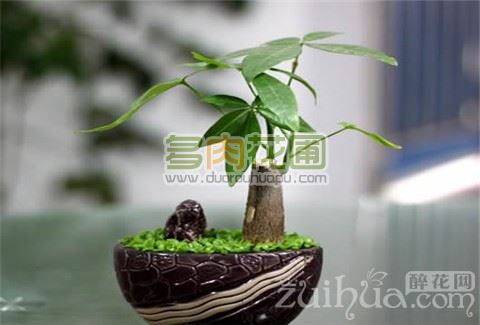
Care methods for the money tree:
The common diseases of the money tree are mainly yellowing leaves, viral wilting, root rot and so on, which require everyone to observe carefully and make targeted solutions. In the home, the money tree not only beautifies the environment and freshens the air, but its feng shui role is also very important, so everyone should learn more about the care methods for the money tree.
1. Yellowing leaves of the money tree:
(1) Water yellowing: caused by overly frequent watering. Its characteristic is that the old leaves show no obvious change while the young leaves turn yellow. Watering should be stopped immediately.
(2) Drought yellowing: caused by lack of water and drought. Its characteristic is that the old leaves turn yellow first from the bottom up. If the lack of water lasts a little longer, the whole plant's leaves will turn yellow, or it may even die, so it should be watered in time.
(3) Fertilizer yellowing: caused by overly frequent fertilization or too high a concentration; its characteristic is that the young leaves are thick and glossy, and uneven; fertilization should be stopped, and the soil should be loosened and watered.
(4) Starvation yellowing: caused by insufficient fertilizer, too low a fertilization concentration, and too long an interval between fertilizing; its characteristic is that the young leaves and tender stems turn yellow first. If this phenomenon is seen and fertilizer is not applied in time, it can also cause the whole plant's leaves to turn yellow or even die; for flowers lacking fertilizer, never apply a large amount of concentrated fertilizer at one time, so as not to burn the roots.
(5) Iron-deficiency yellowing: woody flowers in greenhouses, etc., often show yellowing leaves due to large changes in soil fertility conditions. Its characteristic is that the young leaves are obvious, the old leaves are milder, the mesophyll is yellow, the veins are green, and a typical network forms; it can be solved by applying ferrous sulfate aqueous solution. The method is: mix 7 parts cake fertilizer, 5 parts ferrous sulfate and 200 parts water into a diluted solution and water with it.
2. Root rot of the money tree:
(1) Keep the cultivation environment dry and pay attention to the disinfection of the growing medium and the site;
(2) After the semi-finished products are taken out of the cabinet and unloaded to the handling shed, spray the heads of the money trees with Sumilex to prevent the harm of gray mold fungus;
(3) Before planting, use a sharp knife to cut off the bruised and rotten tissue at the top of the main root, then spray the wounds with Sumilex, and plant after they dry;
(4) One week after planting, the medium in the pot gradually dries, the healing tissue has formed, and new roots have begun to grow. Spray the bare trunks of the money trees with Previcur, Anchor or zinc manganese metalaxyl (Ridomil-MZ), preferably so that the medicinal solution flows along the trunk into the pot soil. After that, use fungicides such as Anchor, terrazole, Ridomil or ethylicin in rotation once a week;
(5) If the Pythium fungus is active, spray with Previcur, terrazole, Ridomil or ethylicin, and the effect generally lasts about two weeks. If the weather is still unfavorable, different agents must be sprayed again to prevent the development of resistance. If any rotting plant is found during this period, it should be discarded immediately.
3. Leaf blight of the money tree:
(1) Remove diseased leaves promptly when found and destroy them;
(2) During the cultivation of the money tree, care management should be strengthened, with timely watering and fertilizing. In each growing season, foliar fertilizer can be applied 2-3 times, such as 0.5% nitrogen potassium dihydrogen phosphate or a 200-fold solution of dual-effect micro-fertilizer;
(3) Before the seedlings are transported from the south to the north, spray protective fungicides on the leaves, such as a 800-fold solution of 70% chlorothalonil, or a 200-fold solution of 18% copper carbendazim emulsifiable powder, or a 600-fold solution of 50% thiram. After arriving in the north, they should be planted promptly, and fertilizer and water management should be strengthened to prevent dehydration and fertilizer loss. When cultivating money trees in southern regions, starting from the rainy season, spray a 800-fold solution of 50% carbendazim, or a 800-fold solution of 70% chlorothalonil, or a 1500-fold solution of 75% thiophanate-methyl every 10-15 days.
The above is all the content I learned today about the money tree. I hope flower lovers will find it helpful after reading this article. If you want to learn more about the money tree, please continue to follow Duorou Huapu, and we will provide you with more related knowledge!
Tips for preventing and controlling pests and diseases on the money tree
The money tree, also known as Malabar chestnut, is a perennial evergreen tree of the genus Pachira in the family Malvaceae. It is native to Central America and can be grown outdoors in China in places such as Guangdong, Hainan and Fujian. The optimal growing temperature for the money tree is 15°C to 30°C. It prefers a warm, humid environment and is not strict about light; it likes light but also has some shade tolerance, and can grow well in indoor scattered light. The growing medium is best a slightly acidic sandy loam rich in humus, which can be made by mixing leaf mold and peat with an appropriate amount of river sand.
The money tree has a certain drought tolerance. Keeping the soil moist during the growing period can promote growth, and watering once every three to four days is enough. In winter, watering should be controlled, and the soil only needs to be slightly dry. It does not have high fertilizer requirements; it can be fertilized appropriately during the peak growing season, mainly with nitrogen fertilizer, and no fertilizer is applied in winter.
Source of this article: http://www.yuhuagu.com/
Common diseases of the money tree include root rot and leaf blight. A damp, shady environment generally tends to cause root rot. The disease usually starts from the roots or the root crown and spreads upward, with the phloem becoming soft and rotting into a water-soaked state and the xylem changing color. Suitable environmental conditions should be created for the plant, and it should be kept dry and clean. After the disease appears, it can be sprayed for treatment with Previcur or zinc manganese metalaxyl.
Leaf blight mainly occurs at the edges of the leaves. In the early stage of the disease, there are small brown spots on the leaf edges, which gradually spread inward to form blighted leaf spots with a clear boundary line against the healthy parts. In the late stage of the disease, many small black dots densely cover the lesions, affecting the ornamental effect. Diseased leaves should be removed promptly once found. At the same time, management should be strengthened during cultivation, with timely watering and fertilizing, and foliar fertilizer sprayed during the growing season; fungicides such as carbendazim and chlorothalonil can also be sprayed.
The main pest is the sugarcane borer moth. For prevention and control when winter begins, you can drench the affected part of the stem with a 1000-fold solution of Haonianodng and mix 3% carbofuran into the growing medium. Once every 10 days, for two or three consecutive times, can kill the overwintering sugarcane borer moth larvae. If the affected plant is severely damaged, burn it promptly.