What to Do About Root Rot in Anthurium? Learn the Correct Way to Handle It
[Symptoms]In the early stage, a few roots are infected, and pale yellow to brown streak-like marks appear on the root surface, with the cortex gradually swelling and rotting. As nematodes continue to multiply inside the roots, the entire root system becomes infected, the roots shrink, turn brown, and finally rot black. When the disease is mild, there are no obvious symptoms on the above-ground parts, and only a small portion of the root system is damaged, discolored and rotted. In severely affected plants, large numbers of roots necrose and rot, the above-ground parts turn yellow, with rust-colored spots, decline, stunted growth and few offsets.
[Pathogen]The burrowing nematode (Radopholus similis) belongs to Nematoda, Secernentea, Tylenchida, Pratylenchidae, Radopholus. Both males and females are filiform. The female has a low head, not constricted or slightly constricted; a well-developed stylet with distinct basal knobs; a normally developed esophagus, with the posterior esophageal gland overlapping the intestine dorsally; paired gonads, outstretched; tail long-conical with a blunt tip. The male has a high head, distinctly constricted, spherical; stylet and esophagus markedly degenerated, without distinct stylet basal knobs; bursa not extending to the tail tip. The suitable temperature for the growth of the burrowing nematode is 24-28°C.
[Occurrence pattern]Anthurium root rot disease can occur at the seedling stage and adult plant stage, in both potted and field-grown plants, with the burrowing nematode attacking new roots and young roots.
[Control methods]
① Drench the roots with a 50-fold dilution of 72.2% Propamocarb aqueous solution, at 1-week intervals, for 3 consecutive times.
② In the early stage of the disease, drench the roots with a 500-fold dilution of 64% Oxadixyl wettable powder. Apply once every 10 days, for 2-3 consecutive times.
③ Drench the roots with a mixture of 50% Thiram and 5% Dexon powder. At intervals of 7-10 days, use a 500-fold dilution for the first two applications and a 100-fold dilution for the third.
What to Do About Root Rot in Anthurium, What Causes Root Rot in Anthurium
Anthurium is a plant with very high ornamental value, with unique flowers and a spadix inflorescence. Its colors are vivid and gorgeous, and the fiery red flowers set off against the emerald green leaves look exceptionally beautiful. However, improper care of anthurium can also lead to root rot, so what should be done about root rot in anthurium, and what causes it?
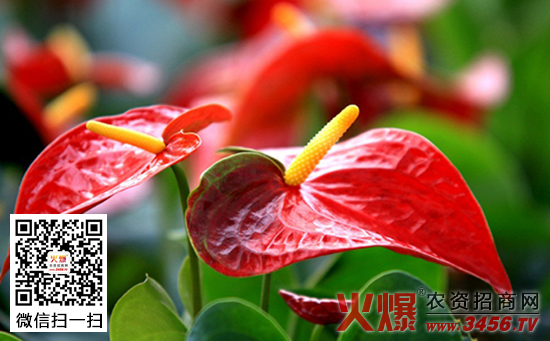
What Causes Root Rot in Anthurium
1. Symptoms of anthurium root rot: In the early stage, a few roots are infected, and pale yellow to brown streak-like marks appear on the root surface, with the cortex gradually swelling and rotting. As nematodes continue to multiply inside the roots, the entire root system becomes infected, the roots shrink, turn brown, and finally rot black. When the disease is mild, there are no obvious symptoms on the above-ground parts, and only a small portion of the root system is damaged, discolored and rotted. In severely affected plants, large numbers of roots necrose and rot, the above-ground parts turn yellow, with rust-colored spots, decline, stunted growth and few offsets.
2. Pathogen analysis: The burrowing nematode (Radopholus similis) belongs to Nematoda, Secernentea, Tylenchida, Pratylenchidae, Radopholus. Both males and females are filiform. The female has a low head, not constricted or slightly constricted; a well-developed stylet with distinct basal knobs; a normally developed esophagus, with the posterior esophageal gland overlapping the intestine dorsally; paired gonads, outstretched; tail long-conical with a blunt tip. The male has a high head, distinctly constricted, spherical; stylet and esophagus markedly degenerated, without distinct stylet basal knobs; bursa not extending to the tail tip. The suitable temperature for the growth of the burrowing nematode is 24-28°C.
3. Occurrence pattern: Anthurium root rot disease can occur at the seedling stage and adult plant stage, in both potted and field-grown plants, with the burrowing nematode attacking new roots and young roots.
What to Do About Root Rot in Anthurium
When root rot is found, first wash the roots and cut off the rotted roots. Place in a ventilated, shady spot, and after the wounds have healed, soak in diluted Baijunling water for about 20 minutes before repotting. It is best to change the soil; if there is no soil, the original soil can also be sterilized at high temperature (microwave, steamer). Add some rooting hormone to the soaking water, and water with a settling-water. Also, if underfloor heating is used, it should be isolated from the ground. The chemical control methods are as follows:
1. Drench the roots with a 50-fold dilution of 72.2% Propamocarb aqueous solution, at 1-week intervals, for 3 consecutive times.
2. In the early stage of the disease, drench the roots with a 500-fold dilution of 64% Oxadixyl wettable powder. Apply once every 10 days, for 2-3 consecutive times.
3. Drench the roots with a mixture of 50% Thiram and 5% Dexon powder. At intervals of 7-10 days, use a 500-fold dilution for the first two applications and a 100-fold dilution for the third.
The above is the article on what to do about root rot in anthurium and what causes it. The optimum temperature for anthurium growth is a daytime temperature of 22-32°C and a nighttime temperature of 21-24°C. When the temperature exceeds 35°C, it can cause leaf scorch, pale spathe color and shortened flower life. When the temperature is below 10°C, growth is slow and lower leaves turn yellow. When the temperature is high, it can be regulated by spraying to cool down and increase humidity.
What to Do About Root Rot in Anthurium: What Happens with Insufficient Light
Anthurium is quite well liked in daily life, and the flowers it produces are red, which is very auspicious. But when growing anthurium, how is it that it ends up with root rot, yellowing leaves, and insufficient light? What can be done about this?
As an indoor potted plant, anthurium is a rare colorful variety, and its care is relatively simple. However, if you do not understand its habits well enough, it is easy for anthurium to develop various problems, such as leaf disease and yellowing, disease, or simply dying.
Anthurium is suitable for growing in a warm, humid environment with good drainage. It is afraid of drought and strong direct sunlight, but insufficient light will hinder flowering.
Anthurium has relatively high temperature requirements, and low temperatures in particular can cause root rot. Below 10°C it will suffer cold damage, or even die.
Anthurium likes moisture but dislikes waterlogging. If water accumulates at the bottom of the pot, it will cause root necrosis, so it is necessary to choose loose, breathable potting soil.
If you end up killing your anthurium, that is quite sad. Anthuriums are still rather expensive, and few flowers can sell for this price. If there is root rot, check whether the anthurium's soil is waterlogged. If there is insufficient light, just take it outside to get some sun.