How to grow narcissus? Detailed guide to cultivation methods and precautions
Narcissus, also known as bingxian, yasuan, tiancong, lilan, yulinglong, xuezhonghua, and more. In ancient times, people also named it after legends and stories, such as nüxing, xiangnü, lingbo xianzi, and so on. Narcissus is a perennial bulbous flower with persistent roots belonging to the Amaryllidaceae family, genus Narcissus. The underground bulb is oval and shaped like a garlic head; botanically it is called a tunicate bulb flower, with layer upon layer of brown membranous scale leaves (bracts) wrapping the bulb. The plant height is 25-45 cm. The leaves grow in clusters from the top of the bulb, narrow and flat, sometimes called strap-shaped leaves, with slightly blunt tips, entire margins, and parallel veins.
The leaves are about 30-45 cm long and about 1-1.8 cm wide. From December to January of the following year, flower scapes emerge from the bulb. For Zhangzhou narcissus, each bulb produces 3-5 flower scapes, with the most producing 6-10. The flower scapes are upright, hollow in the middle, flat and unbranched; scapes that rise above the leaves bear membranous bracts at the top, containing several flower buds arranged in an umbel-like inflorescence. With good cultivation, each scape bears 8-10 flowers. Below is a detailed introduction to how to grow narcissus:
1. Soil selection for narcissus cultivation
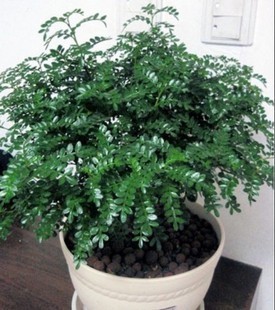
Narcissus has strong adaptability to soil and can grow in all but heavy clay soil and gravelly land, but it most prefers soil that is loose in texture, well structured, and strong in water retention. Alluvial soil and other soils rich in organic matter and well drained can all be used for planting.
Narcissus prefers sandy loam that is loose in texture, well structured, and strong in water retention. Light soil, alluvial soil, and other soils rich in organic matter and well drained are also acceptable. In the narcissus-producing areas of Chongming Island in Jiangsu and Zhangzhou in Fujian, located in the lower reaches of the Yangtze River and the Xiangjiang River basin in Fujian, the soil is alluvial light clayey sandy loam with good structure, loose and airy, fertile, and deep, making it most suitable for the growth and cultivation of narcissus.
2. Fertilization methods for narcissus cultivation
After narcissus forms flower buds, the nutrients in the bulb are almost completely depleted, so appropriate fertilization is needed in the later growth stage. Starting from bud formation, apply a small amount of monopotassium phosphate to the pot when changing the water (0.5 grams each time), or spray the leaves with 0.2% monopotassium phosphate. Adding 1/4 tablet of aspirin containing 0.3 mg or 1 tablet of oryzanol to the narcissus pot can also appropriately extend the flowering period and delay flower wilting.
3. Watering methods for narcissus cultivation
Narcissus has higher water requirements than most plants. In the early stage after the bulb is planted, it does not need much water; simply keeping the soil moist is enough. During the peak growth and development stage, when all organs are rapidly developing and filling out, the demand for water and nutrients is high and must be replenished in time. In the mature stage, metabolic activity weakens, and the need for water correspondingly decreases until it stops completely.
Narcissus belongs to the hygrophytic type and has different water requirements at different developmental stages. In the early stage of bulb planting, the water requirement is relatively small; simply keeping the soil moist is enough. During the vigorous growth and development stage, the water requirement is high and must be replenished in time, with frequent irrigation. By the mature stage, metabolic activity weakens again, and the water requirement correspondingly decreases.
4. Light requirements for narcissus cultivation
Narcissus is a short-day bulb plant and only needs 10 hours of light per day. During the growth stage, it likes plenty of light; sufficient light is beneficial for the plant's assimilation and accumulation of nutrients. During autumn and winter, there are generally many sunny days with short days and long nights, and narcissus can smoothly pass through the light stage. In Fujian during autumn and winter, there are many sunny days, short days and long nights, and cool temperatures, which are most suitable for growth.
5. Temperature requirements for narcissus cultivation
Narcissus likes cool conditions in the early growth stage and warmth in the later stage; in the middle stage it tolerates cold but should not experience drastic temperature differences. According to observations in producing areas, when the temperature is 17-23°C and the humidity is 70-80%, it is most suitable for bulb growth and expansion.
6. Pest and disease control for narcissus cultivation
Narcissus bulb basal rot: after the bulb is affected, it shows dark brown rot, and in severe cases the entire bulb rots. The control method is to soak the bulb in a 500-fold dilution of 25% carbendazim for 15-30 minutes before planting; for those already affected, irrigate the roots with an 800-fold dilution of carbendazim. Narcissus stem nematode disease: after infection, yellow-brown mottled stripes appear on the leaves and flower stems, and finally the epidermis ruptures and the leaves wither. For control, the bulbs can be dipped in a 120-fold dilution of 40% formaldehyde.
7. Precautions for narcissus cultivation
(1) Narcissus is relatively cold-tolerant, hence it is called "xuezhonghua" (flower in the snow). Its cold-tolerance threshold is -3°C; at -3.5°C, frost damage to the leaf tips appears.
(2) To maintain a suitable temperature, light can be used for regulation. It is best to have several hours of light each day (to prevent sunburn of the roots, a layer of cotton can be placed over the root area) to promote good growth. If severe cold occurs and the temperature is very low, take a plastic bag, keep the opening facing up, place the narcissus together with its pot (with an appropriate amount of water in the pot) inside, then blow air into the plastic bag, and once it is full, tie the opening tightly to form a miniature greenhouse, which can withstand cold waves. Methods such as changing to warm water can also be used to raise the temperature.
(3) During cultivation, pay attention to frequently changing the water, especially when the nighttime temperature is above 10°C, the water must be changed frequently to prevent root damage caused by water quality deterioration.
(4) Control the flowering time. Under conditions of sufficient light and clean water, when the indoor temperature is 12-15°C, narcissus takes about 40 days from soaking to flowering; at a room temperature of about 18°C, it takes about 30 days; at a room temperature of 20°C, it takes only 25 days to flower. Growing narcissus requires no flower fertilizer at all; clean water alone is enough.
8. Propagation methods for narcissus cultivation
For commercial production of narcissus, sowing can be used for large-scale propagation. However, for ordinary home cultivation, the most common method of dividing the bulbs is mainly used for asexual propagation.
(1) Seed propagation
Narcissus that flowers in early spring can bear fruit if pollinated artificially; after the fruit matures and is stored until mid-September, it can be sown for propagation. The seedling bed can be a large-mouthed clay pottery flower pot, or a wooden box seedling bed can be made. The substrate can be 5 parts sandy garden soil and 5 parts forest leaf mold, fully sun-dried, finely broken up and sifted; before use, it can be sterilized by high temperature, and after treatment it is placed into the seedling bed.
The surface of the seedling bed can be leveled and compacted with a wooden board, then the seeds are evenly sown in the seedling bed, covered with fine sandy soil, and watered thoroughly by the immersion method; then a piece of white glass is placed over the seedling bed to keep the soil absolutely moist, and it is temporarily placed in a cool, ventilated place. Spray water once every two days; after the seeds germinate, remove the cover and provide more sunlight so that photosynthesis is vigorous and the seedlings grow strong. After the seedlings produce 1-2 true leaves, thinning should be carried out, and they should be transplanted separately into culture soil with strengthened fertilizer and water management. By June-July of the following year, the aboveground parts die and small bulbs form at the roots; they can remain in the seedling bed, and in autumn they are taken out for open-field transplanting. After repeated repotting and soil changing cultivation for 3-4 years in this way, they can flower.
(2) Bulb division propagation
Narcissus has strong sprouting ability; a mature bulb produces many offset buds on both sides each year, and these offset buds, after a period of growth, can grow into small bulbs. When the flowers and leaves wither in June-July, dig up the bulbs, dry them in the sun for 2-3 days, and store them in a cool, ventilated, dry place. Narcissus is an autumn-planted bulb; the division planting time is around the Beginning of Autumn to Frost's Descent, and in the Yangtze River basin and areas to its south, small bulbs are mostly divided and planted in early to mid-October. Large-scale cultivation is mostly carried out in open-field seedling beds, with a row spacing of 15-20 cm and a plant spacing of 8-10 cm, covered with soil within 10 cm. After planting, seedlings emerge in 20-30 days, and decomposed organic liquid fertilizer is applied once every half month at concentrations of 1:6, 1:8, and 1:10.
Strengthen field management, weed and fertilize, and keep the soil moist. Young seedlings raised from small bulbs sprout quickly and grow luxuriantly. After the Lesser Fullness of Grain solar term of the following year, dig up the bulbs again, dry them in the sun, and place them in a cool, ventilated, dry place to allow full dormancy, then carry out open-field cultivation again around Frost's Descent. In this way, after continuous cultivation for 3 years, when the bulbs grow to 4-6 cm in size, they can be planted in purple clay pots for flowering and ornamental display.
Cultivation methods and precautions for narcissus
Narcissus has a cultivation history of more than one thousand years, and the fragrant narcissus has very good ornamental value. Today let us look at the cultivation methods and precautions for narcissus.
Cultivation methods and precautions for narcissusI. Cultivation methods for narcissus——planting
Narcissus is suitable for cultivation in August and September. Before planting, make sure to loosen the soil; soft soil can help improve fertility and has better air permeability, which is more beneficial for the later cultivation of narcissus. Better soil air permeability can also be more conducive to the absorption of nutrients and nourishment.
II. Cultivation methods for narcissus——fertilization
What narcissus needs is organic fertilizer; using some calcium phosphate as fertilizer is more suitable. For annual cultivation of narcissus, the fertilizer amount per mu can be reduced to 10 kg. When fertilizing, it should be even so that the soil can absorb nutrients uniformly. Keep the bottom of each mu's water furrow smooth so that water can flow freely.
III. Cultivation methods for narcissus——irrigation
Narcissus needs water to be kept flowing in the ditches frequently; the size of the water flow should be related to the growth stage and season. Northern regions need more water, while southwestern regions need less. In cold weather, the water amount can be increased, and in warm weather the water amount should be reduced. The water amount should be changed on both rainy and sunny days.
IV. Cultivation methods for narcissus——topdressing
Narcissus likes fertilizer, and some fertilizer can be used as soon as it sprouts. After that, during the growth process, fertilizer can be applied about once every seven days.
Cultivation methods and precautions for narcissus
Narcissus likes warmth, moisture, and good drainage. It has a cultivation history of more than one thousand years in China and is a traditional ornamental flower, ranking tenth among China's top ten famous flowers. Today let us learn about the cultivation methods of narcissus.
.....
Cultivation techniques for narcissus
What are the cultivation methods for narcissus? For the cultivation methods of narcissus, loosen the land in August-September, then release water into the field for flooding, and after soaking the field for 1-2 weeks, drain the water. Then plow and turn 5-6 times at a depth of more than 35 cm, so that the lower soil is matured and softened, thereby improving fertility, reducing pests, diseases, and weeds, and increasing soil air permeability.
Narcissus needs a large amount of organic fertilizer as base fertilizer. For 3-year cultivation, each mu needs 5000-10,000 kg of organic fertilizer, appropriately mixed with some superphosphate or calcium magnesium phosphate fertilizer, about 20-50 kg; for 2-year cultivation the fertilizer amount is halved, and for 1-year cultivation it can be reduced even more. These fertilizers should be turned into the soil several times along with plowing, so that the soil is loose and the fertilizer is uniform; then level the soil surface and make beds 120 cm wide and 40 cm high, with ditches about 35-40 cm wide. The bed surface should be neat and loose, and the ditch bottom should be smooth, firm, and slightly sloped so that water flows freely.
.....
.....
Narcissus cultivation methods. Cultivation methods for narcissus: irrigation
There should often be flowing water in the ditches. The depth of the water is related to the growth period, season, and weather. Flower growers have the principle of "more water with north wind, less water with southwest wind, drain on rainy days, retain water on sunny days." Generally, in cold weather the water should be deeper; in warm weather the water should be shallower. In the early growth stage, the water depth is maintained at 3/5 of the bed height, so that the water approaches the base of the bulb. In late February, when the plants are already tall, the water level can be slightly lowered; on sunny days the water depth is 1/3 of the bed height. If there is rain, the water level should be lowered so that water does not submerge the bulbs. From late April to May, completely remove the water-blocking dams and drain the ditch water until the bulbs are dug.
Cultivation methods for narcissus: topdressing
Narcissus loves fertilizer. Start topdressing after sprouting. For 3-year cultivation, topdressing should be frequent, once every 7 days; for 2-year cultivation, once every 10 days; for 1-year cultivation, once every half month. In Shanghai, where it is cold, to improve the cold resistance of narcissus, apply phosphorus and potassium fertilizer once before winter begins. Stop fertilizing in January, continue topdressing from late February to mid-April, mainly with phosphorus and potassium fertilizer, and stop fertilizing and dry the field in May.
.....
.....
Cultivation methods for narcissus: bud removal and flower picking
When castrating the bulbs, if any side buds that were not completely removed sprout, carry out 1-2 rounds of bud pulling as early as possible to make up for incomplete castration. Narcissus planted in the field flowers from late December to March. To concentrate nutrients on the growth of the bulb, the flowers should be picked. To make full use of the flower material, when the flower stem elongates to 20 cm it can be cut as a cut flower for sale.
Cultivation methods for narcissus: cold protection
Although narcissus tolerates a certain degree of low temperature, it is also afraid of heavy frost and severe cold. When heavy frost occasionally appears, spray water before sunrise to wash off the frost, so as to avoid harm to the narcissus leaves. For weather below -2°C, cold protection measures should be taken. In warmer areas, windbreaks can be planted; in the Shanghai area, plastic film can be used for cold protection, and the narcissus must not be allowed to suffer cold.
.....
Editor's summary
Placed in the living room, narcissus can make people feel calm and warm. The living room is a place for family reunion and receiving guests, suitable for choosing bright floral arrangements and noble, elegant narcissus. Placed at home, narcissus can absorb the noise emitted in the home, absorb the exhaust gases released in the home, and release fresh air. Today the editor's introduction to the cultivation methods of narcissus ends here. Thank you all for reading.