How to grow maidenhair fern? Detailed guide to cultivation methods and precautions
Maidenhair fern is also known as tiexiancao and meirenfen. The fronds grow from the base, resembling an open paper folding fan, with dark purple-black stems that are thin and hard like iron wire, hence the name. It prefers warm, shady and humid environments and acidic soil, and fears strong light.
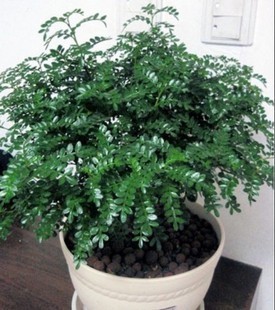
The maidenhair fern has small, dense, layered fronds of elegant and varied form. It prefers shade and can be placed indoors in spots with diffused light for growing and viewing. It can also be placed on windowsills without direct sunlight, bedside tables, desks, dining tables, plant stands, coffee tables, dressing tables and in bathrooms. When the plant is small, it can be placed on a curio shelf. Below is a detailed introduction to how to grow maidenhair fern:
1. Soil selection for growing maidenhair fern
Maidenhair fern prefers loose, fertile acidic soil. At home, the following formulas can be used: garden soil : leaf mold : sand = 4:5:1; peat soil : leaf mold : sand = 4:4:2.
2. Fertilization methods for growing maidenhair fern
Maidenhair fern does not need much fertilizer; generally applying a dilute liquid fertilizer once a month is sufficient. If a small amount of calcium fertilizer can be applied, the growth will be even better. However, note that when watering and fertilizing, the leaf surface must not be splashed, otherwise it easily causes the leaves to turn yellow and affects the ornamental effect.
Maidenhair fern likes fertilizer, but has low requirements for it. Spring, summer and autumn are the growing seasons for maidenhair fern; you can apply decomposed 20-fold liquid fertilizer once every 30 days, or 1000-fold "Huaduoduo" general-purpose fertilizer twice. During this period, 1000-fold ferrous sulfate solution can be additionally applied 2-3 times.
Do not fertilize when summer temperatures are hot. Stop fertilizing after the temperature cools in autumn. When applying decomposed liquid fertilizer to maidenhair fern, use a fine-spout watering can to apply it slowly along the rim of the pot, and do not let the fertilizer liquid touch the leaves, otherwise it easily burns the leaves.
3. Watering methods for growing maidenhair fern
Maidenhair fern likes warm, humid and semi-shady environments. During the growing period, it needs watering once a day; in hot summer, water once each morning and evening, and at the same time spray water on the leaf surface and the ground around the flower pot to increase air humidity. Only in this way can the leaf color remain emerald green. If the water supply is insufficient or the air is dry, the leaves will turn yellow or curl with scorched edges. To keep the leaf color emerald green, it is best to place the flower pot on a moist sand tray for cultivation.
Maidenhair fern likes moist soil and a humid air environment. After maidenhair fern begins to grow in spring, water more to keep the potting soil in a moist state, and frequently sprinkle water around it to increase air humidity. When temperatures are relatively high from late spring to early autumn, while keeping the potting soil moist, the frequency of sprinkling should be increased.
When temperatures are relatively low in late autumn, winter and early spring, the potting soil should preferably be moist, and the surface of the potting soil must not be allowed to dry out. While watering, frequently sprinkle water around it to increase air humidity.
4. Light requirements for growing maidenhair fern
Although maidenhair fern is a shade-loving plant, it still needs a certain amount of light during the growing season. When grown indoors, it is best placed on an east- or north-facing windowsill, where the light level is ideal. At noon in summer, 50%-60% of sunlight should be blocked, and it can receive appropriate light in the morning and evening; too strong light will cause scorched leaf edges. If cultivated on an outdoor balcony, shade should be provided in summer to avoid direct sunlight, otherwise it is very easy to cause scorched leaf edges.
5. Temperature requirements for growing maidenhair fern
The suitable growing temperature for maidenhair fern is 15-20°C. Only when the winter temperature is not lower than 10°C can the leaves remain fresh and green. In midsummer, if the temperature is too high, the plant needs to be sprayed with water every day.
6. Four-season management for growing maidenhair fern
(1) Spring management
In April, maidenhair fern can be repotted; maidenhair fern is repotted once a year. Maidenhair fern likes shade and moisture and fears strong light. In early spring, there should be appropriate morning and evening light, and in spring it should be placed indoors with bright diffused light.
After maidenhair fern begins to grow in spring, attention should be paid to water and fertilizer management. When placing it indoors, special attention should be paid to increasing indoor air humidity. Increasing indoor air humidity is the key to growing maidenhair fern at home. Regularly adding ferrous sulfate can not only increase soil acidity, which is beneficial to its growth, but also make the leaves more emerald green.
(2) Summer management
The high temperature, strong light and dry climate of summer are not suitable for the growth of maidenhair fern. It should be placed in a bright indoor location for cultivation, keep the potting soil moist, and at the same time spray around it more to increase air humidity. Do not fertilize when temperatures are hot. Maidenhair fern fears wind, so it should not be placed in front of an electric fan or at an air-conditioner outlet. Rooms with air conditioning have lower air humidity, so the number of sprays should be increased.
(3) Autumn management
In autumn, maidenhair fern can still grow normally, and attention should be paid to water and fertilizer management. After temperatures drop in late autumn, attention should be paid to maintaining indoor temperature, gradually reducing the amount of watering so that the potting soil is moist, and gradually moving it to a place with morning and evening light for cultivation.
(4) Winter management
Maidenhair fern is not cold-tolerant, and room temperature should be kept above 5°C. At this time, the growth of maidenhair fern is stagnant and the leaf color is dark green. Morning and evening light can be appropriately increased (avoiding strong midday light), watering should be reduced so that the potting soil is on the dry side, and no fertilizer should be applied.
When the indoor temperature is kept above 10%, maidenhair fern also grows relatively well with fresh green leaves; the potting soil should be kept moist, but no fertilizer should be applied. When the indoor temperature is relatively high, air humidity will be correspondingly lower, so attention should be paid to supplementing air humidity.
7. Precautions for growing maidenhair fern
(1) Maidenhair fern is best planted or repotted in spring. The potting soil is commonly mixed from humus, peat soil, a small amount of river sand and base fertilizer. When repotting, do not damage the root system, avoid wind, and keep the potting soil moist and the air humid.
(2) During the peak growing season, maidenhair fern should be watered sufficiently, and water should often be sprinkled around the plant. When watering, avoid the potting soil alternating between dry and wet. Apply dilute liquid fertilizer 2-3 times a month. When fertilizing, be careful not to sprinkle it on the leaves, so as to avoid causing leaf rot. In winter, reduce watering and do not fertilize. Because maidenhair fern has a preference for calcium, an appropriate amount of lime, crushed eggshells and other calcium-containing fertilizers can be added to the potting soil.
(3) During maintenance, if dead leaves are found, they should be cut off promptly to keep the plant fresh and attractive and to help new leaves sprout. When the leaf cluster is too dense, the old leaves can be appropriately pruned in autumn each year to maintain a graceful plant shape and good growth vigor.
(4) Because the leaves of maidenhair fern grow quickly, during the growing season some old leaves should be regularly thinned out. When the leaves are too dense, maidenhair fern not only loses its graceful form, but the new leaves growing from its center are also easily killed by insufficient light, forming a hollow center.
8. Propagation methods for growing maidenhair fern
Maidenhair fern has two methods of propagation: division and spore reproduction.
Division propagation is generally carried out in spring together with repotting. Take the mother plant out of the pot, separate the plant by hand, remove the old substrate, cut the rhizome appropriately according to the situation, and plant them separately in pots to obtain new plants. After watering, place them in a semi-shady place for maintenance.
Spore reproduction: A plastic bag can be used to cover the entire leaf with sporangia on the underside. When the spores mature, pick the leaf together with the bag, gently collect the spores into the bag, and sow them in a prepared shallow flower pot. After sowing, do not cover with soil. Cover with glass and then with plastic film, then immerse in shallow water so that water seeps in from the small holes at the bottom of the pot until the pot surface is moist. After that, keep it moist at all times, and it can germinate in about 30 days. If not sown, the spores can be allowed to disperse naturally after maturing; as long as temperature and humidity are suitable, they can also germinate and produce seedlings.
Cultivation methods and precautions for maidenhair fern
Image: maidenhair fern
[Common questions] Cultivation methods and precautions for maidenhair fern
[Expert answers]
I. Cultivation methods for maidenhair fern
1. Soil selection
Maidenhair fern prefers loose, fertile acidic soil. At home, the following formulas can be used: garden soil : leaf mold : sand = 4:5:1; peat soil : leaf mold : sand = 4:4:2.
2. Fertilization methods
Maidenhair fern does not need much fertilizer; generally applying a dilute liquid fertilizer once a month is sufficient. If a small amount of calcium fertilizer can be applied, the growth will be even better. However, note that when watering and fertilizing, the leaf surface must not be splashed, otherwise it easily causes the leaves to turn yellow and affects the ornamental effect.
Maidenhair fern likes fertilizer, but has low requirements for it. Spring, summer and autumn are the growing seasons for maidenhair fern; you can apply decomposed 20-fold liquid fertilizer once every 30 days, or 1000-fold “Huaduoduo” general-purpose fertilizer twice. During this period, 1000-fold ferrous sulfate solution can be additionally applied 2-3 times.
Do not fertilize when summer temperatures are hot. Stop fertilizing after the temperature cools in autumn. When applying decomposed liquid fertilizer to maidenhair fern, use a fine-spout watering can to apply it slowly along the rim of the pot, and do not let the fertilizer liquid touch the leaves, otherwise it easily burns the leaves.
3. Watering methods
Maidenhair fern likes warm, humid and semi-shady environments. During the growing period, it needs watering once a day; in hot summer, water once each morning and evening, and at the same time spray water on the leaf surface and the ground around the flower pot to increase air humidity. Only in this way can the leaf color remain emerald green. If the water supply is insufficient or the air is dry, the leaves will turn yellow or curl with scorched edges. To keep the leaf color emerald green, it is best to place the flower pot on a moist sand tray for cultivation.
Maidenhair fern likes moist soil and a humid air environment. After maidenhair fern begins to grow in spring, water more to keep the potting soil in a moist state, and frequently sprinkle water around it to increase air humidity. When temperatures are relatively high from late spring to early autumn, while keeping the potting soil moist, the frequency of sprinkling should be increased.
When temperatures are relatively low in late autumn, winter and early spring, the potting soil should preferably be moist, and the surface of the potting soil must not be allowed to dry out. While watering, frequently sprinkle water around it to increase air humidity.
4. Light requirements
Although maidenhair fern is a shade-loving plant, it still needs a certain amount of light during the growing season. When grown indoors, it is best placed on an east- or north-facing windowsill, where the light level is ideal. At noon in summer, 50%-60% of sunlight should be blocked, and it can receive appropriate light in the morning and evening; too strong light will cause scorched leaf edges. If cultivated on an outdoor balcony, shade should be provided in summer to avoid direct sunlight, otherwise it is very easy to cause scorched leaf edges.
5. Temperature requirements
The suitable growing temperature for maidenhair fern is 15-20°C. Only when the winter temperature is not lower than 10°C can the leaves remain fresh and green. In midsummer, if the temperature is too high, the plant needs to be sprayed with water every day.
6. Four-season management
(1) Spring management
In April, maidenhair fern can be repotted; maidenhair fern is repotted once a year. Maidenhair fern likes shade and moisture and fears strong light. In early spring, there should be appropriate morning and evening light, and in spring it should be placed indoors with bright diffused light.
After maidenhair fern begins to grow in spring, attention should be paid to water and fertilizer management. When placing it indoors, special attention should be paid to increasing indoor air humidity. Increasing indoor air humidity is the key to growing maidenhair fern at home. Regularly adding ferrous sulfate can not only increase soil acidity, which is beneficial to its growth, but also make the leaves more emerald green.
(2) Summer management
The high temperature, strong light and dry climate of summer are not suitable for the growth of maidenhair fern. It should be placed in a bright indoor location for cultivation, keep the potting soil moist, and at the same time spray around it more to increase air humidity. Do not fertilize when temperatures are hot. Maidenhair fern fears wind, so it should not be placed in front of an electric fan or at an air-conditioner outlet. Rooms with air conditioning have lower air humidity, so the number of sprays should be increased.
(3) Autumn management
In autumn, maidenhair fern can still grow normally, and attention should be paid to water and fertilizer management. After temperatures drop in late autumn, attention should be paid to maintaining indoor temperature, gradually reducing the amount of watering so that the potting soil is moist, and gradually moving it to a place with morning and evening light for cultivation.
(4) Winter management
Maidenhair fern is not cold-tolerant, and room temperature should be kept above 5°C. At this time, the growth of maidenhair fern is stagnant and the leaf color is dark green. Morning and evening light can be appropriately increased (avoiding strong midday light), watering should be reduced so that the potting soil is on the dry side, and no fertilizer should be applied.
When the indoor temperature is kept above 10%, maidenhair fern also grows relatively well with fresh green leaves; the potting soil should be kept moist, but no fertilizer should be applied. When the indoor temperature is relatively high, air humidity will be correspondingly lower, so attention should be paid to supplementing air humidity.
II. Precautions for growing maidenhair fern
(1) Maidenhair fern is best planted or repotted in spring. The potting soil is commonly mixed from humus, peat soil, a small amount of river sand and base fertilizer. When repotting, do not damage the root system, avoid wind, and keep the potting soil moist and the air humid.
(2) During the peak growing season, maidenhair fern should be watered sufficiently, and water should often be sprinkled around the plant. When watering, avoid the potting soil alternating between dry and wet. Apply dilute liquid fertilizer 2-3 times a month. When fertilizing, be careful not to sprinkle it on the leaves, so as to avoid causing leaf rot. In winter, reduce watering and do not fertilize. Because maidenhair fern has a preference for calcium, an appropriate amount of lime, crushed eggshells and other calcium-containing fertilizers can be added to the potting soil.
(3) During maintenance, if dead leaves are found, they should be cut off promptly to keep the plant fresh and attractive and to help new leaves sprout. When the leaf cluster is too dense, the old leaves can be appropriately pruned in autumn each year to maintain a graceful plant shape and good growth vigor.
(4) Because the leaves of maidenhair fern grow quickly, during the growing season some old leaves should be regularly thinned out. When the leaves are too dense, maidenhair fern not only loses its graceful form, but the new leaves growing from its center are also easily killed by insufficient light, forming a hollow center.
[Editor's comments] The above is "Cultivation methods and precautions for maidenhair fern" introduced to you by the First Agricultural Economics editor. Friends who are interested can grow a few pots at home. For more related materials, such as"The impact of maidenhair fern on the home environment", "Causes and control methods of blackened and scorched-edged leaves of maidenhair fern", "Methods of division propagation and spore propagation of maidenhair fern"etc., please follow the relevant columns or special topic channels of First Agricultural Economics. We will wholeheartedly provide you with more, more comprehensive and more professional materials!
How to grow maidenhair fern, cultivation methods and precautions for maidenhair fern / avoid dryness and strong light
Maidenhair fern can not only be enjoyed for its foliage, but can also be kept at home to remove formaldehyde, nicotine and other harmful substances, and its care and management methods are relatively simple, so more and more people are preparing to keep a few pots at home. So, is maidenhair fern easy to grow? How do you grow maidenhair fern? Today let us learn about the cultivation methods and precautions for maidenhair fern.
Is maidenhair fern easy to grow?
Maidenhair fern is one of the relatively easy plants to grow. Its requirements for soil, temperature, water and fertilizer are ordinary, but its requirements for light and humidity are relatively high. As long as the environment it is in is not too dry and the light is not especially strong, and then suitable soil is used and watering and fertilizing are reasonable, it can be grown very well.
How to grow maidenhair fern
In terms of growing environment, maidenhair fern relatively prefers fertile, loose soil with good water permeability; in terms of light, it likes bright places where the light is not too strong; in terms of water, it likes humid environments; in terms of temperature, its leaves need temperatures above 5 degrees Celsius to remain emerald green, so during care we should try our best to create such an environment for it.
Cultivation methods and precautions for maidenhair fern
I. What soil to use for maidenhair fern
In soil selection, the minimum requirement is good drainage and looseness, and the most suitable soils are of two types. The first is prepared with garden soil, leaf mold and fine sand in proportions of 40%, 50% and 10%; the second is mixed with peat soil, leaf mold and fine sand in proportions of 40%, 40% and 20%.
Precautions: No matter which soil is used, disinfection treatment must be carried out before planting. The simplest method is to leave it in the sun for 1-2 days, and if conditions permit, carbendazim or potassium permanganate solution can be used for irrigation to achieve the disinfection effect.
II. Light requirements
Maidenhair fern likes bright environments without a lack of light. It is relatively afraid of direct sunlight, so when growing it at home it is best placed on an east- or north-facing windowsill, which can prevent it from being exposed to the sun. If it is grown in a courtyard, more than 50% of sunlight should be blocked in summer.
Precautions: When the light is too strong, the leaves of maidenhair fern may become scorched and dry. Therefore, it must not be grown in a full-light environment. However, in the cultivation methods and precautions for maidenhair fern, we should also note that it cannot lack light. If the light is too dim, the leaves will become thin and weak, and it will be unable to fulfill the ornamental value among the effects and functions of maidenhair fern.
III. Suitable temperature
The most suitable temperature for maidenhair fern is 10-20 degrees Celsius, but as long as the temperature is kept above 5 degrees Celsius, its leaves can remain emerald green. However, if it is often below 5 degrees Celsius, it may suffer cold damage, so good warmth protection should be done in winter. In summer, more water should be sprayed to lower the temperature.
Precautions: In autumn or winter, the temperature difference between day and night is relatively large. At this time, how should maidenhair fern be grown? It is recommended that flower lovers move it indoors, which can not only keep the temperature within a suitable range, but also reduce the yellowing of maidenhair fern leaves caused by excessive temperature differences.
IV. Watering methods
When watering, the soil should be kept moist as much as possible, because maidenhair fern is a plant that likes humid environments. Therefore, during the growing period it can be watered once every 1-2 days. If it is summer with relatively high temperatures, it can be watered once each morning and evening, and each watering does not need to be too much.
Precautions: If it is often not watered, the leaf edges will dry up and curl, so when watering, avoid alternating between too much and too little. Although the watering frequency is relatively high, there must never be standing water in the soil. Water as much as possible by spray irrigation.
V. Fertilization techniques
Maidenhair fern does not have high fertilizer requirements. It is enough to apply dilute fertilizer water once a month. Because maidenhair fern is an indicator of calcareous soil, a small amount of calcium fertilizer can be applied when fertilizing, which can make maidenhair fern grow better.
Precautions: When summer temperatures are relatively high, fertilization should be stopped, and organic fertilizer should be applied after the temperature cools. In winter, fertilization is generally not needed either, especially when the temperature drops below 5 degrees Celsius, and fertilizer should not be sprinkled on the leaves when fertilizing.