How to Grow Crabapple Flowers? Detailed Guide to Cultivation Methods and Precautions
Crabapple is a deciduous small tree. It can reach 7-8 m in height, with alternate leaves bearing blunt serrated margins. The flowers cluster in several to form umbel-like racemes, red in bud and pink when open. The pome is spherical and yellow, with a thickened fruit stalk tip and a raised calyx depression, and the sepals persist. The flowering period is April to May. The fruit ripens in September to October.
1. Soil Selection for Growing Crabapple
The roots and stems of crabapple are tender and fragile, so care should be taken to choose a loose, fertile, well-drained medium as potting soil. For container growing, a mix of 7 parts leaf mold and 3 parts river sand with a small amount of decomposed soybean cake fertilizer added and blended evenly can generally be used; or a loose, well-drained potting soil mixed from 4 parts leaf mold, 3 parts peat soil and 3 parts river sand.
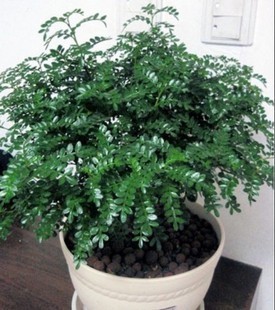
2. Watering Methods for Growing Crabapple
Crabapple can tolerate drought and fears waterlogging most of all. Whether grown in the ground or in containers, generally keeping the soil moist is enough; the potting soil of container-grown crabapple should not be too wet, with semi-moist conditions being best. But for potted flowers placed on balconies or high ground, water the pots promptly; the soil must not be too dry, because when the soil is too dry, root absorption is blocked, the plant's leaves dehydrate, and it easily loses nutrients or becomes scorched, and in severe cases the plant dies. In spring, water once every 3-5 days; in summer, water once every 1-2 days; in autumn, water once every 4-6 days; in winter, water once every half month.
3. Fertilizing Methods for Growing Crabapple
For crabapple grown in the open ground, besides applying base fertilizer at planting, after flowering each year a trench can be dug around the plant and decomposed organic fertilizer applied, then the soil replaced and the plant watered thoroughly, so that it is slowly absorbed and the plant's nutrient requirements for vegetative growth are met. In autumn, the same method can be used to apply an organic fertilizer based mainly on phosphorus and potassium once, to promote flower bud differentiation and meet the plant's nutrient requirements for reproductive growth. For container-grown crabapple, fertilizing can be done according to the season.
In spring, when flower buds have formed but not yet opened, decomposed organic liquid fertilizer can be applied as a top dressing at a concentration of 1:10 or 1:12, once a week, using the method of light fertilizer to force flowering, so that the flower color is bright and the blooms are large. After the flowers fade, the plant enters a vigorous period of vegetative growth; at this time fertilizer management should increase the concentration, generally at a ratio of 1:6 or 1:8, applied as a top dressing once every ten days to half a month, and stopped in July-August. In autumn, apply fertilizer based mainly on phosphorus and potassium at a concentration of 1:10.
4. Light and Temperature Requirements for Growing Crabapple
Crabapple mostly blooms in spring, but if light and temperature are managed properly, with cooling and shading methods used for special technical treatment, it can bloom a second time in autumn of the same year. The specific method is: in the hot, rainy first and middle ten days of July, move the pot to a cool, rain-sheltered place for cooling treatment. Reduce the light intensity to about 40%, gradually reduce the amount of watering, and control the plant's vegetative growth.
As time goes on, the amount of watering should be slowly reduced until its leaves turn yellow and drop off on their own, so as to promote dormancy. After that, continue watering a small amount, just enough to keep the plant alive without sprouting new buds. After a dormancy period of 35-45 days in this way, place the plant in the light, water thoroughly and apply phosphorus and potassium fertilizer to revive it and prompt flower buds to sprout; generally after 15-20 days, you can see brilliant crabapple flowers.
5. Precautions for Growing Crabapple
(1) In early spring, crabapple can be watered once together with fertilizing, and after flowering when fruit sets, if it is dry, water again. Pay attention to controlling pests such as aphids and scarab beetles and diseases such as rot, and it is best to spray lime-sulfur mixture in early spring for prevention.
(2) For container-grown crabapple, it is advisable to apply light fertilizer frequently; otherwise, too much fertilizer can easily damage the root system and cause leaf drop and death.
6. Shaping and Pruning Methods for Growing Crabapple
Shaping and pruning mainly improve the light conditions inside the canopy, form a beautiful tree shape, and thereby increase ornamental value. Generally, pruning is carried out once after leaf fall and before bud break in early spring, cutting out dead branches, diseased and pest-infested branches, and weak branches to keep the canopy open and allow ventilation and light. To promote vigorous flowering, long vigorous shoots should be cut back to reduce nutrient consumption during sprouting, so that the remaining axillary buds can obtain more nutrients and form more flowering and fruiting branches. Fruiting branches and intermediate branches need not be pruned. During the growing season, if pinching is done in time to limit vegetative growth early, the effect is even more pronounced, especially for container-grown bonsai, which should be controlled in this way. If the plant is to be pruned into a shrub form, in the first year leave a height of 20-30 cm to encourage branching, gradually increase the height over 2-3 years, and by the fourth year leave a height of 1-1.5 m; at gaps in the canopy or weak parts of branches, prune heavily to encourage vigorous shoots; if the canopy has taken shape, only slight pruning is needed.
7. Flowering Regulation Methods for Growing Crabapple
Crabapple generally blooms only once in spring, but if methods such as cooling, reducing water and shading are used, it can be made to bloom again in autumn of the same year. That is, in the first ten days of July, move the container-grown crabapple to a cool, rain-sheltered place to lower the temperature, reduce light, and control watering, just enough to keep it alive without sprouting new buds. After a dormancy period of 35-45 days in this way, place the plant in full light, water thoroughly and apply liquid fertilizer to sprout new buds; after another 5-7 days, you can see brilliant crabapple flowers. In addition, taking advantage of its bud scales' sensitivity to temperature, a method of heating to force flowering can be used in deep winter: move the container-grown crabapple into a sunny spot in a greenhouse, water thoroughly, apply liquid fertilizer, then spray the branches and trunk with a suitable amount of water every day, keep the temperature at 20-25°C, and after 30-40 days it can also bloom, for viewing at New Year's Day or Spring Festival.
8. Propagation Methods for Growing Crabapple
Crabapple is mainly propagated by sowing or grafting, and can also be propagated by division, layering and root cuttings, but seedlings grown from seed grow slowly, taking about 10 years or more to flower. Grafted stock flowers earlier and can also retain the original excellent characteristics, so grafting is generally the most used propagation method.
(1) Propagation by Sowing
Mostly used for flower breeding or for raising rootstock, such as Malus baccata, Malus micromalus, Malus lobata and Malus prunifolia, which are often used as rootstock in the north, and Malus hupehensis in the south. After the crabapple seeds are stratified in sand storage, and before sowing are subjected to 30-100 days of low-temperature stratification to break dormancy, the emergence rate can be improved, and the seedlings emerge quickly and evenly.
(2) Propagation by Grafting
This is the most commonly used method for propagating crabapple. The rootstock is a seedling grown from seed, and both cleft grafting and bud grafting can be used. Before bud break in spring, use branch grafting, which can be done by cut grafting, cleft grafting, etc.; in autumn, between July and September, bud grafting can be used, with the specific time according to local climate conditions; the scion is selected from well-developed 1-year-old branches, taking the middle section (with more than 2 plump buds); bud grafting mostly uses the "T"-shaped graft.
In addition, division, layering and root cuttings can all be carried out in spring.
Crabapple Cultivation Methods and Precautions
Crabapple has long been known by the titles "immortal among flowers", "imperial consort of flowers" and "noble among flowers", and has always been planted together with magnolia, peony and osmanthus. Crabapple flowers are brilliantly colored and bloom in profusion, and it is a famous ornamental tree species in northern China. It is often planted on both sides of sidewalks, around pavilions and terraces, at the edges of woods, and by waterside ponds. Below, let us look at how to grow crabapple and an introduction to crabapple cultivation methods and precautions.
Introduction to Crabapple
Crabapple is a tree plant, with a plant height of up to 8 m; the branchlets are stout and cylindrical, with short pubescence when young, gradually falling off, and reddish brown or purplish brown and hairless when old. The leaves of crabapple are elliptical, generally 5-8 cm long and 2-3 cm wide, with fine serrations along the leaf margins, sometimes nearly entire in part, with sparse short pubescence on both surfaces when young, later falling off, and hairless when old. The inflorescence of crabapple is umbel-like, with 4-6 flowers, and the flower color is pink.
How to Grow Crabapple
Crabapple is a sun-loving plant; it does not tolerate shade and avoids waterlogging. But it is extremely cold-hardy and has strong adaptability to severe cold and drought, able to withstand cold climates and grow well even at -15°C, so crabapple can be grown outdoors; if the temperature is minus thirty or forty°C, protective measures should be taken. Crabapple likes sunlight and is suitable for growing in an environment with ample sunlight; if it is often in a shady place, this is very bad for its growth.
Crabapple Cultivation Methods: Propagation
Generally when planting plants, large seedlings should have a soil ball, while smaller ones should retain some native soil according to the planting situation. Crabapple is generally propagated by sowing, division and grafting; sowing is usually done in autumn or in spring after sand storage, but seedling growth is relatively slow, and to make it bloom you must wait at least five or six years. In horticultural cultivation, grafting is often used for propagation; it is best to use Malus baccata or crabapple seedlings as rootstock, and both branch grafting and bud grafting can be used; branch grafting can use cut grafting or cleft grafting, while bud grafting mostly uses the shield or "T"-shaped method.
Light
Crabapple is a sun-loving plant, so light is relatively important to it; if there is insufficient light, it will cause poor growth, leggy leaves, and the leaf color to fade or turn yellow. It can also cause failure to bloom or unattractive flowers. So when growing crabapple, it is best to get enough light every day.
Watering
Crabapple is a cold-tolerant and drought-tolerant plant; although it is fairly drought-tolerant, it still needs water, so when watering it, do not water too much, and keep the soil from waterlogging; otherwise, excessive moisture will cause root rot and yellowing leaves.
Fertilizing
Crabapple does not have a great demand for fertilizer. Generally in autumn, crabapple sheds its leaves, and after leaf fall it must be given a large amount of fertilizer to prevent it from losing too many nutrients; every spring, it should also be given organic fertilizer once.
Pruning
From after leaf fall to before spring bud break, crabapple needs pruning: cut off dead branches, weak branches and diseased branches, and keep it well ventilated. To ensure that crabapple blooms abundantly, its long branches can be cut back so that other axillary buds can obtain more nutrients and nutrient consumption is reduced.
Precautions for Crabapple
1. During crabapple's peak growing season, its soil must have relatively more moisture, so water it promptly and keep it moist.
2. During crabapple's growing period, be sure to fertilize with decomposed, odorless organic thin fertilizer water or an inorganic fertilizer soaking solution. If at the seedling stage, apply more nitrogen fertilizer to promote the growth of its branches and leaves.
3. In summer and winter, affected by the ambient temperature, crabapple grows relatively slowly, so management of fertilizing and watering needs to be strengthened. Especially in hot summer, measures to avoid strong direct light and lower the temperature can be taken, creating a temperature below 30°C.
Summary:Crabapple flowers are gorgeously beautiful, and since ancient times it has been a famous flower enjoyed by both refined and popular tastes, often planted together with magnolia, peony and osmanthus; crabapple is often planted on both sides of sidewalks, around pavilions and terraces, at the edges of woods, and by waterside ponds, and it also has strong resistance to sulfur dioxide, making it a very good greening plant for city streets and mining areas. The above is all the introduction the editor has brought to you; after reading the editor's introduction, I believe everyone has a certain understanding.
▌Related Recommendations
☑ Asparagus fern pictures ☑ How to grow orchids ☑ Winter jasmine bonsai ☑ How to grow Serissa japonica ☑ The effects and benefits of yellow chrysanthemum
☑ Epiphyllum ☑Sansevieria trifasciata 'Laurentii' ☑Zamioculcas zamiifolia pictures☑ Potted flower pictures☑ Which mosquito net brand is good
How to Grow Crabapple: Cultivation Methods and Precautions
Crabapple is a common flower species, with high recognition and high recognizability. Crabapple usually grows and reproduces in mountain areas; a bright red small flower blooming all over the mountains is very beautiful. Crabapple is also suitable as a potted indoor plant, with short stems and leaves, so it has a full, pot-bursting effect. Growing crabapple is not difficult; below, let us look at how to grow crabapple and its cultivation methods.
How to Grow Crabapple Crabapple Cultivation MethodsI. How to Grow Crabapple, Crabapple Cultivation Methods —— Pot
For growing crabapple, it is best to choose a ceramic pot, and if a purple clay ceramic pot can be used, that is best. Ceramic pots have very good ornamental and decorative effects.
II. How to Grow Crabapple, Crabapple Cultivation Methods —— Soil
Crabapple likes fertilizer, so fertile yet loose soil is very important. After planting crabapple, choose a time at one month to repot the soil, and when repotting, sprinkle some bone meal at the bottom to promote crabapple growth. For fertilizer selection, it is best to use several kinds at the same time; if one kind is used repeatedly, it will not be conducive to stimulating crabapple flowering.
III. How to Grow Crabapple, Crabapple Cultivation Methods —— Sunlight
Crabapple cannot be grown indoors all the time; it is best to choose a place that receives sunlight. Crabapple is a sun-loving plant, so letting it get sun is better.
IV. How to Grow Crabapple, Crabapple Cultivation Methods —— Pruning
To slightly maintain crabapple's good appearance, besides regular repotting, pruning is also needed, which can ensure balanced growth of crabapple.