How to Grow Camellia? Master These Growing Methods and Precautions
Camellia, also known as camellia, is an evergreen shrub or small tree of the Theaceae family. It is native to our country and is one of China's famous traditional flowers, with a few distributed in Japan.
The camellia tree has a graceful posture, lush leaves, and clusters of flowers, red as fire and white as jade, appearing exceptionally delicate and elegantly distinctive against the backdrop of emerald green leaves. Camellia flowers are gorgeous but not vulgar, with a long lifespan; the tree is sturdy and upright, evergreen year-round, blooming from February to March, which is precisely the season when few flowers are in bloom, making it extremely suitable for potted ornamental display. Camellia is also suitable for arrangement in southern parks and gardens, suitable for decorating living rooms and studies, and very appropriate for placement at windows and balconies, adding a joyful atmosphere and charm to New Year's Day and Spring Festival.
1. Selection of Pot Soil and Pots for Camellia Cultivation
According to the growth characteristics of camellia, it is advisable to choose slightly acidic, loose, fertile, and well-drained mixed soil as pot soil. Special attention should be paid to good drainage, and calcareous soil must be avoided. The mixing ratio is: 6 parts red soil, 3 parts orchid mud (leaf mold), 1-2 parts fine sandy soil.
The pot size should be moderate, neither too large nor too small. Generally, the ratio of pot to seedling is: a camellia plant reaching 40-50 cm in height with a crown width of 20-25 cm is suitable for planting in a purple clay pot or tile pot with a diameter of about 20 cm. Other sizes follow the same principle.
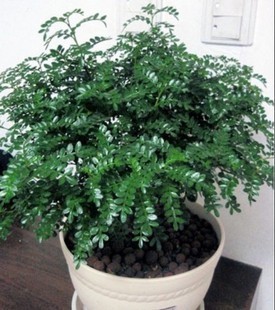
2. Potting Time for Camellia Cultivation
The potting time is November in winter and February to March in early spring. At this time, the flower buds are plump and the flowers are in full bloom, making it the most suitable time for potting. When the flowers are withering and new roots are still germinating, if potting is needed, special care must be taken not to damage the root system. Generally, potting should be stopped before and after the budding period, because at this time new shoots are about to sprout and leaves are expanding, requiring a large amount of water. If potting is carried out, the new roots will be damaged, easily affecting the growth and development of that year. Potting is also taboo in high temperatures and severe winter seasons, to avoid causing plant shrinkage and death.
3. Potting Method for Camellia Cultivation
First, place 3-4 pieces of broken tiles over the drainage hole at the bottom of the selected flower pot, then fill in some coarse soil, plant the seedling in the pot, fill the roots with fine soil, then slowly fill the larger particles of pot soil around the pot, gently shake the pot, and press with your hand to make the pot soil adhere tightly to the roots. For large pots, use a bamboo stick to gently press down the pot soil, being careful not to damage the roots. The pot soil should account for 4/5 of the pot height to allow for watering.
4. Watering Method for Camellia Cultivation
For newly potted seedlings, the first watering should be thorough, until water comes out from the bottom of the pot.
For newly potted seedlings, keep them moist, and after 2 months they can be watered the same as other potted seedlings. The frequency of watering depends on climate conditions, with the principle of keeping the soil moist. Generally, water more in spring to meet the needs of sprouting and shooting; in summer, watering should be done in the morning and evening; during the plum rain period, prevent water accumulation; during autumn drought, water promptly; in winter, watering should be done at noon to prevent the pot soil from freezing, as dry soil freezes more severely.
5. Fertilization Method for Camellia Cultivation
Camellia does not particularly like fertilizer, so there is no need to apply too much. Generally, before flowering in October to November and after flowering in April to May, apply fertilizer 2-4 times.
Generally, mixed fertilizer is used (human manure, cake fertilizer, barnyard manure, phosphate fertilizer), preferably with phosphate fertilizer as the main component and nitrogen fertilizer as a supplement, to prevent excessive branch growth and reduced flowers. All fertilizers must be fully decomposed before use, but rapeseed cake and fish meal can be directly scattered on the soil surface without decomposition, covered with a thin layer of soil, and left to slowly decompose and seep into the soil for root absorption.
The amount of fertilizer applied should follow the principle of more for strong seedlings, less or none for weak seedlings. For seedlings that are too weak, replacing the pot soil instead of fertilizing also works very well.
6. Shading and Cold Protection Methods for Camellia Cultivation
Camellia prefers a warm and humid climate, and both excessive cold and heat are detrimental to growth and development. In spring and during the plum rain period, potted camellias should be given sufficient sunlight; otherwise, the branches will develop thinly and weakly, easily causing sooty mold and scale insect damage, or moss growing on the trunk, leading to dead branches, aging, or death. In the high-temperature seasons of summer and autumn, shade and cool down promptly.
When the winter temperature drops below zero, it will cause flower buds to fall off or flower centers to freeze, affecting flowering quality. Therefore, potted seedlings overwintering indoors should maintain a temperature of around 3-4°C. If the temperature exceeds 16°C, it will promote early sprouting, and in severe cases cause leaf drop and bud drop.
7. Pest and Disease Control for Camellia Cultivation
The main pests of camellia are stem borers and scale insects. The main diseases are anthracnose and sooty mold on the leaf surface, and moss parasitism on branches and trunks. Promptly prune affected branches and spray pesticides for control.
8. Precautions for Camellia Cultivation
Camellia should not be heavily pruned. Its flowers, leaves, and buds take a long time to develop, and the crown forms relatively evenly. Basically, no special pruning is needed; simply cut off diseased and pest-infested branches, overly dense branches, weak branches, and shorten leggy branches.
Camellia is a multi-flower species, especially on weak-growing plants. If flower buds are densely packed, they will consume excessive nutrients, which is detrimental to plant growth. Therefore, bud thinning is an important part of cultivation management. It is advisable to keep 1-2 buds per branch, with a maximum of only 3, and maintain a certain distance. The thinned buds can be used for medicinal purposes.
Camellia has a long flowering period, with the entire flowering period lasting up to half a year. Therefore, promptly removing flowers that are nearing withering is greatly beneficial for reducing nutrient consumption and strengthening the tree.
9. Propagation Methods for Camellia Cultivation
Propagation can be done by sowing, cuttings, layering, grafting, and other methods, but cuttings and high-branch layering are most commonly used.
(1) Cutting propagation: Cutting propagation is mostly carried out in May to June. It is advisable to select robust current-year branches as cuttings, cut them into 10-12 cm lengths, keep 2-3 upper leaves, and remove the lower leaves. Insert them into a plain sand seedbed or flower pot. River sand or loose mountain soil can be used as pot soil. After insertion, water thoroughly, then spray appropriately to keep the soil moist, and provide shade. Roots can form in about 60-70 days.
(2) High-branch layering propagation: High-branch layering is mostly carried out in April to May. The method is to select a branch from the previous year, perform ring-barking at the high-pressure site with a ring width of 0.5 cm; wrap the ring-barked area with plastic film of appropriate size, with a wrapping length of 10-15 cm, first tie the lower opening tightly, fill with moist cultivation soil, always keep the soil moist, then tie the upper opening tightly; after rooting, it can be cut off and planted separately. 2016-3-26
Camellia Cultivation Methods and Precautions, Camellia Cultivation Methods and Precautions
Camellia is a plant of the genus Camellia in the Theaceae family, and it prefers a warm and humid environment. Among the many flowering plants, camellia has a relatively long flowering period, blooming from October to May of the following year. The flower colors of camellia include red, purple, white, yellow, and other different colors. Because of its graceful plant shape, dark green and glossy leaves, and colorful and vibrant flower forms, it is very popular among people. Today, everyone, come with me, the editor, to look at what the cultivation methods and precautions for camellia are.
Soil for Camellia Cultivation Methods
Camellia prefers loose, fertile, well-drained sandy soil, and grows in loess and humus soil. Generally, when choosing soil for cultivation, peat, decayed sawdust, red soil, humus soil, or a mixed substrate of the above can be used. The pH value for planting camellia is best between 5-6.5. Soil that is slightly acidic is optimal.
Light and Temperature for Camellia Cultivation Methods
Camellia is a semi-shade plant, and when cultivating in summer, it needs to be shaded. After the Start of Autumn, when the temperature drops, camellia enters the flower bud differentiation stage, and at this time it should promptly be given sufficient light. In winter, it should be placed indoors for cultivation and placed in a sunny location. Camellia is a long-day plant, so it can only form flower buds in an environment with 12 hours of daylight. Its optimal growth temperature is 18-25°C. If it is higher than 35°C, its leaves will be scorched. When cultivating in winter, the temperature should be maintained at 3-5°C. It can also tolerate short periods of -10°C low temperature, but cannot exceed 16°C for a long time, otherwise it will promote sprouting and cause leaf drop.
Watering and Fertilizing for Camellia Cultivation Methods
Camellia has relatively high requirements for water. If it is in neutral or alkaline soil, it is not good for its growth. When watering, adding too much water will cause root rot. The pot soil should also not be dry, as it easily causes the roots to shrink due to water loss, so it is advisable to keep the pot soil and surrounding environment moist. During the flowering period of camellia, do not spray water. When watering, do not pour water onto the flowers, as that easily causes the flowers to rot and shortens the flowering period. After the camellia flowers fade, promptly remove the residual flowers. In winter, watering is generally done once every three days, keeping the pot soil moist. Camellia likes fertilizer, and generally sufficient base fertilizer is applied when repotting. In autumn and winter, apply a decomposed dilute liquid fertilizer once a week, and additionally apply 1-2 times of phosphorus and potassium fertilizer. When fertilizing, dilute alum fertilizer water can be used for watering. After sprouting in spring, apply thin fertilizer water once every half month; in summer, apply phosphorus and potassium fertilizer; in early autumn, stop fertilizing for about 1 month; before flowering, apply alum fertilizer water again; when flowering, apply quick-acting phosphorus and potassium fertilizer, making the flowers large and colorful with a long flowering period.
Shaping and Pruning for Camellia Cultivation Methods
When pruning camellia, mainly cut off dried branches, diseased and weak branches, crossing branches, and overly dense branches. If camellia flower buds affect the tree shape on branches, the excess buds can be picked off. If it is a potted camellia, it can be shaped and pruned according to personal preference, but when pruning, it should not be cut too heavily, as that will affect its growth.
Precautions for Camellia
1. When watering camellia, be sure to first store tap water in a bucket for one to two days to let the chlorine evaporate. It is best to add one percent ferrous sulfate to the water to help improve water quality.
2. Camellia should not receive overly strong direct light, especially in summer and early autumn, when it must be shaded.
3. When fertilizing camellia, if there is too much nitrogen fertilizer, it easily causes flower buds to scorch. After flowering, apply less or no fertilizer.
4. Because camellia is not cold-tolerant, sometimes its flowering period will be delayed, which is relatively normal.
Summary: Camellia is an evergreen plant in all four seasons. It has a graceful plant shape, dark green and glossy leaves, and colorful and vibrant flower forms. It is a traditional ornamental flower in China, ranking eighth among the "Top Ten Famous Flowers," and is also one of the world's precious flowers and trees. The above is the editor's introduction to camellia cultivation methods and precautions. After reading the editor's introduction, I believe everyone has a good understanding.
Camellia Cultivation Methods and Precautions
Usually many people like to grow beautiful camellias at home, but due to lack of experience and insufficient understanding of cultivation methods, in the end they often fail to grow them well, either they do not bloom or the leaves turn yellow or they die. To grow camellia well, one must master its cultivation methods, and to know what to pay attention to when cultivating camellia. Today, the editor will specifically talk about this knowledge for everyone.
Cultivation Methods1. Cultivation Environment
Usually, cultivating camellia requires choosing a high-temperature and humid environment, and maintaining fertile and moist soil. The soil must be slightly alkaline and fertile; camellia is very difficult to survive in acidic soil. In addition, camellia likes a warm and humid climate, has relatively strong shade tolerance, avoids exposure to the sun, and has relatively good cold resistance, but in winter it cannot be placed in an environment of minus five degrees.
2. Light Conditions
To grow camellia well, light conditions are also very important. Usually, camellia should be placed in a semi-shaded environment, which can promote healthy growth of camellia. But after camellia enters the flowering season, it should be moved to a sunny environment, so that the flowers produced by camellia will have bright colors.
3. Fertilizer and Water Management
When cultivating camellia normally, fertilizer and water management is very important. Usually, camellia should be fertilized once a month, but concentrated fertilizer should be avoided, and the amount of fertilizer applied at one time should not be too much. When cultivating camellia, watering also requires special attention. In the high-temperature weather of summer, water every day to keep the pot soil moist, but there must not be water accumulation in the flower pot, otherwise the camellia buds will fall off.
PrecautionsNormally, camellia should not be placed in full sunlight when cultivating it, otherwise its leaves will be scorched. It grows most vigorously in a semi-shaded and semi-sunny environment. In addition, when cultivating camellia normally, the direction of the camellia should not be changed casually, because camellia has relatively poor adaptability, especially between April and September each year, during the 17 times of bud emergence and arrangement, it is even more important not to move it casually, otherwise the leaves originally on the shaded side will suddenly come into contact with strong light and a large number will fall off.