Which type of dental implant is best for patients with diabetes and osteoporosis
In recent years, dental implants have developed very rapidly. In the United States, the number of dental implant surgery cases has grown more than tenfold and continues to grow steadily. At present, dental implant surgery has solved many clinical problems of missing teeth: such as complete removable dentures for a single jaw, and the occlusion problem between the natural teeth of the upper and lower jaws and the edentulous area. It can avoid grinding down teeth to make a dental bridge, and can slow the loss of alveolar bone height and thickness, providing patients with healthier and more comfortable chewing function.
Among the many dental implant procedures, minimally invasive implant surgery can be completed with the smallest wound, the fastest speed and the least pain, giving many people who fear implants one more option.
Minimally invasive implant surgery is "flapless operation" implant surgery, which uses a circular blade or laser to remove the gum above the implant site before placing the implant. Its advantages are a smaller wound, less bleeding and faster implant placement. The traditional "flap operation" implant surgery uses a blade to cut open and lift the gum, insert the artificial tooth root, and then suture it closed. The features of minimally invasive implants are high accuracy, strong safety, a small wound, less bleeding and fast speed.
Some patients who want to use the minimally invasive implant method, such as those with insufficient gum bone bed, cannot receive implants immediately. They must first undergo bone grafting, and only after the bone bed is sufficient and suitable can minimally invasive implant placement be performed. Minimally invasive implants can only be carried out after a physician has evaluated the oral cavity and physical condition. Trying as much as possible to meet the patient's needs and performing the most suitable artificial implant surgery for the patient is what is best. Compared with traditional implants, minimally invasive implant surgery is highly recommended for elderly people and patients with high blood sugar and high blood pressure. Because the surgical incision is extremely small and the time is short, there is no bleeding or swelling and pain during the procedure, and postoperative recovery is also fast.
Usually, the longer the gum tissue is cut open, the more severe the gum swelling and pain. Minimally invasive implants can help patients receive full-mouth implants within one day and chew and eat normally.
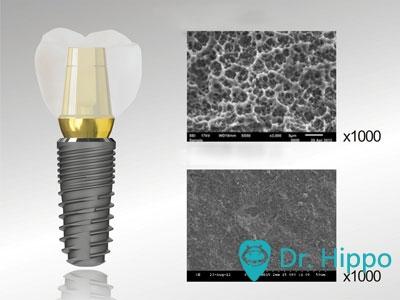
Calcium implants: most suitable for patients with diabetes and osteoporosis
Calcium implants (Ca implants) are a new-concept dental implant technology. The tooth body is placed in a calcium solution to maximize its surface activity, thereby improving initial fixation ability and promoting the formation of new bone. Compared with previous implant technologies, it can not only shorten surgery time, but can also be performed even when the gum bone is weak.
The specially treated calcium implant body attracts blood flow to the surface of the tooth body within the human body, allowing the proteins and bone-forming cells around the tooth to receive the greatest possible blood supply. Calcium ions promote the binding of blood proteins and the formation of platelets, and within a short time form protection for the surgical wound, shortening the treatment time.
The implant is kept in calcium ion water. Compared with previous implants, this new method can prevent surface contamination and make osseointegration faster, so that those who have difficulty undergoing old-style implant surgery, especially patients with diabetes and osteoporosis, can all receive it.