What are the key points to note when planting passion fruit seedlings?
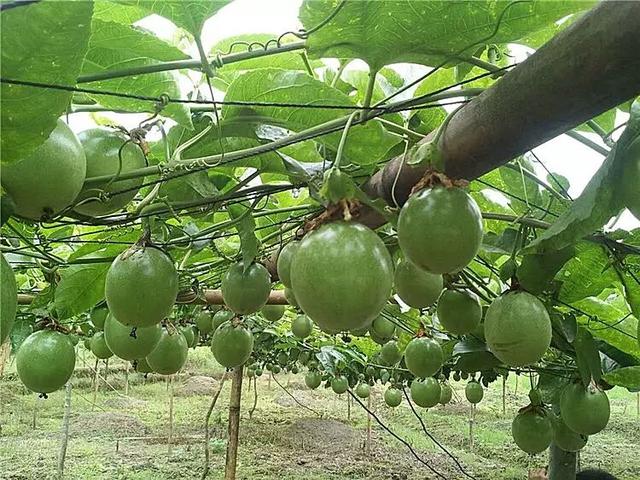
Passion fruit seedlings are mainly propagated from cuttings. The advantages of cutting-grown seedlings are: the resulting plants will all bear fruit, the seedlings grow well, and they suffer from fewer diseases.
When propagating passion fruit seedlings by cuttings, pay attention to the following points:
First, take cuttings for the passion fruit seedlings from high-yielding, high-quality plants; the cuttings taken should not be too thin.
Second, each passion fruit seedling cutting should generally be two or three nodes long. The lower cut should be about 1 cm from the node, and the upper cut should be about 2 cm above the terminal bud. The lower cut needs to be made at a slant.
Third, the passion fruit seedlings need root-promoting treatment: soak the lower part of the cuttings in a 3,000-fold to 10,000-fold indolebutyric acid solution for 30 seconds to 2 minutes. When planting the cuttings, insert the lower half into the soil so it can root, and leave the upper half with one bud to sprout and grow into a shoot. Each cutting should retain half a leaf to one leaf.
Fourth, for passion fruit seedlings it is best to use nutrient bags for raising the plants, so that the roots are not damaged when they leave the nursery for field planting. The nutrient soil can be made by mixing 20% to 30% burnt soil with 70% to 80% loose, fertile garden soil or paddy field soil.
Fifth, after planting the passion fruit seedlings, keep the seedbed moist. Use a small plastic-film arched tunnel or a greenhouse to raise the seedlings, and water every day to maintain humidity.
Sixth, for passion fruit seedlings in winter and early spring, pay attention to cold protection for the seedbed. If using a small plastic-film arched tunnel or a greenhouse for cold protection, open it to release heat on sunny days, and keep it covered the rest of the time.
Spring is the best time to plant passion fruit seedlings. Because of the unique characteristics of passion fruit seedlings, they can be planted at any time of the four seasons, as long as the temperature and humidity are suitable. But in the south, the best planting season is generally around the eleventh month of the lunar calendar, and also this current season, about one or two months after the Start of Spring.
The first thing to consider when planting passion fruit seedlings is the seedling stock; the quality of the passion fruit seedling determines the harvest to a certain extent. As for varieties, the most common on the market is Zixiang No. 1, the type with purple skin when ripe, which is also the easiest to grow. In recent years, some new varieties have also become popular, such as Mantianxing, Tainong, and Huangjinguo. Having grown passion fruit for many years, and having expanded the planting by 100 mu this year, I will share with you how to choose fruit seedlings and how to plant them.
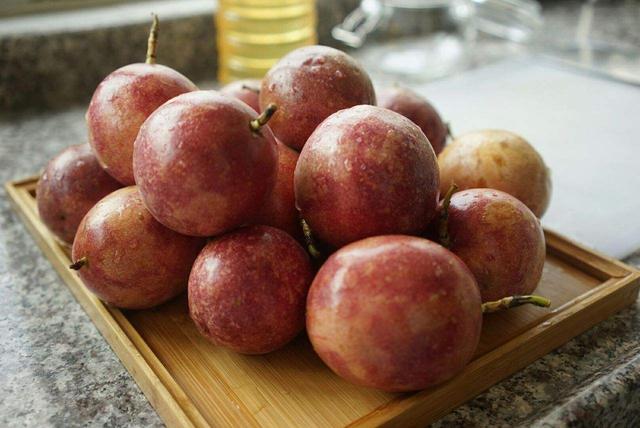
The most basic principle when choosing passion fruit seedlings is first to decide on the type. If you have never grown them, it is recommended to start with Zixiang No. 1, as it is easier to succeed. Then, when choosing, pay attention to whether they are strong branches, whether they have been virus-free treated, whether the roots are well developed, and whether the young shoots are growing normally. Generally, seedlings about 3 months old are fine.
Below are the key points for planting passion fruit seedlings:
About growing them in pots
1. When the passion fruit seedling arrives, remove the plastic bag packaging. Then, if the cultivation bag wrapped around the soil is also a plastic bag, it needs to be removed too; if it is a cloth bag, it does not need to be removed and can be planted directly!
2. A potted passion fruit seedling needs a pot about the size of a water bucket, and only one plant can be grown per pot. Do not think that because the seedling is so small now you can use a small pot; this is not good for the growing environment of the passion fruit seedling. After a few months, the root system will become very large!
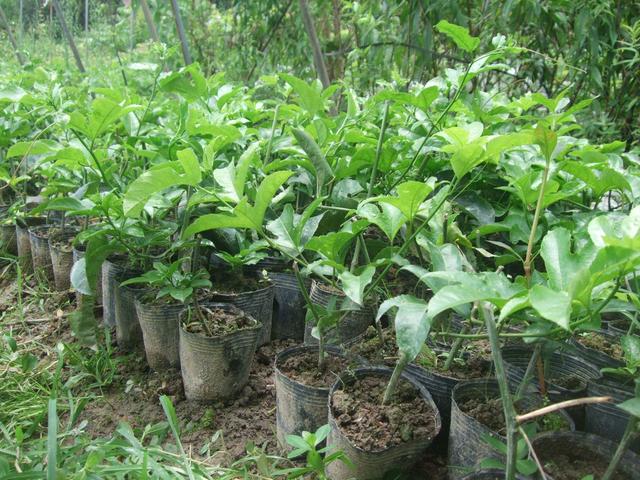
3. After planting the passion fruit seedling, water it. Usually keep the soil moist, but do not let too much water soak the roots. Drainage must be done well. If the sun is strong right after planting, provide some shade too!
4. Fertilize the passion fruit seedling only 15 days after planting. You must wait until the seedling has established its roots, otherwise the fertilizer will burn the seedling's young roots. Remember this!
5. After planting the passion fruit seedling, it generally must first establish its roots. It is impossible to see obvious growth in 10 days or half a month, so do not be too anxious. When the weather is warm, it will grow very quickly!
The role and use of rooting powder for passion fruit seedlings:
Rooting powder for passion fruit seedlings promotes well-developed roots, fast root establishment, and a higher growth rate. For those who do not know how to grow plants, you can bring along a packet! After planting, mix it with water and pour it directly on the roots. One packet can be mixed with 20 jin of water. Those planting just a few plants can use it in two portions, applying once every 3-4 days!