Production area distribution and cultivation analysis of Japanese wisteria in China
The largest introduction of Japanese wisteria varieties into China took place during the preparation of Jiading Wisteria Park. The wisteria garden within Jiading Wisteria Park has a total of 93 trees, including more than 30 different varieties, all donated free of charge by Mr. Fujimoto Michio, former mayor of Waki Town, Okayama Prefecture, Japan. Every year Mr. Fujimoto Michio travels from Japan at his own expense to provide technical guidance on wisteria cultivation and pruning. The wisteria trellises in the park were donated and built by Mr. Tokunaga Shinji, president of Tokunaga Carp Flag Company of Japan from Waki Town (a donation of 2 million yen in 1997). As the market applications of Japanese wisteria in landscaping and potted plants continue to expand, the cultivation bases for Japanese wisteria have adjusted the varieties and cultivation methods accordingly. Because wisteria vines require a long time to grow and transplanting flowering trees carries certain risks, cultivation enterprises and bases will gradually adjust their scale.
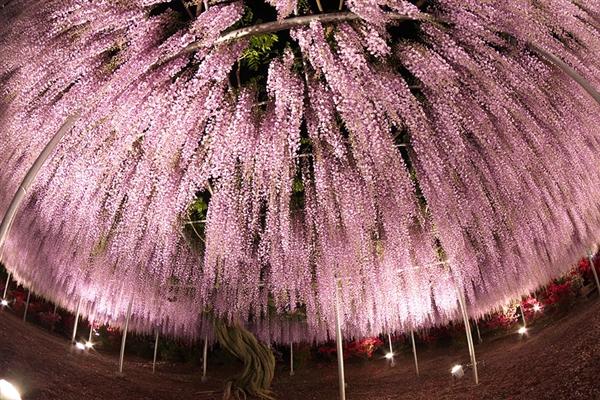
Production areas of Japanese wisteria in Chinaand cultivation analysis
Japanese wisteria is native to Japan. According to the China Japanese Wisteria Market Prospect Survey and Analysis Report released by Qianxun Consulting, the main domestic cultivation regions are as follows. The mid-subtropical evergreen and deciduous broad-leaved forest zone of the Yangtze River basin and areas to its south includes the following major cities: Wuhan, Shashi, Huangshi, Yichang, Nanchang, Jingdezhen, Jiujiang, Ji'an, Jinggangshan, Ganzhou, Shanghai, Changsha, Zhuzhou, Yueyang, Huaihua, Jishou, Changde, Xiangtan, Hengyang, Shaoyang, Guilin, Wenzhou, Jinhua, Ningbo, Chongqing, Chengdu, Dujiangyan, Mianyang, Neijiang, Leshan, Zigong, Panzhihua, Guiyang, Zunyi, Liupanshui, Anshun, Kunming, Dali; the southern subtropical evergreen broad-leaved forest zone includes the following major cities: Fuzhou, Xiamen, Quanzhou, Zhangzhou, Guangzhou, Foshan, Shunde, Dongguan, Huizhou, Shantou, Taipei, Liuzhou, Guiping; the tropical monsoon forest and rainforest zone includes the following major cities: Haikou, Sanya, Qionghai, Kaohsiung, Tainan, Shenzhen, Zhanjiang, Zhongshan, Zhuhai, Macao, China, Hong Kong, China, Nanning, Qinzhou, Beihai, Maoming, Jinghong.
Wisteria has strong environmental adaptability, but it is considered difficult to grow because it takes an average of seven years to bloom, and if grown from seed, it may take even ten years. Wisteria is a plant for zones 4-9 and is one of the few that adapts to both temperate and cold climates, but in cold regions it must be planted in a sunny, south-facing area, and in winter the roots must be protected with mounded soil. Wisteria mostly blooms in June, and some bloom as late as the end of summer. After blooming, it must be pruned to control the tree shape and maintain its appearance.
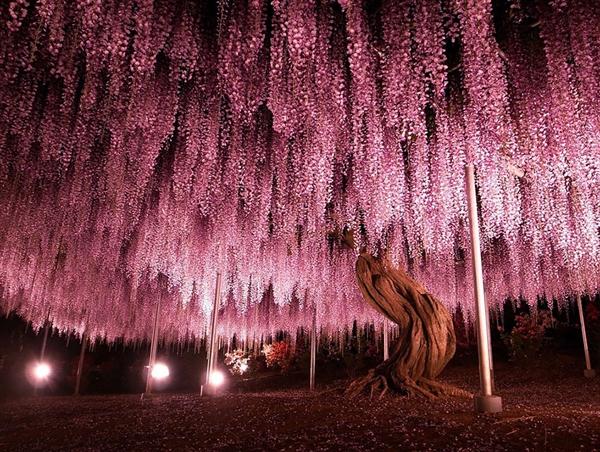
Production areas and cultivation analysis of Japanese wisteria in China
Wisteria seeds are collected after autumn, the pod skins removed, then dried in the sun for storage, or the seeds are stored in damp sand. In spring, soak the seeds in warm water at 60°C for 1-2d. When the water temperature drops to 30°C, remove the seeds after they swell, rinse them in cold water, keep them moist and piled for one day and night, and then they can be sown. Seedlings emerge in about 1 month, with an emergence rate of about 90%. Because the plants do not tolerate transplanting, the spacing between plants and rows at sowing should be somewhat larger, and after 2-3a they can be moved directly to the permanent planting site.
For cutting propagation, hardwood cuttings are generally used. In autumn, take sturdy I-2 year old branches, tie them in bundles and bury them until the following year. In mid-to-late May, before the branches sprout, cut them into about 15cm pieces as cuttings and insert them into prepared seedbeds, at a depth of about 2/3 of the cutting length. Spray water promptly and strengthen care. Keep the seedbed moist, and annual plant height reaches 20-50cm. They are ready to leave the nursery after two years.
For root cutting propagation, because wisteria roots very easily produce adventitious buds. Therefore, in mid-to-late March, dig out roots 0.5-2.0cm thick, cut them into 10-12cm cuttings, insert them into the seedbed, and keep the upper cut end parallel to the ground.
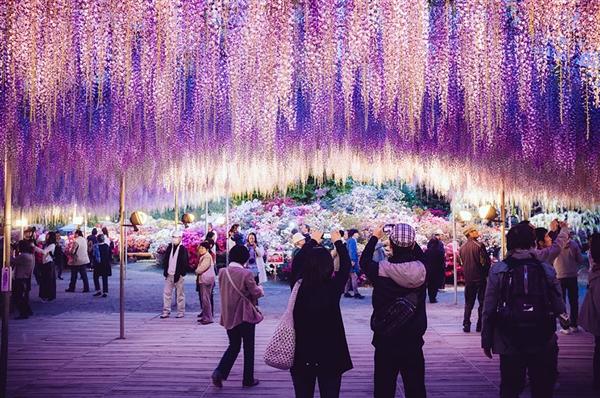
Production areas and cultivation analysis of Japanese wisteria in China
For grafting propagation, wisteria with excellent traits can be propagated by grafting. Select a good wisteria variety as the scion and an ordinary variety as the rootstock. Grafting is mostly carried out in spring before the plants begin to sprout, and either branch grafting or root grafting can be used. Some varieties of Japanese wisteria are generally propagated mainly by grafting to achieve large-scale production.
Cultivation and care. Because wisteria has a long main root and few fibrous roots, transplanting must avoid damaging the root system as much as possible. The survival rate is relatively high when transplanting in spring and autumn, and soil balls may be omitted during transplanting. It is mostly planted in early spring, with organic fertilizer applied in the planting hole as base fertilizer, and watered thoroughly after planting. Before planting, a trellis must be built for the wisteria, and the thicker branches tied to the trellis so that they can climb along it. Because wisteria has a relatively long growth period and luxuriant branches and leaves, a relatively solid trellis can be made before planting or before climbing according to the design requirements.
Pruning of wisteria is generally carried out during the dormant period. The distribution of branches can be regulated by removing dense ones and keeping sparse ones and by artificial training. To promote growth and development, pruning should be carried out reasonably according to the growth characteristics of wisteria. New shoots of the current year should be shortened, cutting off 1/3 to 1/2, and thin weak branches and dead branches should be removed flush with the base of the branch. Post-bloom pruning can use heavy pruning of the previous year's branches and removal of excessive buds to appropriately lower the height, ensuring the shrub form and a sufficient amount of strong shoots for the current year's growth.
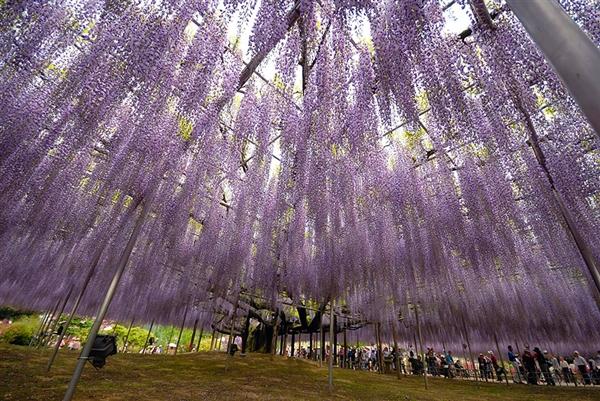
Production areas and cultivation analysis of Japanese wisteria in China
Fertilization: before wisteria sprouts, apply a mixed fertilizer of nitrogen, phosphorus and potassium once every half month, and apply a phosphorus-potassium fertilizer once more before blooming. Do not use too much nitrogen fertilizer, otherwise the plants will grow excessively and fail to bloom. After blooming, prune promptly, remove the flower stalks, and apply a mixed fertilizer mainly of nitrogen once. In autumn, apply base fertilizer around the base of the wisteria stems. Organic fertilizer is preferable, and water after application.
Japan carried out the collection, identification, improvement and selective breeding of wisteria varieties relatively early and has many varieties. China has done very little work in this area. With the widespread application of plant tissue culture and rapid propagation virus-free technology in the breeding of superior seedlings in modern agriculture, Japanese floribunda wisteria, as an excellent type of colorful urban landscaping tree species, has been in short supply in places such as Shanghai and Jiangsu in recent years, with prices remaining high (5 yuan per plant for small seedlings 30-50cm tall, and 100 yuan per plant for 3-year-old plants about 250cm tall).
The impact of rising prices of Japanese wisteria seedlings on the profitability of Japanese wisteria enterprises is constrained by the overall industry technical level. Seedling prices cause rising costs in the Japanese wisteria industry, but with the industrialization and rapid production process of Japanese wisteria tree species, it will not bring too great a shock to the Japanese wisteria industry.