How to Grow and Propagate Air Plants
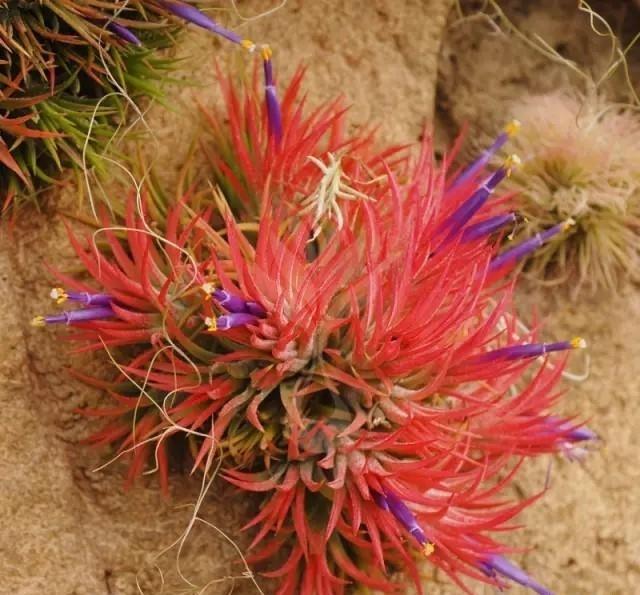
Before learning how to grow and care for air plants, you should first understand some basic facts about them. Air plants, as the name suggests, do not need flower pots or soil, and can grow simply by relying on the air, absorbing moisture, oxygen and nitrogen compounds from it. The secret of why air plants do not need to draw water from soil through their roots lies in the dense scales covering their leaves, which have the ability to absorb water. These scales come in many shapes, the most typical being shield-shaped, densely covering the epidermis. Mist or rainwater in the air is intercepted by the depressions of the epidermis and slowly seeps into the plant body through the gaps between thin-walled cells, thereby obtaining the water and nutrients needed for growth and development. Therefore, air plants are drought-tolerant epiphytes, and can also be called perennial epiphytic, aerial herbaceous plants.
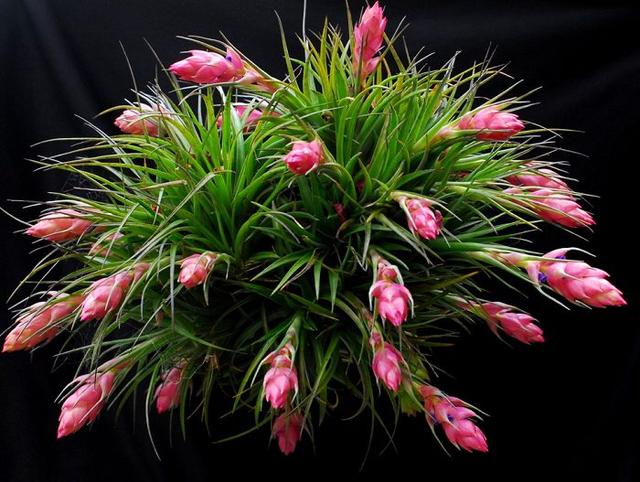
Air plants are enjoyed both for their foliage and their flowers. Small plants are only about 5-8 cm in size, while large ones can reach 1-2 m. There are individuals that grow on their own, as well as groups that grow in clusters. The leaves take on many forms, such as radial, spherical, curved and naturally drooping, and this diversity of forms is also what makes air plants so attractive. The leaf surface is mainly dark green, light green or silvery white. The flowering period is generally concentrated in spring and autumn. Even when you neglect to care for it, it will still bring you different surprises.
The most suitable growing temperature for air plants is 20-25 degrees. At extreme temperatures, they can withstand cold down to 5°C and heat up to 40 degrees. However, in low-temperature conditions in winter, you should pay attention to water control; in low-temperature weather, do not let air plants soak in water for too long, otherwise it can easily lead to frostbite. Conversely, in high-temperature conditions in summer, you should pay attention to ventilation, and can soak them in water and spray them more as appropriate. But remember, remember, no matter what season or what weather it is, what air plants need most is ventilation. Do not let air plants become stuffy, and do not let water accumulate on air plants, otherwise viral infection can easily cause rot in the center.

Regarding light, air plants can be placed in a spot with diffused light; there is no need to put them under harsh sun exposure or direct sunlight, otherwise the leaf surface can easily get sunburned. However, different varieties also need different light intensities. If the leaf surface has more silvery white scales, it can relatively be given stronger light; if the variety has tender green leaves and droops naturally, it can be placed in a relatively shady spot that still receives diffused light.

According to their different light requirements, air plants can be simply classified into three types, and you can appropriately adjust your growing approach according to the different types.
1, Green-leaf type: The leaf surface is smooth with no scales, the leaves are soft and droop naturally, it needs low sunlight and has a relatively high water requirement.
2, Semi-green-leaf type: Those between the silvery white-leaf type and the green-leaf type can all be classified here. (Semi-silvery white leaves)
3, Silvery white-leaf type: The leaf surface is covered with scales, the appearance is silvery white to greenish gray, the leaves are hard and rough and almost never droop, it needs relatively high sunlight and has a low water requirement.

Air plants are a relatively novel variety, and they are basically obtained through online shopping, so you must understand how to handle air plants after they arrive. Notes after receiving air plants:
1, After the air plant arrives, please do not rush to water it. After a long period of transport to a new environment, an air plant is not suited to being watered immediately. First take the air plant out of the packing box and place it in a spot with good air circulation to let it quietly get familiar with the environment of its new home.
2, Three days later, once the air plant has become familiar with the environment, you can give it a bath to let it stretch out. Remember not to let the bath last too long; generally keep it to about 2-3 hours. After the bath, the air plant will give you a completely fresh feeling.
3, After the air plant has adapted, you should help it with a trimming. At this time you should check whether the air plant has any dead or rotten leaves, and if so, cut them off promptly; after cutting them off, the air plant can grow better. Then observe whether the air plant has rooted. If it has rooted, it proves that the air plant has already adapted to the new environment. If not, there is no need to worry; the air plant is a "shy" plant, so give it more time for you to get to know each other.
4, Finally, a warm reminder: air plants must be given the right amount of water, better too little than too much, for extreme measures lead to the opposite result. Remember... the most important thing is ventilation and diffused light.
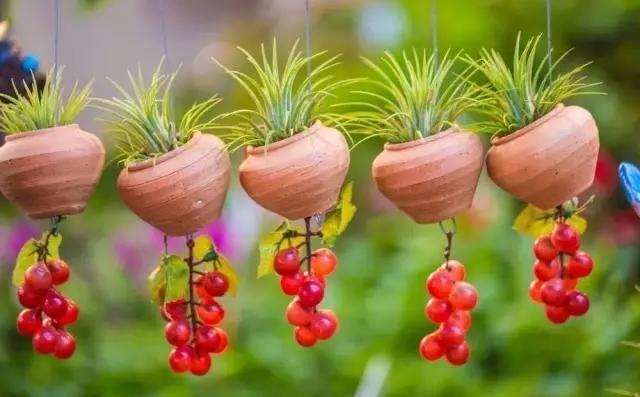
Notes during the process of growing air plants:
1, Observe more and care more. If you find rotten leaves, trim them promptly, because rotten leaves no longer have stomata and cannot breathe after getting wet, making them hard to dry, and dead leaves that are hard to dry can easily cause rot in the center of the air plant.
2, When you have nothing to do, do not always hold the air plant in your hands and play with it. Air plants need time to adapt to a new environment; if after adapting they are taken out and played with again, the air plant will be "startled."
3, Air plants are plants of the air, not plants of the water. Remember not to give too much water, otherwise they will surely die.
Spring: This is the most active growth cycle for air plants. Everyone, please do not miss this opportunity; care for your air plants with your heart, and they will absolutely give you unexpected rewards. Generally in spring, water once about every 2 days. After watering, you can pick up the air plant with your hand, gently shake it a few times, and then place it in a ventilated spot to dry. If conditions permit, try to let it dry completely within 3-5 hours.
Summer: When humidity is below 80%, you can spray water once about every 2-3 days. During the day, air plants are in a state of active respiration, so please do not water during the day, otherwise the moisture will block the breathing pores and cause the air plant to become stuffy or even suffocate. Generally, choose to water after nightfall. Throughout summer, because the temperature is relatively high, air plants grow relatively slowly, so please be careful to avoid sun exposure or high temperatures.
Autumn: Air plants bloom in autumn. In autumn, some air plants will bloom, so at this time pay attention when watering; try not to spray water onto the buds, otherwise the buds can easily become stuffy and damaged after getting wet. Generally in autumn the air is relatively dry, and air plants are relatively short of water. If you are in some particularly dry place, you can choose to give a small spray once a day and a big spray once every 3 days, trying to maintain the humidity around the air plants.
Winter: Because the temperature in winter is relatively low, most air plants choose to close their stomata to avoid the cold, so generally in winter keep watering to 1-2 times a week. During the day, you can let them bask in the sun more to warm up.
The above watering frequencies are for reference only. Specifically, each air plant enthusiast still needs to make judgments according to different regions, weather conditions and the condition of the air plant.
4, If conditions permit, place it in the most ventilated spot in your home.
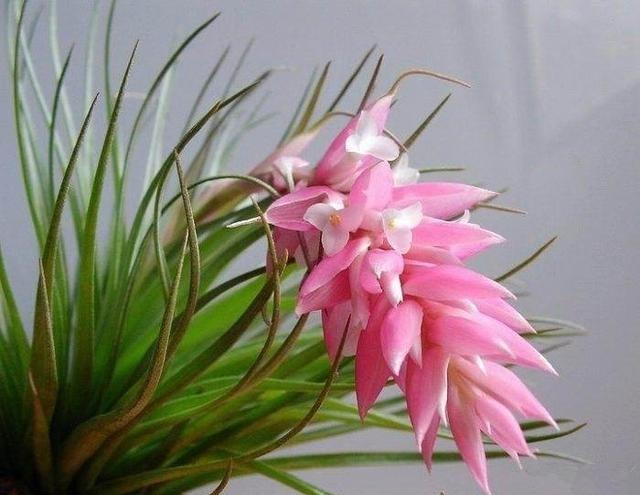
5, Propagation of air plants: Generally, an air plant blooms only once in its lifetime, and after blooming it will produce new shoots (pups) at the base of the mother plant. At this time, air plant enthusiasts must not rush to take out the new shoots or separate them from the mother plant. Air plants, like other animals and plants, need the mother to provide them with nutrients when the offspring are young. If the mother and offspring are separated too early, it can easily cause nutritional deficiency in the offspring, leading to extremely slow growth or even death. Generally, it is best to wait until the new shoot has grown to one third or even one half the size of the mother plant before separating the new shoot from the mother plant. Afterward, the care of the new shoot can be the same as that of the mother plant.

Pests and diseases that may be encountered during the process of growing air plants:
1 Sunscald: It often appears in places with sufficient light. Due to improper operation, when water is sprayed on the leaf surface and does not dry in time, the water droplets act like a convex lens and burn the leaf surface beneath the droplets, but it will not spread. For daily care, just pay attention to ventilation.
2 Heart rot and root rot: These are also the most common diseases of air plants. Heart rot damages the tender leaf part of the growing point at the center of the plant, causing the tissue to soften and rot, and a putrid, moldy smell can also be detected. Ultimately it causes the growing point to separate from the entire plant. Root rot, on the other hand, shows as a browning to blackening rotting process at the root tips of the affected plant, with no lateral roots growing. The above often appear in home cultivation, where excessively high temperatures cause growth to stagnate, and at the same time poor ventilation creates high temperature and high humidity. This then acts on the plant and produces pathological changes. Taking Beijing as an example, in summer when the temperature is relatively high, attention must be paid to ventilation. If the growing medium chosen is group planting for landscaping, pay attention to good medium drainage. Avoid accumulating too much water. At the same time, also pay attention to avoiding water quality with high Ca calcium and Na sodium.
3 Ring spot disease: The symptoms are the appearance of numerous spots on the leaf surface, and the color goes from light to dark: beige - light yellow - coffee - gradually turning black. The spotted areas will clearly show tissue destruction and shrinkage. In addition, the outer leaves clearly draw inward toward the center. If the spots are few and distributed on the outer leaves, you can cut off the diseased leaves, reduce light exposure time, pay attention to ventilation, and wait until the recovery process is over and new leaves grow out and resume growth, then return to normal management. (This kind of disease often appears on plants mail-ordered from abroad. To save on shipping and quarantine costs, enthusiasts usually pack many varieties together, and it takes a long time to reach the mail-order buyer's hands. Because of poor ventilation, great environmental changes, and rough handling causing external injuries to the plants, this kind of disease is easily triggered.)
4. Pests
a. Scale insects and mealybugs: Caused by factors such as poor ventilation. The larvae rest on the underside of leaves. Using the stylet formed by their evolved two pairs of upper and lower jaws, they suck the plant's fluids, and at the same time inject digestive fluid into the affected plant, making the wounds on the affected plant difficult to heal. At the same time, because such pests secrete excrement containing high sugar content, they attract ants and can easily cause secondary infection, namely sooty mold. When there are few scale insects, they can be removed by hand, and you can use a cotton ball dipped in vinegar or alcohol to wipe them off. If there are many, you can use specialized pesticides, such as acetamiprid.
b. Snails and slugs (snails without shells): Such pests are very easy to find, because the places they crawl over show bright, transparent mucus, making them very easy to identify. Such pests use their licking-sucking mouthparts to harm the plant, especially the new tender leaves. Such pests have strong reproductive capacity and must not be ignored, but for household cultivation... just kill however many there are... If there really are too many to handle, you can use 10% metaldehyde to kill them.