The 16 easiest wildflowers to grow, which ones have you tried?

Yanghua98 WeChat ID: yanghua98
A professional platform for gardening enthusiasts to exchange ideas, an essential tool for gardening lovers!
1. Portulaca grandiflora
| Chinese name | Flowering period | Seeds/gram | Type | Color | Latin name | Height |
| Portulaca grandiflora | Summer-Autumn | 10000 | Annual | Yellow/Pink/Red/Purple/White | Portulaca grandiflora | 10-20 |
Portulaca grandiflora (moss rose) is also called "pine-needle peony" because its leaves resemble pine needles and its flowers resemble peonies. It grows very low and its stems are prostrate. The flowers are large and brilliantly colored, while its fleshy leaves are round and stick-shaped; with large flowers and few leaves, it has strong drought tolerance. Portulaca grandiflora loves intense light, and its flowers close at night or on cloudy days. As an extremely low-growing species, its excellent adaptability to the environment makes it one of our strongly recommended choices.
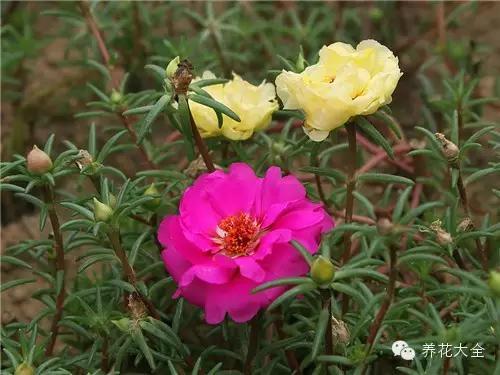
Portulaca grandiflora is native to Brazil and grows only 15-20 cm tall. Under conditions above 15°C, it germinates about 10 days after sowing and can bloom in about 30 days.
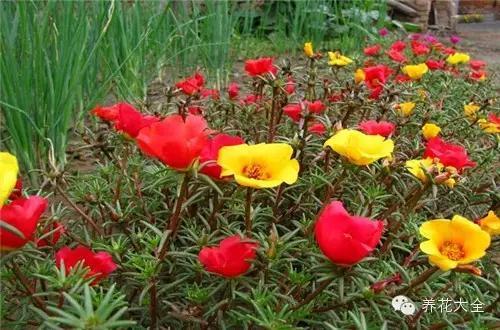
Therefore, it can be sown from spring to autumn. Portulaca grandiflora loves intense light and is very drought-tolerant, with tenacious vitality; it is commonly known as "die-hard," and these ultra-low-maintenance traits give it obvious advantages in large-area landscape greening where planting and management conditions are relatively poor.
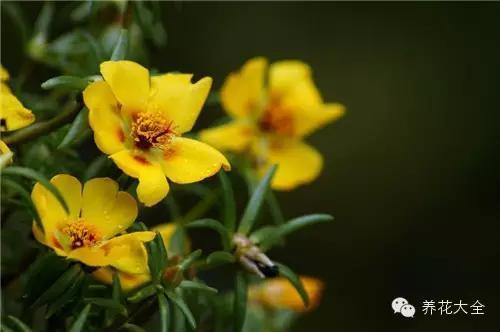
Portulaca grandiflora blooms when it sees sunlight and closes in the early morning, evening, and on cloudy days, hence the names "sun flower" and "noon flower." Its flower colors include white, yellow, red, and purple, making it richly colored. When sowing, note that the seeds are tiny and should not be covered with soil; simply press them onto the seedbed. Apart from ensuring necessary moisture during the seedling stage, it does not need frequent watering during the growing period.
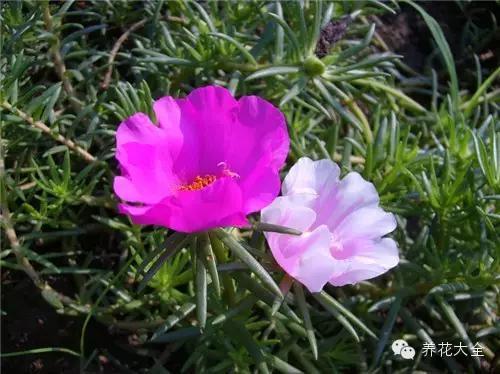
Because Portulaca grandiflora stands out in four indicators - richness of flower color, ease of management, length of flowering period, and speed of blooming - it is widely welcomed by users as an important variety among low-growing types.
2. Zinnia
| Chinese name | Flowering period | Seeds/gram | Type | Color | Latin name | Height |
| Zinnia | Summer-Autumn | 120 | Annual | Yellow/Pink/Red/Purple/Orange | Zinnia elegans | Tall stems 50-80, dwarf stems 30-50 |
Zinnia is native to the southwestern United States, Mexico, and South America, so it tolerates poor soil and drought and is naturally robust. It has the bold, unrestrained style of the Americas, with large and brilliantly colored flowers. Because it has hard stems, the plants are upright and not prone to lodging. Zinnia grows at a very uniform height, and when planted in large areas it can create a magnificent landscape effect. Because of its bright colors, butterflies and bees often dance on it.
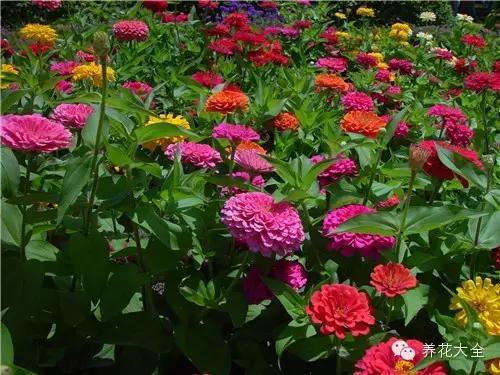
Large-flowered zinnias have full flower forms and a rich choice of colors. Small-flowered zinnias are dense and lush, with more blooms. Therefore, they can provide landscape effects with their own distinctive styles. Zinnia is also one of the types we recommend as very easy to grow and very easy to produce results with.
Zinnia is a relatively short-day plant. When the day length is longer than 14 hours, flowering will be delayed, taking about 70 days from sowing to flowering, and at this time the ray florets will noticeably increase; when the day length is shorter than 12 hours, flowering can be earlier, and the time from sowing to flowering will be shortened to about 60 days. Therefore, experienced growers can control the flowering period by adjusting the sowing time and the timing of pinching.
3. Iceland poppy
| Chinese name | Flowering period | Seeds/gram | Type | Color | Latin name | Height |
| Poppy | Spring-Summer | 11500 | Annual, biennial | Pink/White/Purple/Red | Papaver rhoeas | 40-80 |
The Iceland poppy is a representative of North American-style landscape flowers, with slender stems and relatively large flowers, much larger than ordinary poppies. It has a unique plant form and brilliant colors, and the seeds have a certain ability to self-sow, so when planted in patches it can form a very spectacular sea of flowers and can last from spring all the way to summer.
It is often used alone or mixed with several other poppy species to form beautiful poppy combinations. It can be sown in either spring or autumn, but autumn-sown plants are more robust, and patch planting is especially good.
The brilliant colors, low height, and relatively long flowering period of the Iceland poppy make it a big favorite among flower varieties, and it is also one of the types we strongly recommend.
4. Cosmos
| Chinese name | Flowering period | Seeds/gram | Type | Color | Latin name | Height |
| Cosmos | Summer-Autumn | 120 | Annual | Pink/White/Red | Cosmos bipinnatus | Tall stems 50-100, dwarf stems 30-50 |
Cosmos's outstanding drought tolerance, cold tolerance, and tolerance of poor soil make it the first choice for landscape decoration materials in various environments lacking maintenance. It likes light and also tolerates partial shade and high temperatures, and it grows rapidly, so its swaying graceful figure can often be seen along roadsides and on slopes. Its leaves and branches are slender, so whether sown alone or combined with other wildflower varieties, it can form a beautiful landscape.
Wild species are mostly mixed colors, while commercially produced seeds offer a variety of separately colored flower types to choose from.
In addition to the richness of color choices, commercially produced seeds are more uniform in plant form, suitable for flower borders, and when planted in patches along lawn edges, around groves, and beside roads as background material, they have a quite wild charm.
Besides growing rapidly, cosmos's outstanding self-sowing ability is also an important reason we recommend it, allowing you to greatly save on sowing labor while maintaining the landscape effect.
5. Marvel of Peru
| Chinese name | Flowering period | Seeds/gram | Type | Color | Latin name | Height |
| Marvel of Peru | Summer-Autumn | 12 | Annual, biennial | Yellow/Pink/Red/White | Mirabilis jalapa | 50-90 |
Marvel of Peru is a truly native plant. If everyone is not familiar enough with the name "Marvel of Peru," surely they have some impression of "landmine flower."
Its petals are light and graceful, appearing semi-transparent like gauze when in full bloom, and its colors are rich, making it one of the commonly used landscape greening materials. In southern China, its underground parts can safely overwinter and become a perennial herbaceous flower, continuing to sprout and grow new plants the following spring. The flowers of Marvel of Peru open from evening to early morning and close under strong light. In summer, it grows and blooms well with some light shade. Marvel of Peru can self-sow and reproduce.
Commercially produced Marvel of Peru seeds come in a rich selection of separately colored varieties, allowing you to choose. The dazzling multicolored type, passionate red, romantic yellow, and graceful white can all make it easier for landscape designers to use color when planting.
6. Scarlet flax
| Chinese name | Flowering period | Seeds/gram | Type | Color | Latin name | Height |
| Scarlet flax | Summer | 290 | Annual | Red | Linum grandiflorum rubrum | 30-90 |
Scarlet flax is relatively rare in China, but it is one of the very commonly used types in landscape design abroad. Its small red flowers are like scattered lights in the dusk, with a unique charm among the lush leaves.
Whether planted alone in patches or combined with other types, it can form a good landscape effect and quickly attract the viewer's attention.
7. Calendula
| Chinese name | Flowering period | Seeds/gram | Type | Color | Latin name | Height |
| Calendula | Summer-Autumn | 120 | Annual | Orange | Calendula officinalis | 40-60 |
Calendula is native to southern Europe and the Mediterranean coast. It is said that the ancient Romans saw calendula blooming on the first day of the month, so they named it after "Calends" (the first day of the ancient Roman calendar). It has good adaptability and has become a widely distributed landscape flower in China. In China, because its flower looks like a golden plate when it blooms, it is named calendula.
Its flower form is relatively large, with ray florets in one or multiple overlapping layers, golden yellow or orange-yellow. Calendula has bright yellow flowers and emerald green leaves, very eye-catching.
Uses: flower beds, flower borders, potted plants, ground cover, ordinary greening, combinations.
Because of its relatively low height, calendula is especially suitable for landscape foreground combinations or large-area planting. At the same time, its brilliant yellow-orange flower color is often combined with red varieties of the same height, making it one of the commonly used varieties especially favored by Chinese designers for setting off a lively holiday atmosphere.
8. Blue flax
| Chinese name | Flowering period | Seeds/gram | Type | Color | Latin name | Height |
| Blue flax | Spring-Summer | 690 | Perennial | Blue | Linum perenne | 30-60 |
Blue flax is one of the blue-toned early spring bloomers. In the early spring when it is warm yet still cold, while the flowers of other species are still dormant, blue flax sown last autumn has already shown its light and cheerful face early on.
In the hands of landscape designers, it is often used in mixed sowing with plants such as hard fescue, forming a fresh, rustic-style flower-studded lawn.
When fully grown, blue flax is densely covered with star-like small blue flowers at peak bloom, giving a calm and quiet feeling. It is relatively cold-hardy and highly adaptable. Since it is a perennial variety, the plant grows larger year by year, and from the second year onward the flowers gradually increase.
9. Toadflax
| Chinese name | Bloom period | seeds/gram | Type | Color | Latin name | Height |
| Toadflax | Spring-Autumn | 16250 | Annual | Pink/light purple/yellow | Linaria maroccana | 30-60 |
Toadflax can grow well in sandy soil, hillside grassland and along roadsides, which is thanks to its strong reproductive capacity, and therefore it has a very vivid flower meaning of "tenacity".
The branches and leaves of toadflax are very soft and fine, the corolla tube is long and mask-shaped, with dense small flowers at the top forming a raceme, and the flowers are about 2 cm long, small and delicate.
Designers in Europe and America often mix-sow it with other low-growing species such as pot marigold and California poppy. The elegant purple paired with bright orange-yellow forms a high-grade landscape groundcover effect. The image below shows the actual effect after mixed sowing.
10. Sulfur cosmos
| Chinese name | Bloom period | seeds/gram | Type | Color | Latin name | Height |
| Sulfur cosmos | Summer-Autumn | 110 | Annual | Orange-red | Cosmos sulphureus | Tall type 60-100, dwarf type 40-60 |
Sulfur cosmos has brilliant colors and strong adaptability, with striking orange-red flowers and super strong tolerance to poor soil. It can both perform well in large-scale landscape applications under intense sunlight and be combined with other plants to form excellent landscape flower combinations. Experiments have shown that it can still grow well and bloom under tree shade with a light intensity of 1500-2000 lux.
Due to its ease of planting, speed of flowering and relatively long blooming period, sulfur cosmos is also one of our recommended commonly used, fast-growing, excellent groundcover-type landscape flower species. It can be sown from late spring to early autumn and still achieve a lush landscape effect.
Sulfur cosmos is also often mix-sown with dwarf cosmos (ordinary cosmos varieties are not suitable for mix-sowing with it because they are taller than sulfur cosmos).
11. Baby's breath
| Chinese name | Bloom period | seeds/gram | Type | Color | Latin name | Height |
| Baby's breath | Summer | 800 | Annual to biennial | Pink | Gypsophila elegans | 50-80 |
Whenever early summer comes, countless white or pink flower buds gather at the tips of the branches. The pure white, cloud-like flowers with a slight fragrance form spectacular flower clusters, like countless stars shining, hanging all over the horizon.
Viewed from afar, it seems like morning mist or evening glow, hence it is also called "xia cao" (glow grass).
Depending on the usage environment, three types can be selected: large-flowered white, small-flowered white and large-flowered pink. Due to Chinese people's color selection habits, pink baby's breath is more favored when used for large-scale landscapes.
12. Cornflower
| Chinese name | Bloom period | seeds/gram | Type | Color | Latin name | Height |
| Cornflower | Summer-Autumn | 220 | Annual to biennial | Blue/red/yellow/purple | Centaurea cyanus | Tall type 50-70, dwarf type 30-50 |
Cornflower is one of the most widely used landscape flower species. It has nearly ten flower colors, which is very rich. The clustered small flowers are ball-shaped with a distinctive flower form, and different varieties also have different growth heights.
A single species can create a landscape with rich forms and brilliant colors, so it has become a favorite of landscape designers. It is a good material for landscape field planting, pot planting and cut flowers. It can be arranged with other herbaceous flowers in flower beds and flower borders, and can also be planted in masses. Tall varieties can also be used as cut flowers.
Cornflower is native to Europe. On country roads and in wheat fields in Europe, you can see the small, lovely figures of cornflowers, giving off a faint delicate fragrance. Especially in Germany in central Europe, cornflowers can be found on hillsides, in fields, around houses, along roadsides and by the water.
Every summer is the blooming season of cornflower. The medium-sized flower heads grow at the tips of slender stems, like graceful young girls. Cornflower is also one of the classic species commonly used in combinations.
13. Blanket flower
| Chinese name | Bloom period | seeds/gram | Type | Color | Latin name | Height |
| Blanket flower | Summer | 350 | Perennial | Yellow-red bicolor | Gaillardia aristata | Tall type 50-70, dwarf type 20-40 |
The red and yellow color combination of blanket flower fits very well with the Chinese concept of "festive and auspicious", and its growth height is relatively low, so designers often use blanket flower to lay out large areas of landscape groundcover to create a festive atmosphere.
Blanket flower is more cold-hardy than ordinary varieties. In late autumn, when other flower species have already faded one after another, its wonderful figure is still performing on the landscape stage, so blanket flower is an outstanding representative of perennial autumn-flowering species.
Blanket flower is native to North America, and its drought and heat tolerance is also very strong, so its blooming period is very long (it can be planted from spring to autumn), and it adapts to a wide range of regions.
Sow in spring, autumn and winter (in the south); spring sowing is best. It can self-sow and reproduce, and its growth is very robust. Therefore, blanket flower is a very good herbaceous flower for sand land greening, beautification and sand fixation, with simple cultivation and management.
14. Lavender
| Chinese name | Bloom period | seeds/gram | Type | Color | Latin name | Height |
| Lavender | Summer-Autumn | 1000 | Perennial | Blue-purple | Lavandula angustifolia | 40-60 |
Lavender is a landscape flower and aromatic plant with a long history. It was the favorite bathing additive of the ancient Greeks and Romans. The English name Lavender comes from the Latin "Larare", meaning "to wash". The fragrance acts on the brain and can change brain waves. Lavender can stimulate alpha waves in the human brain, making people feel calm and steady. In its place of origin, Provence, France, lavender has become the local pride. Lavender was originally wild. In the mid-19th century, people began to harvest wild lavender in an organized way, and large-scale cultivation began in the 1920s.
Growing lavender requires certain professional knowledge. Usually gibberellin is used to break dormancy in order to increase the germination rate.
Lavender is not only a typical aromatic herbaceous flower plant; due to its long cultivation history, it also carries much cultural connotation and has become a representative of romantic and charming French style. In the suburbs of Beijing, people who love romantic French style have specially established lavender estates, which have now become paradises for vacationers and photography enthusiasts.
Lavandula vera (English Lavender) is a narrow-leaved type of lavender. Compared with French Lavender, its fragrance is more intense, and it is the lavender variety most suitable for essential oil extraction.
15. Corn poppy
| Chinese name | Bloom period | seeds/gram | Type | Color | Latin name | Height |
| Corn poppy | Spring-Summer | 11500 | Annual to biennial | Pink/white/purple/red | Papaver rhoeas | 40-80 |
Before the corn poppy blooms, the egg-shaped flower bud is wrapped in two green sepals with white edges, hanging alone on a slender upright flower stalk, very much like a young girl bowing her head in thought.
When it blooms, the bent stem becomes upright, and the upward-facing flower has 4 thin petals, as thin as silk and as smooth as satin. The light corolla is like patches of red clouds and pieces of colored silk. Even without wind it seems to sway by itself, and when the wind moves it seems even more ready to flutter away.
The corn poppy combines both simple elegance and rich gorgeousness, the two harmoniously unified in one. Its appearance and posture greatly carry the charm of a beauty in classical Chinese art, and it can be called an exquisite work among flowers. Uses: groundcover, rock garden, flower border, combination, pot planting, flower bed.
Corn poppy has smaller flowers than Icelandic poppy, but because it is an annual species, it grows and blooms quickly and self-seeds readily, making it the better choice when a landscape effect is needed within the same year.
Corn poppy is often sown in mixes with species of similar height such as sulfur cosmos, cornflower and blanket flower; its red combines with the orange of sulfur cosmos, the red and blue of cornflower, and the yellow-and-red bicolor of blanket flower to create a very rich color effect.
16. Forget-me-not
| Chinese name | Flowering period | Seeds/gram | Type | Color | Latin name | Height |
| Forget-me-not | Spring-summer | 1600 | Annual, biennial | Blue | Myosotis sylvatica | 25-40 |
Chinese forget-me-not is a widely known landscape flower with a special meaning; whether as a bouquet or a flower bed planted in the garden, its plain and elegant small blue flowers always carry pure attachment and inseparable emotions.
It grows quickly; sown in spring, it can bloom in summer and autumn. Its unique meaning and graceful form make it one of the most popular species among landscape designers and private courtyards. Uses: flower beds, flower borders, forest edges, rock gardens, potted plants, cut flowers, combinations.
Forget-me-not, by contrast, is relatively short, with loose flower stems and a more scattered look, appearing like blue mist.
Chinese forget-me-not is very low-growing; when sown early it blooms early, and while most other summer-blooming varieties are still stirring, it can already open its plain and elegant small blue flowers early, making it one of the representative varieties of the spring-summer flowering period.
How to determine the best sowing time for a wildflower mix
Generally speaking, spring, summer and autumn are all seasons for sowing wildflowers, depending on the region you are in, the climate characteristics and the effect you want to achieve. So the first consideration for sowing time is not the season, but the climate characteristics of your region....
>>>>Sowing in frost-free areas
If you are in an area with no frost or a very short frost period, you can sow at any time as long as you avoid the hottest season. Of course, it is best to sow before the rainy season arrives and to ensure the temperature is not too high after the seedlings emerge. So autumn sowing is a good choice.
>>>>Sowing in areas with a short frost-free period
Both spring sowing and autumn sowing can be chosen, and each has advantages and disadvantages.
Autumn sowing
Obviously: "Nature sows in autumn." In the natural state, wildflowers usually enter their full flowering period in summer, gradually set seed in autumn, and the seeds fall directly onto the ground and are "sown." Of course, the number of seeds that naturally fall and self-propagate is quite large, and in a purely wild state anything can happen -- seeds fall on rocks or other crops and cannot contact the soil at all. This is the price of natural self-propagation; a large number of seeds are actually lost. For example, black-eyed Susan enters its full flowering period in midsummer and gradually begins to set seed in late summer. If the temperature is suitable, these seeds can germinate in the same season. If the climate is dry and conditions are unsuitable, they will overwinter in the open ground until germination the following year.
Advantage one of autumn sowing: early flowering
The biggest advantage of autumn sowing, especially in cold regions, is early flowering; it usually germinates and blooms about two weeks earlier than spring sowing. This characteristic is similar to lawn seed -- autumn-sown lawns establish faster than spring-sown ones.
The plot you choose will also affect the planting time. If it is flat ground, you can sow at any time. If it is sloped ground, it is best to choose spring sowing. Autumn-sown seeds need to remain in the soil from late autumn through the entire winter, so they are more easily washed away.
If you decide to sow in autumn, it is best to wait until after the first frost to ensure the seeds do not germinate before the soil freezes.
Advantage two: more ample time for autumn sowing
With autumn sowing, gardeners can have more ample time. This shows in two ways. First, spring weather is complex and changeable, while autumn weather is much better; sowing will not be delayed by rainfall, nor is there a time limit requiring the seeds to be sown during a specific period. Second, compared with the busy spring, gardeners have more free working time in autumn. So for autumn sowing, you only need to choose the site well, prepare it a bit, and then sow before the soil freezes.
Advantage three: easier weed control
Autumn sowing is carried out after the entire growing season has ended, and at this time weed seeds have also entered dormancy.
Weeds being dormant is very beneficial for sowing. For example, if you prepare the land one weekend and do not sow until the next weekend, this is feasible in autumn but not in spring. Obviously, dormant weed seeds buy you ample time. In spring, however, you must prepare the land and sow on the same day, otherwise wildflower seeds will be at a complete disadvantage in competing with weed seeds.
Of course, everything has two sides. One unfavorable factor of autumn sowing is that at sowing time you do not know exactly how many weed seeds are in the soil. Of course, autumn sowing at least ensures that flower seeds and weed seeds are in the same competitive position. With spring sowing, weed seeds that have gone through the entire winter have an obvious competitive advantage.
Spring sowing
Most wildflower mixes are sown in spring, simply because people are accustomed to sowing in this season. For spring sowing, timing is important. Generally speaking, you must wait until the threat of frost has passed before sowing. But there are also some other considerations.
For spring sowing, after preparing the land, it is best to sow on the same day, or at least not delay beyond the next day. Even more, do not prepare the land one weekend and sow the next weekend. The reason is that once you turn the soil, you give weed seeds an opportunity to grow rapidly. If you do not sow in time, flower seeds will be at an obvious disadvantage in competing with weed seeds.
Advantage of spring sowing: weeds can be cleared
If you have enough patience and are willing to do a bit more work, in spring you can take measures to eliminate weeds before sowing. Compared with autumn sowing, this is a major advantage of spring sowing.
The specific method is: first clear the land, do not sow, but let weeds grow rapidly (water when the soil is dry to promote rapid weed growth, then observe carefully). After two weeks, weeds gradually emerge, and at this point you can at least know the types of weeds that germinate earliest in the soil. Continue waiting (the waiting time depends on the weather and when you plan to sow). When you have a clear understanding of the weeds in the soil, you can eliminate these weeds and then sow the flower seeds.
There are several different methods for dealing with weeds. Many people use herbicides (such as "paraquat"). Some gardening enthusiasts lay newspapers over the weeds to smother them, but this method is unreliable and time-consuming. Soil that has been treated this way can no longer be cultivated. If the land is prepared again at this point, new weed seeds will be turned up again, causing all previous efforts to be wasted.
After preparing the land and dealing with the weeds, the flower seeds will grow in an environment with as few weeds as possible. But it is hard to achieve perfection in anything; after some time, weeds will still appear. Even so, pre-sowing weed treatment is still the best approach. Of course, pre-sowing treatment also has some disadvantages: 1. It delays time. 2. It requires more watering. Because time is delayed, part of the rainy season will be missed. 3. Flowering is delayed.
Summer sowing
As long as the hot season is avoided, summer sowing is suitable in most regions of our country. Many flower seeds do not germinate under high temperatures. Early summer weather is changeable and the nights are cooler, so it is suitable for sowing. The later in summer you sow, the greater the water requirement will be.
Different sowing times for different flower types
Another consideration for sowing time is the type of flower seed. For example, perennial varieties can be sown during most of the year, except that they will not germinate and bloom at the time you want. The vast majority of perennial varieties need to go through one winter before flowering. Annual varieties grow and bloom quickly and die before frost arrives. This means that if you sow annuals in midsummer, even if the climate is very suitable for growth, you will not see many flowers open, because frost will arrive soon after. If you sow a combination product (containing both annual and perennial varieties), regardless of autumn sowing, spring sowing or early summer sowing, the annual varieties will bloom in the same year, while in the second year the landscape effect will be presented by the perennial varieties and the annual varieties with strong self-seeding ability.
About annual varieties: some TA varieties, even when "sown as seed in place," will still be damaged by late spring cold after germinating the following spring. Cosmos belongs to this type, while corn poppy and cornflower will not be greatly affected.
Sowing schedule
| Sowing time | Frost-free period | |||
| Less than 150 days | 150 days-270 days | More than 270 days | ||
| Spring sowing (sowing on frozen ground) | Before the last frost | HA、P | HA、P | HA、P |
| Spring sowing | After the last frost | All types | All types | All types |
| Summer sowing | Avoid the high-temperature period | All types | All types | All types |
| Autumn sowing | 8 weeks before the first frost | HA、P | A、HA、TP、P | All types |
| Autumn sowing (sown as seed in place) | After the first frost, before the soil freezes | All types | All types | All types |
To exchange tips on flower growing, please add the editor's personal WeChat: yanghuadaquan
Flower Growing Encyclopedia
WeChat ID: yanghua98 (long-press to copy)
A professional exchange platform for flower-growing enthusiasts, an essential tool for flower-growing enthusiasts!
Reply to me in the official account conversation mode, and I will show you something good!
Reply: Strange Flowers: rare peerless strange flowers!
Reply: Flower Watering: watering methods for 50 kinds of flowers!
Reply: Succulent Guide: care methods for 100 kinds of succulents!
Reply: Homemade Flower Fertilizer: make flower fertilizer at home!
Reply: Pests and Diseases: practical methods for preventing and controlling flower pests and diseases!
Reply: Shamate: a small fresh succulent transforms into Shamate!