How to grow chili peppers? An expert teaches you the new cultivation techniques
Chili pepper, also known as small hot pepper, is an agricultural by-product with a fairly broad range of uses at present and good market prospects. Generally, the yield of chili peppers per mu is around 500 to 1000 jin, with considerable yield-increase potential, relatively stable prices, and fairly decent income for pepper farmers. Farmers are quite enthusiastic about growing chili peppers, so in order to help more pepper farmers increase their income, it is necessary to raise both pepper yield and pepper quality. Yield multiplied by selling price equals farmer income.
Let us first talk about yield. Pepper yield comes from the pepper fruit: more fruit, more seeds set, and thicker skin mean higher yield. So if you want more pepper fruit, you need the pepper plant to bloom more; if you want it to bloom more, you need it to branch more; if you want it to branch more, you need it to root more. This shows that only when the pepper plant roots abundantly can it branch abundantly; only when it branches abundantly can it bloom abundantly; only when it blooms abundantly can it set abundant fruit, and abundant fruit means high yield.
The second point is that selling price depends on quality. Good quality, red color, large fruit, strong glossiness, and a rich spicy flavor are what make a top-grade product, and the selling price will naturally be much higher.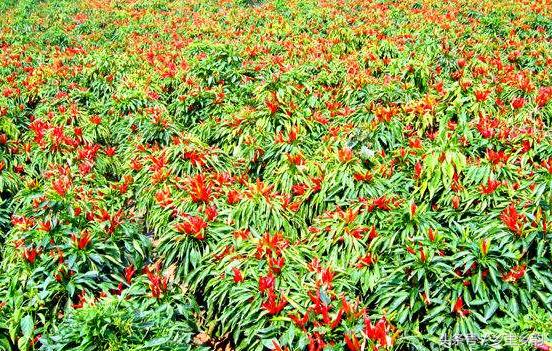
So what method of growing chili peppers can achieve the above goals?
I. New techniques for pepper seedling bed management
1. Pepper seedling raising: Peppers are an economic crop that requires seedling raising and transplanting. Please choose a plot of combined land that is well ventilated and sunny, and prepare it into beds one meter wide. The bed length depends on the planting area (generally a 10 sq m seedling bed can plant one mu of land, 667 sq m).
2. The seedling raising time for spring peppers is early February, with a seedling age of 70 days. The seedling raising time for peppers interplanted with wheat is mid-March, with a seedling age of 60 days. Use 35-50 grams of pepper seed per mu.
3. After the seedling bed is prepared, irrigate it directly. After irrigation, insert bamboo hoops, cover with plastic film, and steam the bed for 2-3 days to raise the ground temperature (no fertilizer of any kind is needed in the bed, but an insecticide must be used). Put the purchased pepper seeds in the sun to sun-dry for 1-2 days, then soak the seeds in a trace-element nutrient solution for 12 hours. Taking advantage of the higher temperature at noon, uncover the plastic film and begin sowing. Mix the soaked seeds with fine sandy soil at a 1000-fold ratio, and broadcast sow in the bed more than three times so that it is spread evenly, then cover with 1 cm of fine sandy soil, apply seedling bed herbicide, lay down plastic mulch, and then cover with a plastic greenhouse film. Press the surrounding edges tightly and firmly to prevent strong winds from tearing the plastic film, which would prevent it from keeping warm and moist. The temperature for pepper seed germination must not exceed 32°C. After emergence, keep the seedling bed temperature controlled at 15 to 28°C.
4. When the seedling bed needs watering, please apply Tianjiushengjin no-till water-soluble fertilizer by flushing. Water frequently in small amounts, and apply seedling-nourishing fertilizer frequently but in small amounts.
5. Affected by temperature, pepper seedlings may develop damping-off, anthracnose and soft rot. They can be sprayed with pepper anti-drop yield-increasing agent and azoxystrobin or hymexazol fungicide.
6. When the pepper seedlings grow to 20 cm tall, cut off the main growing tip of the pepper seedlings to let them branch as quickly as possible. This is easier, more convenient and faster than topping in the field. When the pepper seedlings have grown a whole set of small branches, they can be transplanted to the field. Before transplanting, remember to give the pepper seedlings a "dowry fertilizer," that is, one flush application of Tianjiushengjin no-till water-soluble fertilizer and one spray of Meitianle foliar fertilizer. After one day, the seedlings can be pulled and transplanted. According to the row spacing the farmers have prepared themselves, one plant every 15-20 cm, about 12,000-15,000 plants per mu is sufficient. Do not plant too densely, as this affects branching, flowering, fruit setting, and also affects pepper coloring. After transplanting is completed, water thoroughly once with enough transplanting water so that the pepper seedlings survive healthily and enter the growth period.
II. New techniques for water and fertilizer management in pepper fields
7. In order to achieve the goals of more roots, more branches, more flowers and more fruit in peppers, we need to reform our fertilization concepts and use Weiwo brand no-till fertilizer to adjust soil compaction, treat soil pollution, prevent continuous cropping obstacles in peppers, resist the harm of saline-alkali land, deepen the plow layer, retain water and save fertilizer, prevent fertilizer volatilization, prevent fertilizer leaching, and prevent fertilizer loss, so that our land becomes naturally loose and the soil's air permeability is enhanced. This is the main purpose of making peppers root more. Because the rooting ability of peppers is relatively weak, soil compaction directly affects pepper rooting, so adjusting soil compaction is an urgent task and also a necessary measure for increasing pepper yield and income.
8. For planting peppers in spring land, apply 1-1.5 sets of Tianjiushengjin no-till fertilizer per mu (one bag of nitrogen-phosphorus-potassium no-till compound fertilizer 80 jin, one bag of high-efficiency bio-organic fertilizer 80 jin, counted as one set of fertilizer). Broadcast it on the ground before plowing. For continuous cropping plots, use another 50 jin of quicklime powder per mu. There is no need to buy various kinds of animal manure. Then plow the land, make beds and transplant.
9. The transplanting and planting time for spring peppers is April 20 to May 5. After planting, apply pepper field herbicide and cover with plastic mulch. The transplanting time for peppers interplanted with wheat is May 20 to before wheat harvest. After the wheat harvest, apply 1 set of Tianjiushengjin no-till fertilizer per mu as a topdressing, and then apply pepper field herbicide.
10. Prevention and control of pepper diseases and pests. During the growth period, peppers are very prone to damage from rhizoctonia rot, root rot, bacterial spot, leaf spot, black spot, purple spot, brown spot, sunscald, black pox, rot, bud drop, flower drop, fruit drop, leaf drop, and small-leaf virus disease, wrinkled-leaf virus disease, mosaic virus disease, fern-leaf virus disease, leaf-curl virus disease, yellow-leaf virus disease, bark virus disease, chicken-leg virus disease, etc.; as well as damage from aphids, cotton bollworm, diamondback moth, yellow slug moth, thrips, leafhoppers, mirid bugs, flea beetles, stem borers, white planthoppers, gray planthoppers, green planthoppers, black planthoppers, and red spiders, yellow spiders, white spiders, etc. If farmers want to apply the right remedy for these diseases and pests, it is very difficult to do. But they all affect the yield and quality of peppers. For this reason, it is suggested that farmers use bifenthrin and abamectin to control various insect pests, and use chlorobromoisocyanuric acid or azoxystrobin to control various diseases, mixed together with Meitianle, and spray once every half month. In particular, after the herbicide is applied in the corn fields around the pepper field, be sure to spray Meitianle for peppers once to relieve the harm of the corn field herbicide to the peppers, because the drift and fumigation effect of corn field herbicide is relatively strong, travels relatively far, and causes relatively great harm.
11. During the bud-emergence and fruit-setting period of peppers, it is best to apply, through irrigation, one flush application of Tianjiushengjin no-till water-soluble fertilizer with high potassium content, to promote pepper fruit setting and expansion, prevent pepper plants from running out of nutrients during the expansion period, and prevent leaf drop, bud drop, flower drop and fruit drop. Be sure to finish the flush application before the Start of Autumn, because August 10 every year is the peak period for pepper bud drop. This lays a solid foundation for increasing yield by preventing the "four drops." Peppers managed this way set more fruit, have large fruit, thick skin and more seeds, red color, glossy brightness and full weight, allowing farmers to obtain ideal yield and price, and only then can the goal of increasing yield and income be fully achieved.