The Strawberry Expert's Guide to Growing Experience: Practical Tips Explained in One Article
In order to achieve high yields in strawberry cultivation and increase farmers' income, the high-yield practical management experience from some strawberry-growing areas in China is summarized below for everyone's reference.
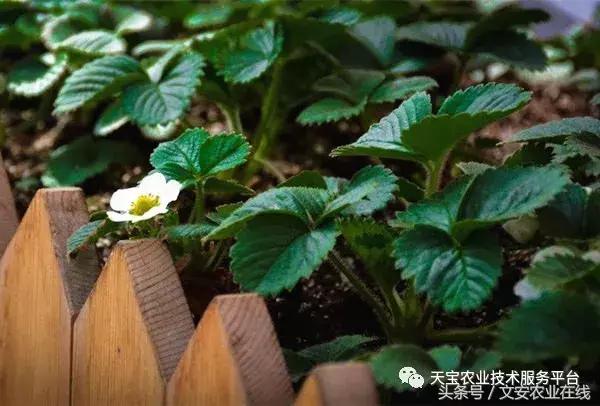
High-Yield Management
1. Sufficient base fertilizer + high-ridge cultivation + micro-sprinkler irrigation
The purpose of this cultivation model is to improve soil permeability and promote root development; micro-irrigation can save water and fertilizer, prevent root rot, reduce air humidity, and prevent disease outbreaks.
Apply 3000-5000 kg of fully decomposed manure, 30 kg of potassium sulfate, and 40 kg of diammonium phosphate per mu, then deep plow. One week later, build trapezoidal high ridges with a ridge height of 25-30 cm, a ridge base width of 80 cm, and a ridge top width of 50 cm, leaving 20 cm between two high ridges as a working row, and lay micro-sprinkler pipes in the middle of the ridge surface. Water thoroughly before planting to settle the high ridges, and level the ridge surface. When planting, use double-row close planting, with two rows per ridge, row spacing of 25 cm, and plant spacing of 10 cm. Generally, about 12000 plants can be planted per mu.
2. Planting principles
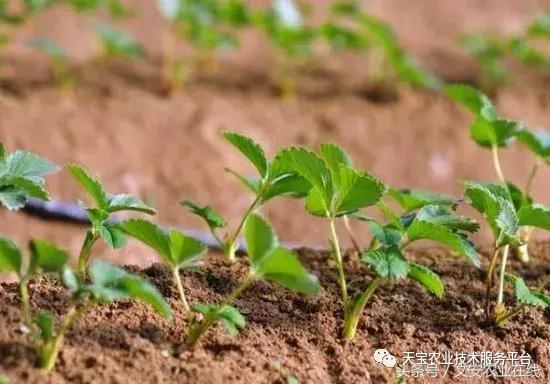
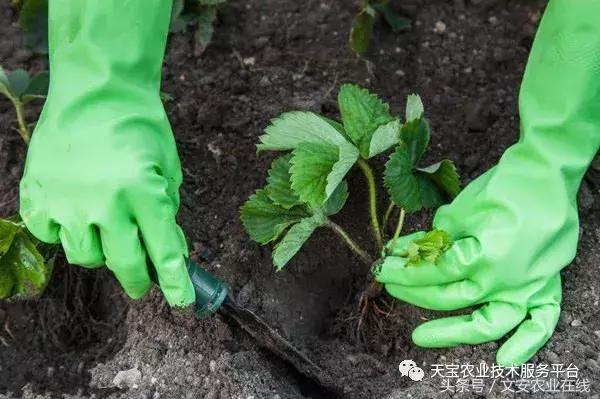
Strawberry seedlings are arched, and when planting, follow the principle of "arch facing outward, crown not buried, roots not exposed." Experts remind everyone that the arched side of the strawberry is where the inflorescence emerges; facing the arch outward allows the strawberry flowers and fruits to be positioned on the outer side of the ridge. First, this allows the fruit to receive sufficient light and develop good color; second, when watering, water does not fall on the fruit, reducing the occurrence of disease. "Crown not buried" should be based on the seedling crown still being above the ground after the planting water has settled; planting too deep can easily cause the crown to become muddy and rot after watering, leading to bud blight. "Roots not exposed" is to promote the growth of lateral roots and improve seedling survival rate.
3. Improve pollination quality
First, thin flowers in time to ensure normal pollination of the flowers. Lower-order flowers are prone to male sterility, and higher-order flowers are prone to female sterility, but the former can still set fruit and develop normally as long as there is good pollen, while the latter cannot set fruit or sets fruit poorly. Therefore, promptly remove 4th- and 5th-order flower buds, black flowers (frost-damaged flowers), and deformed flowers to avoid wasting nutrients. Generally, the terminal inflorescence of each strawberry plant retains 6-7 fruits, and the number of fruits retained on subsequent inflorescences depends on the plant's vigor, generally 3, but ensure that the total number of fruits retained per plant does not exceed 15.
Second, bee-assisted pollination. According to statistics, the rate of deformed fruit in greenhouse strawberries without bee pollination is more than 30% higher than that with bees, so bee-assisted pollination should be used in the greenhouse as much as possible. During the strawberry pollination period, the daytime temperature should be maintained at 22-25°C to ensure normal bee flower visits and pollination.
Problems that must be solved in greenhouse strawberry cultivation
1. Remember the temperature for each stage
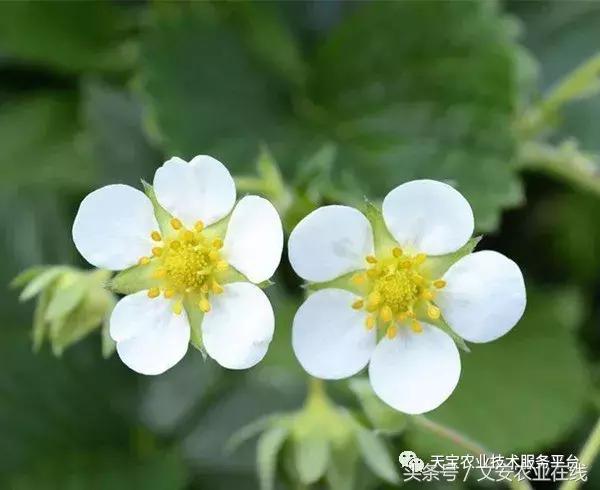
(1) Flower bud differentiation: Most strawberry varieties differentiate flower buds at a temperature of 13-17°C and 8-12 hours of sunlight. At 5-12°C, flower buds can differentiate regardless of day length. When the temperature is above 30°C, flower buds cannot differentiate regardless of day length. Below 4°C, plants enter dormancy and flower bud differentiation stops. The low temperature and day length required for flower bud differentiation differ among varieties.
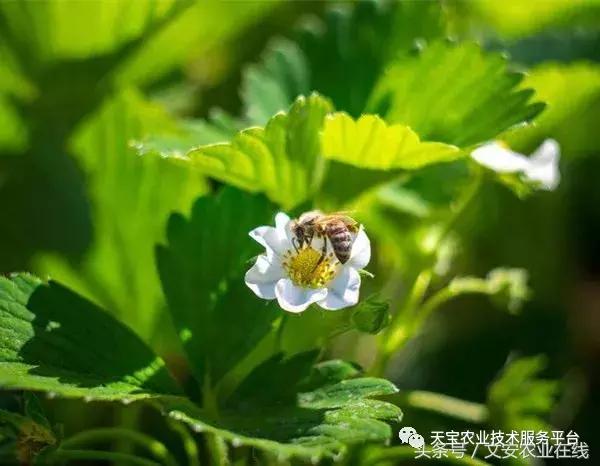
(2) Flowering, pollination, and fruit ripening: Strawberries begin to flower when the average daily temperature is above 10°C. Before flowering, the pollen grains in the anthers are initially mature and already have low germination ability; germination ability is highest 2 days after flowering, and the optimum temperature for pollen germination is 22-25°C. The optimum temperature for anther dehiscence is 14-21°C, and the critical maximum relative humidity is 94%. If the temperature is too high or too low, humidity is too high, or there is rainfall, the anthers will not dehisce, or after dehiscence the pollen will dry out and rupture, making pollination impossible. The fertilization capacity of the pistil is highest from the day of flowering to 4 days after flowering. Pollen is spread by insects, wind, and vibration.
The optimum daily temperature for fruit development is 18-20°C, with a night temperature of 12°C. The optimum temperature for fruit ripening is 17-30°C, with accumulated temperature of about 600°C. From flowering to fruit ripening takes about 30-50 days; when the temperature is low, ripening is slow. At suitable temperatures the fruit stalk is thick, and at high temperatures it is thin. In environments with insufficient sunlight intensity and relatively low temperatures, the fruit contains higher levels of aromatic compounds, pectin, pigments, and vitamin C.
2. Prevent soil-borne diseases and eliminate the harm of plant death
The diseases causing strawberry plant death are mainly root rot and anthracnose. Root drenching should be done in advance for prevention. In severely affected continuous cropping plots with serious plant death, experts recommend using fumigants to seal the greenhouse (such as calcium cyanamide, metam-sodium, etc.). For routine prevention, pesticides can be applied in the planting holes, such as copper acetate, carbendazim, dexon, and other agents; after the seedlings recover, root drenching can be done, such as oxadixyl+thiophanate-methyl+Jiamei Hongli. The key to plant death diseases is prevention; do not wait until after the disease appears to treat it.
3. Water and fertilizer management cannot be ignored
(1) Light application of seedling fertilizer: About 10 days after planting, apply 2-3 kg of Jiamei Hailibao by flushing, or 5-8 kg/mu of Jiamei Yinglilai 1-2 times, and at the same time drench roots with 800-fold Jiamei Hongli solution to increase ground temperature and soil buffering capacity, promote root growth, and prevent deformed flowers.
(2) Steady application of flower bud fertilizer: During the strawberry flower bud stage, vegetative growth and reproductive growth proceed simultaneously. Apply 10-15 kg of Jiamei Yinglilai per mu, or 3-5 kg of Hailibao 1-2 times by flushing, and spray 800-fold Jiamei NaoBaijin or Jindian 1-2 times to improve pollination rate and retain flowers and fruits.
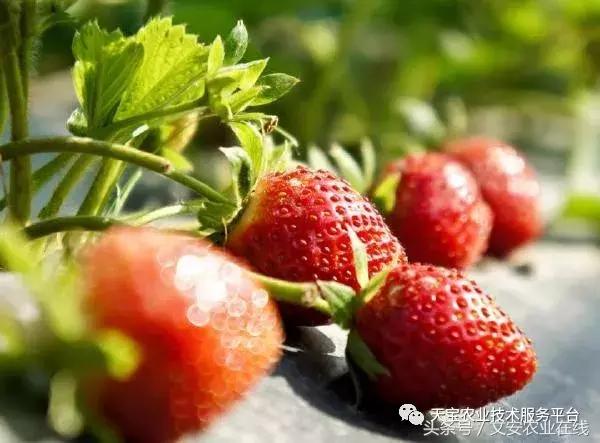
(3) Heavy application of fruit-swelling fertilizer: When the terminal fruit of the first inflorescence reaches the size of a thumb, apply 3-5 kg of Jiamei Hedongli by flushing, or 15-18 kg/mu of Jiamei Yinglilai 1-2 times, and at the same time spray fulvic acid and medium and trace nutrient elements such as boron and calcium, including NaoBaijin and Jinbeng, 1-2 times, to reduce the occurrence of fruit drop, deformed fruit, and hollow fruit and to prevent deficiency diseases.
(4) Frequent application of fruit-harvest fertilizer: After the strawberries of the first inflorescence begin to be harvested, and as other fruits on the same inflorescence gradually swell, apply 3-5 kg/mu of Jiamei Hedongli or Hailibao by flushing, generally once every 10-15 days, and spray fulvic acid and medium and trace nutrient elements such as boron and calcium, including NaoBaijin and Jinbeng, 1-2 times, to prevent the occurrence of deformed fruit, hollow fruit, and stiff fruit.
(5) Skillful application of rejuvenation fertilizer: After the strawberries of the first inflorescence are harvested, in order to help the plants regain strength as quickly as possible, a large amount of nutrients needs to be supplemented. Apply 15-18 kg/mu of Jiamei Yinglilai 1-2 times by flushing, and 1-2 bags/mu of Hongli, to activate and loosen the soil, promote root growth and development again, and quickly, timely, and comprehensively supplement nutrients.
(6) Frequent application of axillary fruit fertilizer: After the strawberries of the second and third inflorescences begin to swell, and as other fruits on the same inflorescence gradually swell, apply 20-25 kg/mu of Jiamei Yinglilai by flushing, generally once every 10-15 days, and spray fulvic acid and medium and trace nutrient elements such as boron and calcium, including Jiamei NaoBaijin, Jindian, and Jinbeng, 1-2 times, to prevent the occurrence of deficiency-related diseases such as deformed fruit and hollow fruit.
4. Key disease control
The main diseases commonly occurring in strawberries are gray mold and powdery mildew. For gray mold, the optional agents include: pyrisoxazole, procymidone, pyrimethanil, Kaisai, Trichoderma, BASF Cuize (boscalid + kresoxim-methyl), Syngenta Lufei (isopyrazam + azoxystrobin), German BASF Kenda (fluxapyroxad + pyraclostrobin), and other products. For powdery mildew, generally choose Bayer Luna Sensation (fluopyram + trifloxystrobin), BASF Cuize (boscalid + kresoxim-methyl), Syngenta Lufei (isopyrazam + azoxystrobin), German BASF Kenda (fluxapyroxad + pyraclostrobin), bupirimate, Dow AgroSciences Karathane (36% meptyldinocap emulsifiable concentrate), Peru Kereimu, and other agents for alternating control. Try not to choose triazole products; if side effects occur, they will affect fruit swelling.
5. Timely intertillage and weeding
Strawberry is a perennial herbaceous plant with a shallow root system, preferring moist and loose soil. Intertillage helps soil aeration and increases soil microbial activity, accelerates the decomposition of organic matter, and promotes root and aboveground growth. Intertillage can also eliminate weeds and reduce pests and diseases. The number and timing of intertillage depend on the specific conditions of different strawberry fields. For new strawberry fields with few weeds and loose soil, intertillage 5-6 times a year is sufficient, with the goal of keeping the field clean, free of weeds, with smooth drainage and irrigation, and loose soil. The depth of intertillage should be based on the principle of not damaging roots while removing weeds and loosening soil, generally 3-4 cm.
This article was edited and compiled by the Guotai Jiamei technical team
When reprinting, please be sure to cite in the following format
Article source: Tianbao Agricultural Technology Service Platform (ID: zhxdnyjs)