Succulent planting guide: teach you to grow cute succulents
Succulents are named by taking the words at face value: they are called succulents because the plants are full of water and juice. Being full of water and juice means the plants themselves hold a lot of moisture. Once you understand this, comparison is still the key point: they are different from herbaceous plants. During the growing season, herbaceous flowers basically need water every 1 to 2 days, while succulents themselves store a lot of moisture.
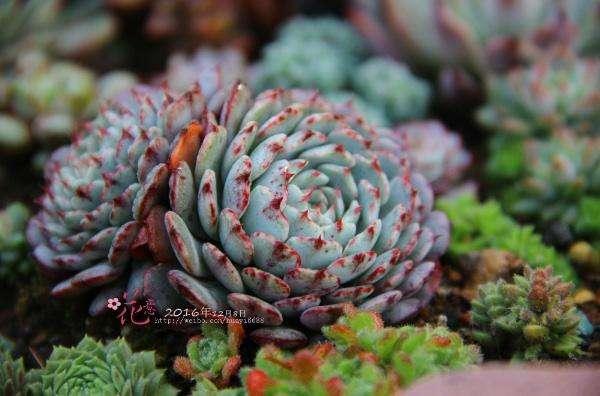
Beginners can water according to the condition of the plant and the dryness of the soil. It sounds simple, but in actual practice it is still rather particular. For Sedum plants in normal growth, you can usually judge by the leaves: if the soil surface is dry and the leaves, while growing normally, are also slightly wrinkled and look listless, then basically it is time to water. This method is still somewhat helpful for beginners who do not understand. If you are a hobbyist who already knows a bit, basically you can water once the potting soil is completely dry. Once a month you can water with diluted carbendazim and the like, which can prevent invasion by pathogens (this is watering for healthy growing leafy succulents, that is, the situation of some beginners who directly buy plants with pots and bring them home).
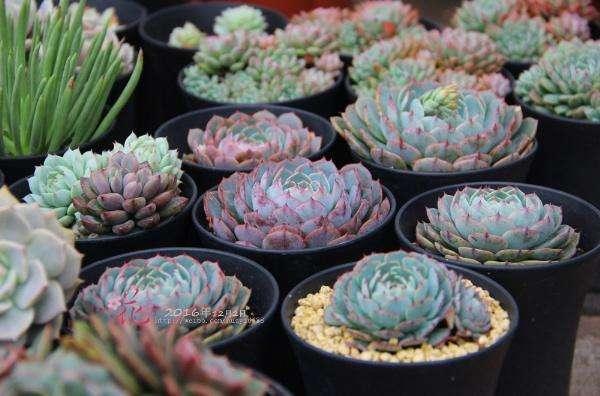
Online shopping is so prosperous now that plants sent by express delivery basically have no soil. After such plants arrive, for beginners this is a headache-inducing problem. First, what soil should be used? There is no fixed standard for this question; as long as the soil is breathable, it is fine. However, beginners had best not use garden soil or soil from flower beds, because after watering these soils easily compact and cause the plant roots to suffocate and die, or root rot. Breathable soil actually surrounds us in many forms, such as: river sand (needs to be washed clean, with the powder removed; particles from 1 to 5 mm are all fine, depending on the plant's needs), coal cinders (crushed, then the powder removed, then the dust washed off; particle size is usually 1 to 3 mm, and larger pieces can be placed at the bottom of the pot), and also red brick, which requires great effort to break into small 3 mm particles (I once saw a gardening friend do this). These are all planting materials readily available around us in daily life. These materials can be mixed with a small amount of peat or not mixed with peat, and either way they can grow succulents.
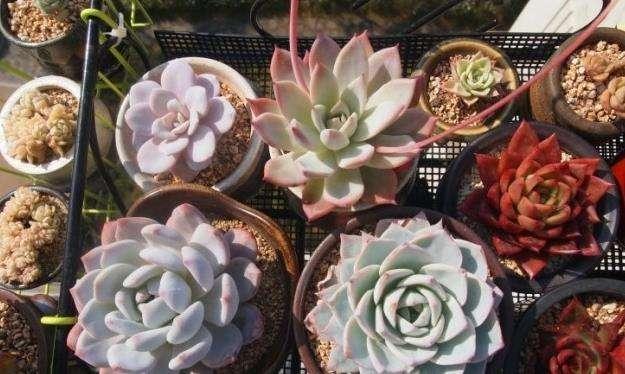
Many gardening friends will ask: my city has no river sand or coal cinders. Hehe, unless the city you live in is not in China, construction sites around us have river sand everywhere. However, it is best not to get sea sand, because sea sand has very heavy salt content; freshwater sand is the natural choice. Usually inland areas are basically freshwater sand, while coastal cities are basically sea sand. Go to a construction site and ask them for some; they will give it to you. Next is coal cinders. Coal balls can be seen in every city in China; it is just that in today's big cities, because of environmental issues, coal-ball stoves have already been phased out. But around you there are many breakfast stalls, night markets, small food stalls, and canteens where you can see them: burned coal balls (images can be found on Baidu, and Fengzheng's blog also has posts), not burned raw coal cinders. Crush these street-stall coal cinders (many gardening friends report that after stepping on coal cinders they are all powder; that is because the quality of the coal balls is poor and there is too much soil, so you can only use a few more coal balls). After sieving, wash them to remove the fire qi, and only use them after drying in the sun. Then there are akadama, pumice, diatomite, kanuma, vermiculite, perlite, and peat; these are all sold in flower markets and on Taobao. When there are many types of soil, they can all be mixed together, or a single planting material can be used alone to grow plants. Whether mixed or single, as long as the soil is breathable, it is fine.
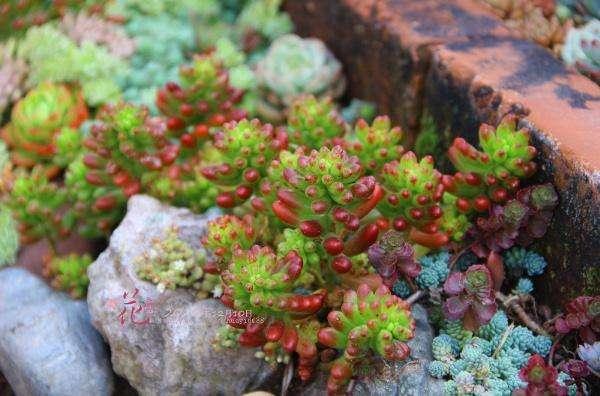
What is breathability? That is to say, when you pour water in, it immediately flows out from the bottom of the pot. This is the most ideal. According to different plants, add a bit of peat and the like. What planting material to use depends on your own habits; there is no rule that you must use something. So for beginners, as long as the planting material is mixed to be breathable and water flows out from the bottom of the pot immediately after watering, that is enough. After rambling for quite a while, you should have at least a rough understanding of the minimum planting materials. There is no need to ask every day what planting material is good. Fengzheng's planting materials: coal cinders mixed with a small amount of peat, pure coal cinders, pure river sand, or river sand mixed with a small amount of peat; sometimes a bit of perlite or vermiculite is added.
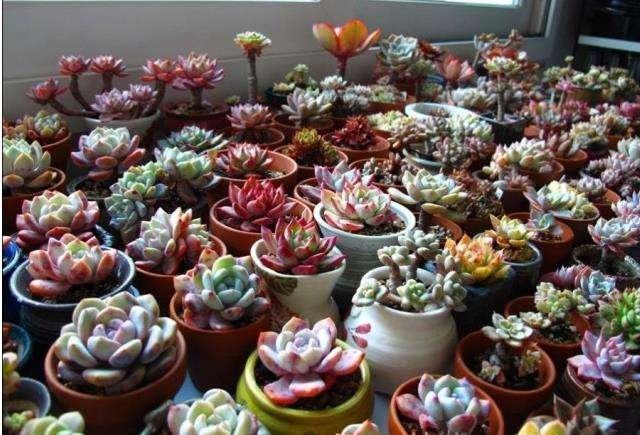
Next let's talk about pots. Pots actually are not particular: plastic, iron, wooden, porcelain, purple clay, any container you can think of can be used to grow flowers. However, they require one thing: the bottom of the pot must have drainage holes. If there are no drainage holes, it is very difficult to control moisture. Although many girls nowadays like to use glass cups, wine glasses, and the like, for a short time without holes, if you pay attention to watering, they can still survive. If it is a long-term hobby, it is best to switch to ones with drainage holes. The pot is not the most critical thing. Fengzheng's pots are all kinds: ceramic, porcelain, purple clay, plastic, paper, ordinary chocolate boxes, ice cream boxes; as long as they can hold a bit of soil, they can be used to grow flowers. Choose a pot of the corresponding height according to the plant's root system.
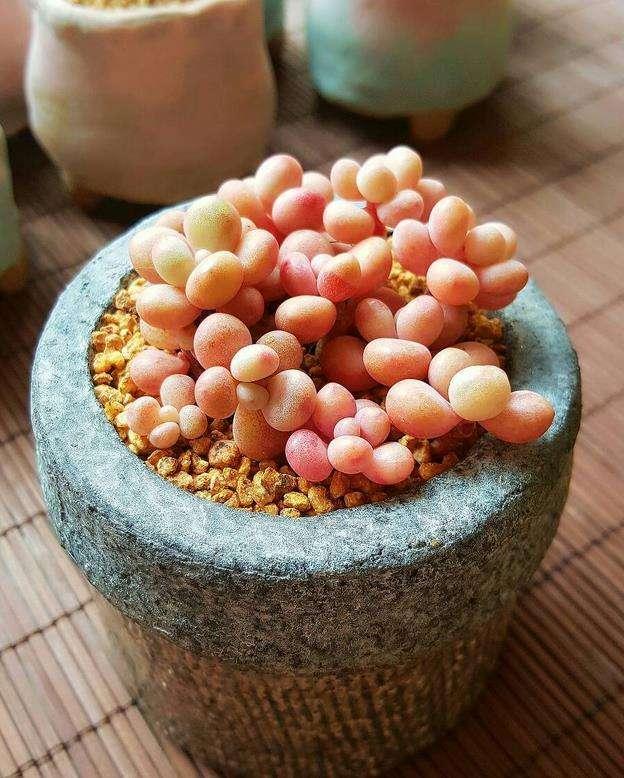
Watering...... The soil and pots mentioned earlier are not the most important; the most important is watering. When you have chosen good soil and a good pot, if you do not water properly, there will still be losses. First take bare-root plants prepared for potting. Usually plants to be potted can only be potted after the roots are trimmed and the wounds are dried in the sun. As much as possible, use slightly moist soil for potting, and do not water. What is slightly moist soil? Many newly initiated gardening friends have no standard to measure it. How moist is slightly moist? Feel it with our hands: after mixing the soil, add a bit of water, work the soil until it forms a ball when squeezed, and when you let go the soil disperses. This condition is fine. If you cannot judge well, that is, grab soil with your hand and your hand does not feel wet, while the soil looks moist; soil at this time is best for potting plants. Mix a bit of dry carbendazim powder into the soil and stir it together, which can inhibit bacteria from invading the fine roots after rooting. If you want to add preventive medicines such as carbofuran or soil insect pills, after mixing the slightly moist soil, pour in the preventive medicine, stir evenly with a tool, and it is ready for use. Plants potted in slightly moist soil usually in a cool, ventilated place will basically dry thoroughly in about 5 to 10 days. This drying-through should be determined according to the season and environment.
Once the potting soil has dried thoroughly, you can give the second watering. This watering is relatively important. You can use carbendazim water or purified water and water in a circle along the edge of the pot, so that the moisture can slowly penetrate to the plant roots. In this way, the fine roots that have just rooted will not easily dry out again. The second watering depends on the water permeability of the planting material. How to judge? That is to say, after this watering, it is best if the moisture can slowly penetrate to the plant roots. Beginners may not necessarily grasp this degree well, but since carbendazim is mixed into the water, giving a little more water will not be too much of a problem. Beginners had best use less water; if your hand slips and you give too much, root rot easily occurs. Compared with watering plants that have just been potted, it is still not much of a problem; a little more will not cause too big a problem, and with good ventilation there is usually no problem.
The hardest thing to grasp is watering plants after dormancy. Many succulents go dormant during the high-temperature and low-temperature periods of summer and winter. Especially this year's summer, that heat exceeded previous years. Because the temperature was too high, many plants died during dormancy due to insufficient resistance. Some with good resistance, after autumn temperatures gradually dropped, because the amplitude and amount of watering were not grasped well, led to large numbers of deaths; gardening friends who lost plants were not few, and even experienced growers could not necessarily avoid it. In summer, watering differs between northern and southern environments; the amplitude and amount of watering are different, and different plants need different water. If we started talking about it, three days and three nights would not be enough. Here Fengzheng will talk about a method that is relatively easy to start with.
When summer temperatures gradually slide downward, you must hold back, control your hands, and do not assume that if the weather forecast shows low temperatures for 10 days, the forecast is necessarily accurate. By late summer, a period of frequent thunderstorms, watering must be done with care. Plants in late summer have gone through the intense heat and are very thirsty. At this time we cannot let them drink their fill all at once. Why? It is like when we exercise: after intense exercise, we also feel very thirsty, because exercise makes us sweat too much. At this time we need to replenish water. If we drink too much all at once, we also cannot stand it; it must be divided into several times to gradually quench thirst. Plants are the same. In summer they consume nutrients and moisture. If at this time there is a big watering, the plants will immediately rejoice and desperately absorb water. All at once, the leaves also become plump and loose, and the remaining moisture cannot dissipate. If the temperature rises slightly, rot goes from the roots all the way to the top of the plant. This is also why many gardening friends, after summer ends, still lose many plants in autumn: they die from rain and they die from watering.
The specific method should be: after the temperature drops, do not rush to give a big watering. At this time plants most need moisture and nutrients, and we can only water step by step. Plants that have gone through summer are all relatively weak, and their resistance is not too good. When watering, it is relatively safer to dilute a bit of carbendazim water and pour it. Do not give too much at once. Many beginners do not know what step-by-step means. Here is an explanation: water step by step, for example, when we first water about 1/6 of the potting soil's moisture, that is, the soil layer 1 cm below has moisture. After it dries thoroughly, you can water so that 2 to 3 cm of the soil layer is moist. After the potting soil dries thoroughly again, water so that 5 to 6 cm of the soil layer is moist (some gardening friends also calculate by drops; generally speaking, no matter how you water, it is fine, and everyone's method is different). Step-by-step watering is giving water according to the plant's condition. Grasping this degree requires long experience accumulation. As the saying goes: watering takes ten years of skill. What it says is that watering depends on accumulated experience. Usually, for plants in gardening friends' homes, after passing the adaptation period, watering is still very easy to grasp. Observe more and ask more; this is what beginners must go through. Different plants have different watering needs, all gradually accumulated during the process of growing them. Regional climate all affects plants' moisture needs.
Fengzheng hopes that all succulent hobbyists, before purchasing plants or after purchasing them, first read more related materials and at least know the general idea. In this way your plants will not die while you are still muddled and ignorant. Regarding varieties you do not understand, it is better to give less water and grow them slowly. Do not rush for quick results and want to grow them big all at once. As long as the plant does not die, after a year you will basically understand its habits, and next year you can manage it normally. If you can keep a notebook, it is still very helpful for long-term management. The above is roughly the watering situation; treat specific varieties specifically, and wait for gardening friends to understand it themselves.
Do not copy mechanically. Materials are dead and are not necessarily suitable for your growing environment. You must adapt flexibly; only then can you grow plants very well. During dormancy, moisture is even less. Since they are dormant, it is enough to keep the roots from dying from excessive dryness. A small amount of moisture is still necessary. For commonly home-grown succulents, because the pots are small and there is little soil, if during the entire dormancy period not a single drop of water is given, some varieties will completely die. Regarding watering, gardening friends should refer to more materials according to their own environment and grasp it flexibly.
Having talked about soil, pots, and water, next we must talk about plants. With the prosperity of the internet now, there are also many exotic plants, and the channels for buying succulents are becoming broader and broader. For beginners, how should newly arrived plants be handled? Fengzheng will briefly talk about it.
For succulents, usually when sellers ship, they basically send them bare-rooted. First, for transport safety; second, to prevent pathogens from migrating with the potting soil to the new owner's home. Usually, plants that have gone through long-distance transport are dried and softened before shipping. First, for easier packing and to avoid dropping leaves; second, to remove part of the moisture so they do not easily rot during long express delivery. Plants lacking water are easier to keep alive. Do not be fooled by how soft they are when they arrive. Fengzheng usually looks at them when they arrive. For ones that are too plump, basically trim the roots and dry them for a few days. If they are caudiciform, after root trimming the drying time is even longer; 1 month to 2 months is fine. Only after dehydration will new roots emerge quickly. The reason is simple: when a plant is thirsty, it must drink water, and to drink water it must grow roots; they all rely on roots to absorb moisture. If a plump plant is potted and immediately watered, or the potting soil is too wet, new roots will not easily grow right away, because the plant itself is not very short of water. If you then let them drink water, how can it get in? If the potting soil is too moist, then root rot occurs. This is also a misunderstanding among many beginners: they always think the plumper the plant the better. Because the plants we buy online come from different places, if they are naturally grown, plump plants given a bit of water can still tolerate it. If the plants come from places with high temperature and high humidity (such as greenhouses, or grown with big water and heavy fertilizer), then dehydration is necessary; otherwise, with heavy water they easily rot. Sedum plants are still okay; on the express delivery route they are basically already dehydrated enough. If they are globular, Haworthia, or caudiciform types, these very fleshy succulents, then trimming roots and sun-drying after coming home becomes a necessary task. 3 to 5 days is not necessarily safe, because we do not necessarily know where they came from. Only after dehydration can the plant's regrowth be more favorable, and only then can it more quickly adapt to our growing environment.
When there are new plants, many gardening friends come to ask Fengzheng: can fertilizer be given after potting? Dear, can you first take it easy? Although Fengzheng also wants to grow plants very well and bigger, for plants that have just been potted and have not yet settled in well, giving fertilizer is still relatively unsuitable. The roots have not grown well; if you give fertilizer, can they absorb it? Usually when the plant is growing relatively stably, you can give a small amount of light fertilizer. Fertilizers generally include slow-release fertilizer, water fertilizer, green manure, etc. Sometimes Fengzheng gives some plants a bit of water fertilizer. This is easy to do: mix it into water and give a bit. Then there is slow-release fertilizer, which is also relatively good; when planting you can also mix it into the soil, or drop a few grains on the soil surface, which is quite convenient. As for green manure, Fengzheng never uses it. Succulents usually grow in relatively barren sandy soil with almost no nutrients, relying on the moisture of rain. Although they have no nutrients, they grow very healthily, and their colors are more natural and beautiful. Some gardening friends will worry: without nutrients, how will they grow? Hehe, actually in water, in soil, and in air there are all the growth elements they need. There is no need to worry about this. Although we do not give any fertilizer, perhaps the plants we grow are not as big as others' and not as strong as others', but they will still bloom, will change with the seasons, and moreover will be healthier and tougher. Plants given big water and heavy fertilizer have scenery that can only be temporary, and may die young under some harsh weather. In the high temperatures of 2013, many gardening friends' losses should have been greater than before.
Next let's talk about light. All plants need sunlight, but not all plants like intense sunlight. Many beginners ask Fengzheng: can they be sunned right after potting? Yes, plants need sunlight, but we also must wait until they grow stable before exposing them to sunlight. If we impatiently let them see sunlight, not only will the roots not grow well, even the plant itself may gradually dehydrate and die. We should first let them grow roots well in a cool, ventilated environment, then gradually expose them to sunlight, and only after they are accustomed can they be sunned in the sun. Growing-season succulents usually need sunlight. During dormancy, they still must avoid exposure to harsh sun. For example, in summer, many succulents go dormant. At this time what must be done is shade, ventilation, and less water. During Fengzheng's motorcycle trip this time, after going out for 5 days, upon returning I saw that the shade net had been blown open by strong wind at one opening. Under the opening, the Lithops and Sedum were all sun-bleached and dried out; even sun-tolerant varieties had scorched leaves and sunburn, and recovery would take a very long time. Of course, there are also many sun-tolerant plants that grow in summer, such as strongly spined cactus. These can be exposed to harsh sun; without harsh sun they do not grow well or beautifully. For example, Fengzheng's Ferocactus and Mammillaria, under the high temperatures of 2013, at temperatures where the concrete soil surface could cook an egg, appeared even healthier, tougher, and more beautiful. Each gardening friend can give plants corresponding light according to their own living environment. If because the environment is truly poor and light is lacking, then you can only supplement light artificially. There are many supplemental lights on the market; cold light and warm light are both fine. For plants that are going to bloom, using a warm light source can promote flowering and artificial pollination. Only with sufficient light will plants grow healthily and beautifully.
By the way, let's talk about sowing. Now some beginners start sowing right away. This is understandable. Under the current situation where plant prices remain high, choosing to sow is a relatively good method. For beginners, it is still relatively difficult, because plants from sowing are relatively hard to raise in the first half year. Once water is cut off, it may be a total wipeout. Management is relatively meticulous, such as doing a good job sterilizing the potting soil to prevent bacterial invasion. In the first half year, the soil in the seedling tray cannot be too dry. It must frequently be misted with carbendazim water, ventilated, and given scattered light, then gradually direct light. Be careful not to sunburn the seedlings. If the temperature is high and they become stalled seedlings, it is relatively troublesome. For seedling-stage management, as long as light and humidity are grasped well, basically they can gradually be grown larger. For detailed specifics of propagation by sowing, you can refer to Fengzheng's sowing blog posts.
Finally let's talk about succulent pests and diseases. This problem is still relatively troublesome. Usually Fengzheng mixes soil insect pills or carbofuran into the soil for prevention. For beginners, when summer and winter come, outbreaks of pests and diseases increase. First, there was no prevention; second, they do not know where to start. Usually planting materials that have been treated for prevention do not easily get pests and diseases, but this cannot be said to solve everything once and for all. When entering summer and entering winter, you also need to spray all plants once with abamectin or scale insects medicines such as Sujiejieqing or Jiebitzhi. Do not spray powdery ones; you can give a bit of medicated water as a root drench. In this way it can provide very good prevention. What beginners most easily fall victim to are red spider mites and mealybugs. Some gardening friends even throw away the pot directly. Hehe, this is not a fundamental solution, because as long as you keep plants, there may still be mealybugs and red spider mites. You must do a good job of prevention, and when pests and diseases appear, use specific methods to remove them. This is fundamental. You can refer to Fengzheng's blog post introducing mealybugs.
Once I open the conversation box, I cannot stop. While writing blog posts, gardening friends keep asking questions. Hehe, Fengzheng is not all-powerful; there is much knowledge Fengzheng is also unclear about, and we need to advance and learn together with the broad community of succulent hobbyists.
Some succulent varieties grow slowly and some grow quickly. They can all bring us unexpected surprises. The purpose of growing succulents is not how fast or how big they can grow, but that they can show us the beauty of nature. Growing them can bring us physical and mental joy. Within reinforced concrete, we can find a pure land belonging to the soul. After growing succulents for a long time, your temper and disposition will also gradually change; even those without patience can become very patient. This is the happiness succulents bring us and the magic they bring us. Do not give up because of brief setbacks; Fengzheng will advance together with everyone.