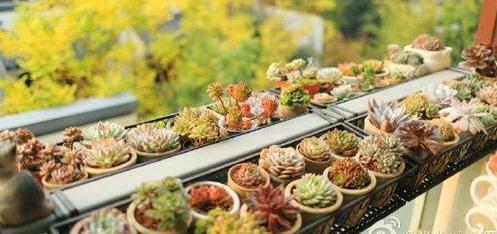
Succulent growing basics: even beginners can care for them with ease
These days all kinds of adorable succulents have become everyone's favorites, but the trouble is that a plant looks great when you get it and then dies as soon as it arrives. Below we will learn how to keep it alive!
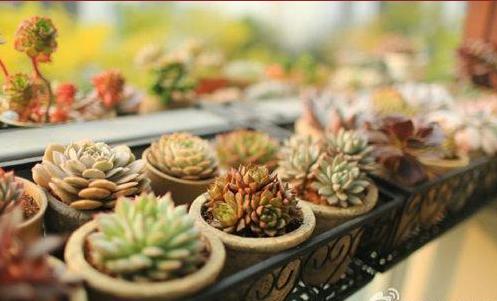
When growing plants, you can never get away from three things: water, growing medium, and light, and succulents are no exception:
Light mainly affects how well a plant grows, but water and growing medium can directly determine whether a plant lives or dies. Many beginner growers, when they first start growing something, casually use whatever soil is on hand, then enthusiastically pamper the plant by watering it every day... and then... there is no "then"...
The soil should be loose, breathable, and well-draining, but with some water-holding capacity, and neutral or slightly acidic. There are many growing media suitable for succulents, but a very important point is that they must be sterile, because the direct cause of succulent death is often rot. There are two common ways to sterilize: one is to use a fungicide such as carbendazim. The other is to use high temperature sterilization; for example, I have heard of people stir-frying soil in a pan, and also heard of people baking soil in a microwave. A good medium means a good start. For ordinary home growing, it is recommended to use peat (1 part), plus 1-2 kinds of granular media such as kanuma soil, diatomaceous earth, rice husk charcoal, and kiryu sand (2-3 parts); that is, the ratio of peat to granular medium is roughly 1:2, or 1:3. Terracotta pots are breathable and water evaporates quickly, so use a little less granular medium; plastic pots and ceramic pots are not breathable and water evaporates slowly, so use a little more granular medium. With less granular medium, water less often; with more granular medium, water more often.
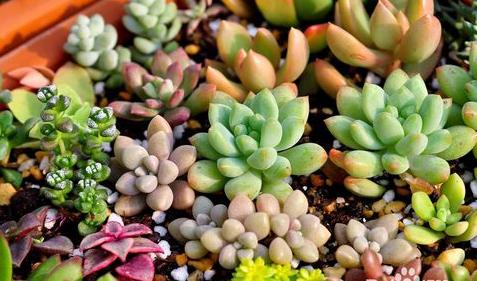
2. The watering principle is "dry then wet," meaning that when the soil has dried out completely, water thoroughly. If it is hard to tell whether the soil is completely dry, you can stick a toothpick into the soil, and when it is normally time to water, just check how dry or damp the toothpick is. "Dry then wet" is a common term in flower growing, meaning to water thoroughly each time, then wait until the soil is almost completely dry before watering a second time. Its purpose is to prevent root rot caused by overwatering and pests and diseases caused by dampness. Of course, it does not need to be that strict; as long as you do not water too frequently, it generally will not cause succulent death.
During the growing process, our love for flower pots grows day by day, and we bring home pots of all styles: ceramic pots, terracotta pots, wrought iron, rattan weaving, and all kinds of others. Different pots require different management methods. Ceramic pots hold water and are not breathable, so watering frequency should be low; terracotta pots are breathable and do not hold water, so watering frequency should be high; plastic pots are not attractive, but they can save space. Because there are so many kinds of flower pots at home, you cannot be lazy at all in management. Every time you water, you must first look at each one, then proceed.
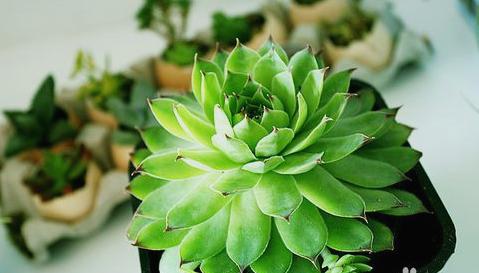
3. Growing environment. Succulents all love sunlight, and with a certain amount of light they grow better. The first choice is a place with good ventilation, good sunlight, and shelter from rain. If you cannot have all of these at once, you can temporarily take shelter indoors or in a mild place for a short time. Long-term insufficient sunlight easily leads to leggy growth, and many people do not want to see their adorable little succulents turn into long-necked giraffes, so even in hot summers and cold winters, do not let the succulents stay indoors for too long.
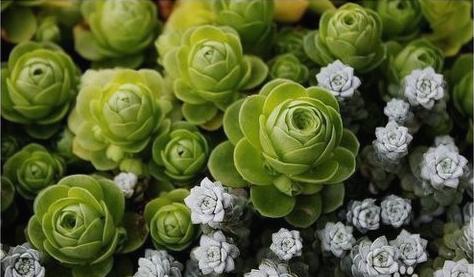
Summary of recommendations:Growing succulents is not hard to call hard, and not simple to call simple. Beginners are advised to first understand their habits, combine that with their own home environment, and start by growing cheap varieties (after all, it hurts when an expensive one dies). Avoid placing succulents indoors, since a place with no ventilation and no sun is not the growing environment they love.
About top dressing:The original purpose of top dressing is to look good, but it actually has more important functions: separating the medium from the leaves, preventing pests, and preventing muddy water from splashing. Growing flowers is generally for beauty, and if you grow your succulents into little mud dolls, even if they are worth a fortune they become worthless. Putting on an appropriate top-dressing medium can keep your succulents both clean and beautiful, and can also reduce pests and diseases. For example, diatomaceous earth can provide biological pest control and is especially effective against mollusks. Others such as akadama soil have better moisture retention and are more suitable for top dressing Haworthia cooperi. Kiryu sand, ordinary river sand, kanuma soil, and kiryuzuna can all be used as top dressing for succulents. It is recommended to avoid media with good heat absorption, such as rainbow stone and maifan stone.
About bird prevention:I once had small succulents eaten by birds, so I placed the decorative resin pet cats and dogs at home next to the succulents, and since then they have never been damaged by birds again. Fellow flower lovers might as well try this. It is said that owls and hedgehogs are also very effective, and the more realistic the better.