How Exactly Is Murcott Grown? A Full Breakdown of the Key Technical Points
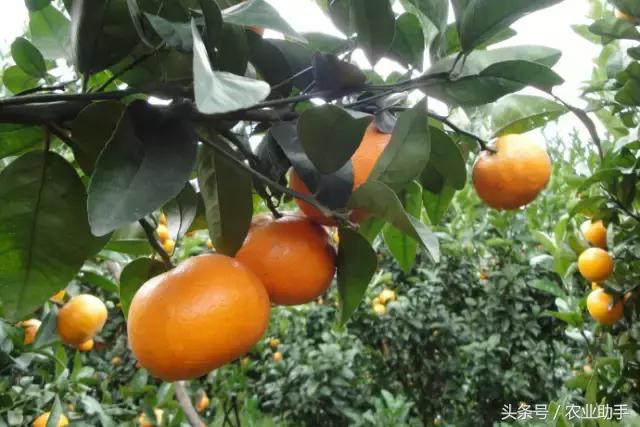
Murcott is a late-maturing citrus variety, originally from the Miami Agricultural Experiment Station in Florida, USA. It was developed by hybridizing a mandarin with a sweet orange. In the 1970s it was introduced from the United States to Taiwan, China, and in the 1990s it was introduced from Taiwan, China to the mainland.
Because Murcott has good quality, an attractive appearance, a favorable harvest season and is easy to eat, it is deeply loved by consumers. In recent years its price has remained relatively firm, and its planting area has continued to expand.
Getting to Know Murcott
Variety Characteristics
Morphological characteristics:Murcott is an evergreen small tree. The branches grow in clusters, the trunk is smooth and grayish brown, and the branches extend fairly upright and are thick and strong. The leaves are broadly lanceolate, the corolla is long oval and white, the fruit is oblate, and the seeds are small, oblate with a pointed shape.
Phenological period:Murcott sends out 3 flushes of shoots per year, namely spring, summer and autumn shoots. Spring shoots are the most numerous, accounting for 70-80%. Their budding periods are February, mid-to-late June and late August respectively, and the bearing mother branches are mainly spring shoots. The bud emergence stage is in mid-to-late February, the first flowering stage is in mid-March, and the full flowering stage is in late March. Flower types are divided into leafy single flowers, leafless single flowers, leafy inflorescences and leafless inflorescences. The fruit begins to color in early November and matures from February to March the following year.
Fruiting habit:The ideal length of bearing mother branches is 10-15 cm, mainly spring shoots, and the fruit set rate of leafy flowers is higher than that of leafless flowers. The first physiological fruit drop peak is from March to early April, the second physiological fruit drop peak is from April to late June, and the fruit enlargement period is from May to December.
Fruit traits:The fruit often grows at the tips of branches. The peel is thin and a bright orange-yellow, and the fruit shape is uniform. The fruit is firm and oblate, with a flat base and top, and a single fruit weighs 150-300 g. The soluble solids content can reach 17.0%, the acidity is 0.6-1.0%, and the flavor is rich and refreshing.
Main Advantages
Early fruiting and high yield:After planting, it can bear fruit in the second year, and in the third year the yield per mu can reach 1,500-2,000 kg. After the fourth year it enters the full production period, and with high management levels the yield per mu can reach up to 2,600 kg.
Strong compatibility:When grafted onto rootstocks such as trifoliate orange, Ponkan, sour orange, lemon, red tangerine and Zhiyang sweet orange, it shows strong compatibility and grows and develops well.
Strong cold resistance:Murcott has relatively strong cold resistance. Through planting trials, when the local low temperature at the planting site was -3 to 4°C, the Murcott canopy was unaffected.
Late-maturing variety:The maturity period is from February to March each year, which can avoid the time when large volumes of citrus hit the market, and it also coincides with the festive season, so the returns are relatively good.
Some Shortcomings
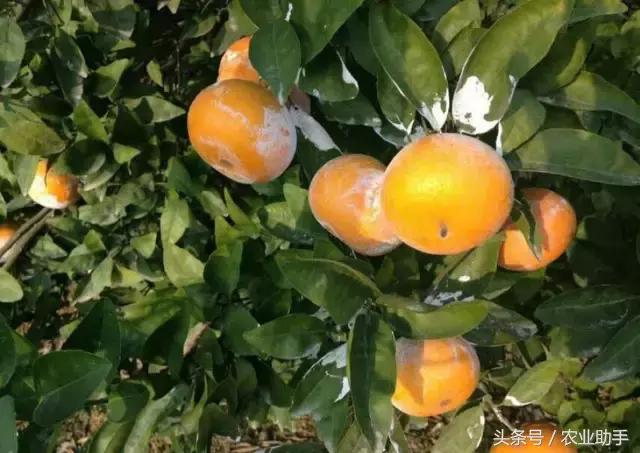
① Because Murcott branches tend to grow fairly upright and the fruit mostly grows at the tips, the peel is tightly connected to the flesh,so fruit sunburn occurs relatively seriously, especially in young trees, where it is even more obvious.
②The Murcott peel is thin and clings tightly to the flesh, making fruit cracking easy to occur,especially during the fruit enlargement period, when cracking increases noticeably after a long drought followed by heavy rain or uneven water supply.
③ Murcott mainly uses trifoliate orange as its rootstock, which is characterized by moderate vigor, early fruiting and high yield, relatively good cold and drought resistance, and easy management.However, after 3-4 years in the full fruiting period, premature decline is prone to occur, leading to low yield and poor quality.
A Brief Introduction to Murcott Cultivation Techniques
Site Selection and Orchard Establishment
Murcott has wide adaptability. It can be planted where the annual average temperature is above 20°C and the annual rainfall is above 1,700 mm. In general, both mountain and flatland cultivation can produce early fruiting and high yields, and sites with an extreme low temperature above 0°C are best.
Choose a plot that is loose, fertile, well drained and irrigated, with a pH value between 5.5 and 6.5, sheltered from the wind and facing the sun, as the orchard site. Before planting, dig the planting holes well, with a depth of 0.6 m and a width of 0.8 m, and apply sufficient base fertilizer. The topsoil and subsoil dug out must be piled separately, that is, the 30 cm thick mature soil from the surface layer is placed on one side of the hole when dug out, and the 50 cm thick raw soil from the lower layer is placed on the other side.
After digging the planting holes, first put the topsoil into the bottom layer, then put 35 kg of farmyard manure or weed green manure, 20 kg of pig and cattle pen manure, 1 kg of phosphate fertilizer, 0.25 kg of potassium fertilizer and 0.5 kg of lime, etc., into each hole, mix them thoroughly with the soil and place them in the bottom layer of the hole, filling to 1/2-2/3 of the depth, and finally shape it into the planting hole. The planting hole should be 15-20 cm higher than the original soil surface to prevent the graft union of the seedling from being buried when the fertilizer and loosened soil settle, causing root crown rot.
Planting
Row spacing and plant spacing are 3.0 m × 2.0 m or 2.5 m × 2.0 m. Plant about 15 days after the Beginning of Spring, before spring budding, when the roots have already begun activity and the survival rate is relatively high. In areas with good irrigation, autumn planting is also possible.
When lifting seedlings, be careful to coat the roots with yellow mud slurry to protect the root system. When planting, choose improved, strong seedlings with well-developed root systems. After planting the seedling, when the soil has been filled to 80%, gently lift the seedling upward once so that soil enters the gaps in the root system, then press the soil firmly around the seedling with your foot, and continue covering with soil up to the root crown, forming a disc-shaped tree basin.
Management of Young Trees
Water management:Within 1 month after planting the Murcott seedling, water once every 3-4 days, and it can survive after half a month. After new shoots sprout, water once every 10-15 days to keep the soil moist. Drain promptly after rain to prevent root rot.
Tree basin mulching:After the seedling is planted, cover it with weeds or rice straw, etc., to reduce water evaporation, keep the soil loose and moist, promote new root growth and increase the seedling survival rate.
Increasing nitrogen fertilizer:About 1 month after planting, the seedling has basically survived. At this time, drench with a 500-fold solution of Sea Elf biostimulant (root application type), or dilute manure water + 0.2-0.5% urea. After that, apply 1 application each of shoot-pushing and shoot-strengthening fertilizer before each new shoot sprout and before the branches mature, with the fertilizer basically based on high-nitrogen compound fertilizer.
During the young tree stage, Murcott is mainly in vegetative growth, so fertilization should be "frequent and light", that is, many times in small amounts and at low concentration. Generally, for 1-2 year old young trees, the annual average nitrogen application per plant is 0.2-0.3 kg, equivalent to 0.4-0.6 kg of urea.
After the surviving young tree sprouts new shoots, the first application of light liquid fertilizer can be made, and thereafter once every half month. The fertilizer is best as decomposed human manure and urine or rotted bran cake fertilizer. At the beginning, use 5-7 kg of manure water or bran fertilizer per plant, and as the seedling grows, the application amount and concentration should also gradually increase.
Training the canopy:Bud rubbing and shaping, and cultivating a canopy that is ventilated and light-transmitting with a reasonable branch distribution, are the key to stable tree vigor and high quality and yield. Generally, only 3-4 strong shoots are retained, and 2-3 strong buds in different directions are retained on ordinary shoots. Each year, 3-4 batches of shoots are allowed to grow, so as to gradually form a compact and stable canopy.
Management of Fruiting Trees
Fertilizer and water management:Generally, fruiting trees set many fruits and basically do not grow autumn shoots, and the bearing mother branches are mainly spring shoots. Murcott has many flowers, sets fruit easily, is high-yielding and has a high solids content, so "heavy post-harvest application" should be carried out well, that is, after the fruit is harvested in late February, dig a small trench 40 cm wide and 60 cm deep along the drip line of 1/4 of the canopy, apply 25 kg of organic fertilizer and 5 kg of compound fertilizer per plant, and increase the application of medium and trace element fertilizers according to actual conditions, loosen the soil gently, and turn the fertilizer under the surface soil.
"Summer potassium" refers to applying fruit-stabilizing fertilizer in early May, before physiological fruit drop, mainly with high-potassium compound fertilizer and water-soluble fertilizer containing humic acid and seaweed extract. For the leaves, spray a 800-fold solution of Sea Elf biostimulant (foliar type), or a 800-fold solution of Phosphorus Potassium Source Library + medium and trace element water-soluble fertilizer.
"Autumn compound" means applying 3-4 kg of compound fertilizer per plant in mid-July before releasing autumn shoots. "Irrigation and drenching fertilizer" means drenching once a month from July to early December with a 300-fold solution of Sea Elf biostimulant (root application type), about 25 kg per plant. Spray the leaves once every 2 months with a 800-fold solution of Phosphorus Potassium Source Library, boron fertilizer and medium and trace element water-soluble fertilizer. In addition, applying too much potassium fertilizer will make the Murcott peel thicker and coarser, so the dosage should be controlled when using it.
Smart recommendation:
Sea Elf biostimulant, awakening the wildness of crops, hormone-free, 30 ml * 25 packets, foliar spray
Shaping and pruning:After entering the production period, the bearing mother branches of Murcott are mainly spring shoots, that is, when the spring shoots grow to 5 cm long, retain 2-3 strong buds in different directions on each shoot. The principles for retaining buds are: thin out dense ones and keep sparse ones, thin out short ones and keep long ones, thin out weak ones and keep strong ones, and pinch the tips of overly vigorous branches after retaining 6-7 leaves.
Remove all summer shoots. Before releasing autumn shoots (early to mid-July), remove scattered buds and cut back branches. The cutting position should not be too high or too low, and is best between the 6th and 7th nodes.
Release autumn shoots in late July. For trees with weaker vigor or a non-compact shape, a small number of late autumn shoots may be retained as appropriate, and all the rest and winter shoots should be removed. Prune promptly after harvest. When pruning, base it on ventilation and light transmission, reasonable branch distribution and a compact canopy, cut off crossing branches, shaded branches, water sprouts, diseased and pest-damaged branches, weak branches and dead branches, burn them in a centralized manner, and clean the orchard at the same time.
Flower and Fruit Management
Flower and fruit thinning:Because Murcott has many flowers and a high fruit set rate, in order to reduce the consumption of tree nutrients, artificial shaking of the tree should be adopted at the full flowering stage of fruiting trees to thin flowers, that is, shaking the trunk or main branches to accelerate the abscission of the entire floral organs and reduce the number of flowers.
Artificial fruit thinning is carried out in 2 rounds. The first is after the peak of the first physiological fruit drop, mainly removing diseased, pest-damaged and deformed fruits; the second is after the second physiological fruit drop, thinning fruit according to the leaf-to-fruit ratio of citrus varieties, using the leaf-to-fruit ratio of Satsuma mandarin of 25-35:1 as a reference, from late June to early July.
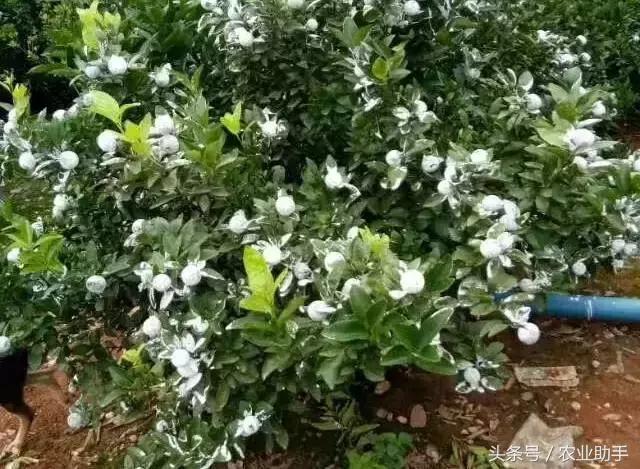
Preventing sunburn:Murcott fruiting parts are mostly at the tips of branches, which easily causes sunburn and wind scars, especially in young trees where it is even more obvious. A common preventive method is, when the fruit transverse diameter grows to 4 cm, attaching white paper to the sun-facing side, bagging, or whitening the fruit, with the latter being the most common.
Homemade whitening agent: light calcium carbonate + glue + water, with a dilution ratio of 10:6:1. Mix the light calcium carbonate according to the ratio, with a consistency suitable for smearing, then use a brush to dip the light calcium carbonate and evenly smear it on the fruit peel.
Notes: ① Do not use calcium oxide; ② Whole-tree spraying is not recommended, as it will affect photosynthesis and flower bud differentiation; ③ Calcium supplementation may not necessarily eliminate sunburn, but many years of practice have proved that calcium supplementation can effectively reduce sunburn in Murcott.
Preventing fruit cracking:The Murcott peel is very thin and prone to cracking, especially after a period of drought followed by sudden heavy rain, and it cracks even more easily during the fruit enlargement period. Therefore, during the fruit enlargement period (May to December), covering the ground under the canopy with rice straw, bagasse or other organic fiber materials (the covering material requires a pH value of 5.5-6.5), and where conditions permit covering with plastic film or drip irrigation, are effective measures to prevent cracking. During the fruit enlargement period, calcium should be supplemented to reduce cracking. Combined with drenching Sea Elf biostimulant, it can increase the sugar content and quality of the fruit.
Pest and Disease Control
The main pests and diseases of Murcott include anthracnose, canker, gummosis, thrips, psyllids, red spider mites and fruit-piercing noctuid moths, etc. According to the occurrence patterns of pests and diseases, spray pesticides at the right time for the right target, and at the same time master the use concentration and precautions of various pesticides, to ensure good efficacy without causing phytotoxicity. For specific control plans, refer to previous articles on the platform.
This article was compiled and organized by the Agricultural Assistant team. When reprinting, be sure to indicate the source Agricultural Assistant. Please do not modify the content of the article when reprinting. Modifications will be pursued.
References
"High-Quality and High-Yield Cultivation Techniques for Murcott" by Chen Jingshan
"Research on the Development Status and Countermeasures of Murcott in Guangxi" by Wang Bo
"Biological Characteristics of Murcott and Preventive Measures for Sunburn and Fruit Cracking" by Chen Binyan
"Causes of Premature Decline in Murcott and Countermeasures" by Fang Jinchuan
"Whitening Techniques for Murcott" by Copper Sulfate