Water and Fertilizer Requirements of Rice During Its Growth Period and Key Points of Planting Management
We usually divide one growth cycle of rice into the seedling stage, the regreening stage, the tillering stage, the long ear stage (panicle differentiation stage), and the grain-filling stage.The seedling stage is mostly completed during the seedbed period. After transplanting, the period of waiting for the seedlings to recover and survive is called the regreening stage. After regreening, rice begins to tiller (some also begin tillering in the seedbed), and then comes panicle differentiation (stem elongation). Before young panicle differentiation, it is the vegetative growth period dominated by root, stem and leaf growth; from panicle differentiation to maturity, it is the reproductive growth period dominated by panicle, flower and grain growth.
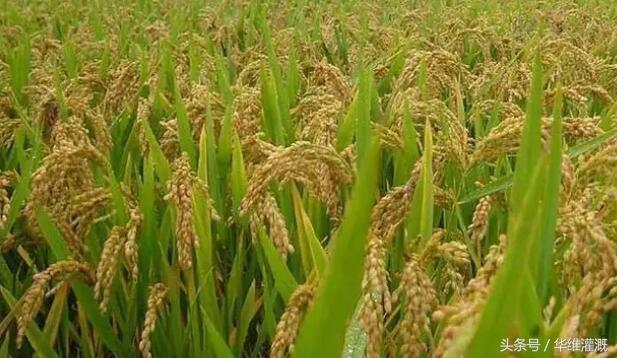
Seedling stage
The seedling stage is the phase from seed germination to the three-leaf stage, generally further divided into the seed germination stage and the seedling growth stage. For seed soaking and germination, the required temperature for germination is 12°C for indica rice and 10°C for japonica rice, with an optimum temperature of 30°C-32°C and a maximum temperature reaching 40°C-42°C. However, during seedling raising, the temperature must not fall below 5°C, or 0°C; at low temperatures, seed rot, bud rot and seedling rot occur. First of all, the seedbed should be selected on a field plot that faces the sun, is sheltered from wind, and has irrigation and drainage. In case of low temperature, measures such as covering with plastic film can also be added to reduce or avoid rot. The temperature for emergence and seedling growth is 2°C higher than for germination, that is, 14°C for indica rice and 12°C for japonica rice; above 16°C, both indica and japonica rice can emerge smoothly.
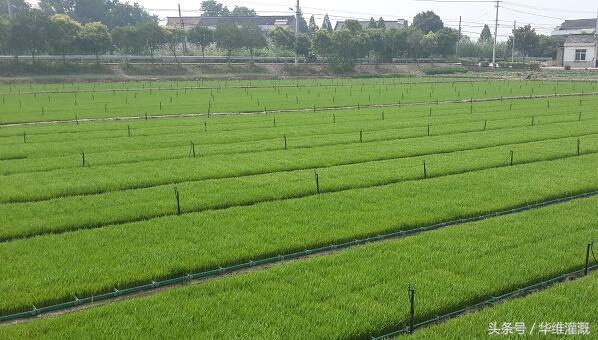
Environmental requirements of the regreening stage and tillering stage
The regreening stage is the buffer phase after transplanting, from the seedbed to survival in the main field, lasting about 4 days. It requires shallow water, because if the water is too deep it submerges the growing point (young leaf), ventilation is poor, and seedling rot or slow survival may also occur. After regreening, the vegetative growth period then centers on tillering, with growth of roots and leaves.
1. Temperature requirements. The highest optimum temperature for rice tillering is 30-32°C, and the optimum water temperature is 32°C-34°C. The maximum air temperature is 38°C-40°C, the maximum water temperature is 40°C-42°C, the minimum air temperature is 15°C-16°C, and the minimum water temperature is 16°C-17°C. When the water temperature is below 22°C, tillering becomes relatively slow. Low temperature delays tillering and affects the total number of effective panicles from tillering, so transplanting is required to begin when the temperature is above 15°C.
2. Light requirements. During the tillering stage, sufficient sunlight is needed to increase the photosynthetic intensity of leaves, manufacture organic matter, and promote an increase in the number of tillers. Under natural light, tillering begins 3 days after regreening; if there is only 50% natural light, tillering begins only 13 days after regreening; if there is only 5% natural light, not only will no tillers be produced, but even the seedlings will die.
3. Water requirements. The tillering stage is the period most sensitive to water, but it only requires the paddy field to be water-saturated, or shallow water is most favorable for tillering. Under high temperature conditions (26°C-36°C), when soil water-holding capacity is 80%, the greatest number of tillers is produced. If irrigated with deep water, when the water layer exceeds the field by 8 cm, the light at the tillering nodes is weak, oxygen is insufficient, and the temperature is also low, which inhibits tillering. However, if the field is too dry and the water-holding capacity is below 70%, tillering will also stop.
4. Nutrient requirements. During tillering, more nutrients are needed, and there are also more effective tillers. More nutrients can promote tillering and make growth faster and more abundant. If nutrients are insufficient, tillering is also reduced or stops. Among the required nutrients, nitrogen, phosphorus and potassium are the main ones, with nitrogen fertilizer being the most needed. It is best to apply nitrogen, phosphorus and potassium together as a topdressing, which is most beneficial.
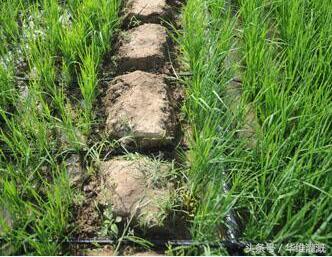
Environmental requirements during the stem elongation and booting stage
The stem elongation and booting stage is a period when vegetative growth and reproductive growth advance simultaneously. During this period, rice grows and develops rapidly, the root mass is at its largest, and the leaf area of the rice plant reaches its maximum. At the same time, the rice panicle begins to differentiate. Stem elongation and booting is the key period determining the number of grains per panicle, the period for consolidating the number of effective panicles per mu, and the period determining grain weight, with the main factors lying in the influence of external conditions.
1. Nutrient requirements. During young panicle differentiation, the root mass of the water roots continuously increases, and the last 3 leaves grow out one after another. This is a period when both vegetative growth and reproductive growth require nutrients. If nutrients are lacking during this period, it will have an adverse effect on young panicle differentiation. Therefore, in production, intertillage and topdressing should be carried out, about 30-40 days before heading, to promote glume flower differentiation and increase the number of secondary branch rachides. This fertilization can also be called "flower-promoting fertilizer"; 10-20 days before heading, a spraying fertilization can be applied, that is, during the stage of male and female flower core formation and the meiosis stage of pollen mother cells, when fertilizer is most needed to prevent glume flower abortion and ensure more grains. This topdressing is "flower-preserving fertilizer."
2. Temperature requirements. The optimum temperature for young panicle differentiation is 26°C-30°C, and 35°C during the day with 25°C at night is even more favorable for forming large panicles. The external temperature for young panicle differentiation is 15°C-18°C, but the most sensitive period is the meiosis stage. During the meiosis stage, damage from both high and low temperatures will cause massive abortion and sterility of glume flowers.
3. Light requirements. Light intensity is closely related to young panicle differentiation, and strong light is favorable for young panicle differentiation. According to experimental evidence, shading with two layers of gauze during the young panicle differentiation stage (transmitting about 1/6-1/8 of natural light) resulted in 30% more glume flower degeneration than the control. If there are many cloudy and rainy days, little sunshine, and excessive canopy closure, ventilation is poor. Therefore, Guizhou has relatively little sunshine time, so a reasonable rice density should be ensured to promote a certain amount of photosynthesis and increase organic matter so that large panicles and many grains of rice can be grown.
4. Water requirements. From young panicle differentiation to heading is the period when rice needs the most water in its entire life, especially during the meiosis stage of pollen mother cells, when it is most sensitive to water. Therefore, during this period, the field water-holding capacity must be maintained above 90%; if water is lacking, it will affect glume flower development. However, too much water and flooding will also cause adverse effects, such as death if completely submerged.
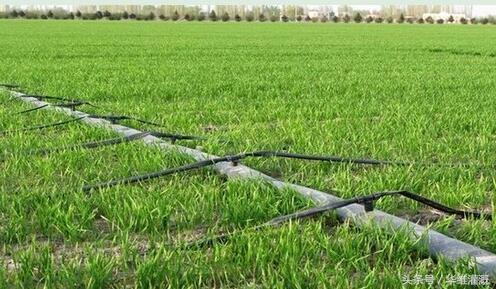
Environmental requirements during the heading and grain-filling stage
During the heading and grain-filling stage of rice, vegetative growth basically stops. This period is dominated by reproductive growth. All tasks are in the key period of maintaining many and heavy grains. Management should mainly keep rice from premature senescence, from excessive late growth, and from lodging.
1. Heading and flowering.
(1) Rice heading. 1-2 days after young panicle differentiation, the rice panicle is extruded from the leaf sheath of the flag leaf. When 50% has emerged, it is the heading stage, and when 80% has emerged, it is the full heading stage. At heading, due to low temperature or insufficient fertilizer and water, the rice panicle often cannot fully emerge. In production, this phenomenon is called "enclosed panicle" or "neck-enclosed panicle." Those enclosed cause blighted grains or empty shells. If the temperature during heading of hybrid rice is below 20°C, it will cause 100% "enclosed panicles" and no harvest.
(2) Flowering: Under normal conditions, the rice panicle can flower once it emerges. Before flowering, first the two lodicules inside the glume absorb water and swell 3-5 times in volume. After absorbing enough, they open the lemma. The angle between the lemma and palea is about 25°C-30°C. The opening process takes about 10-20 minutes. After fully opening, the angle of 25°C-30°C can be maintained for 30 minutes, so the entire flowering process takes about 1-2 hours. Temperature has a relatively large effect on flowering time. At high temperature, flowering time is short; at low temperature, flowering time is long, sometimes reaching more than 2 hours. When the lemma and palea open, the filaments extend, the anthers split, and pollen is shed, landing on the stigma for pollination. About 10-15 minutes after pollination, the anthers slowly wither, and at the same time the lodicule fluid also shrinks in volume due to water evaporation, and the lemma and palea close again.
2. Factors affecting grain filling and setting.
(1) Light. Light intensity and light duration affect the photosynthesis of rice leaves and the transport of carbohydrates to the grains. More than 90% of the substances that fill the grains of high-yield rice after heading are supplied by carbohydrates produced by leaf photosynthesis. Therefore, photosynthesis during the grain-filling stage will directly affect rice yield.
(2) Temperature. Temperature is closely related to grain filling and setting. Generally, the most suitable air temperature for grain filling is 20°C-22°C. After the first 15 days of grain filling, a day temperature of 29°C, a night temperature of 19°C, and an average daily temperature of 24°C are suitable. For the latter 15 days, a day temperature of 20°C, a night temperature of 16°C, and an average daily temperature of 18°C are good. A suitable grain-filling temperature helps extend the time for accumulating nutrients, slows cell aging, reduces respiration and consumption, and gives better rice quality. Both high and low temperatures are unfavorable for normal grain filling of rice, and moreover affect rice quality.
(3) Water. Water during the grain-filling stage is second only to water during the stem elongation, long ear and tillering stages. If water is insufficient, it will affect the assimilation capacity of leaves and the transport of grain-filling substances, and insufficient grain filling will cause yield reduction. Insufficient water during the grain-filling stage will affect photosynthesis, reduce the efficiency of material transport, shorten the time, and deteriorate the physical properties of rice.
(4) Mineral nutrition. During the grain-filling period, there is a close relationship between leaf nitrogen content and photosynthetic capacity. Proper nitrogen application can increase leaf area photosynthesis, maintain maximum leaf area, prevent premature senescence, and improve root activity, which greatly affects increasing rice yield. Therefore, foliar topdressing is commonly used in production. At the full heading stage, fertilizer can be supplemented according to seedling condition, or phosphorus and potassium fertilizers can be supplementally applied, to ensure that the grain-filling process proceeds normally.
Factors affecting rice root growth
1. Temperature
The optimum soil temperature for rice root growth is 30°C-32°C. Above 35°C, growth is hindered, senescence is accelerated, and absorption capacity declines; above 37°C, it declines significantly; below 15°C, both growth and absorption capacity are greatly weakened; below 10°C, growth stops.
2. Light
Light plays an indirect but important role in root development and absorption capacity. Because sufficient light strengthens photosynthesis and transpiration, more nutrients are supplied to the roots, thereby promoting root development, improving root activity, and increasing root absorption of inorganic nutrients. When light is insufficient, it not only affects root development, but also significantly reduces root absorption of various inorganic nutrients.
3. Soil nutrients
Among the three essential fertilizer elements, nitrogen has the greatest effect on root growth and absorption capacity. An appropriate amount of nitrogen fertilizer can effectively increase the differentiation of root primordia and the rooting capacity of rice plants, increasing the number of roots per plant and shortening root length. With nitrogen deficiency or excessive nitrogen supply, the root mass is small. Combined application of phosphorus and potassium fertilizers has an even greater promoting effect on root growth; root number, root mass and root length all increase, and the distribution of the root system also deepens.
4. Soil aeration
The occurrence and elongation of rice roots, as well as physiological activities such as nutrient absorption and transformation, all require sufficient oxygen. If oxygen is lacking, it will affect root growth and physiological functions, and root activity will also be lost.