How to Grow Kiwifruit: A Detailed Guide to Growing Methods to Help You Master It Easily
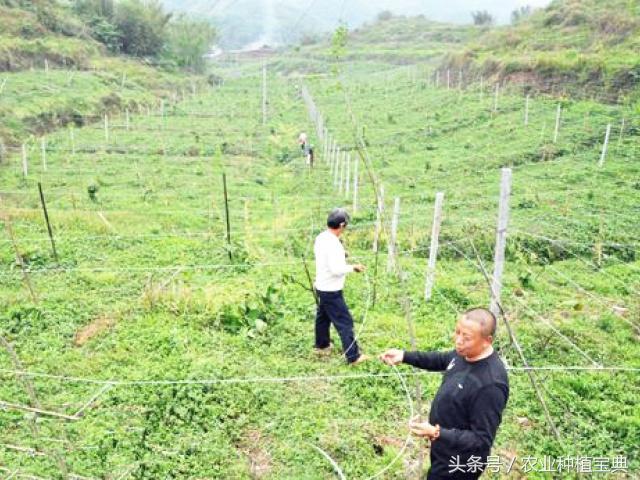
Kiwifruit, a fruit that is very helpful for cardiovascular disease. Although it doesn't look particularly attractive, its green flesh is still very appealing. If the kiwifruit is fully ripe, the taste is quite good as well. So what are the methods for growing kiwifruit? The environment is very important, and secondly, special attention must be paid to the prevention and control of pests and diseases in kiwifruit management.
Kiwifruit originated in the Yangtze River basin of China. It prefers warm, humid conditions and requires neutral to slightly acidic soil. It is drought-tolerant, and excessively strong sunlight can easily cause leaf scorch. Propagation can be done through tissue culture, cuttings, layering, root cuttings, division, and grafting. Kiwifruit is dioecious, so pollinator trees need to be arranged. Generally, 1 male plant is arranged for every 8 female plants, or male flowering branches can be grafted onto female plants. Male varieties with a flowering period close to that of the female plants should be selected. So what are the methods for growing kiwifruit?
Kiwifruit Cultivation
1. Sowing seedlings: In mid-to-late March, clean the seeds, remove shriveled and moldy seeds, then sun-dry for 1 day. The next day, soak the seeds in 200 PPM gibberellin solution for 5 to 8 hours, remove and air-dry, then mix with sand for storage. The purpose is to activate the seeds and achieve uniform germination. When the sprout tips emerge, immediately mix with sand and sow to ensure uniform seedling emergence. After sowing, spray with sufficient water, cover with fine sandy soil about 2 times the thickness of the seeds, and level it. Then build a small arch shed over the seedbed, cover with white film, and shade with black shade netting.
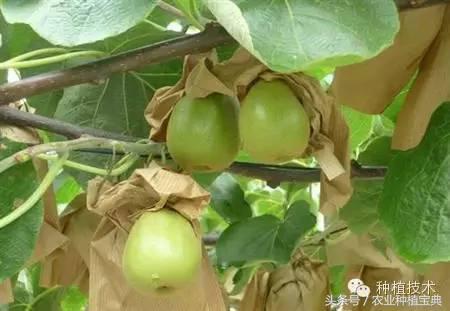
After sowing, seedlings can emerge uniformly in 30 to 45 days. During the seedling stage, shade must be maintained continuously, which helps the seedlings grow quickly. After June, decomposed dilute manure water can be used to water the seedlings, once every half month. Foliar spraying of monopotassium phosphate can also be applied once a month until September. At the same time, weeds in the seedbed should be removed promptly.
2. Bud grafting: This can be done from early June to early September. When bud grafting, select healthy seedlings as rootstock and use the "T" grafting method. First, select plump buds on the scion and cut them into shield-shaped bud pieces. Then make a "T" shape on the selected rootstock at 5 cm above the ground, lift the bark, insert the shield-shaped bud piece, and finally tie it tightly with plastic film strips, exposing the bud head. If the bud piece is still green after one month, it means the xylem has connected together and the grafting was successful. At this point, cut off the upper part of the rootstock and strengthen fertilizer and water management. The new buds can sprout shoots in the same year, and the following year they can become commercial seedlings.
3. Root bark grafting: Select branches from robust, superior one-year-old mother plants as scions, taking them as you graft. First, select plump buds on the scion, make a horizontal cut above and below the bud, then make a vertical cut on the left and right sides, and peel off the bud piece in a "" shape. In the same way, remove the root bark in a "" shape at the root of the rootstock, attach the scion bud, tie it with plastic film, and expose the bud eye. Finally, cut off the upper part of the rootstock, plant uniformly in the field, and the following year they can become commercial seedlings.
4. Cut grafting: Select a scion with 2 buds and a thickness similar to the rootstock. Cut the upper part above the upper bud flat, and cut the lower part below the lower bud into a wedge shape. After cutting the upper part of the rootstock root flat, split it open, align the cambium and insert the scion, tie tightly with film, and plant in the field. Because kiwifruit has fleshy roots, root grafting adheres easily and the survival rate is relatively high.
Conditions for Selecting a Kiwifruit Orchard Site
Most varieties currently cultivated in production mainly belong to two species: Actinidia deliciosa and Actinidia chinensis, which originated mainly from the central and southwestern regions and the central and southeastern regions of China, respectively. In the subsequent process of cultivation expansion, it was found that it can be cultivated from Beijing to Hainan, and from Yunnan, Guizhou, and Sichuan to Taiwan, China.
The natural conditions required for kiwifruit cultivation are: annual average temperature 11.3-16.9°C; extreme maximum temperature not exceeding 42.6°C, extreme minimum temperature not lower than -15.8°C; no sharp cold wave in early winter causing the temperature to suddenly drop below -12°C; effective accumulated temperature ≥10°C between 4,500-5,200°C; average daily temperature during the growing period not lower than 10-12°C, no strong winds; absolute temperature during the late frost period not lower than -1°C; frost-free period 160-240 days; annual sunshine hours 1,300-2,600 hours; natural light intensity 42%-45%; annual rainfall around 1,000 mm; relative humidity above 70%; deep soil layer, loose and fertile, rich in organic matter, pH 5.5-6.8, well-drained mountain forest soil, red, yellow, brown, or black sandy loam or loam. There are not many places that fully satisfy these conditions. In arid northern areas with irrigation conditions, humid southern areas with drainage and irrigation measures, and areas with strong winds with windbreak forests, cultivation is also possible.
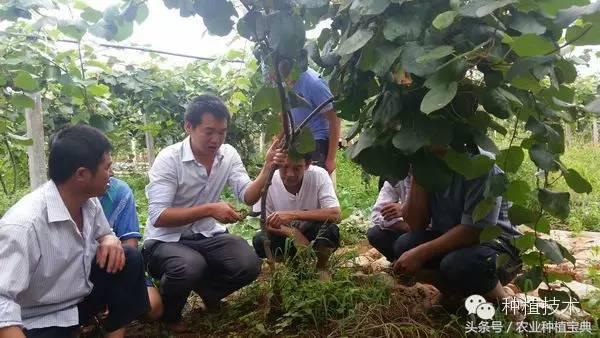
In addition to considering the above natural conditions, local social, economic, transportation, microclimate, and site conditions must also be considered. Generally speaking, plots with good public security, sufficient investment, convenient transportation, flat land, fertile soil, convenient drainage and irrigation, sufficient sunlight, and a mild climate, and that are not in wind tunnel areas or hail strike zones, are ideal orchard site selections.
Kiwifruit pruning is divided into winter pruning, summer pruning, and male plant pruning.
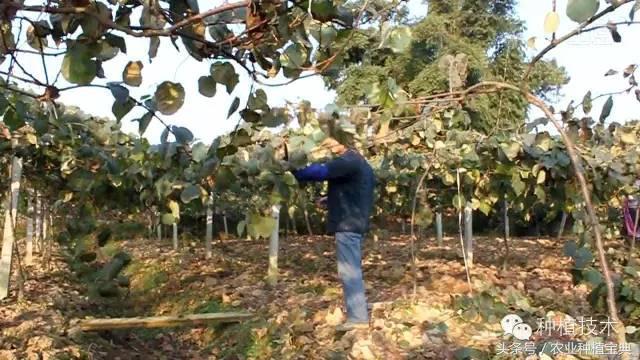
Winter pruning is carried out from after leaf fall to 1 month before early spring sprouting, mainly thinning, with appropriate heading back. Keep more main vines and fruiting mother branches, and cut off overly dense large branches, weak twigs, crossing branches, and diseased and pest-infested branches. Summer pruning is mainly carried out from mid-May to early July, including removing sprouts, pinching tips, thinning, and tying, promptly removing sprouts on the main trunk, and arranging branch and vine space. Male plant pruning is carried out after flowering in May-June. Keep 3-4 branches per plant, leave 4-6 buds per branch, and pinch the tip when new shoots grow to 1 m.
Generally, fruit thinning is carried out 1 month after flowering. Keep the middle fruit and thin the side fruit, aiming to leave 1 fruit per 4-5 leaves. Generally, leave 1-2 fruits per 20 cm on normal branches, and leave 5-6 fruits per 20-25 cm on weak branches. For a yield of 50 kg per plant, 500-600 fruits should be retained.
Pest and Disease Control
Diseases harmful to kiwifruit include anthracnose, root-knot nematode disease, damping-off, seedling blight, root rot, and fruit soft rot. Among them, anthracnose harms both stems and leaves as well as fruits, and can be controlled by spraying 800 times carbendazim 2-3 times at sprouting. For root-knot nematode disease, fertilizer and water management should be strengthened, and isofenphos-methyl or 30% carbofuran toxic soil can be used for control.
The main insect pests of kiwifruit include white peach scale, Pseudaulacaspis cockerelli, cutworms, scarab beetles, leafhoppers, and fruit-piercing noctuid moths. For scale insects, overwintering nymphs can be controlled with omethoate or 1,500-2,000 times liquid of Supracide; for underground pests, roasted bran and carbofuran mixed at a ratio of 10:1 can be spread on the ground. For scarab beetles, spray with trichlorfon or 1,000 times liquid of malathion in the evening from late March to early April, or use pyrethroid insecticides. For leafhoppers, use 50% phoxim emulsifiable concentrate or 1,000 times liquid of fenitrothion for control.